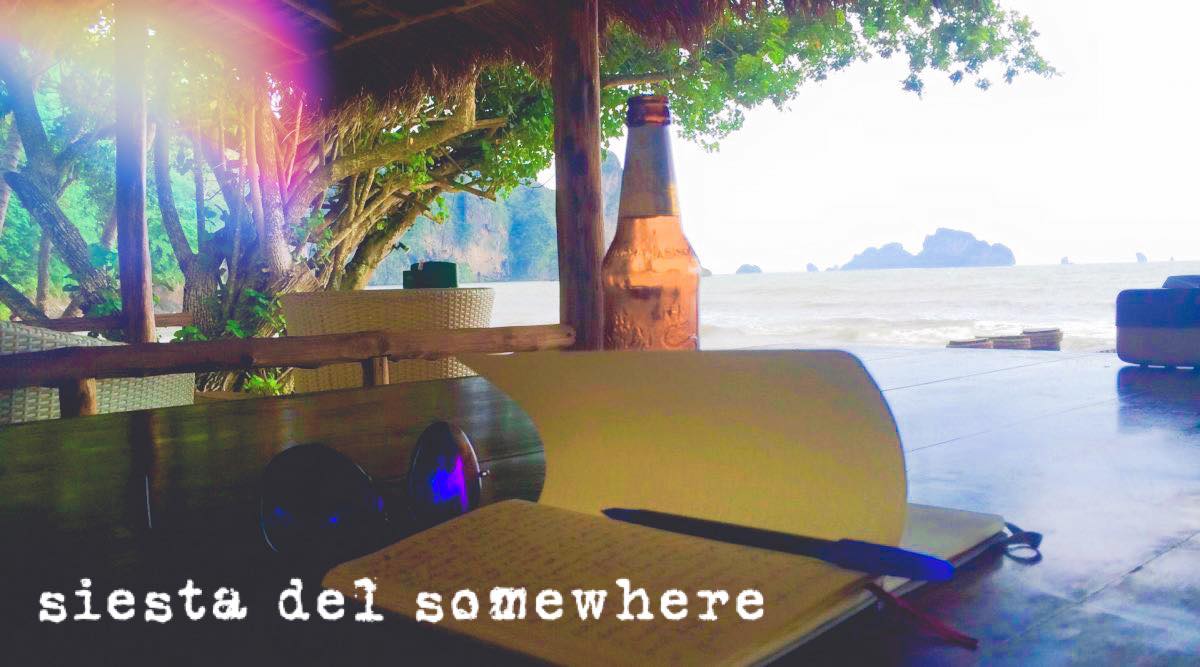
5 Saturday Morning King Street

Morning. My eyes are closed. The early bus is leaving the beach. We are heading back to the city.

Eyes closed – I can see wave upon wave shining ashore, clapping hard down on shoreline sand, spraying sunlight and rainbows into the morning blue. Cool, blue sea breeze moves along the far horizon, flecked white tips dance with ships far out at sea. The moon and stars fell not long after dawn and now only the white hot sun burns down on alabaster sand, filling the pure blue sky with glare, arrowing down on the surface of the Indian Ocean.

Image by Karl Powell, Beach, 2019

The early bus is moving, uphill downhill, turning, heading back to the city. Eyes stay closed. I can feel the sunlight still moving through my skin, saltwater cooling the sting, drying now, hair still wet, body heavy, eyes closed, sand stuck between my toes. Arrived at the beach around 7am when all was still cool. Lay on my back, slept off the night, digging toes down into soft sand. Could feel the sun moving across my skin, shadows walking past (all dark for a moment then light again). Sounds of people all around; happy people laughing. Ocean kept lapping waves on the shore. Opened eyes and nothing but blue – no clouds, no commitments, no sense of time. A plane flying high above, climbing higher in silence, moving off, up along the coast. Someone laughed, three big waves crashed with children screaming in distant laughter. Thought about reading my book, but it stayed there half-open on the beach (pages rippling with occasional sea breeze). Eyes close again.
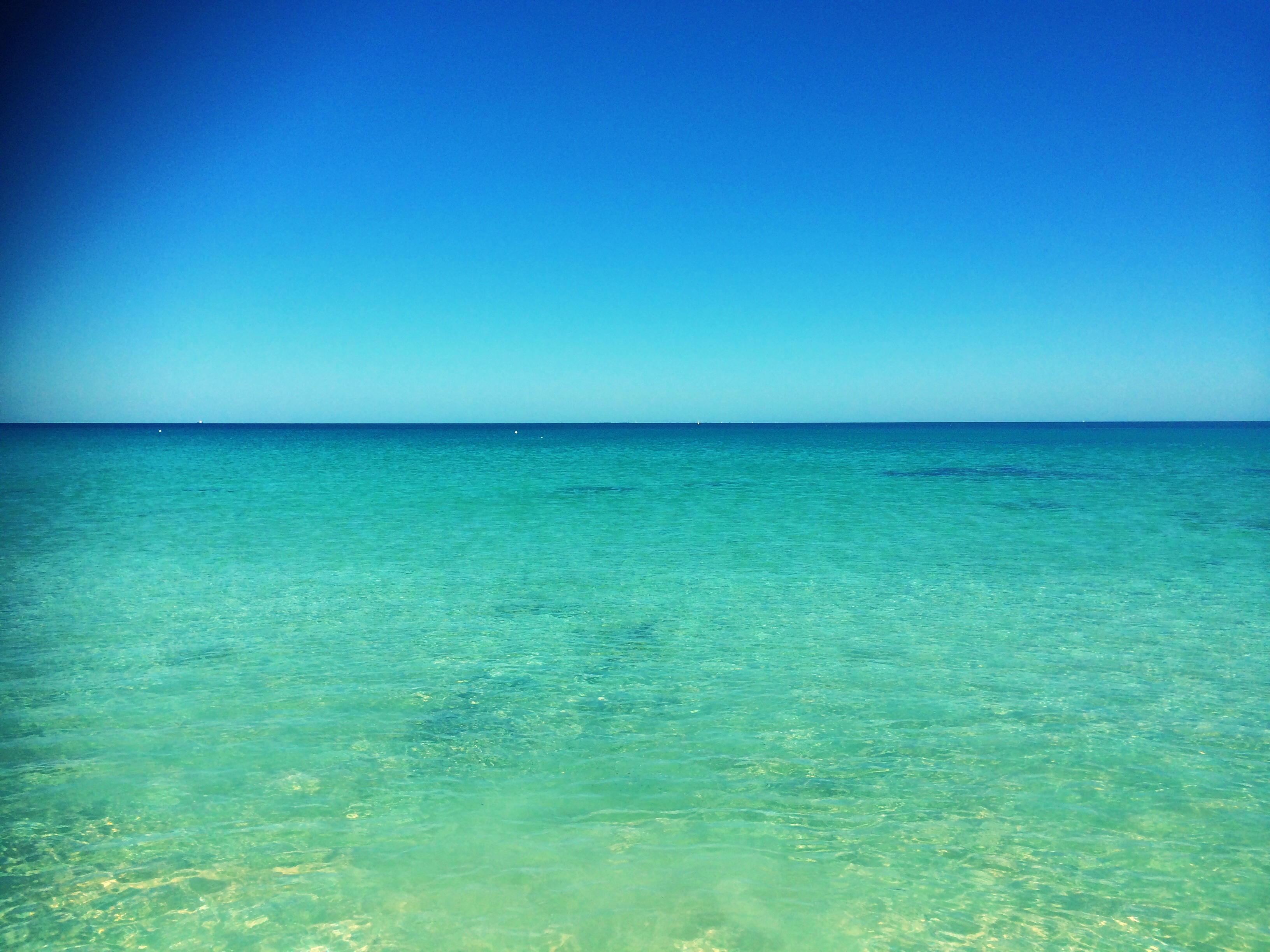
Image by Karl Powell, Indian Ocean Blues, 2018

As the sun angled up and shone down, I eventually made my way towards the blue to swim. I stood at the shoreline for a moment; I saw one endless sheet of shining blue, glittered and large. I saw cormorants swimming and swooping for shoals of fish; I saw my friend Bruce swimming out past the reef (his yellow swimming cap moving parallel to the coast in a group of four splashing out in the deep). And into the water I waded, deeper until I dived. Underneath the water the great dance of sunlight swayed in buoyant silence, flying with me in the ebb and flow of twirling shells in the gin jade emerald blue, moving back and forth, swaying in hammocks, looking at these gemstone wonders swirling around you until you have to surface once again for air.

Image by Karl Powell, Beach Bruce, 2017

The bus stops suddenly. Eyes open. The driver jumps out from his seat apologising to the congregation – he wants to take a photo of the ocean. Yes, it really is that good today. An entire ocean so flat. Nine huge tankers sit out along the horizon, waiting for a berth at the docks. Then out of nowhere a wave moves in so fast, swelling, racing, arcing up then with an intake of roar it collapses with a bang of surf onto the wet sand. The driver has his photo and jumps back onto the bus. The bus is moving again, leaving the beach behind, heading back to the city. Eyes closed now.

Even on this bus I can still feel the saltwater, the morning, the sunshine moving across me.

Image by Karl Powell, de Chirico in King Street, 2021

Mid Morning. Stepping off the bus and into the white heat of the city felt like walking into the artwork of Giorgio de Chirico. Silhouettes, sloping shadows, empty spaces. The forecast for this week predicts we will reach 40.c. Burning, blistering heat. Footsteps slow down a pace. Elsewhere, indoors, the shade is the best place to be. Towards King Street, for a coffee, I cross the road, the busy street, shimmering tarmac, heated fumes, passing traffic. I look up and see Neil sitting at the steps of the Trinity Church. Neil on the Trinity steps. Usually, he’s there sat reading; today he’s there sat talking to somebody. He looks up and sees me. I wave, he flashes a peace sign back with his fingers. I think he’s a writer, I think he’s homeless; he’s always on those steps reading, writing, talking to somebody.
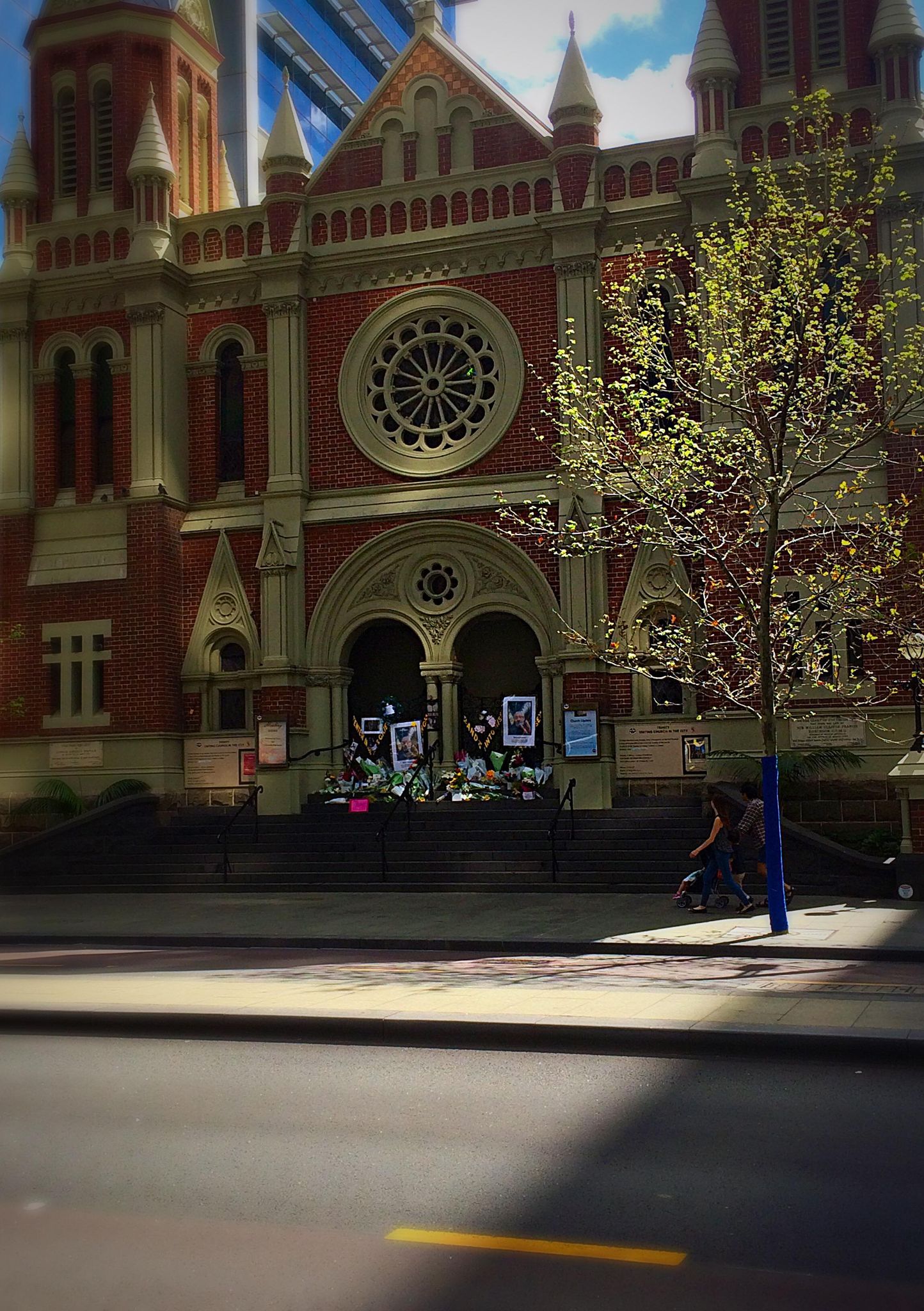
Image by Karl Powell, Neil on the Trinity Steps, 2020

Along King Street, the flow of shade stretched past each intersection. It was cooler here and colours could emerge from the bleaching, blinding sun. Murals of art shared space with open armed palm trees, which stood at the corners wriggling thin fingers of palm leaves in what little breeze breathed. A white cockatoo flew high above the street casting a moving shadow over bookshops and buildings, and the two stone lions lazing in sunshine on top of the old theatre, while a Mauritian restaurant began to prepare for its lunch service with the sounds of sega music moving through the heat.

Up at the café, I found the best seat in the house (outside, to the right, tight up against the windows, on the pavement, facing out). There, everything felt like a Saturday should. There, everything always felt as if today would be one of those days in which you would be destined to meet a special someone, someone special, at some stage during the day, one of those once-in-a-lifetime dalliances that starbursts immediately and sparkles throughout the summer. There, it would easier to watch the world walking past, to waste time productively, to idle, to daydream, to convince yourself that this was an essential part of being.
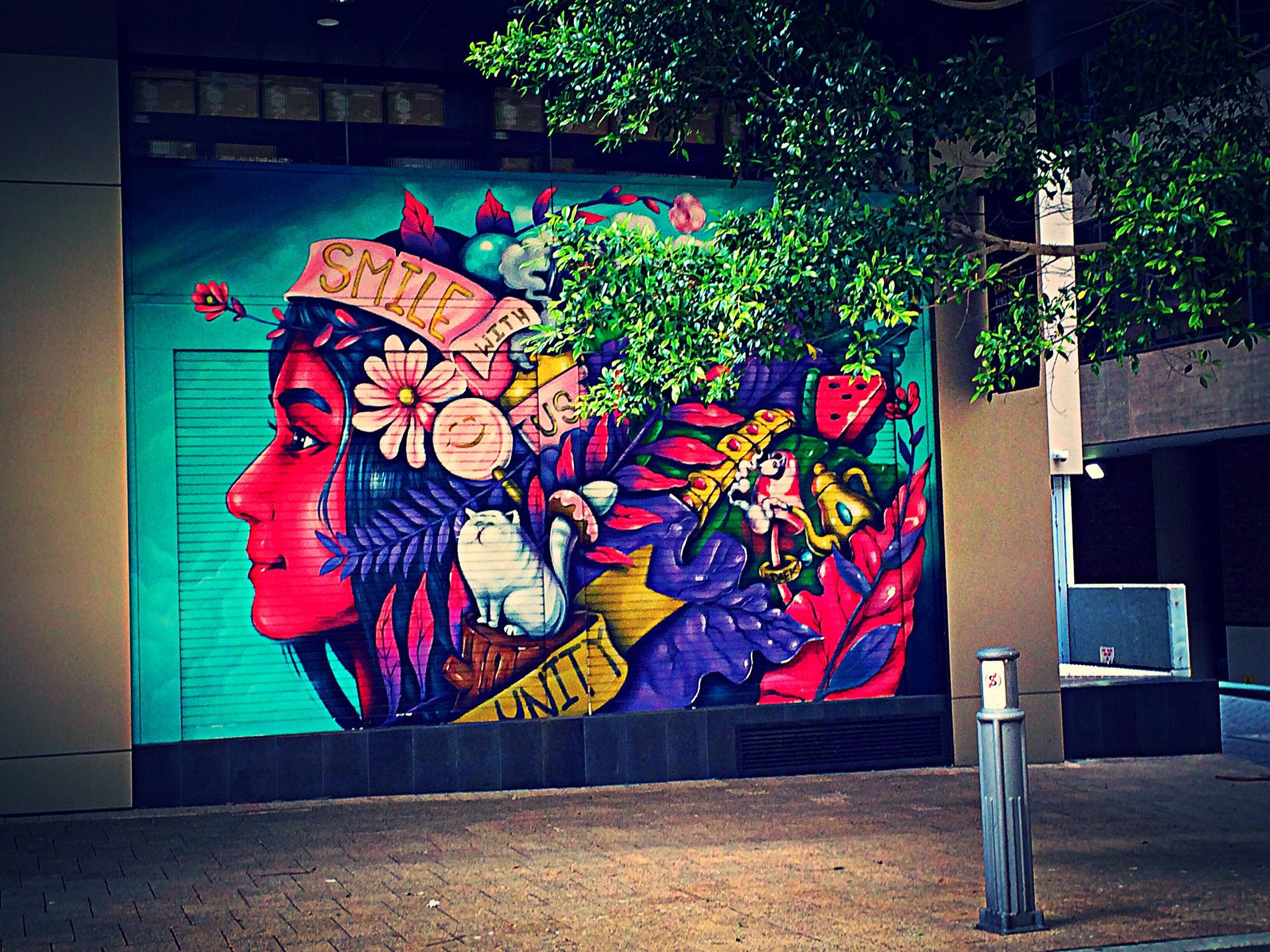
Image by Karl Powell, King Street Mural, 2021

Sunshine was falling into the street, causing parked bicycles to shine as they leant up against white walls. I watched a woman cross the road. She left the shade to walk over into the sunshine. Her hair lit up at once. Shoulder length blonde curls that bounced in life. A man with long, black sideburns growing down his face and a paunch hanging out of a red t-shirt, gunned past on a skateboard; his wheels tore up a sound on the hot, dry tarmac. A taxi pulled up in front of the café. A man dressed in a suit and a white shirt (no tie), got out. He went into one of the apartments above one of the shops opposite my seat. Next door, two girls sat in the sunshine on the steps to their flat. Gloss black hair, sunglasses screening eyes. Brickwork and white paint, two concrete steps that led up to their open doorway. Three shoppers walked past them, each carrying bags and sullen faces. I saw another friend, Jean-mic, walking slow, slow walking (and I mean s.l.o.w.w.a.l.k.i.n.g), broadchested in his t-shirt and shorts, sunglasses on, arms swinging at his side, overtaking us all. Then the cars came. A blue car turned up the street making noise. A speeding white car followed up, slowed down and sounded its horn echoing on the narrow walls – a bald, smiling face waved at me. I only recognised my friend Antonio moments after his car sped off. An elderly couple walked gently past the cafe holding hands and shopping bags in silence.

A small, dragon fly came to rest at my table just as my espresso arrived. It sat there, warming its wings and moved only when I went to drink my coffee. The golden crema cooled in the white demitasse. Sweet on the palate, warm, sip, swallow, bitter, leaving the taste of roasted smoke cooling through the lungs.

The table next to me – a family of four – got up and left the café. The sound of scraping chairs carried in the air. They left behind a newspaper on one of the chairs and it was open at the horoscope page. I leant over and checked over for mine. I read it – it was pretty good without being accurate. It said it was time for legs to be up and running, telling me I was smart enough to strip away flattering words in order to see what was really on offer; creative skills linked to writing would open the way to new successes. So it said. A child came running up the pavement, his footsteps stopped suddenly at the café to say hello – out of breath and panting, it was Gavin, the son of a family I knew. Carrying a copy of Ian Fleming’s ‘Live and Let Die’ he was running late for an acting class but wanted to say hello. I watched him run off up King Street.

Image by Karl Powell, Caffeinated Scribbles, 2016

The sun was high, much higher than when I arrived and now almost overhead. A spinning disc of burning light. The street was hot. The blues and greens were bright. Passing people blurred and my eyes ached. It was time to go home, to sleep a siesta, and then to find a way to make all the words and sentences of the morning breathe and flow into stories that meant something to me. If they made other people happy, then great. But there was an indulgent purpose in being able to spend an afternoon touching and sculpting the moments of your time from fleeting thoughts and visions into captured language on paper. To defy the running rivers of Heraclitus and to step into that same water twice, to swim beneath the great dance of sunlight, to sway in buoyant silence and to look at all the gemstone wonders swirling about you until you had to surface once again for air. And then, when all the writing had finished, and the Muses subsided, the night would fall flat like the morning ocean, to reveal great pools of starlight and the opportunity to dance again.

Image by Karl Powell, Another Sunrise, 2021

*

4 Coffee Morning (Dubai)

The day awoke with the sound of prayers. Slowly, the individual voices from each of the mosques of Al-Karama began to sing the first call to prayer, the Adhan. The faithful are stirred from their dreams and are reminded in verse sung from minarets that ‘prayer is better than sleep…[and]… to hasten to the best of deeds.’ I had arrived here in Dubai about this time yesterday, walking through the airport’s baggage reclaim after a twelve-hour flight en-route to elsewhere. This same call to prayer permeated the Al Maktoum International airport. It is amazing how you can even feel a sense of familiarity with an airport that size. But this one does feel familiar now (it is my fifth visit). I know my way around. Knew my bearings: the routine, the lifts, the escalators, the way of direction through the chaos of flow. Occasionally glimpsing faces from the flight I’d just disembarked, I watched for a moment as we all stood in queues, before disappearing into the rest of our lives. My taxi was waiting for me. The driver was from Pakistan. He gave a genuine warmth of generosity at such an early hour. He told me how happy he was working in Dubai but missed his family and his home. The journey to my hotel took about a quarter of an hour, roads were quiet and we arrived at the hotel at around sunrise. Despite the early hour, the working day was already walking about and moving.

Image by Karl Powell, First Call to Prayer (Dubai), 2016

Yesterday was much of a blur after that; of sleeping, of eating, of feeling fatigued. I didn’t travel far or do very much (not that I can remember). After check-in, I was taken from the hotel foyer to my room. Fifth floor, room 541. Six lifts from the lobby all going upwards. Unpacked a bit, showered, sat on the bed, listened to the silence. I went back downstairs, through the lobby, to a shining dinning room and ate for breakfast. In a different time zone watches and clocks matter very little. But I ate and drank hot, black coffee. After breakfast, I crossed a busy road and went to a Carrefour supermarket and bought fruit and water. I got chatting to a happy cashier from Uganda and then was helped packing my things into a bag by a man from Egypt. He told me he loved the English language and its literature – that he enjoyed reading Virginia Woolf and Shakespeare. He told me that he was pleased to have met me and hoped I enjoyed my stay in Dubai. Back at my hotel, I fell asleep and slept solidly face down on the bed. To salvage the day, I had tried to walk down to the Creek at around sunset, but was still tired, disorientated and eventually lost my way. In the end, I came back to the hotel. The rooftop pool was closing, but the young pool guard from Kenya allowed me a few minutes to look at the glittering night-time skyline of the city in the distance. 

Image by Karl Powell, Dubai, 2016

So, I am here now, in Dubai (in transit – a stopover), for another 24hours. This time tomorrow I will be back at the airport, with my bags, moving on elsewhere, completing the rest of my journey. Before that, because of yesterday, I am determined to enjoy something of today, to see something today (something I have not seen before). So, just before first light, I showered, made coffee and opened the windows of my room and heard the first call to prayer. I took photos of the day as it rose before me. I sat looking at this incredible city moving from dawn into day. I re-read a quote I had written down during the flight from His Highness Sheikh Mohammed bin Rashid Al Maktoum about the importance of transforming ‘a dream or an idea into reality and vision into action… History has no place for dreamers.’ I drank my coffee; hot, black, and watched the cooling, curling twisting, white whisps of vapour steam out from the darkness of my cup into the new light of day.

On leaving the hotel I decided to walk back to the Creek. This time I had a map, I’d marked streets and a clear route there. I wanted to see the Al Fahidi district – there was a souk and a historical area, with older buildings now converted to museums and art galleries. It was still only mid-morning and some shops had opened, others were opening. Streets were perfumed with incense. The day had yet to heat up. People seemed at peace with each other. There was no hurrying. Shopping was actually quite pleasurable. People smiling, wishing you ‘assalam mualikum’. Nothing hurried. It took a while but I got there.

Image by Karl Powell, Al Fahidi Mural (Dubai), 2016

Wandering around at first, looking at postcards, looking at pottery, I eventually found a Coffee Museum. It was a two-storied building which told the story of the region’s relationship with coffee. You could buy, you could try. There were so many different types of coffee available, so many different colours, so many different varieties existing. My choice had been to try local Gulf coffee. It came served from a tall, metallic dallah pot, poured from a thin neck into a small, white cup and given to me to drink. There a golden coloured coffee cooled, flavoured with cardamom and cloves (no sugar needed). I bought Medjool dates and almonds to eat with it.

Image by Karl Powell, Dallah (Dubai), 2016

Afterwards, I walked around the souk and the historical buildings. The heat of the day was beginning to bite; in full sunshine it was intense. The blue sky was now smudged with humidity. White buildings reflected glare. Palm trees rose up out of the ground, into the day, housing small birds which chirped and swooped, flitting between the sunshine there before sheltering in the coolness and serenity of surrounding eves and ceilings – flying through the eternal peace of the spaces found in a mosque nearby. Climbing stairs, I discovered a rooftop terrace which faced the Gold and Spice Souks across the water near Deira.  For a while, I sat watching the river flow down the Creek and out into Port Rashid. Dhows and water taxis flowed past. I drank my water. I ate some fruit. As the heat increased the small birds sang more softly in their echoes and chirps. At around midday, the streets rose up once more in song – the second call to prayer sang out across the Creek; it called from everywhere, all at once, reverberating around this city.

Image by Karl Powell, Cooling Shade (Dubai), 2016

The heat was beginning to weigh me down. The fatigue of my flight had not quite left my body. I spent what cash I had left on me buying souvenirs and gifts and hurried to return to my room. During my attempt back to the hotel, I still had to navigate my way out of the little streets and alleyways. A few times I got lost. On another turn I found the Centre for Cultural Understanding; they were busy preparing a meal for lunchtime – served in an hour. I was invited to stay, to join them, but had already arranged to meet a friend back at the hotel (he lived here, had moved here, had also arranged lunch). I promised to return next time, to join them, to share a meal. Then, the last discovery, entirely by accident: an art shop selling watercolours, an art shop creating watercolours entirely from coffee. On entering, the first thing I smelt was the familiar warm perfume of coffee – yet this was from the artwork. Paintings hung from the walls ready for sale; paintings of dhows, calligraphy, sunflowers, paintings in differing shades of gold, tan and black; paintings of coffee. The artist told me how he used coffee as his medium to paint and how he enjoyed his craft. It was spellbinding as he explained and demonstrated what he did. I wanted so much to buy a picture, to support this creativity, yet my cash had already been spent elsewhere. I wished so much that I had found this place first and had bought a picture from coffee before anything else. I vowed to return to Dubai again, and find this shop and to buy a picture. To date I haven’t been back. At present, I’m not sure when I’ll have the chance again.

Image by Karl Powell, Sunset (Dubai), 2016

On the rooftop of my hotel in the late afternoon sun, I am sitting by a pool. I am still full from lunch – having met my friend from London at an Ethiopian restaurant called Zagol in a street behind this hotel, in a street in the shade. The food was incredible, utterly amazing, we ate it all and enjoyed the hour together before his return to work. I came here and have spent the afternoon enjoying the sunshine. Ahead of me now is the silhouette of Dubai’s skyline. The Burj Khalif stands tall. It is tall, it is so tall. I look out over the dreams and ideas that have come into fruition here; that have been created here. It is an incredible city. As the sun now angles lower, and begins its descent into dusk, a breeze blows across my shoulders. The streets below in Al Karama sound to the clangs and bangs of new dreams being created through construction noises, busy cars toot their horns; here, umbrellas around the pool stretch and strain as the Emirati breeze picks up. In the distance I can see the sail of the Burj al Arab. Beyond that the smooth shining gold foil of the Indian Ocean. This time tomorrow I shall be elsewhere in the world. The Indian Ocean is like flat gold foil. And the big blue sky is endless. Is endless. Is endless.

*

3 The Rain (Ao Nang)

High above the streets of Ao Nang this story begins. Perched up along the rooftop restaurants, looking down at the sounds from below which come up to greet: tooting horns, tuk-tuk sounds, traffic moving, traffic swerving, big trucks, motorbikes, laughter and language. Words are heard expressing worlds in every sound and syllable. Something heavy is being dragged across the floor. Knives and forks twang, clang and chime in the way that only cutlery can chatter. Glasses chink at the bar. White paper napkins flutter in the breeze. Waves roll ashore. Rushing waves roll ashore. There’s a faint wind blowing in off the sea; moving air inland. A large full moon begins to rise over a giant monolith of limestone rock towards one end of this town (dropped down in the soft sand at the far end of the beach). A string of coloured lanterns dance in the darkness, lighting all along the way there, all the way until the eye can see no more.

Image by Karl Powell, Ao Nang (after the storm), 2019

Unaware of bearings and landmarks, there is no comprehension of where lies North, South, East or West. Dislocated from familiarity, there is no Pole Star for guidance, only the sounds of this night can reassure. Waves rolling ashore.

Occasionally a solitary raindrop falls. Skies were clear a few moments ago.

Apparently there is a big storm elsewhere. Somewhere far away – far out at sea. It has made lots of smaller storms, lots of other rain. This was on the news, so I was told. With these other rains coming, there will be no customers in town for this week. The tourists will stay away. Shops can sell no goods. Yesterday there was no electricity here. One of the 7/11 supermarkets had to close for the day (electric doors, electric tills). Even though power was back on by the evening, the customers still stayed away (stayed indoors, stayed in their hotels). I was told for my safety, do no boat trips: stay on land (for my safety, you understand, for my safety).

A nearby table of three French girls leave. They sound so happy – laughing and singing together. We are literally eating up in the rooftops among treetops. Steep steps had lead up here; I had no idea there was even a restaurant up here. And I’ve found it – on Day One. The now vacant table is quickly cleared by staff and transformed into a space to eat again. There is a lull in service. And for a moment – the briefest of moments – a waitress looks down at the passing traffic on the Beach Road. She has a black ponytail, soft shoes and stands with her hands behind her back. The neon signs all around cast changing colours onto her face. Green palm trees light up the darkness of the night behind her. There is no light beyond them (only stars). There is no light beyond the crashing foam washing ashore.

My food arrives.

Image by Karl Powell, The Green Curry Restaurant, 2018

Morning. And so the rain fell last night. It rained heavily throughout the night. And it kept falling. It must have started around 3 or 4am. The sound of the rain hitting the banana palms and frangipani trees woke me from the deep. In my room, around that time, as my eyes rolled around in the unfamiliar surroundings of a new room everything illuminated suddenly with a quick, white flash, followed by silence. The low, slow bellow of thunder staggered through the darkness soon enough. Briefly there is respite. The green of the mountains and trees take on a vibrancy with this weather. Everything feels alive. A wind blows colder across this Andaman Sea, dispersing the hot, thick humidity which stuck to the night sky. Another storm is moving closer. At the beach, along the horizon, all is black. Incoming. Thunder booms like slow, approaching canon-bangs. The sand physically shudders and vibrates as this sound hits dry land. Warm rain occasionally falls, causing large, flat puddles to become pockmarked with moving circles on the water’s surface.

The air is still again; thick with moisture and fragranced with jasmine from burning incense lit at a nearby Buddhist shrine. A family of mynah birds swoop down from some pencil thin palm trees and look for food in the wet grass. An olive stray dog sits under cover waiting for someone or something for breakfast. White butterflies, unfazed by the weather flit about their business – followed by two small children mimicking their flight before being quickly called back into the dry by the grownups.

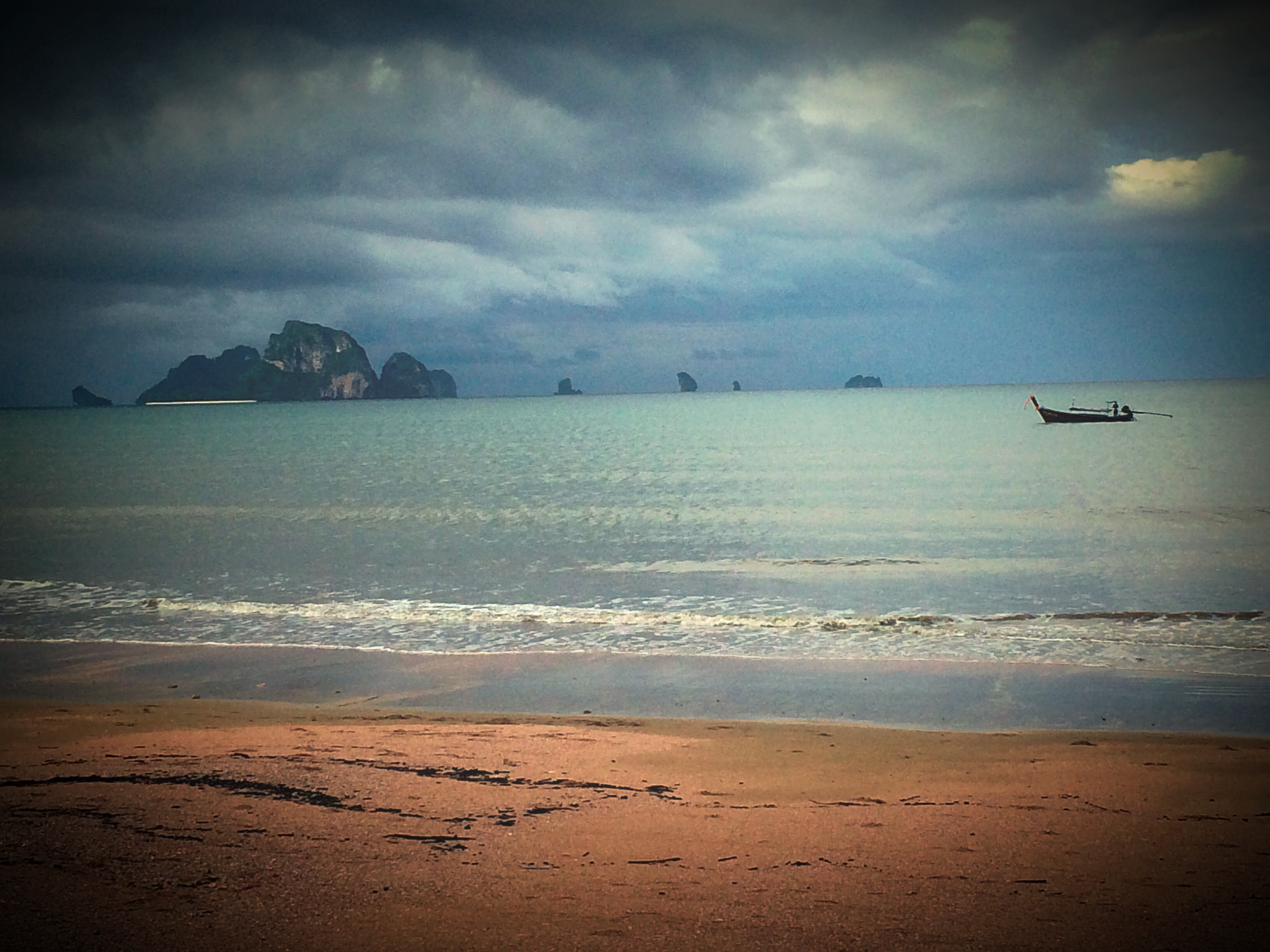
A leaf falls from the Holy Almond tree and the sea breeze gathers pace again. The ocean had been flat moments earlier, from shoreline to the edge of the world, flat glass water now rippled with rushing winds. Brightly coloured long-tail boats float on this endless sea – their painted hulls shine as they emerge up into the morning light, lifted by growing, shoreline waves. At the far end of the beach, two people swim in the emerald depths of the Andaman Sea (their heads visible only as small, round silhouettes). I watch another large brown leaf fall from a giant overhanging branch – it flutters and tumbles, curling through gravity’s downward pull. It seems to take an age to fall. But here, time lives within Time and plans reside elsewhere. The wind is now a steady stream of warm and cool air. The sea changes colour: blues, grey, green and teals. A bank of cloud hangs along the horizon. Partly grey, partly white, partly black. Thunder booms somewhere out there, its muffled rumbles carried here on the breeze, audible and loud. A bird the size of my thumb suddenly alights near my table. I move only my eyes to look at it. It chirps and darts off. Time to move, time to be, time to meet what the day will bring…

Image by Karl Powell, Fontok Laew, 2019

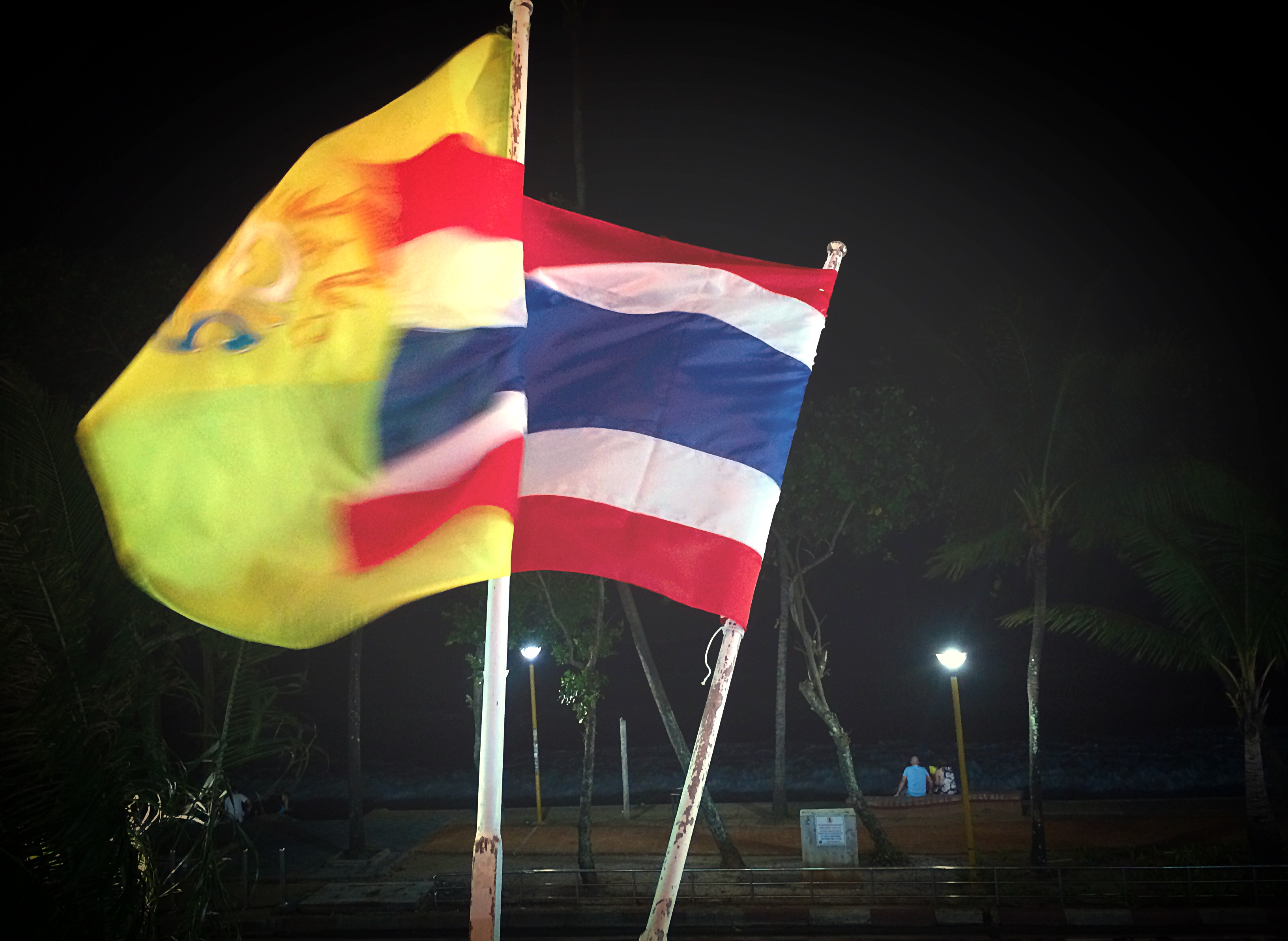
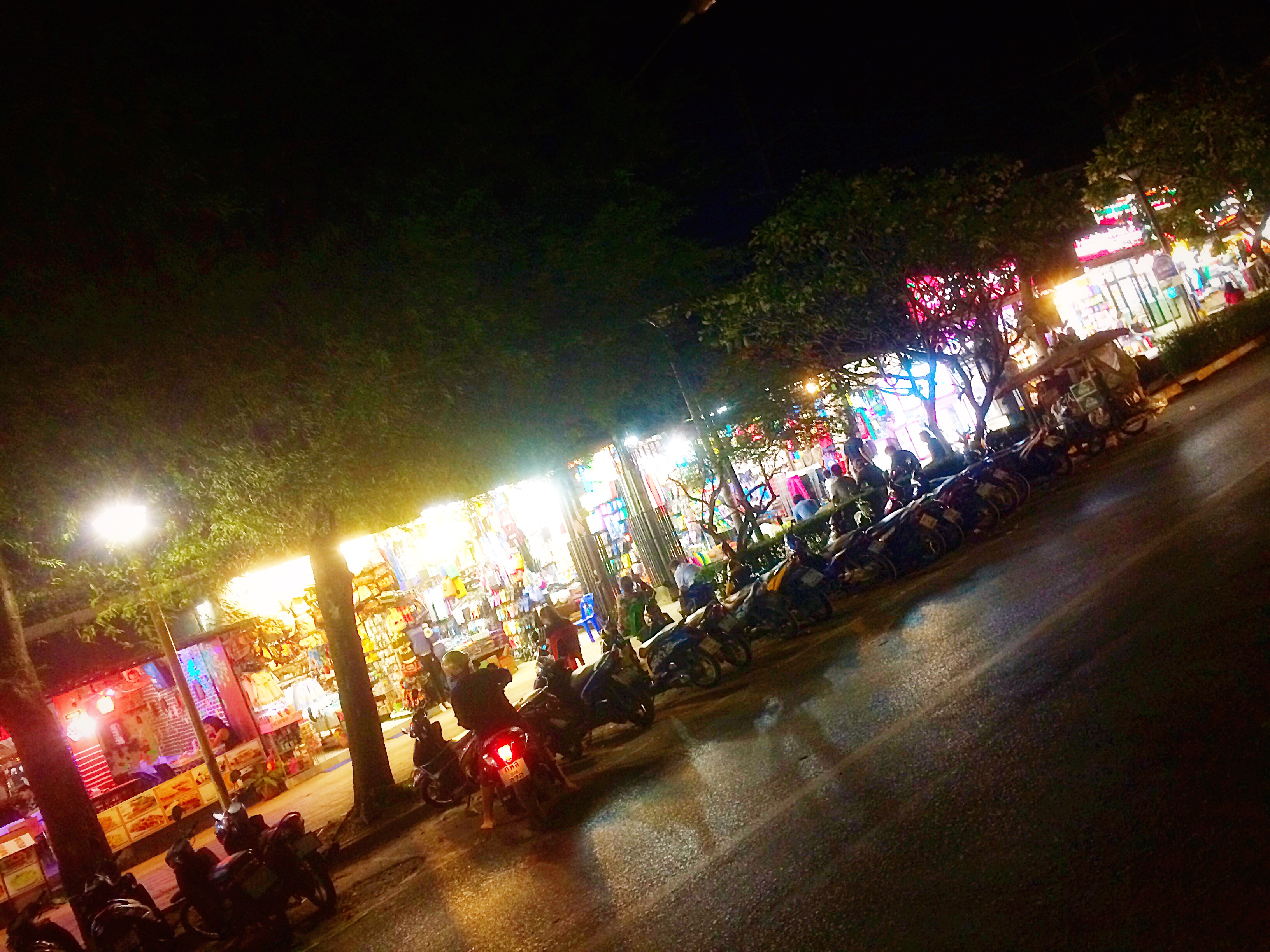
And when the rains came there was nothing you could do. They came in the late afternoon. The building bubble of humidity finally burst and the sky fell open. At first, big flat splats of raindrops, then long sheets of vertical downpour lasting hours at a time. Daylight dimmed. Umbrellas and ponchos lined the streets. Everything shone with a sheen brought down from the skies. I hid and huddled under tarpaulin canopies all along Walking Street, unable to get back to my room. Until I found a table at Sitti Café and ordered water spinach, chicken and rice. They gave me a cup of lemon tea for free. Next door, at the Boogie Bar, a band was playing Bob Marley’s ‘One Love.’ I listened and ate and watched the massage girls try to coax rain dodgers into the shelter of their shop. A large white butterfly with black polkadots flew past me in the rain (it had been flying about me the whole day… or so it seemed… either way it was good for the story). On the Beach Road, there was a man in a blue Pepsi Cola t-shirt, trying his best to thread himself between the falling raindrops and passing tuk-tuk taxis; he moved like a blur through the kaleidoscope of shining neon reflected on a gloss of coloured puddles captured in potholes and flat tarmac.

Image by Karl Powell, Rainy Afternoon, 2019

At the hotel earlier in the morning, I saw a poster advertising something that said, ‘Take time to do what makes your soul happy.’ And so I sat at Sitti Café until evening and I wrote about how happy I felt, about how I loved what I was feeling at that time, about what the place was beginning to mean to me and how I enjoyed it. I wrote about how much I was falling in love with AoNang, about how I felt it was a special place with such special people living there, happy to share it all with me. And there I was writing, watching people, listening to rain. And it felt good – it felt meaningful. And I thought that maybe one day, I would look back at this moment and realise I was doing things that made me happy, and I would bless these moments again and again and again. It was one of those rare epiphanies when you knew you doing what you were meant to be doing, that Fate had really intervened. Rainy days are made for writing. And so I sat and I wrote until I heard the Maghrib Prayer in the distance, sounding down from the Mosque at the top end of town, by then I knew the day was around sunset.

Image by Karl Powell, Sitti Cafe, 2018

And all the while, the waves kept rolling ashore, rolling in foam over jade green waters. The long blue stripe which sits between the worlds of heaven and ocean had long dissolved into a misted grey of heavy rain.

And all the while, the waves keep rolling ashore.

And I kept writing.

Image by Karl Powell, Colours of AoNang, 2018

*

2 A Day in Sorrento

There is no blue like the Mediterranean blue. It has its own complexion and light which shines throughout it depths. It is made all the more intense when it comes into contact with the endless sunshine of July. When this happens, a timeless summer returns to dance on the water’s surface once again, allowing a clear blue to flood this breathing body of water with a vibrant hue. The colour produced begins to speak of an ageless, living link to those other worlds long since dimmed. These are, after all, the waters that Odysseus sailed upon – as he desperately sought to return to his island home of Ithaca. There were numerous obstacles he faced on his journey: a battle with a cyclops, a storm sent by Poseidon, even his crew were almost seduced by the apathetic lifestyle in the Land of the Lotus Eaters. But despite all this, Odysseus did make it home – even evading the Sirens of Sorrento (those mythical creatures who lured passing sailors onto the rocks of the Amalfi Coast through the hypnotic lure of their songs and music). Here in Sorrento, I spent time today.

Image by Karl Powell, The Bay of Naples, 2007

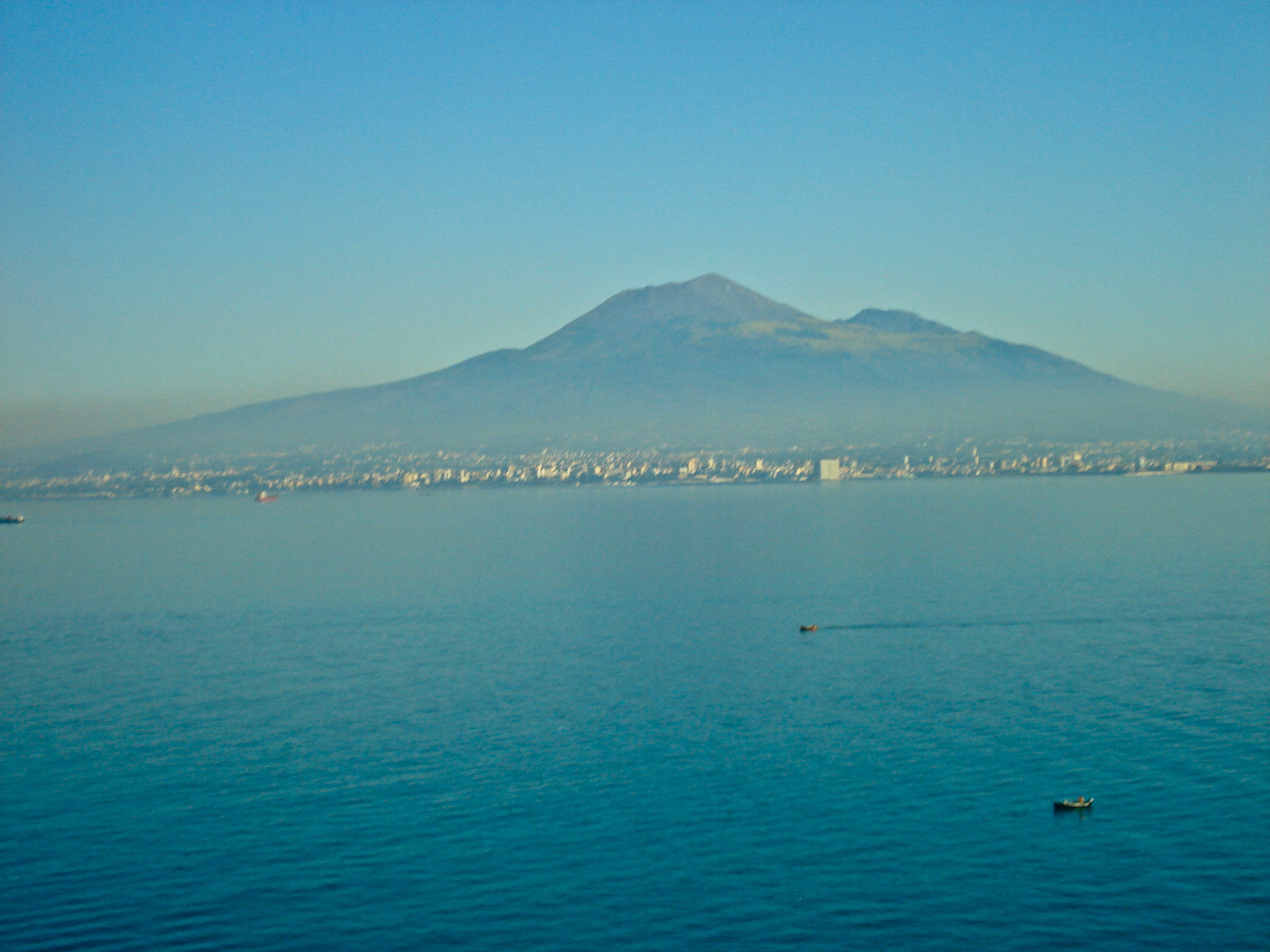
Somewhere off the Piazza Tasso I have found a place to sit in the shade. It is eleven o’clock in the morning and I am drinking coffee at a bar somewhere in these narrow, back streets which slope down towards the sea. The sun is already very strong. People now stay in the shadows. Many are smoking. Only giant stone buildings brave the direct bite of the sunlight. One, with a sand coloured façade, is decorated with large sprayed-on black graffiti reading, ‘Ti amo Giugglieta’ – another scratched in ink warns, ‘Don’t waste your time or you time waste you [sic].’ Birds sing, phones ring and small scooters scuttle off to unseen adventures. Time stands still. The streets here in Sorrento, smell so different to that of anywhere else; it is as if they are perfumed with citrus or lemons. Many of the streets house tall, overhanging trees and vines with coloured flowers of bright purple, crimson and pink. Beyond the blossoms and terracotta air, there are dozens of zigzagging steps leading down from cliff-top heights towards the waters of the Mediterranean blue. Sunlight dances on the face of the water. The Bay of Naples, visible along the coast, catches each rhythmic rolling wave moving in from the deep. The silent silhouette of Vesuvius sleeps on the horizon.

One of the first things I did on arrival here was to buy a postcard from the first tourist shop I found. Ciao de Sorrento. I wanted to send it to an Italian restaurant in Northbridge, Western Australia, which shared the same name. Years earlier I had worked as a barista there. I had loved that job so much. The family who owned the restaurant had been extremely kind to me when I was a migrant, and I had been keen to send them a postcard from the place which shared its name. Ciao de Sorrento.

Image by Karl Powell, Ciao de Sorrento, 2014

As I finished my coffee and wrote my postcard, I thought of the restaurant and the people I had met there. During the summer months, when I helped to open the restaurant in the mornings, a flow of regulars (mainly old men) would come inside to socialise with each other over a coffee. All had been born in Italy. All spoke Italian. They freely shared their stories – stories of Italy, stories of Australia, stories of migration. These stories were shared amongst each other and with the staff – many of whom were young migrants and travellers. They were from all parts of the world. People from Italy, Brazil, Czech Republic, Germany, Slovakia, Canada, Norway. Many stories and stories of adventure were shared across the generations. Friendships arose from that restaurant and some still endure. The lingua franca was the commonality of journeying. Being travellers they all shared an awareness in the finite currency of Time – the precious moments that could be shared together; never urgent, never wasteful, Time was always used to share something together.

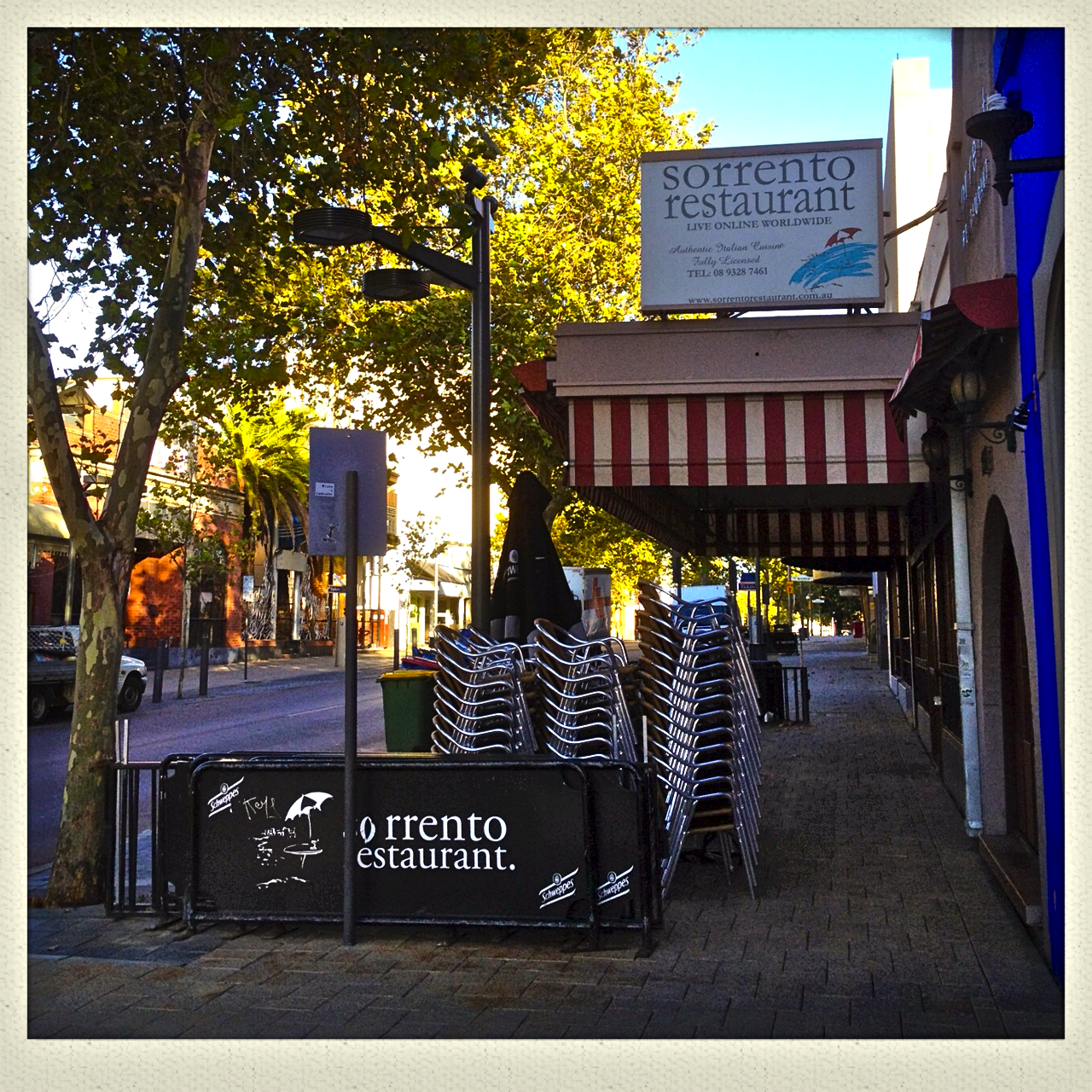
Image by Karl Powell, Sorrento Restaurant, 2016

The rest of my afternoon in Sorrento led me down to the ocean. There at the Marina Grande I stood for a while and watched small, bobbing boats sigh slowly in the sheltered sea. Fishing nets had been hung up and dried on anchored sails, small red buoys, strung out across the dancing shoal of moving waves, rose and fell. Shops and houses toppled forward from staircases of stone steps which moved through shaded arches, carrying the call of the Catholic Mass for midday with chiming bells sounding loudly in the ocean air. Colours seemed so pure. I bought a bottle of limoncello from a woman called Carmel who was celebrating her name day in her shop near the water’s edge. I ate a meal of seafood for lunch – I tasted butter, olive oil, garlic, basil, parsley, tomatoes, mussels, clams, calamari, fish; I tasted the Mediterranean. I remember sitting there thinking that had it not been for that restaurant in Northbridge I would not have visited this beautiful place and would never have experienced this moment.

Image by Karl Powell, The Fruit of Carolina, Sorrento 2007

After lunch there was still time to kill until my coach departed Sorrento at dusk. So, I wandered, slowly, through the streets. Scooters and tourists mingled without conflict or collision. I saw an old woman sat on some stone steps, drying herbs and chillies in the fierce sun. Crushed, packaged and labelled she sold them in small, white paper sachets from a basket. Shops lionised the afternoon shade and displayed their goods outside. Beautiful glass vases, coloured and swirled, were stacked on flat white shelves. Other shops paid homage to an Argentinian genius who once played for SSC Napoli. Endless rows of azure shirts carried the name ‘Maradona 10’ reminding us that he, too, once danced in this sunshine – winning two Serie A Scudetto Championships in another time.

The myth of Odysseus was used by another shop to promote its produce of large, coloured ceramic plates. A giant mosaic had been created on one of its exterior walls. Sitting in the middle of this artwork were three plates – all differing in size – featuring ships and mermaids. On one of these plates a lone figure, silhouetted and bound in white ropes, stood at the bow of the ship, with the foam of crashing waves sending spray upwards around him, while looking straight ahead at the floating shape of a woman with wings and the tail of a large fish. On the large mural were words written Italian: Secondo le leggenda le sirene, erano donne ucello le qua questo mare matarono in donne pesce dopo che Ulisse riuste a resistere al loro canto (“Legend tells that in the beginning the mermaids were birds, and that, in this sea, Odysseus survived their singing, so that the strange creatures, deceived, changed from birds into fishes.”)  This local legend still celebrates the link between Sorrento and the ancient myth of Odysseus – namely that the Sirens in the story had once belonged to these coastal waters.

Image by Karl Powell, The Mediterranean Blue , Sorrento 2007

Of all the writers who have devoted their time to understanding the potential purposes myths can still give us, Joseph Campbell is perhaps the most celebrated. In The Hero With A Thousand Faces, Campbell is at pains to remind us that Odysseus was often at the mercy of the winds of an angry Poseidon, driving him around the Mediterranean without reason or apparent purpose. The myth of Odysseus, like any myth, reminds us of an extraordinary event that happened long ago, linking time and place together. But myths can do much more than that. They can also remind us that we never travel alone. To quote Campbell, ‘where we had thought to travel outward, we shall come to the centre of our own existence; where we had thought to be alone, we shall be with all the world.’ According to the myth, it took Odysseus ten years to reach his home. For those travellers who search the world for a place to call ‘home’ or those who just ache to experience the feeling of belonging they need for a moment in their lives, the voyage of Odysseus around the Mediterranean reminds us that despite the travails which can arise in moments of our own existence – and even threaten to shipwreck our dreams and searches – his resolute vision of returning ‘home’ to Ithaca ultimately prevailed.

It was almost sunset when my coach departed Sorrento. From my seat at the back of the bus, I watched a setting sun begin to coat the Bay of Naples in a glowing, orange dust. Then the sun burnt an intense ruby red as it sunk. Silhouettes of palm trees passed in front of my window. The silhouette of Vesuvius towered upwards towards a clear sky. As the dusk and twilight gave way to the night, a new moon appeared – its thin, white crescent shone clearly as it rose.

*