13 Two Days in Doha (Qatar)

Been here in Qatar for almost 24hours. Here for the first time. Here for two days. I took the opportunity to stopover; for practical reasons, a chance to sandwich a transit between two long-haul flights – for the indulgence of curiosity, to experience something new. In essence, it is the same ache that Alfred, Lord Tennyson’s Ulysses talks about: being unable to rest from travel… to always roam with a hungry heart. Despite being in this destination for just a moment, the desire is try to glimpse along the edges of a world unknown – to sail beyond the sunset.

Image by Karl Powell, Dhow Harbour, 2018

Yesterday was much of a blur. Off the plane. Into the unknown. Corralled queues for security and immigration. People in motion, crowding, pushing, moving all around. Passport stamped with a hand tattooed in henna. Out into a huge hall. Facing taxis holding names – found mine, escorted outside the airport. Sat on a bench and waited while the driver went to get his car. He returned and we drove in to Doha. Only a 15minute drive to the hotel. It was dark and dawn and light and morning all merging. The first call to prayer sung and carried with its divine beauty through the cool air. Roads were quiet. The driver told me I had arrived on a good day: Qatar’s National Day. He said there would be fireworks and a parade. He also told me everything was preparing for the 2022 World Cup. In fact, in a few days, the FIFA World Club Championship Final will take place: Liverpool v Flamengo. On my flight I remembered there had been a man from Zambia flying in to attend the match – decked in the red of the European Champions.

Image by Karl Powell, Call to Prayer, 2018

At the hotel I checked in. Room 127. The Front Desk was patient and helpful. Unhurried, he photocopied a map of Doha for me, telling me most shops would be closed because of the public holiday. Found my room, showered and went for breakfast. Food was lovely. So much to choose from – buffets of everything, chefs cooking orders, waiters pouring hot, black coffee. Everything clean and spacious. After eating, back to my room – got lost on the first floor (turned left instead of right from the lifts). Rooms and corridors. Bed huge. Slept a deep sleep. Then tried to walk around, to see something of the National Day, but unprepared and disorientated (forgot my map). Got lost. No sense of bearings. I found a policeman near the Al Corniche – one of the main roads. He told me there would be a parade in a few hours. I stayed for a while, felt tired, felt unsettled not knowing my bearings or where to go. Retreated back to the hotel. Disappointed. Front Desk presented with a beautiful cake iced in the maroon and white colours of the Qatari Flag to celebrate the National Day. Went back to my room and slept another deep sleep (missed the parade – can vaguely remember hearing fireworks).
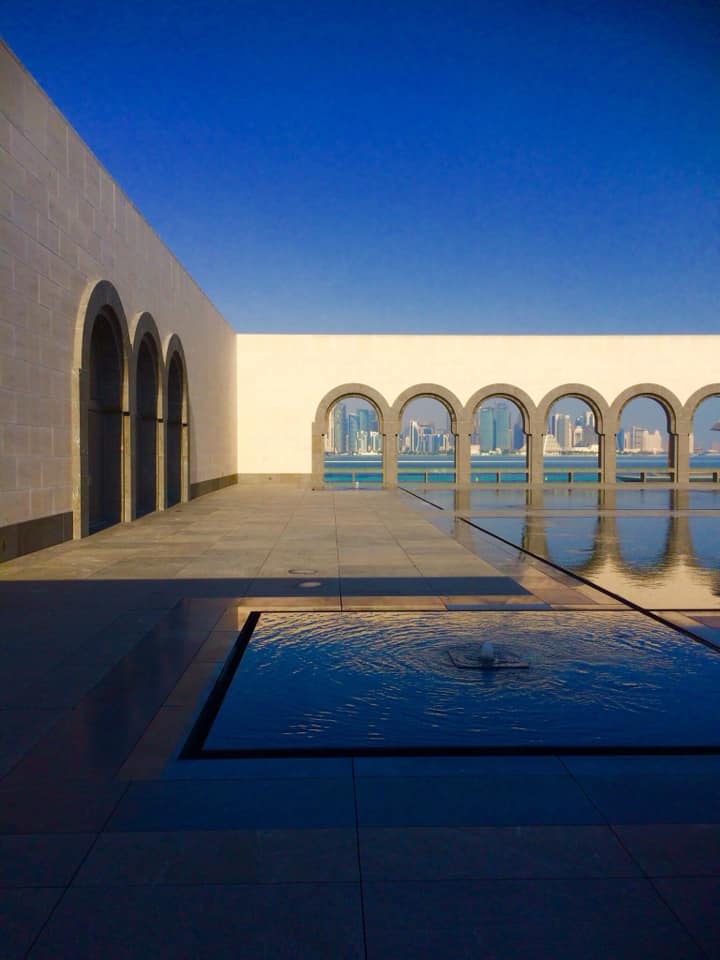
Image by Karl Powell, Water in Doha, 2018

Going to go down for breakfast soon. Not sure what today will bring. This hotel, though, does seem close to everything. Will have to walk around and explore. Planning on seeing what I can: to walk along the Corniche, to see the waterfront, to visit one of the big museums – maybe the National Library – and to explore the main souk. No idea of the distance (or how long this adventure may take), but am taking my map with me this time. Hope to be back at the hotel around 3pm (8pm body clock), sleep til 10pm, taxi to airport at 10.30pm. Flight is at 1am.

After eating, I left the hotel early and made my way along the Al Corniche. So clean and accessible, beautiful footpaths. The Museum of Islamic Art was straightforward to find; it sits like a landmark on the waters of the Persian Gulf. As I approached it the road suddenly silenced and closed. Police pulled up in motorbikes and began blowing whistles. They motioned at me to stop crossing the road, to move back to the kerb. Something was approaching. A fleet of cars sped through. The policeman told me it was members of the Royal Family. The road opened again and the policeman thanked me for waiting.

Image by Karl Powell, Museum of Islamic Art (Doha), 2018

The Museum of Islamic Art opened at 9am and I must have been one of the first ones admitted. From the outside it was beautiful: sharp, straight lines of a cream white building contrasted against the blues of sky and water. Inside, the main hall was a large central space, with a staircase and fountain. Natural clear light fell inside, creating an immediate sense of serene stillness.  I spoke to a lady on reception who was helpful; she explained what I could see in the museum, as well as in Doha (drawing on my coloured map of the city places I was interested in seeing). There were four floors in total at the Museum. There was also an exhibition on Syria – showing its art, culture, and history before the civil war. I went and looked at each floor. There was so much to see on each – all the patterns, beauty and geometries of Islamic art expressed through ceramics, calligraphy, textiles and astrolabes. School children were on guided tours; guards were present in each room (courteous, softly spoken, all knowledgeable about the art).
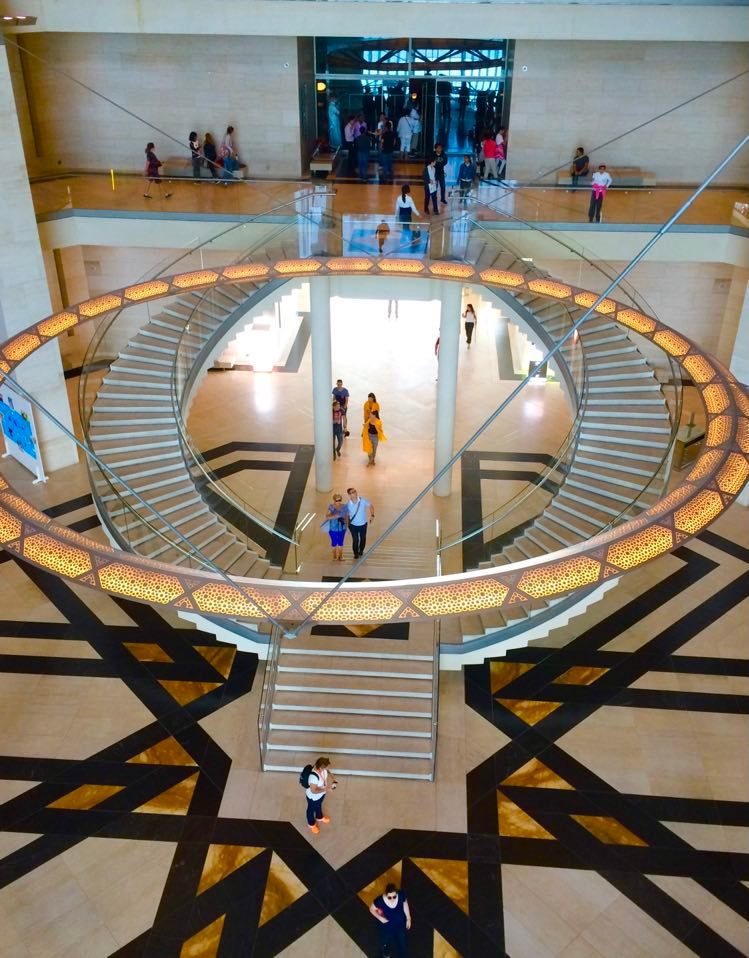
Image by Karl Powell, Staircase: Museum of Islamic Art, 2018

Outside the Museum, I walked along the waterfront. There were lots of boats at the Dhow Harbour empty and floating on the water’s surface. As a tourist, voices called out to me in every language to take a trip. It looked fun – something that should be done – but maybe next time. It was getting noticeably warmer. I kept walking along the Al Corniche towards the souk (following the directions written on my map). The conical swirl of a mosque was my landmark to aim for. Through a jumble of traffic lights I eventually found an entrance into Souq Waqif. Walkways were wide, clean and easy to navigate. Colourful bunting hung and fluttered in the maroon and white national colours; portraits and photos of the Emir were visible, too. Most shops had stock stacked outside on display: shops selling lanterns, lampshades, clothes, bags – giving away welcoming smiles and salam mualikum. Everyone I encountered had been kind, attentive and gentle in manner.

Image by Karl Powell, Lamps of Souq Waqif, 2018

Eventually, I found an alleyway that led into an open-air courtyard. The area housed cafes and restaurants. It was still early, mid morning, but I was five hours ahead of local time and now hungry. I went inside a Moroccan café called Tajeen, which had just opened for service. A woman greeted me and gave me a menu. I ordered and sat outside among one of a number of tables up against a wall in the shade, facing out into the sunshine, facing out into courtyard. Everything was orderly and interesting. Where I sat, I heard lots of birds caged and free all chirping, their songs echoing through open spaces; I watched smoke float through the air in drifts of blue and grey, twisting twirls of tobacco; I heard an old man sneeze loudly and an another voice close by say something to him, to which he replied shukran (thank you -شكر ). A guy with a black beard sat a few tables away from me, bubbling his inhalations through a large, turquoise shisha, tapping endlessly into a red laptop. His coffee arrived in a small pot, which a waiter tilted to one side over a white cup; a thick black soup with a golden hue emerged smoothly. Curls of steam were visible. Instantly the air was fragranced with coffee. And in that courtyard, in that moment, waiting for my meal, I realised Tennyon’s Ulysses had been right:

How dull it is to pause, to make an end,
To rust unburnished, not to shine in use!

Opportunities to travel should be taken if you have wanderlust in your spirit or born under a wandering star. While this stopover was short – painfully short – every hour was something out of the ordinary. To quote Tennyson again, every hour was saved… a bringer of new things.

Image by Karl Powell, Souq Waqif, 2018

Waiting now to board my flight onwards. Tried to sleep this afternoon after arriving back at the hotel from the souk. Nodded off a bit. By 5/6pm decided to order room service and had something to eat. Ate, dozed, kept the lights off as it grew dark outside. Alarm eventually went off at 9.45pm. Settled up at the hotel: only room service and a taxi to the airport (50QAR). As always, staff so courteous. The taxi was quick, driver polite, my mind dancing between airline scenarios and departure times. At the airport, once again I entered the organised confusion of check-in, immigration and security (belts off, shoes off, laptops out). Into the transit halls I couldn’t find my departure gate at first. Someone with an iPad was there to help me: C13.

Saw a man handing out flyers for Burger King. I asked him directions to the Food Court. He couldn’t do enough to help me, practically escorting me there. I was so grateful. I found a restaurant, Azka, serving biryani. I bought a meal and a bottle of water. The chef was generous in his portions, trying to give so much food; I thanked him. Took me a while but I found somewhere to sit. Most tables of four were occupied. People, bags, noise. Soon, I found a seat on a kind of long, curved wooden bar overlooking the food court; wide enough for the plastic trays provided. There were tall stools underneath to sit on. There were gaps and spaces to find and push in. As I put my food down, three women next to me had finished their meals and were gathering up their bags and duty free. They began to walk off. One had (almost) left their green passport on the bench next to an empty tray. The image flashed: it sat there so visible and yet unseen when the mind is tired and focused elsewhere. I caught her attention before she disappeared into the moving sea of travellers. Sat there reflecting on how much of a nightmare that could have been.

Image by Karl Powell, Qatar Airlines Seat 59K, 2018

I entered the departure lounge – another set of security checks and identity checks – passport out, boarding pass inspection, water confiscated. My seat was Zone 4. Slowly waited; more passengers than seats – stood and watched the other zones get called. We were the last to board, but I got my seat – a window seat. I sat and watched the other passengers board and the thought appeared that it had suddenly felt like a long time since I was in my own bed. I spoke to the guy next to me (he was from Zambia), then the flight was suddenly ready and cabin crew were told to take their seats. Lights were dimmed.

So, I am leaving Doha after only two days. Grateful for the experience, grateful for the break in journey. Despite the brevity, it was worth it. As Tennyson’s Ulysses tells us, it is never too late to seek a newer world. One of the reasons being is that any journey changes us: I am a part of all that I have met. There once was a time when I would have spent most of these flights in silence, writing and recalling most of what I’d just experienced and seen – in colour, in detail, in words. Now I seem happier succumbing to digital distractions: WIFI, editing photographs, watching in-flight movies (it’s easier and less taxing to do). But this book is before me, urging me to write, recite, recall asking me to preserve those fleeting moments before they are forgotten. All times I have enjoyed.

Image by Karl Powell, Doha Waterfront, 2018

*

12 Dreams of Mauritius

The world is asleep but I am wide awake. This beautiful room, with its table of shells and walls of coloured art, is quiet. The balcony doors are closed, their green gossamer drapes hang motionless. 4.29am. Awoke about ten minutes ago. Had a really deep sleep. Dreamt of nothing – just one of those bottomless, velvet starless sleeps where the shoreline of contentment never moves beyond the tides of breathing in and breathing out. Everything feels still and at peace. But I am awake and four hours ahead of local time. The rest of this guesthouse sleeps. Most of the other guests are from France (and they are a further two hours behind). Breakfast is served at 8.30am; some of us are meeting at 6.30am to walk to the beach. There is nothing I can do to make the time go faster.

Image by Karl Powell, Sunset Mon Choisy, 2007

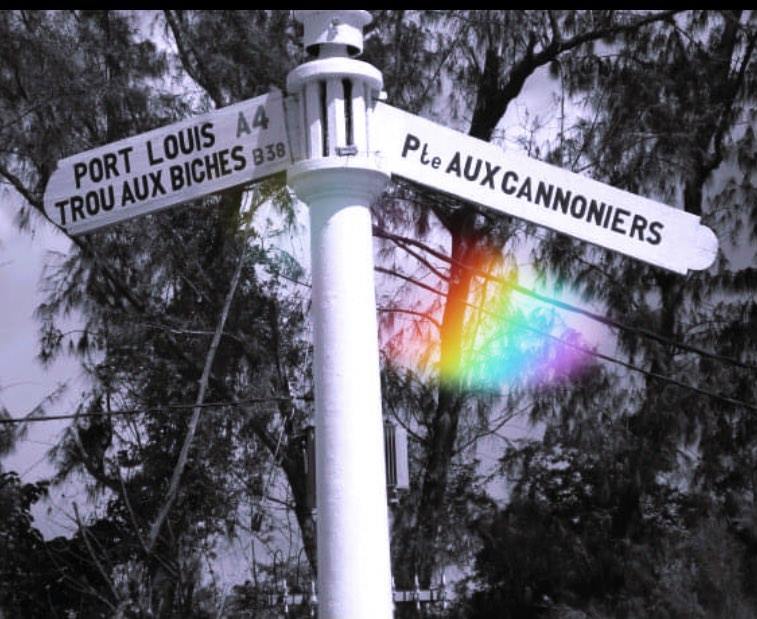
Along a road, along a lane was a house in Pointe aux Cannoniers. I stayed there for only a short while, but long enough to love it and the experiences it gave. Due to my jet lag the mornings were longer than the nights. I began each day by boiling a kettle to make some vanilla tea (thé à la vanille), and would sit on the floor of one of the small balconies waiting for the hues of dawn to blend and change across the sky. My room was large, on the top-floor. The space inside generous: white washed walls with the owner’s artwork on display (in essence it was a living gallery). Ocean shells could be found on tables and shelves. In the corner of the room was a small desk. I wrote there a few times (especially during the afternoon), but found preference with one of the balconies seated within its cast iron railing surrounding the drop. This balcony overlooked the al-fresco courtyard where meals were served; it also overlooked the long laneway linking this little world with the long road out of Grand Baie, and to the rest of Mauritius. For that time before daylight, I would sit and write. As my vanilla tea cooled in its red rum colours, I ate mangoes, oranges, pineapples and wrote about the previous day. On reflection, I probably spent no more than an hour there each morning writing, lost in the thing I loved to do.

Image by Karl Powell, Grand Baie, 2007

The sun would rise around six, bringing a honey-coloured light into the sky, creating pastel hues within the thin drifts of cloud smudged high above. Before then, the silence existing at the edge of night would give way to a dawn chorus. The other balcony, at a right angle to where I sat, reached directly into a tree – much taller than the guest house – this was home to a number of small, orange songbirds. At breakfast they would come to tables and eat any crumbs fallen to the floor. But the day would only begin when they sensed the moment before sunrise. At first one solitary voice would begin to chirp in soft, regular trills. Then, within minutes, the entire tree was alive with the most beautiful sounds and songs of morning praise. These birds would sing all day until sunset. Few moments will ever come close to replicating the beauty I heard at that hour. In fact, wherever I am, whenever I make vanilla tea, I am immediately back in that room, in the guest-house in Pointe aux Cannoniers, glimpsing those moments before dawn.

Image by Karl Powell, Coastal Road, 2007

Half the world is asleep but I am wide awake. 6.30am. Waiting for Virginie from Arles. We are going to walk to the beach. People are leaving today. The honeymooners are going home; as are Michel and Marie-Claude. Had such a lovely evening last night. Ate at the restaurant here. Last night’s special was a crab salad. It was incredible. Gérard the chef brought it to me himself. Rahma from Paris arrived yesterday; a guy called Benjamin from Kenya was also eating in the restaurant. After the meal, Michel bought rum for all of us and gave toasts to the future. They were such a lovely couple. We’d spent the day together at île aux Cerfs on a day trip when I first arrived. Despite language barriers I enjoyed their company; they were lovely people. At the end of the night, when we came to say our goodbyes, Marie-Claude was crying. She hugged everyone goodbye. She told me that she wished for me good luck, to be happy and to have a beautiful life. She repeated this twice, slowly, wanting me to remember. Michel and Marie-Claude left at 4am this morning for the airport. I didn’t hear them leave.

Image by Karl Powell, Bus to Grand Baie, 2007

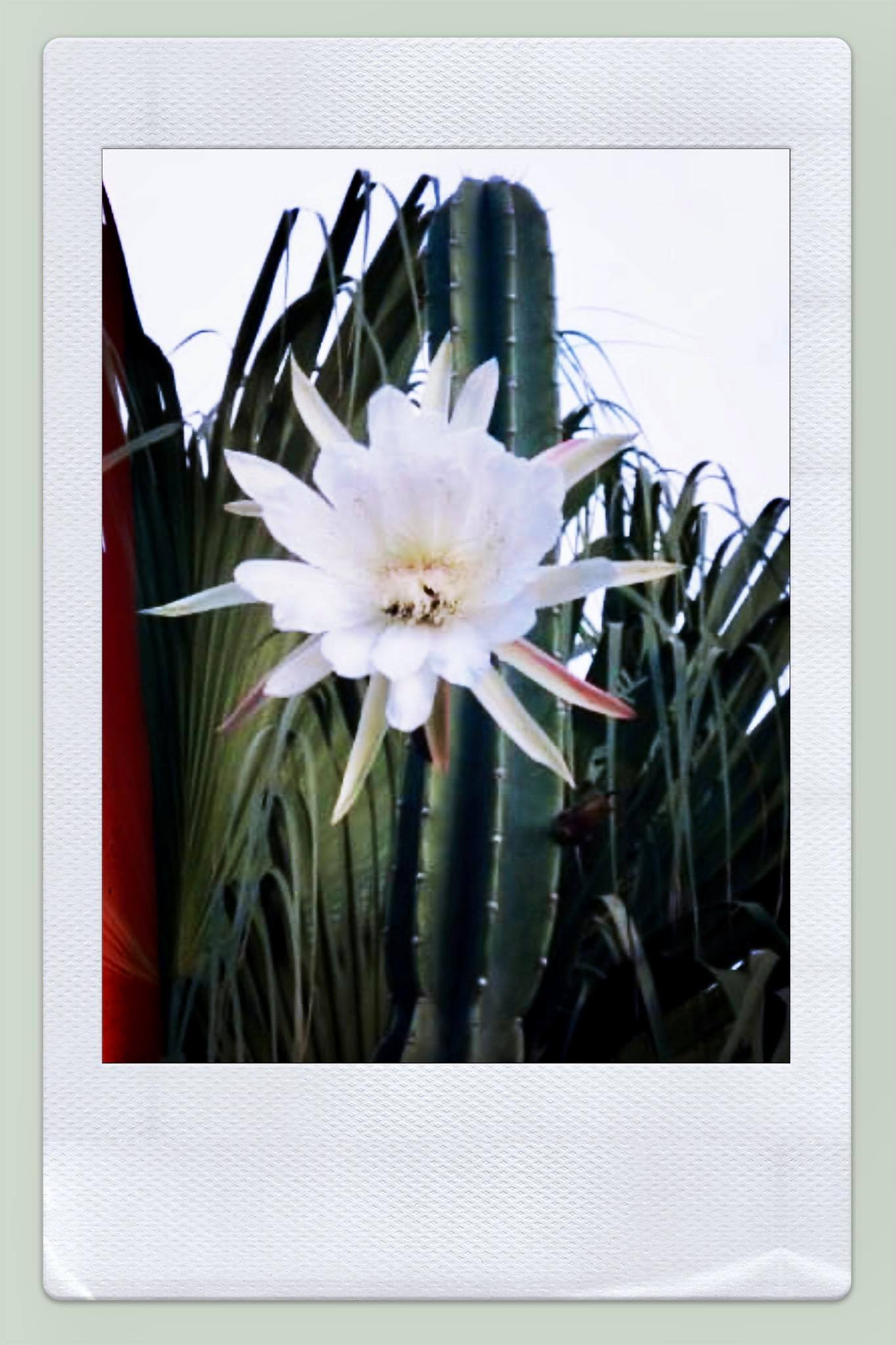
The walk to the beach from the guest house was long, but always worth it. There seemed to be an adequate amount of time to walk all the way there, to swim, and to walk back before breakfast. On arriving back at the guest house Yasmeen, from Rodrigues Island, had just begun serving coffee. Flanking the laneway, all the way out to Royal Road, were tall, stone walls. Plants, flowers grew there. A giant cactus held its arms wide to the sky, showing a giant white flower which only seemed to blossom in the morning. There was also a small shrine to the Madonna hollowed out in one of these walls. There were always fresh flowers placed there and weeping wax candles burning. Once I saw an old woman kneeling there praying in the afternoon. There were tears streaming from her eyes.

Image by Karl Powell, Morning Cactus, 2007

The end of the laneway faced directly opposite a small grocery shop on Royal Road: Persand Royal Super Market. This had been one of my first navigation points when exploring my surroundings on my arrival. From here, I turned right and walked along the long road to the beach. I had been told it was a long walk, but one which was possible (I had even been given a hand drawn map by one of the staff at the guest house). At that hour there was very little traffic on Royal Road – occasional early buses coming in from the capital Port Louis and suburbs such as Goodlands (where some of the hotel staff lived). Occasionally, I found candles burning on the road side, bottles of rum asleep on their sides, sometimes other people walking the same pathway as myself.

Image by Karl Powell, The Roundabout, Mon Choisy, 2007

At the end of the walk was a roundabout with a confusion of roads all branching off in other directions. As long as I followed a sharp left, hugging a path that curled around a shopfront (facing onto the roundabout), I would stay on track. The shop was large – a kind of supermarket selling everything from food to souvenirs; the owner, a welcoming man from Madagascar, recommended good varieties of rum for me to try. Back on the track, past the shopfront, the pavement ended and I would have to walk carefully along the shared tarmac with oncoming traffic. I came to recognise a row of small houses as my final marker; I crossed the road and made towards a thin forest of trees. Then, there were two beaches alongside each other to choose from: Mon Choisy and Trou aux Biches. Mon Choisy was the one I came to love the most.

Image by Karl Powell, The Spices of Life, Port Louis, 2007

The whole world is wide awake but I am ready to sleep. I am walking back along the narrow tarmac road that leads back to the guest house. With the time difference, it is already way past my bedtime at only 7pm. Dusk has fallen, stars are beginning to pierce the sky. Trees hang tired branches down. The air is warm. Everything smells of a day in the sun. I have been down to the beach to swim and watch the sunset. It was not so busy there tonight. Last night was amazing – it was packed with makeshift tents erected between trees, sheets and blankets pulled together; several camp fires danced with leaping flames, people moved to sega and reggae, the sound of drums thumped into the sand. Before my walk there, I went down to Grand Baie to sit by the water’s edge. I saw Gérard the chef there fishing. Not sure if he caught anything. Virginie leaves for Reunion Island tomorrow afternoon. She told me this morning on our walk to the beach that Marie-Claude had terminal cancer. She thought I knew. It had been Marie-Claude’s dream to visit Mauritius. “Good luck, be happy, have a beautiful life.”

Image by Karl Powell, Fishing, Mon Choisy, 2007

Mon Choisy faced west. The beach played host some of the most incredible sunsets, filling the sky with vibrant colour as the red sun slid behind the horizon and across the rest of Africa. As in the morning, the water was almost always flat and calm at sunset. In the morning, the bright yellow sunlight arrowed out from the surrounding trees and illuminated the ocean. Yet at evening, the setting sun faced you as you sat facing the ocean. The colours were every bit as mesmerising as I had always dreamt they would be. It was difficult not to want to share that beauty with someone close. As with any encounter with the Indian Ocean you come to realise this magical ocean is always awake, always alive, somehow connected to you.

Image by Karl Powell, Le Morne, 2007

To visit Mauritius had been one of my dreams, and the short time I spent in the house at Pointe aux Cannoniers was literally a dream come true. During these experiences of travelling you meet strangers sharing the same path, the same moments in time; invariably, they become woven into that dream’s unfolding. From his home in Souillac, the poet Robert Edouard Hart wrote from a house facing the Indian Ocean. In one of his poems he spoke about how the ocean, like many of our shared dreams, has a natural quality to touch, inspire and include all people (transcending cultures, countries and difference):

Tous les songes d’Asie, Tous les parfums d’Afrique, Toute le poésie chimérique, me viennent ce soir avec cette brise de la Mer Indienne…

All the dreams of Asia, All the perfumes of Africa, All the chimeric poetry, comes to me this evening with this breeze from the Indian Ocean…

One of the great indulgences that writing can provide is the opportunity to drink from these wells once again; to travel back in time, to revisit these places and to meet old friends again for the first time. In just a short time, I had met so many wonderful people – from Mauritius, its surrounding islands, Europe – who all gave their kindness and friendship freely. For the whole of today I have been able to see and feel all what I experienced there so many years ago. Individual, separate moments joined together in a whole, shared experience – now colours a part of a dream that lives forever.

Image by Karl Powell, The House in Pointe aux Cannoniers, 2007

*

11 The Last Sigh, Granada

In the city of Granada resides an expression (it is inscribed on a wall near the Catedral): Dale limosna mujer que no hay en la vida nada come la pena de ser ciego en Granada. Roughly translated it means, If you see a blind beggar in Granada, give him twice as much, for it is suffering enough not to be able to see this beauty. If you have the opportunity to visit Granada once in this life, then do so.

Image by Karl Powell, View of Alhambra, 2007

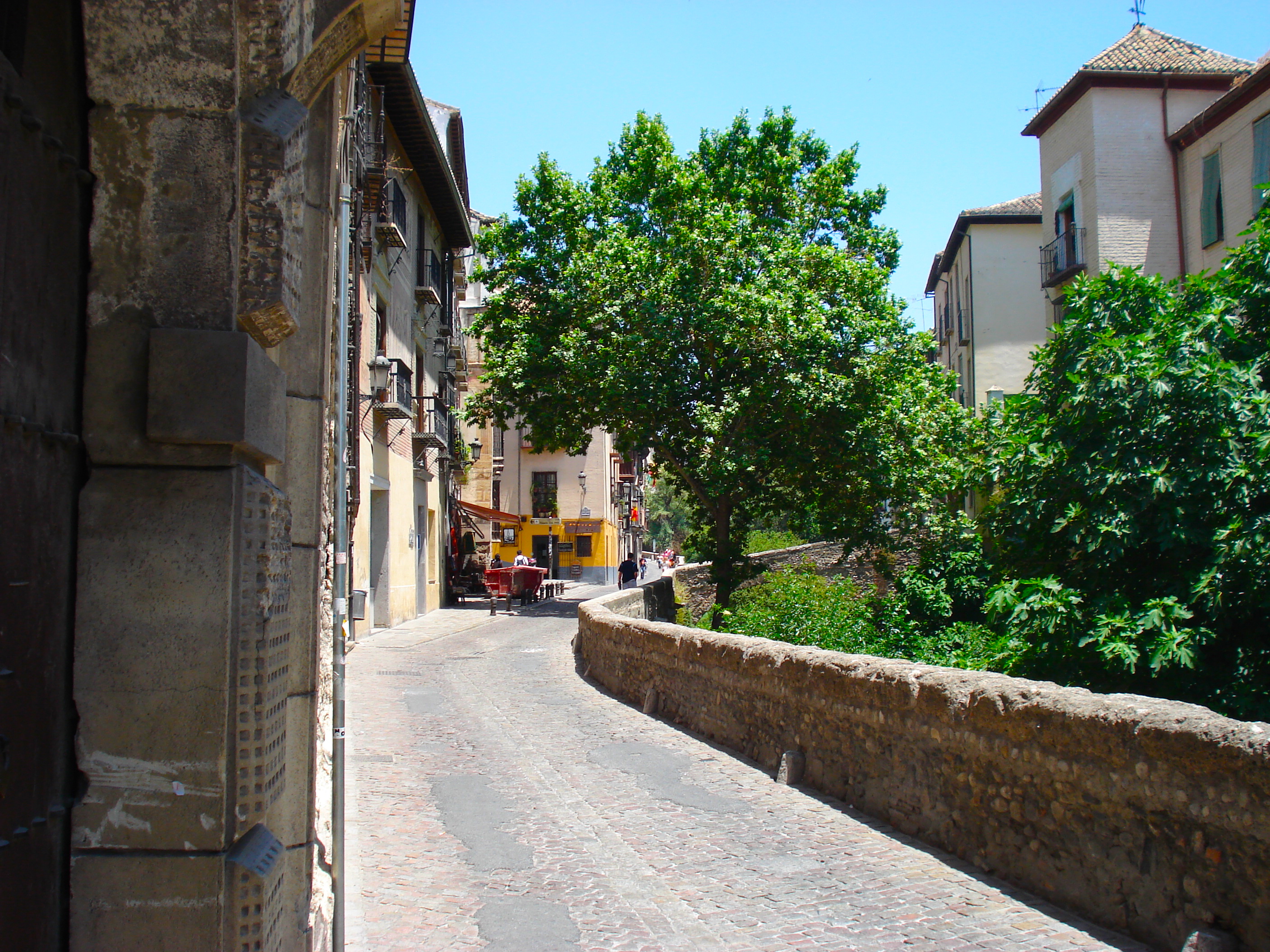
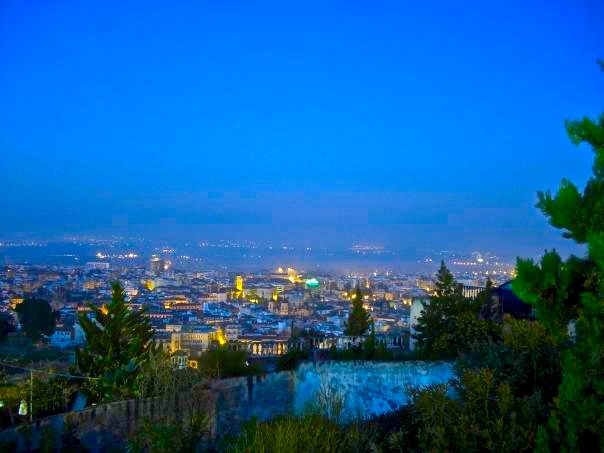
Everywhere you go in Granada the Alhambra maintains a certain presence. Your eyes instinctively search for it, both as a landmark and as a reassurance. It sits high on a foothill, near Sacromonte, looking down over the Albaicín and the city below. The morning sun climbs over it and the moon rises behind it. Sat at the Mirador de San Nicolás my gaze stretches out across the Paseo de los Tristes and the River Darro to directly look into its face. The sounds of castanets rattle around the patterned stones here (worn smooth over time). A mother tries to teach one of her infant children to dance. The child dressed in pink, laughs before stooping to stroke a dog who suns himself in the winter light. The castanets grow louder and a guitarist begins to sing Camarón’s ‘Soy Gitano.’ The sun is clear and warm. The wind is cold on the skin as it blows down from the mountainside. The mid-morning mists rise and start to clear, lifting to reveal the frozen peaks of the Sierra Nevada over there in the distance. The silhouette of the Alhambra appears to rise with the cypress trees. Below, the streets of the Albacín are filled with incense and the music of nightingales. The domes of the Catedral are visible, bells sound from the Convento de San Anton all the way up here to the Iglesia de San Nicolas and everywhere else between. All of Granada lays out before me. Beautiful Granada, paradise of light, skies filled with clear azure, sunbeams and darting sparrows. The beauty of the Alhambra is that it was once just a dream that someone dared to create.

Image by Karl Powell, View of Granada from the Alhambra, 2007

For the past few weeks I have been living in Granada learning to speak Spanish. Twice a day I have attended a school with others to practice grammar, conversation and also familiarise ourselves with the culture of Andalucia (through art, tours and movies). Yesterday was my last class – tonight I depart (flying from Malaga airport with my next destination Marrakech, Morocco). Everything is ready: a bus ticket reserved from Granada to Malaga, bags packed and my goodbyes and gratitude given to those who taught me. As has been customary with the many comings and goings of our group we ate, drank and danced together. We started, as usual, at a bar called Little Italy eating tapas before moving onto to a club called Habana. My closest friend during my duration, Marcel, was busy taking photographs of the evening from start to finish. At some stage of the evening one of us thought it a great idea to go and watch the sun rise over the Alhambra. Instead of going up to the lookout nearby – the Mirador de San Nicolás – it seemed more of an adventure to go beyond the medieval city walls to the other viewpoint, the Mirador de San Cristobal. We arranged to meet at 6.30am outside a Burger King, opposite the Convento de San Anton on the long calle which divides Granada down the middle, the Recogidas. Marcel and I left Habana at around 3am, laughing, and finding the spot to meet before we went our separate ways. Marcel went east towards his district across the River Genil, and I towards mine (San Anton).

Image by Marcel Bosch, Bridge over Genil in Rain, 2007

At 6am I heard my phone vibrate. I ignored it. I knew who it was. But it kept ringing. It was obviously Marcel. He had remembered. It kept ringing. In the darkness of my room at 6.25am I eventually answered. It was Marcel. He was now standing outside the Burger King. It was dark and cold. Reluctantly, I said I’d be there in a few minutes. The narrow streets, though lit, were deserted. Weaving through familiar, labyrinthine streets, I moved back to the spot where we had parted only a few hours earlier. The idea to watch the sun rise no longer had the same appeal that it had at the club. Why did we choose the Mirador de San Cristobal – especially as the Mirador de San Nicolás was much closer and always more popular (in fact, most Friday afternoons many of my classmates would meet and gravitate there before deciding on a place to eat). But Marcel was adamant. Half asleep, half annoyed I followed his lead down the Gran Via de Colon towards the old city gates. It would be about an hour before we would reach Mirador de San Cristobal. It was a long walk. No matter how fast we walked it was cold. In the haze of that hour, there were many people bouncing about in a state of exuberance having left bars and clubs trying to get a bus home from the main street that dissects across Granada.

Image by Karl Powell, Streets of Albacin near River Darro, 2007

Having walked the length of the Gran Via de Colon, Marcel and I eventually reached the Puerta de Elvira, the old city gates. We moved through a small square, Plaza de Triunfo, before following a quiet street, Cuesta de Alcahaba, which curved upwards towards the viewpoint. Marcel said we had to find a series of small streets which zigzagged off our track directly to the mirador. We couldn’t find them. We got lost several times. Came close to giving up. Eventually we found an old man who was drunk and it was he who helped point us in the right direction. We began climbing a series of steps. It was still cold. It was still dark, but, as we climbed upwards, the sky started to glow and change colour along the horizon behind the visible outline of the Sierra Nevada.

Image by Karl Powell, Flamenco Girl, 2007

In one of the poems of Federico Garcia Lorca he writes about watching a summer sunset move across these mountains and the Alhambra. The colours he describes were also present that winter morning:

When the sun vanishes behind the mountains of mist and rose,
and the atmosphere fills with a vast symphony of religious devotion,
Granada bathes in gold and pink and purple tulle.

Standing at the Mirador de San Cristobal, colours changed all around us. Time appeared to collapse, behaving differently – evading the tick-tock march towards an end point; that moment hung in the air. The veil of night lifted, exposing clear skies and the frosted stars that had hung there now melted back into the clear blue of day. Planes criss-crossed vapour trails high above the deep gorges and valleys of Andalucia. Cypress trees twirled upwards. The cold clung to every strand of cotton threaded through the fabric that tried to keep me warm. Legs were aching. Toes were numb. Church bells sounded from the city beyond the old walls. There was a morning mist near the mountains evaporating, revealing the majesty of the Sierra Nevada. The colours, once again, can be described from Garcia Lorca’s poem: The mountain slopes are coloured violet and bright blue, while the summits are rosy-white. There are still spirited patches of snow that resist the sun’s fire. And this description reminds us why poetry is important to the human experience; it is an expression of being that brings us close to timelessness, painting images and emotions that other mediums cannot map. A light breeze blew, lifting the fallen leaves left behind which clung to bare branches and rattled like echoes of the castanet. All of Granada lay out before us. Beautiful, beautiful Granada.

Image by Marcel Bosch, Dawn at Mirador de San Cristobal, 2007

Marcel and I walked back into Granada. We walked back along the Gran Via de Colon. Life was different now, things had changed gear – a different pace, different people, cars and buses going about their business. At the top of my street was a small, square park called Plaza Trinidad. It was an enclosure of communal green. People of all ages sat here during the day, during the evenings and shared the space together. There was a small, outdoor café along one side of the square. Marcel and I bought some coffee and bread to eat. We sat on one of the benches, still cold, but feeling better. The sunlight was bright, shining down on the snow along the top of the Sierra Nevada. It was brilliant white. We chatted for a while, reminiscing over several weeks of friendship and the highlights we shared with the other classmates. We made plans and suggestions about how and when and if we could meet up again. We daydreamed aloud about the possibility of us and the others all buying a house together in Granada that we could all use and share. One of those special daydreams that made no sense in reality but encapsulated the magic of friendship (especially when forged in bubbles outside our everyday lives). But it felt attainable. And like any dream the commitment to an idea (or a passion) must be followed through streets of darkness with perseverance and patience until the dawn comes, and then light dissolves doubt and wishes become reality.

Image by Karl Powell, Friday afternoon Mirador de San Nicolas, 2007

Then it was time to say goodbye. Our coffees were finished. We stood at the corner of my street until the inevitable – we shook hands and went our ways. I walked down Obispo Hurtado feeling sad that this adventure was over; feeling enriched for the experience (and Granada had been an experience like no other). At my casa, my elderly landlady, Carmen, was already awake – making coffee in her stove top cafetera and some breakfast. We spent the morning watching a cookery show, Cocina Hoy, from the kitchen table. In fact, we watched it together most Saturday mornings. I found it helped with my Spanish. She wrote down recipes of interest in a small notepad she kept in the front pocket of her apron. Carmen cried a little when I left for my midday bus to Malaga. It was hard to leave. And in this sadness can be found the true beauty of travel: you discover meaning and belonging in places and people that come to both shape and also represent some authentic aspect of you. These fleeting moments cultivate a humility within; we are touched by the spirit of others. All of which creates a permanent imprint onto our being which resonates out into the world. From this space dreams, ideas and passions journey through us to be shared with others. Granada is a city like no other.

Image by Karl Powell, Alhambra, 2007

*

10 Fireflies in Borneo

The day was ending, but not quite. There was still one more leg of the day’s excursion to complete – a night trip cruising for fireflies through the mangrove waterways of Klias Wetlands. It would take another hour or so to reach there, leaving behind the foothills of Mount Kinabalu to head west towards Papar and the coastline along the South China Sea. The day had begun early, having been collected from our hotel during breakfast for an organised tour in the Kinabalu National Park. En route, we drove through the capital city of Sabah, Kota Kinabalu, passing “The Floating Mosque” Masjid Bandaraya which stood at the city’s entrance. Built on a lagoon, the still waters surrounding the white mosque reflected its extraordinary beauty giving the impression of transience as it appeared to shimmer above dry land. Once through the city we began our voyage up towards the clouds. We drove towards Mount Kinabalu (some 4,000 meters high). The sun had been shining for several hours but we drove most of the way in the shadow cast down by the giant mountain; the road itself slow with dense fog of drifting cloud and moisture.

Image by Karl Powell, The Journey’s End, 2013

We journeyed up to where the air grew thin. We felt dizzy and nauseous and our heads ached. No matter how much water we drank we felt dehydrated. I was travelling with an Australian mate, Ray, and somehow we had the entire minibus to ourselves (no one else was booked on this excursion), so we were able to stretch out, sprawl out, have a window each and watch the landscape change as we climbed higher. Leaning out of a window I recall looking at the sheer scale of the mountain as we drove around it. Straining my neck out of the moving van I struggled to see the summit which rose at a sharp vertical height upwards. Thick cumulus clouds clung to the mountainside, but for an moment parted and where I expected to see the crown of this monolith, the summit simply rose higher. Waterfalls fell out of the clouds from sinister heights. They were as long as rivers. Entire rivers pouring down, free falling, dropping towards the earth below (an ending obscured in mist).

Image by Ray Seaby, Kinabalu National Park, 2006

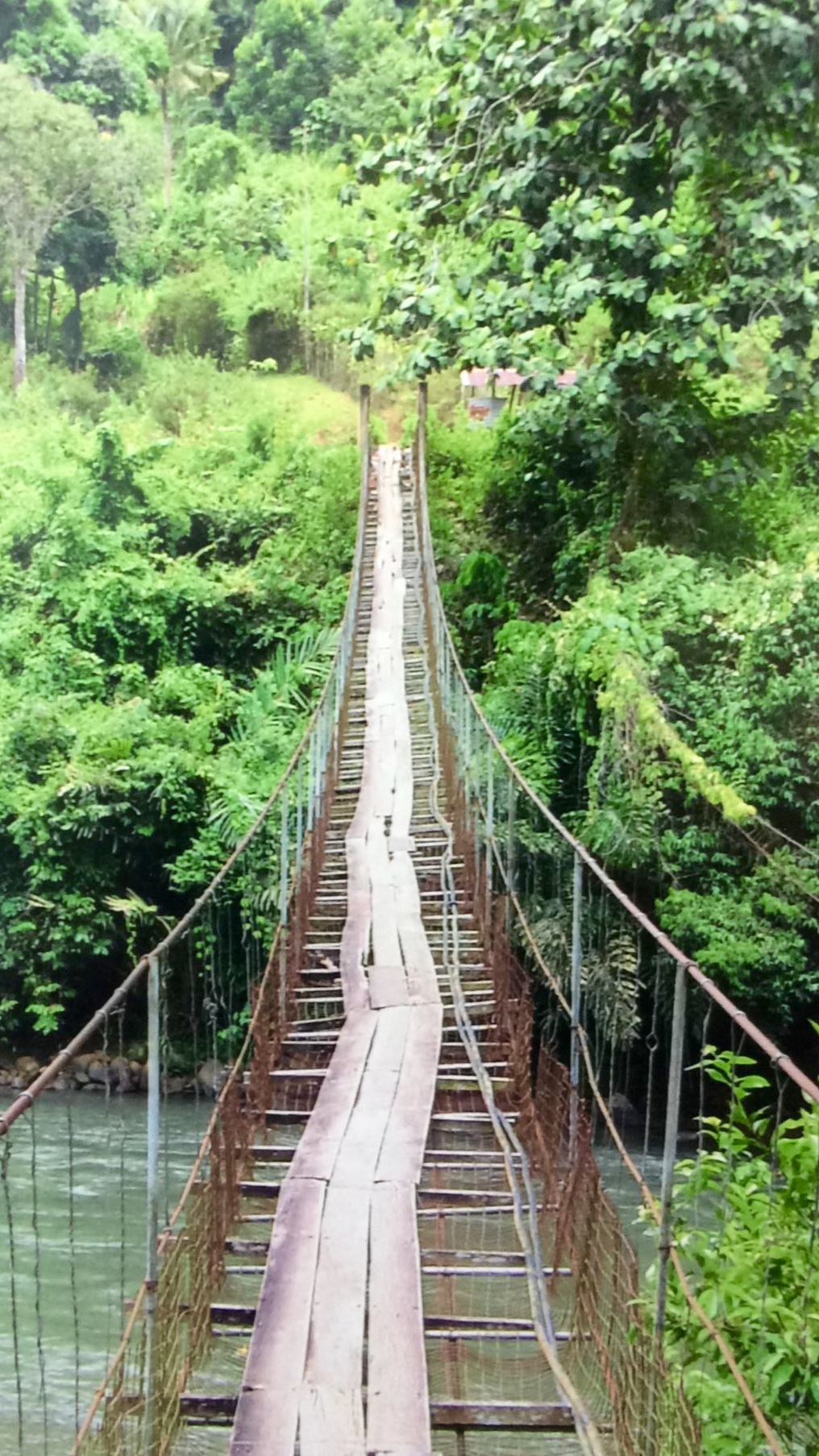
We had lunch at the Kinabalu National Park after a guided tour through the rainforest. Everything was so green. Sunshine pushed its way through fractured space; leaves moved in what little wind was there. The air was warm, the humidity intense. My head was thumping and I felt dizzy. But the rainforest was alive; is always alive. Sounds, smells and sights – always alive. Cicadas were singing, birds whistled and called. Tree tops moved; they don’t sway, they just move – almost on their own accord. The undergrowth is always moving. Water is always sounding. Frogs are croaking. Sounds echo above and below and around you. There are so many shades of green in the rainforest. Every colour sings. Everything is insulated in steam, fragrance and noise. The rainforest is always alive. When there, something calls to you, appeals to something deep within your being, to stay and to be a part of all this forever.

Image by Ray Seaby, Bridge Over River, 2006

After lunch, we took a detour. Ray had asked the driver if we were near a memorial park in Kundasang. The driver checked his map, made his calculations and said we had time to visit if we wanted. I knew nothing about the memorial park, but Ray had read about the Prisoner of War marches which occurred from Sandakan to Ranau during the Second World War and it was something he wanted to see. So we made the decision to go. It was moving and emotional. We were met by the guardian of Kundasang War Memorial, a Thai man who lived in Kota Kinabalu. He gave us his card: Sevee Charuruks. He explained what had happened, what suffering had been endured and the eventual fate of those who had been here decades earlier. There was a poem written in one of the gardens on a plaque: It is all history now, but as we scan the mountain slopes, it will do no harm to think back to those times of sadness that were to be the seed from which the Memorial grew: Look up in awe, to where the misty peaks meet heaven; Where the spirits of the mountain dwell. Remember those who came this way before. Saw those same rocks through weary eyes before they died. Remember them.

Image by Karl Powell, Sabah, 2006

Little was said on the drive back down Mount Kinabalu. The day was ending but there were still a few hours of sunlight left (enough to be at the mangroves before dark). We were tired, we shared food with each other, but mainly we were just lost in our own thoughts. I never asked Ray what he was thinking, but the experience of Kundasang did change us, shaping the way we thought about the world and our place in it. Our headaches cleared the more the road sunk down in altitude back towards the sea. Ray stretched out on his seat – I on mine. We fell asleep for moments, took time to watch the world pass us by, even read the books we’d brought along for the trip. I’d been reading one about John Ruskin, the pre-Raphaelite art critic who believed we should all spend more time sketching and drawing the world we lived in. It was his response to the growing trend of his day: photography. Ruskin believed that sketching things in nature – even something as simple as a leaf – would reveal some kind of deeper appreciation for this existence; a more conscious way of appreciating the world and the moment in which we belonged.

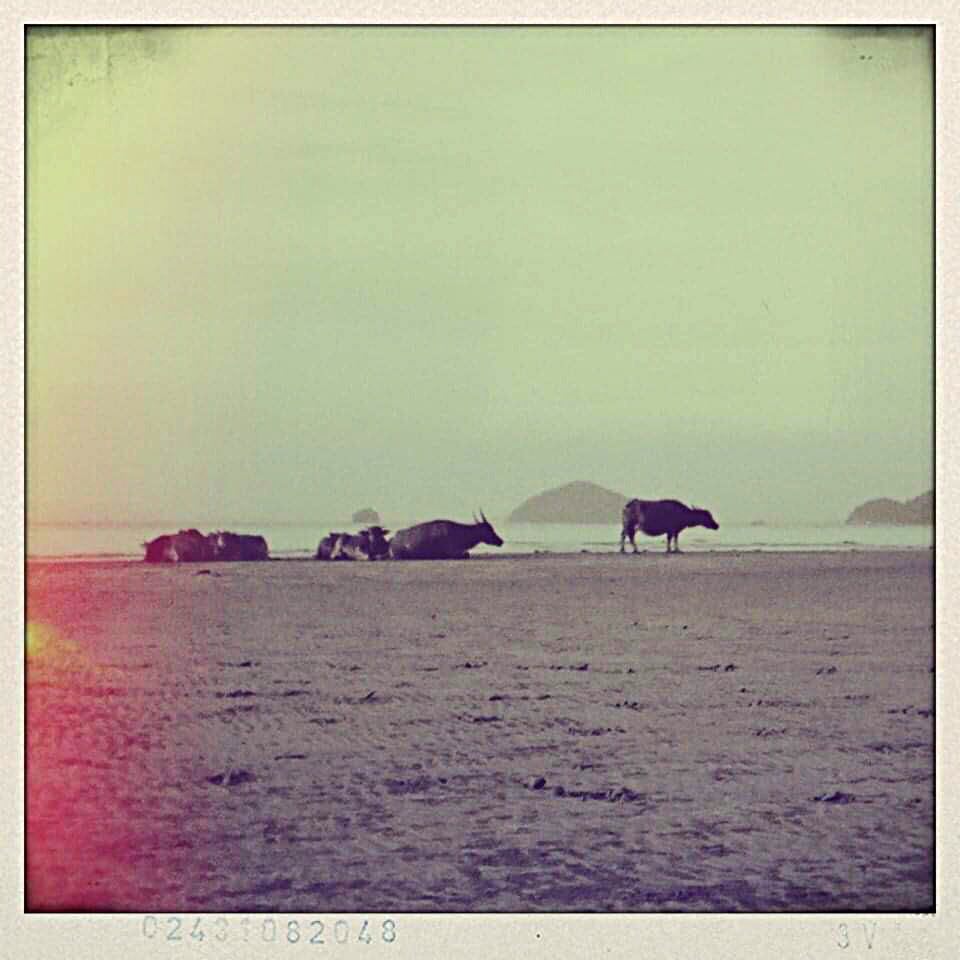
Image by Karl Powell, Buffalo on the Beach, 2006

We drove through the last of the small villages in the foothills of Mount Kinabalu. The sun would be setting soon. I looked back at the sheer size of the mountain – it was immense and alive and had a presence so powerful it made you feel diminished and empowered at the same time. The type of feeling the Romantics called an encounter with the Sublime, the type of feeling that moved Wordsworth to try to describe it as “a presence that disturbs me with joy of elevated thoughts; a sense sublime of something far more deeply interfused whose dwelling is the light of setting suns… and rolls through all things.” Our van slowed suddenly to navigate a hairpin bend. There were flat, square houses on my side of the road. Some had flat rooftop areas. As our van swung around the turn my eyes rested on the silhouette of an old man sitting on his roof. The setting sun was behind him. But the sun shone on me, and for some reason I waved at him from the window of the minivan. For a moment the old man did nothing, then as if suddenly charged with energy he bolted upright in recognition and jumped to his feet waving back with his right arm. As the van descended down we exchanged a long wave. His silhouette disappeared into the mist surrounding the foothills but his arm still visible waving for a second longer.

Image by Karl Powell, The South China Sea (Kota Kinabalu), 2006

At the wetlands we sat in open boats preparing to cruise through the mangroves to see the fireflies. The sun had set, we had eaten and felt better. Guided by the light of torches, we had made our way into a large, communal canoe, acutely aware of the rocking buoyancy of the vessel as we stepped on board. On one side of the boat, the lights and sounds of the riverbank danced in familiarity – over the starboard edge, only darkness. And in that darkness was a stillness without silence. You could feel the air breathing and moving all around you, pressing against your skin. There were no stars overhead; everything was insulated in steam and low cloud. A large full moon looked majestic high in the heavens. Its silver light spread out across the top of the cloud-cover, filtering soft light down before it dissolved into our darkness. A large, lunar rainbow sat motionless, like a halo, on top of this flat white veil. In the far distance, explosions of an electrical storm momentarily cracked the darkness into patches of deep violet scorched with pearl lightning. Beyond that, horizons and waterways existed without delineation; it was impossible to see divisions of land and sky.

Image by Karl Powell, Washed up in Moonlight, 2006

We moved through the water in the land below the wind. The air was cooler with the night but always the humidity clung. Dense, thick foliage from the forest rose either side of the quiet, black water which had carved its way through the land. The river was slick like oil and smelt strongly of pungent bore water. Everything belonged to the earth. We heard loud crashes and snapping in the canopy of trees above and were told this was due to the monkeys jumping from branches. Occasionally leaves that looked like creeper vines floated on the water’s surface like large carpets, bearing purple flowers. Life breathed in the darkness. Sounds reverberated again and again – bird songs, insects, the high pitched squeaks from bats. And then we turned a bend in a river and the darkness became punctured with a great tree alive with fireflies. No words can express the sight we witnessed. Thousands of fireflies shining tiny pinpricks of blinking, coloured light in the fabric of night. Some were green, some looked red, others were yellow. The colours of the fireflies were so vibrant in that darkness. There were other boats from other tours also floating around the Great Tree but few of us took photographs. Some of us tried and captured nothing (only vague images of darkness). Some of us tried to capture the sight in video recordings. But sometimes a higher intelligence within directs you to be still and to just soak in the moment. Some experiences can only be felt to be known.

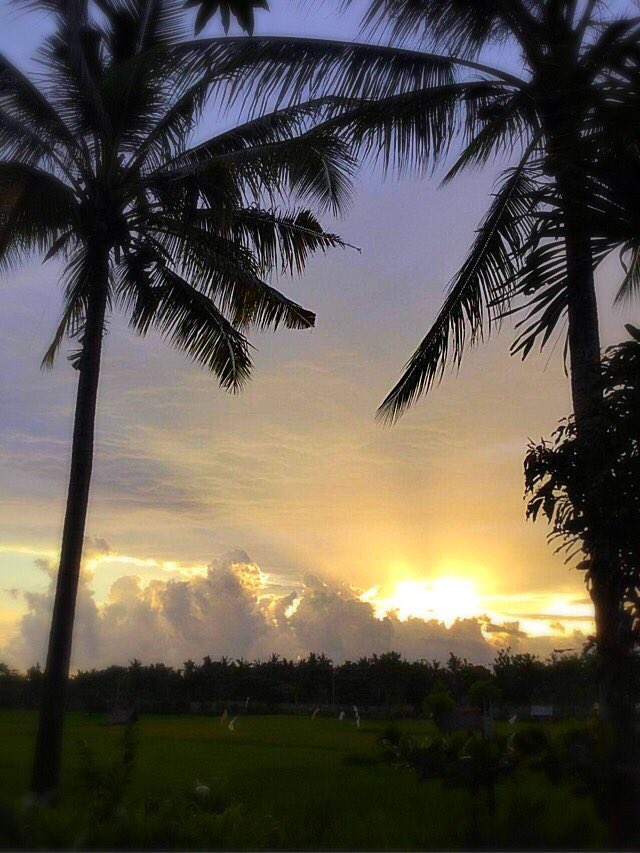
Image by Karl Powell, Setting Sun, 2006

*

9 The Balinese Fishermen

The day had been spent writing. It was important to find a routine that worked; for good writing it was necessary to find a rhythm (or to let the rhythm reveal itself to you) – something, in the words of the Poets, which enabled you to hear the Muses sing as clearly as possible. When you committed to creating momentum, and worked patiently within in, then the words just flowed and the magic happened in front of your eyes. Waiting for inspiration is as pernicious as blocks, procrastination or the fear of a blank page. Much has been said about how to write, when to write, how often to write. In the end what works for you is probably best: but you have to find your own rhythm. For some, the most potent time is around dawn – brahma muhurta – when creativity literally comes down to meet you; for others the alchemy is best experienced after dusk, as documented in the verses of Dylan Thomas:

In my craft or sullen art
Exercised in the still night
When only the moon rages
And the lovers lie abed
With all their griefs in their arms,
I labour by singing light.

Image by Margi Currey, Sultry Sunset over Seminyak, 2017

For almost a month I had found a routine that really worked for me: a walk along Tuban Beach before breakfast; to write for several hours at a desk in a room I had rented until lunch; a couple of afternoon hours editing sitting outside; finishing with a walk near the ocean at the day’s end – leaving the nights free. Long mornings were spent sat at a desk overlooking a garden with green, flat tropical leaves, which moved and swayed in what little breeze dared whisper. After lunch, I moved onto a balcony, a bar or cafe, editing what had been written the day before – all the while watching the afternoon skies grow heavy and then burst with rain. The flat palm leaves were drummed into a kind of submission by the downpour of raindrops – the surrounding greenery seemed to become more vibrant in sound and colour because of the rain. This routine had worked, the project I was working on was almost complete.

Image by Margi Currey, Sunset , 2017

Walking along the beach at late afternoon (before the sunset) helped rejuvenate and untangle the mind from words and ideas. It was a good way to avoid burnout on any long project. The beach was not far from my room – a short walk through several narrow streets (jalan or gang). Roughly, I would arrive there at that time of day when shadows had begun to fall through the trees and stretch themselves out across the shoreline where wet, tropical tarmac gave way to the sand. The strength of the sun had long begun to fade. Mosquitos were beginning to make themselves known, nipping and biting. The day itself felt tired in some way.

Image by Karl Powell, Kartika Gang Jalan (Tuban), 2005

Some days I would walk there as the tide crept its way back up the beach. The incoming waves growing in noise from a still and silent ocean. Local children would play in the foaming surf; tourists taking photos of the flat silver ocean beyond them, waiting for the pink sun to set and burn Titian colours across the sky. Planes flew upwards from Ngurah Rai Airport, passing the beach, reaching up overhead journeying home. Sometimes patches of yellow light broke from above the clouds and over towards the north, the mists would clear and Mount Batukaru drifted into view. 

Image by Karl Powell, Jenni, 2005

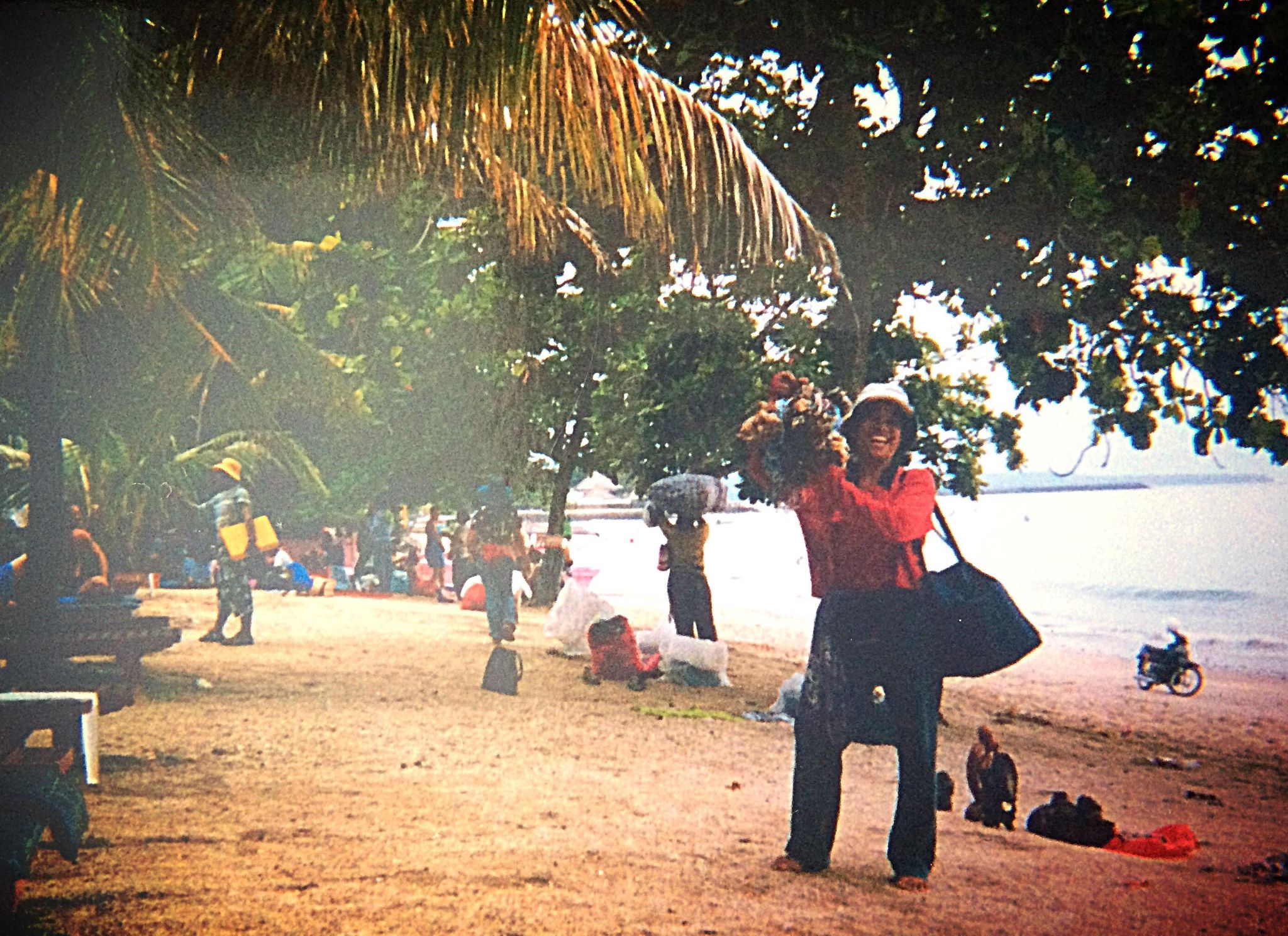
At that time of day, many of the sellers would be packing up – taking home what had not been sold to try again tomorrow. The odd tourist would walk past but the last sale of the day had possibly come and gone. Heads low. Some of these sellers worked on the beach the whole day. Time to count up the rupiah and see what has been made for the family today. Not much left to say. No more customers will come now. Through the familiarity of routine I got to know some of these faces. Andrew sells necklaces. He wears a yellow hat with his name on it. He has four children, three boys and one girl. He tries to sell me a temporary tattoo. OK don’t forget me tomorrow – remember my name. Eric is selling a crossbow. He also has a blow-dart for sale.  Eric speaks Italian. He learnt it on the beach. He speaks fluent Italian. A friend bought him a book. Each day he learns a little more. Step by step. Eric also speaks Javenese, Balinese, Indonesian, English, Spanish, French and a little German. He learnt it all on the beach – a la spiaggia. Most of the sellers here have their own patch.  Some sit under frangipani trees during the heat of the day. They sell for good price, cheap price, welcome to Bali price. A blond tourist has three Balinese women braiding her hair on the beach outside her hotel. They say all the right things to her: she is pretty, she smells nice, she has beautiful hair. They ask if she is Australian, or American, or English. They each repeat their names if she needs anything else – You want to buy a hat tomorrow? You come to Jenni. Kiki, Lisa, Jenni – all three braid her hair.

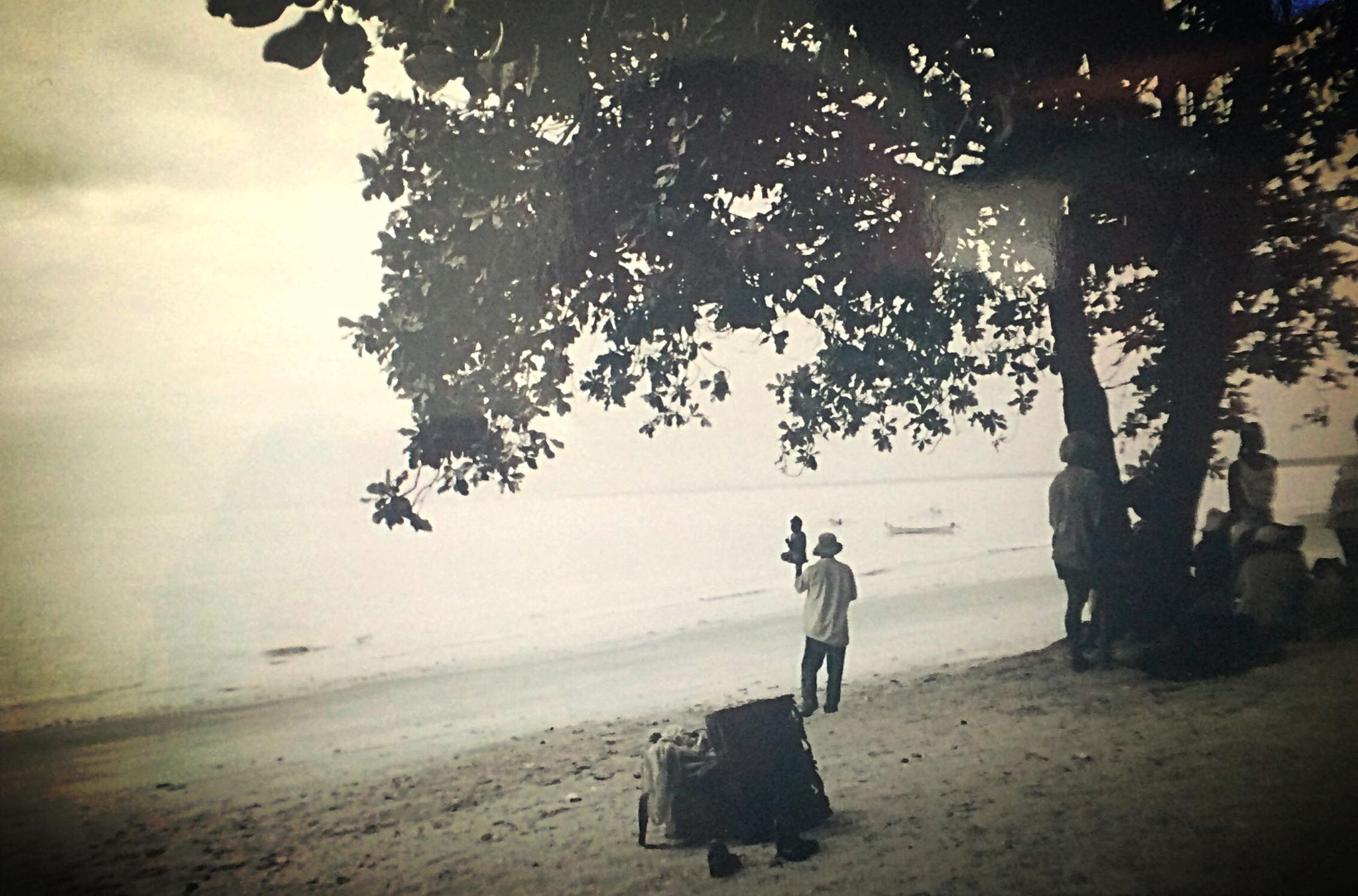
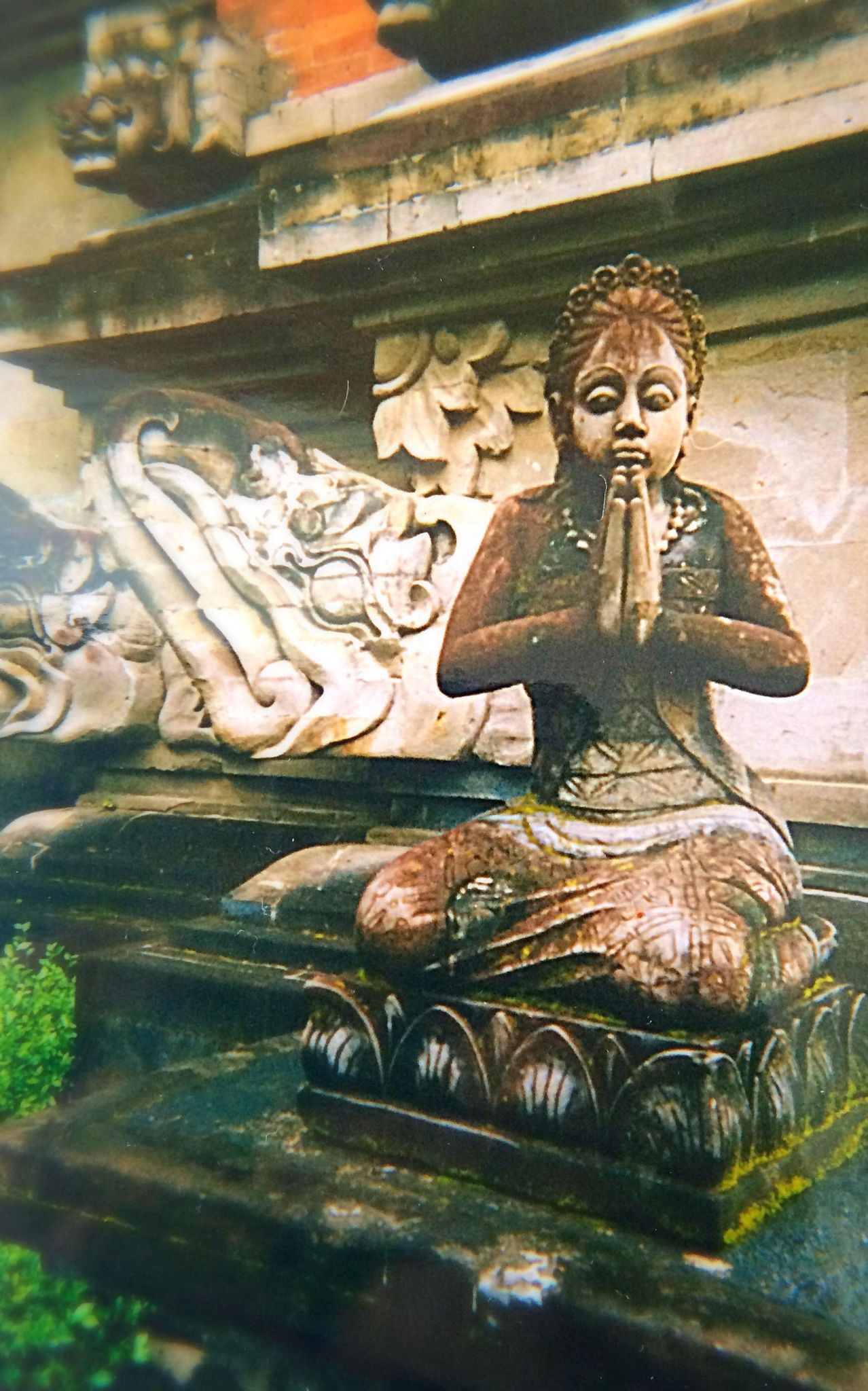
Yayan Nuken sees me and comes and tells me his name.  He writes it in the sand so I can see it. ‘YAYAN NUKEN.’ He gets me to pronounce it.  He sells wooden statues of the Buddah. He sells the most beautiful shells in the world (laid out on the sand in three, neat rows). He says, I make nothing for one week. I pray to make a little more money for next week. The rain keeps the tourists away. No tourist, no money. You want a tattoo, Boss?

Image by Karl Powell, Yayan Nuken, 2005

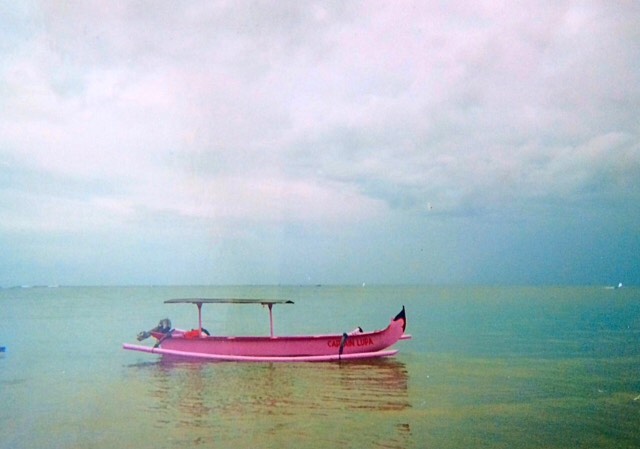
Further along the beach, the Lupa floats about without care on the flat silver ocean. It is visible from a distance, being a distinctive bright pink. Lupa is a boat – a jukung – a long, hollowed wooden outrigger with long, lateral supports. It is anchored in waist-deep water and having spun and drifted all day it now bobs and nods on the easy sea. Clouds move east filling the Balinese sky with moisture and heat. Captain Nyoman stands looking out to sea. No tourists. No good. No money. Arms folded over his chest he walks along the water’s edge. He sees something, bends down to pick it up. He looks at it in his hand, then tosses it out for the ocean to keep.

Image by Karl Powell, Lupa, 2005

Some days it was nice to walk the full length of the beach – to go right down to a perimeter fence that segregated something from the rest of us. One of the first times I ventured that far, I saw a lone black silhouette standing in waist-deep water ahead of me. By the time I reached him, he was standing up behind a stone breakwater facing the ocean, holding a thin fishing rod with the line sunk under the water. As I got closer I could see he was a young man, maybe in his twenties, hidden underneath a navy blue polythene poncho. He wore a baseball cap. On seeing my approach, he nodded and said, ‘Look for the stones to stand on.’ I looked down and there in the sand was a hopscotch smattering of octangular shaped stones sunk in the water, big enough for feet to walk on.

Image by Margi Currey, The Hidden Crystal Waters of Bali, 2017

I joined the fisherman on standing on the breakwater. Elevated up, he water stood around our knees with the breakwater at our chest.

‘Have you caught anything?’ I asked.
‘No, not yet.  I try to catch something.’
‘You work on the beach?’ I asked.
‘Yes.  Every day I work here,  I sell ice-cream for the tourist.’
‘You are from Bali?’
‘No, I am from Java.  But now I work in Bali.’
‘Do you have family here?’
‘Only my brother,’ he pointed to a smiling figure standing behind us up on the shore.
They both wore the same plastic ponchos.

The soft waves of the pushing ocean rolled around the front of the breakwater, bouncing back into the face of the Indian Ocean before being washed up on shore. The brother pointed out to sea and shouted something to his brother. I turned, but the fisherman already knew what the brother meant; his line was taut.  He caught something on his line. He clicked his reel and began to play with the fish. His line bent, with the nose of the rod dipping down into the water, pulled harder before flexing and relaxing and flexing again. The brother said something, wading in the water, across the octagonal stones and up onto the concrete ledge behind the breakwater. All the while, the fisherman kept focused, holding the rod with his left hand, spinning the reel with his right. His bare arms poked out of the poncho, with veins working hard beneath his skin. The rod kept being pulled beneath the waters, engaged in a frenzy of tight, spasmodic combat. The fisherman reeled and began to pull the fish in from the deep.

Crack!

And then the line snapped.  It just broke. 

The three of us stood there for what seemed a moment in time. I heard that sound that falling rain makes when it hits the ocean’s surface to create pockmarked rings. The fisherman stood holding what was left of his rod and turned half smiling in a kind of apology for something.

‘It’s gone,’ he said to me. 
The brother turned and jumped into the sea, wading back to shore, head bowed.
‘That was going to be our dinner,’ the fisherman said.
Instinctively my hand slapped the pocket to my shorts for some kind of recompense. But it was empty.  There was nothing there to give. The fisherman smiled, and jumped down into the sea. I stood still on the ledge for a moment, looking out at sea, listening to the rain.

The two brothers stood at the edge of the shore waiting for me to join them.
‘Where do you go now?’ I asked them.
‘Home,’ they replied. 
I shake their hands.  ‘I’m sorry about your fish.’
‘Don’t worry God will look after us,’ said the fisherman. 
‘I wish I had something to give you.’
‘Don’t worry.  Wassalam Mualaikum.’
And then we parted.

Image by Karl Powell, Goddess of Bakung, 2005

Each night, my body would feel better for the walk and my mind would be at rest (free from thoughts and ideas for another day). Back in my room I could often hear the evening rains falling on Tuban Beach. It was a time of day many gave thanks. It was a time to give thanks to the gods who protected them, and for the good luck and for the day that just happened. It was a time to say thank you for what prosperity had run through your hands. It was a time to express gratitude for family, for the love to which we belong, and for what roof spans above our heads this night. It was a time for offerings, to ask for the chance to try again tomorrow. To hope for a better day tomorrow. Terima kasih. The rain fell often on Tuban Beach.

*