Few things can prepare you for your first sight of Venice. It is a place like no other. It is one of the rare places – the very rare – that is difficult to describe. Words elude each page as you try to write honestly about it. Venice is living magic: a floating city regal in an Adriatic lagoon. To visit Venice is like stepping into a dream; time seems to behave differently (there is a kind of timelessness existing there). There is an other-world quality about the beauty created and expressed in its architecture. It is to look at someone else’s vision of a dream made manifest in this world and to realise that belief in creative ambition and imagination should always be fostered and encouraged. It is like hearing a wonderful story that meanders through such a wonderful choice of language and expression that you can often forget to listen for its aim or purpose; whatever is spoken is captivating enough to keep you spellbound throughout the narration. And for the artists, the dreamers, those who want to create beauty in their lives, Venice serves as a reminder that we should pursue our dreams and desires without concern or fears.

There are two ways to arrive in Venice: one is by boat and the other by rail. If possible, arrive by boat. In Thomas Mann’s Death in Venice (1912),as the main character Gustav von Aschenbach makes his way to convalesce in the Venetian republic, the novella’s narrator shares this piece of advice:
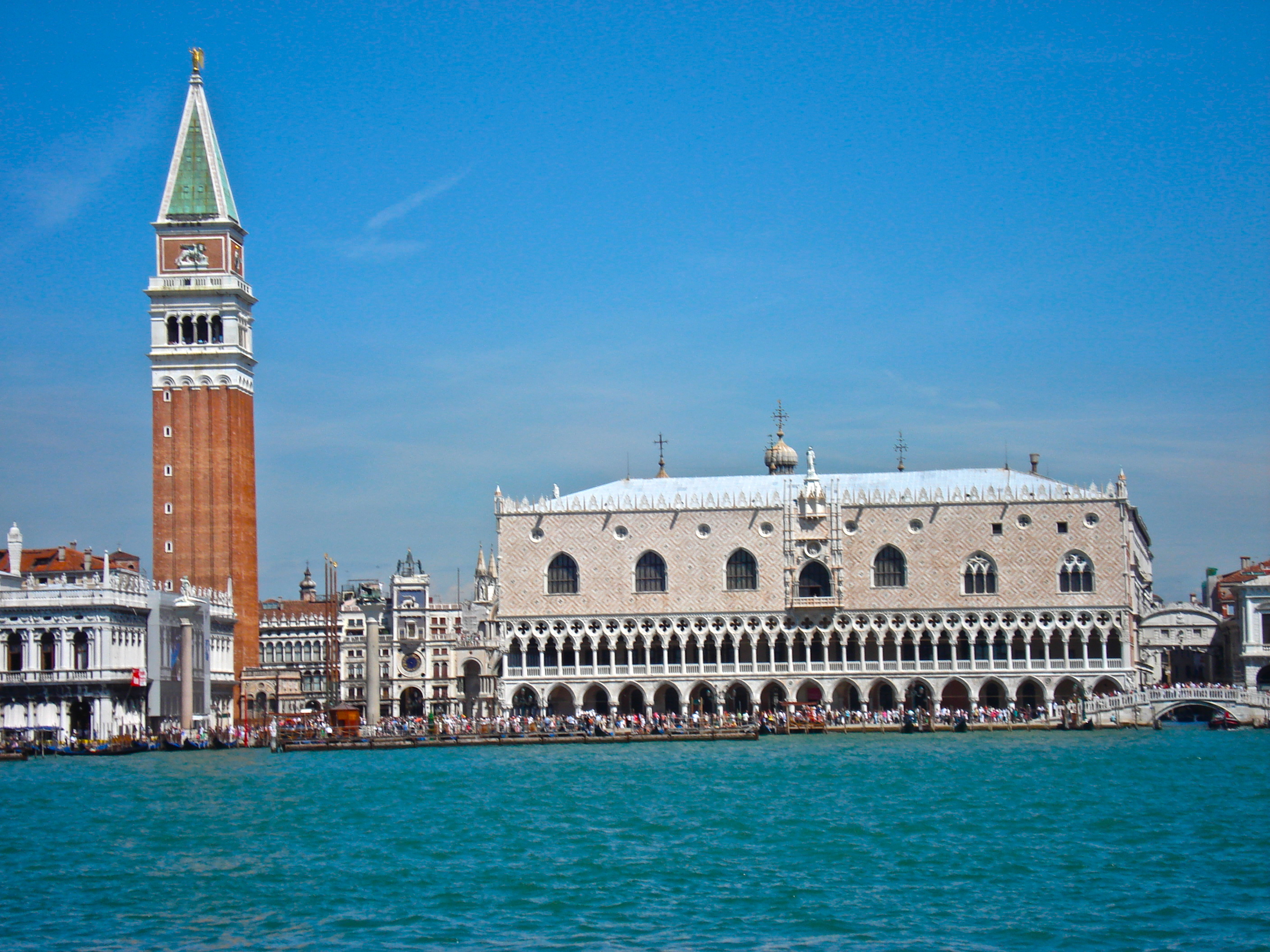
Aschenbach saw it once more, that landing-place that takes the breath away, that amazing group of incredible structures the Republic set up to meet the awe-struck eye of the approaching sea-farer: the airy splendour of the palace and Bridge of Sighs, the columns of lion and saint on the shore, the glory of the projecting flank of the fairy temple, the vista of gateway and clock. Looking, he thought that to come to Venice by the station is like entering a palace by the back door. No one should approach, save by the high seas as he was doing now, the most improbable of cities.
I had deliberately chosen to arrive by boat having been captivated by the opening scene in Luchino Visconti’s cinematic adaptation of Mann’s text. In Visconti’s movie we share the view of von Aschenbach’s own arrival into the Venetian capital at dawn, ferried across the Laguna Veneta, accompanied by Mahler’s Adagietto from his Fifth Symphony. Floating along the Canale di San Marco, we see Aschenbach lost in a trance at the appearance of the Venetian republic; there is a sense of weightlessness as the character drifts towards the Piazza de San Marco. This approach is described by Mann as one which was ‘set up to the meet the awe-struck eye of the approaching seafarer.’ The approach to Venice remains one of the most amazing things I have ever seen.

For the past month I’ve replayed that arrival back in my mind. Each time I close my eyes and return there I still feel a quality of magic in that approach. The journey by boat across a flat, open lagoon – travelling towards something unseen beyond the dip in the horizon. Small, solitary islands occasionally appear either side of the boat and glide past you in silence. Some islands have small buildings on them. In the distance a shape begins to take form. It is directly in front of you. A shape, a silhouette, something like an apparition. Landmarks appear, emerging out from the blur. The more you journey towards it, the more a familiarity makes itself present – you immediately recognise Venice. It is as if the great paintings of Canaletto are coming to life and you are about to step into a canvas – to touch the canals, its bridges, its buildings. All the while you and Venice ebb ever closer. You can almost see the wind flap at the flecks of crumbling paint on the facades of old houses; you can hear the sound of water lapping at the stone steps leading up into this masterpiece. Open your eyes and you will be there.
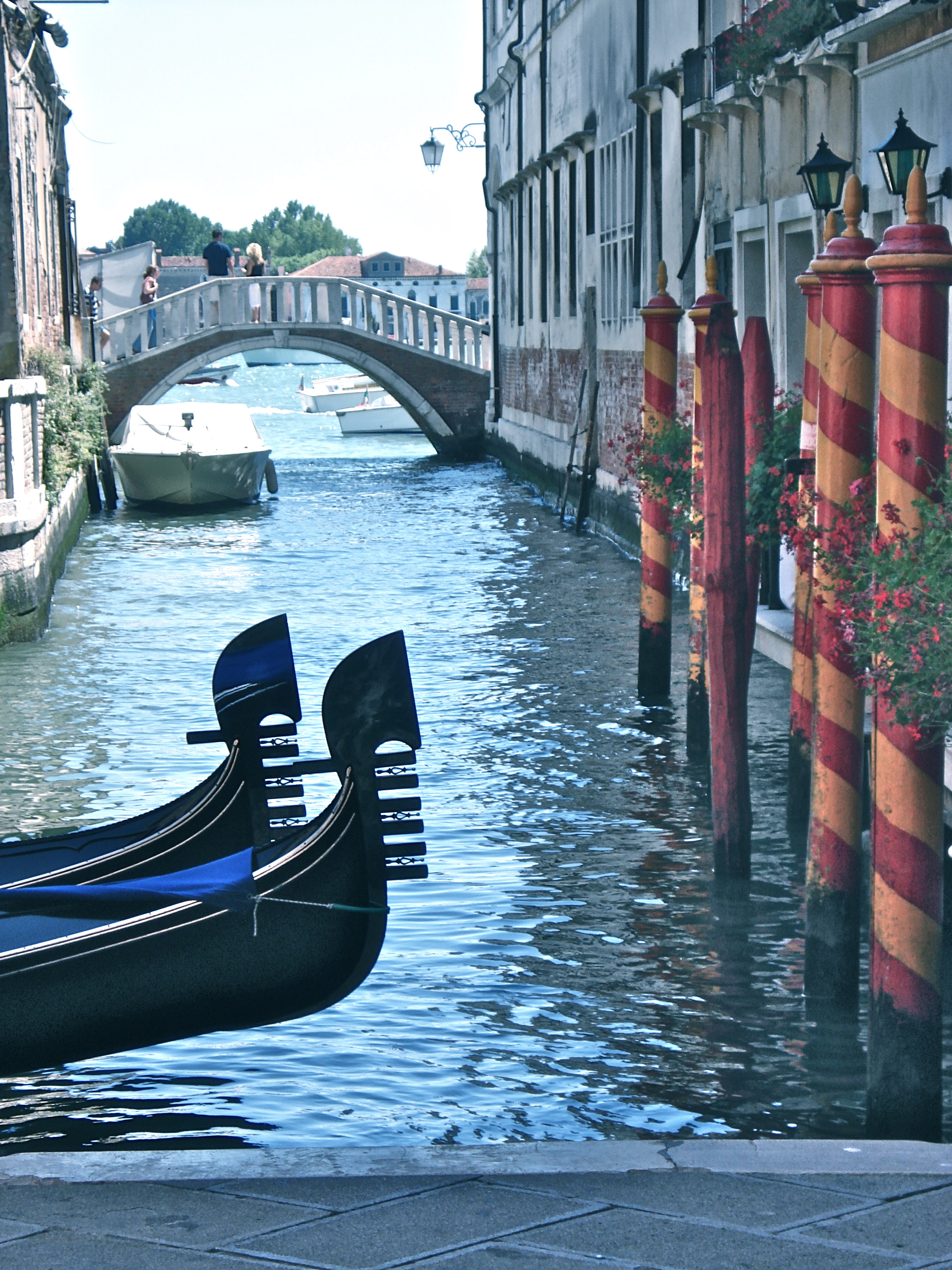
For the past month I’ve tried to find anything that I wrote when I was in Venice. But there’s nothing there. I’ve read and re-read the journal I kept when I was in Italy but each time I go through those notes there are no entries for Venice. No sketches. No sentences scribbled on scraps of paper. Nothing. Just a gap. Not a word was written down the entire time I was there. And I don’t know why – it wasn’t a deliberate choice. I’ve gone back to that Venetian arrival so many times in my mind this last month and after arriving I can remember disembarking and walking across the Embankment… and then the whole thing becomes a kind of amnesia – a haze of sketches, fragments and impressions. Walking in awe. I’ve used maps to try and retrace my steps: a walk across the Piazza San Marco, saw a narrow calle leading somewhere, found a café and ordered a coffee, stayed a while, started walking through the back streets, found an art shop (bought a print), then wandered off following my footsteps wherever they wanted to go. They walked along narrow canals, past silent corners until they stopped somewhere on the Ponte di Rialto high above the Canal Grande. And there in front of me was the whole of Venice. And there was I suspended high above its waters and transported into a sense of timelessness – my eyes doubting the reality of the dream before me. Everything merged into blurred thinking, overwhelmed with beauty, trancelike looking, captivated with astonishment, buildings and vistas that looked like paintings standing still in moving waters, real as reality can hope to be.
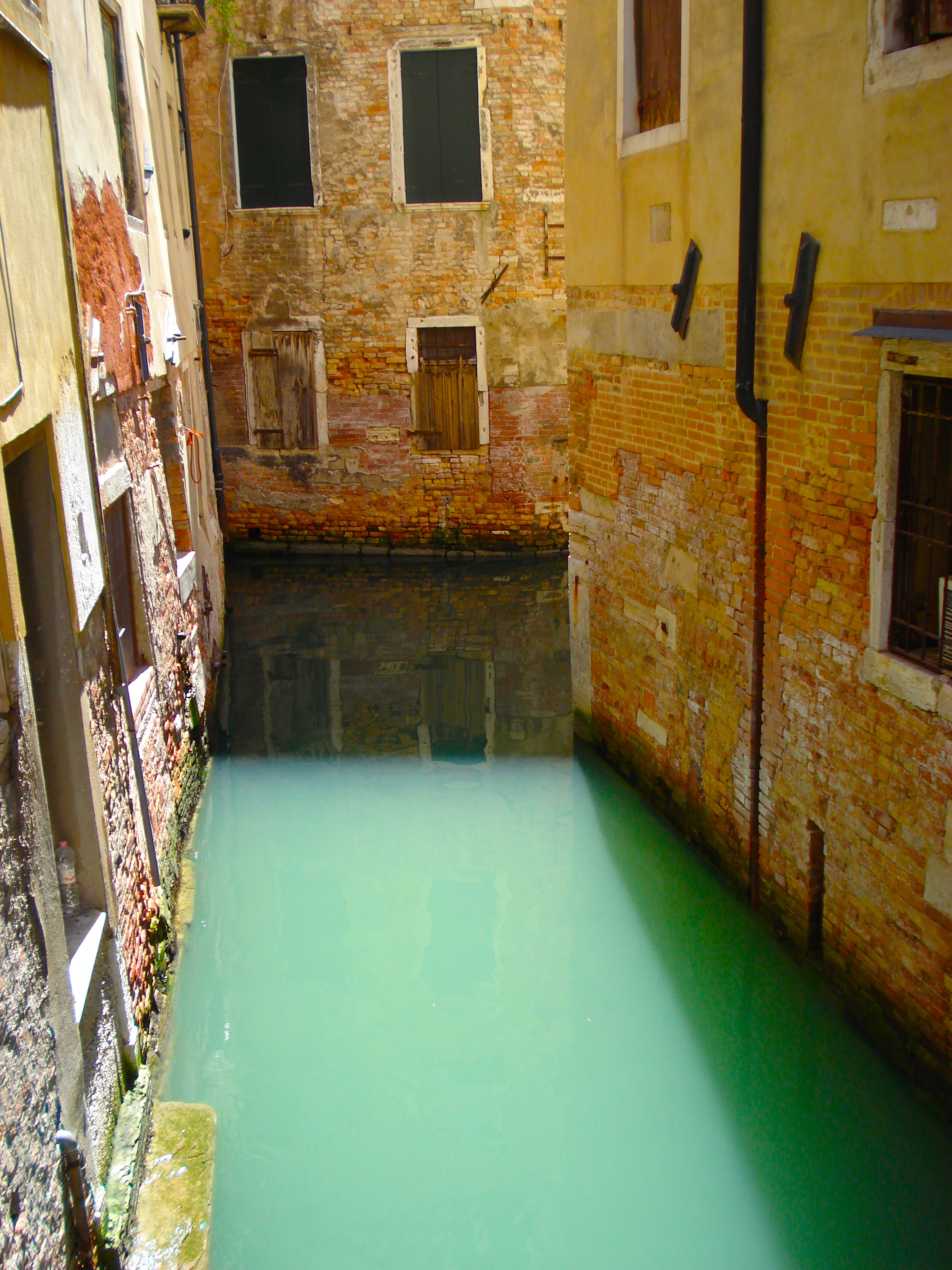
Years later I studied a novel while reading a degree. The book, Night Letters, was about an Australian traveller who was coming to terms with an illness as he travelled through Italy and Switzerland. During the narration, the author, Robert Dessaix, visits Venice and experiences a similar disorientation of time and place. One morning, while walking along the Embankment Dessaix stood still and gazed east into the waking morning light. As he stood alone at the water’s edge he felt himself transported into another dimension (coming face to face with the soul of Venice) – the breeze which blew across the lagoon became ‘perfumed with nutmeg and cinnamon, saffron and pepper,’ and he heard ‘scores of strange languages [alive] in the air.’ Like looking directly into a trance, Dessaix seemed to slip through the fissures of reality commenting, ‘Time simply crumpled. I have no idea how long I stood there.’ The art historian John Ruskin, who stayed in Venice during the 19th Century, even believed there was magic resonating in the stones used to build the Gothic, Byzantine and Renaissance buildings he saw. Ruskin, who campaigned for the preservation of old buildings in The Lamp of Memory (1849), asked us to reconsider the stones of old buildings (especially those in Venice) as we would the jewels in a crown:
We have no right to touch them. They are not ours. They belong partly to those who built them, and partly to all the future generations who are to follow us. We have no right obliterate. What we have ourselves built, we are at liberty to throw down; but what others gave their strength and wealth and life to accomplish, their right over them does not pass away with their death in those buildings they intended to be permanent.
Whether the stones of Venice are charged with magic, or can provide a metaphysical vision into a past where mercantile traders carried spices to these maritime ports, either way it is like nothing else on Earth. It is a place like no other.

When we look at Venice with our own eyes, our understanding of beauty changes forever. When we look out onto Venice we witness someone else’s belief in the power of creativity and an acceptance in the infinite possibility contained within the human imagination. When Lord Byron stood on the Bridge of Sighs – il Ponte de Sospiri – he marvelled at the way that beauty always survives and endures in a world where everything else eventually perishes. And, in essence, this is the challenge we all face in wishing to create beauty in our lives, in manifesting our innermost dreams into an environment which is finite. We have limited time to visit Venice and to also create the things we want; Venice serves as a reminder that we should pursue our dreams without concern, to cultivate beauty in this world knowing that whatever we manage to accomplish with others that beauty will ultimately live forever. To create without attachment to any outcome and once completed to let go.

Venice is one of those rare places where it is difficult to describe; Venice can only truly be experienced. And should be experienced (at least once if you can). Venice is one of those places where dreamers can feel free to dream knowing that everything is possible again. Some places raise our awareness of the reality we find ourselves in – Venice does this in so many way. It remains one of the greatest attempts to capture a vision, a dream, something that floats upon the ether for a moment in front of our hearts and minds, and to transform it into something tangible that others like us can see and touch.

*
 siesta del somewhere