13 Two Days in Doha (Qatar)

Been here in Qatar for almost 24hours. Here for the first time. Here for two days. I took the opportunity to stopover; for practical reasons, a chance to sandwich a transit between two long-haul flights – for the indulgence of curiosity, to experience something new. In essence, it is the same ache that Alfred, Lord Tennyson’s Ulysses talks about: being unable to rest from travel… to always roam with a hungry heart. Despite being in this destination for just a moment, the desire is try to glimpse along the edges of a world unknown – to sail beyond the sunset.

Image by Karl Powell, Dhow Harbour, 2018

Yesterday was much of a blur. Off the plane. Into the unknown. Corralled queues for security and immigration. People in motion, crowding, pushing, moving all around. Passport stamped with a hand tattooed in henna. Out into a huge hall. Facing taxis holding names – found mine, escorted outside the airport. Sat on a bench and waited while the driver went to get his car. He returned and we drove in to Doha. Only a 15minute drive to the hotel. It was dark and dawn and light and morning all merging. The first call to prayer sung and carried with its divine beauty through the cool air. Roads were quiet. The driver told me I had arrived on a good day: Qatar’s National Day. He said there would be fireworks and a parade. He also told me everything was preparing for the 2022 World Cup. In fact, in a few days, the FIFA World Club Championship Final will take place: Liverpool v Flamengo. On my flight I remembered there had been a man from Zambia flying in to attend the match – decked in the red of the European Champions.

Image by Karl Powell, Call to Prayer, 2018

At the hotel I checked in. Room 127. The Front Desk was patient and helpful. Unhurried, he photocopied a map of Doha for me, telling me most shops would be closed because of the public holiday. Found my room, showered and went for breakfast. Food was lovely. So much to choose from – buffets of everything, chefs cooking orders, waiters pouring hot, black coffee. Everything clean and spacious. After eating, back to my room – got lost on the first floor (turned left instead of right from the lifts). Rooms and corridors. Bed huge. Slept a deep sleep. Then tried to walk around, to see something of the National Day, but unprepared and disorientated (forgot my map). Got lost. No sense of bearings. I found a policeman near the Al Corniche – one of the main roads. He told me there would be a parade in a few hours. I stayed for a while, felt tired, felt unsettled not knowing my bearings or where to go. Retreated back to the hotel. Disappointed. Front Desk presented with a beautiful cake iced in the maroon and white colours of the Qatari Flag to celebrate the National Day. Went back to my room and slept another deep sleep (missed the parade – can vaguely remember hearing fireworks).
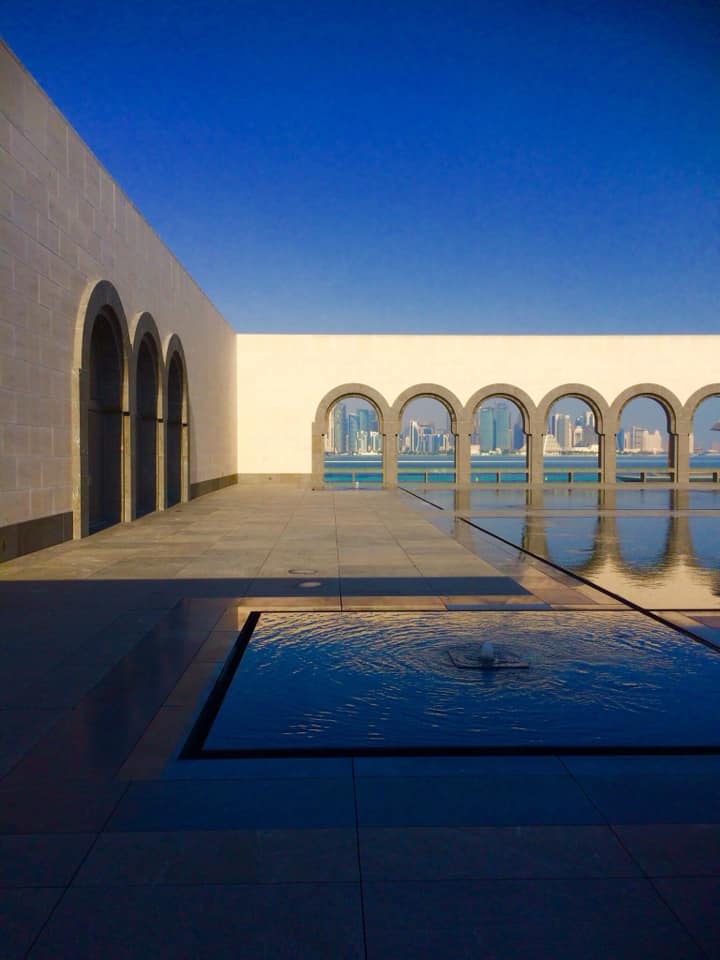
Image by Karl Powell, Water in Doha, 2018

Going to go down for breakfast soon. Not sure what today will bring. This hotel, though, does seem close to everything. Will have to walk around and explore. Planning on seeing what I can: to walk along the Corniche, to see the waterfront, to visit one of the big museums – maybe the National Library – and to explore the main souk. No idea of the distance (or how long this adventure may take), but am taking my map with me this time. Hope to be back at the hotel around 3pm (8pm body clock), sleep til 10pm, taxi to airport at 10.30pm. Flight is at 1am.

After eating, I left the hotel early and made my way along the Al Corniche. So clean and accessible, beautiful footpaths. The Museum of Islamic Art was straightforward to find; it sits like a landmark on the waters of the Persian Gulf. As I approached it the road suddenly silenced and closed. Police pulled up in motorbikes and began blowing whistles. They motioned at me to stop crossing the road, to move back to the kerb. Something was approaching. A fleet of cars sped through. The policeman told me it was members of the Royal Family. The road opened again and the policeman thanked me for waiting.

Image by Karl Powell, Museum of Islamic Art (Doha), 2018

The Museum of Islamic Art opened at 9am and I must have been one of the first ones admitted. From the outside it was beautiful: sharp, straight lines of a cream white building contrasted against the blues of sky and water. Inside, the main hall was a large central space, with a staircase and fountain. Natural clear light fell inside, creating an immediate sense of serene stillness.  I spoke to a lady on reception who was helpful; she explained what I could see in the museum, as well as in Doha (drawing on my coloured map of the city places I was interested in seeing). There were four floors in total at the Museum. There was also an exhibition on Syria – showing its art, culture, and history before the civil war. I went and looked at each floor. There was so much to see on each – all the patterns, beauty and geometries of Islamic art expressed through ceramics, calligraphy, textiles and astrolabes. School children were on guided tours; guards were present in each room (courteous, softly spoken, all knowledgeable about the art).
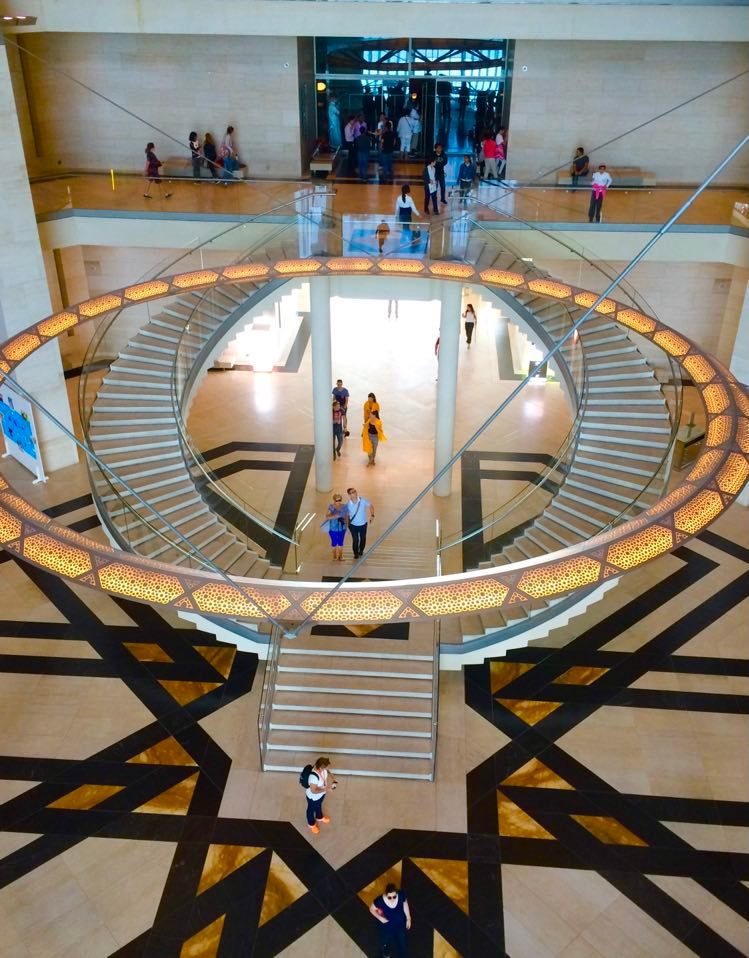
Image by Karl Powell, Staircase: Museum of Islamic Art, 2018

Outside the Museum, I walked along the waterfront. There were lots of boats at the Dhow Harbour empty and floating on the water’s surface. As a tourist, voices called out to me in every language to take a trip. It looked fun – something that should be done – but maybe next time. It was getting noticeably warmer. I kept walking along the Al Corniche towards the souk (following the directions written on my map). The conical swirl of a mosque was my landmark to aim for. Through a jumble of traffic lights I eventually found an entrance into Souq Waqif. Walkways were wide, clean and easy to navigate. Colourful bunting hung and fluttered in the maroon and white national colours; portraits and photos of the Emir were visible, too. Most shops had stock stacked outside on display: shops selling lanterns, lampshades, clothes, bags – giving away welcoming smiles and salam mualikum. Everyone I encountered had been kind, attentive and gentle in manner.

Image by Karl Powell, Lamps of Souq Waqif, 2018

Eventually, I found an alleyway that led into an open-air courtyard. The area housed cafes and restaurants. It was still early, mid morning, but I was five hours ahead of local time and now hungry. I went inside a Moroccan café called Tajeen, which had just opened for service. A woman greeted me and gave me a menu. I ordered and sat outside among one of a number of tables up against a wall in the shade, facing out into the sunshine, facing out into courtyard. Everything was orderly and interesting. Where I sat, I heard lots of birds caged and free all chirping, their songs echoing through open spaces; I watched smoke float through the air in drifts of blue and grey, twisting twirls of tobacco; I heard an old man sneeze loudly and an another voice close by say something to him, to which he replied shukran (thank you -شكر ). A guy with a black beard sat a few tables away from me, bubbling his inhalations through a large, turquoise shisha, tapping endlessly into a red laptop. His coffee arrived in a small pot, which a waiter tilted to one side over a white cup; a thick black soup with a golden hue emerged smoothly. Curls of steam were visible. Instantly the air was fragranced with coffee. And in that courtyard, in that moment, waiting for my meal, I realised Tennyon’s Ulysses had been right:

How dull it is to pause, to make an end,
To rust unburnished, not to shine in use!

Opportunities to travel should be taken if you have wanderlust in your spirit or born under a wandering star. While this stopover was short – painfully short – every hour was something out of the ordinary. To quote Tennyson again, every hour was saved… a bringer of new things.

Image by Karl Powell, Souq Waqif, 2018

Waiting now to board my flight onwards. Tried to sleep this afternoon after arriving back at the hotel from the souk. Nodded off a bit. By 5/6pm decided to order room service and had something to eat. Ate, dozed, kept the lights off as it grew dark outside. Alarm eventually went off at 9.45pm. Settled up at the hotel: only room service and a taxi to the airport (50QAR). As always, staff so courteous. The taxi was quick, driver polite, my mind dancing between airline scenarios and departure times. At the airport, once again I entered the organised confusion of check-in, immigration and security (belts off, shoes off, laptops out). Into the transit halls I couldn’t find my departure gate at first. Someone with an iPad was there to help me: C13.

Saw a man handing out flyers for Burger King. I asked him directions to the Food Court. He couldn’t do enough to help me, practically escorting me there. I was so grateful. I found a restaurant, Azka, serving biryani. I bought a meal and a bottle of water. The chef was generous in his portions, trying to give so much food; I thanked him. Took me a while but I found somewhere to sit. Most tables of four were occupied. People, bags, noise. Soon, I found a seat on a kind of long, curved wooden bar overlooking the food court; wide enough for the plastic trays provided. There were tall stools underneath to sit on. There were gaps and spaces to find and push in. As I put my food down, three women next to me had finished their meals and were gathering up their bags and duty free. They began to walk off. One had (almost) left their green passport on the bench next to an empty tray. The image flashed: it sat there so visible and yet unseen when the mind is tired and focused elsewhere. I caught her attention before she disappeared into the moving sea of travellers. Sat there reflecting on how much of a nightmare that could have been.
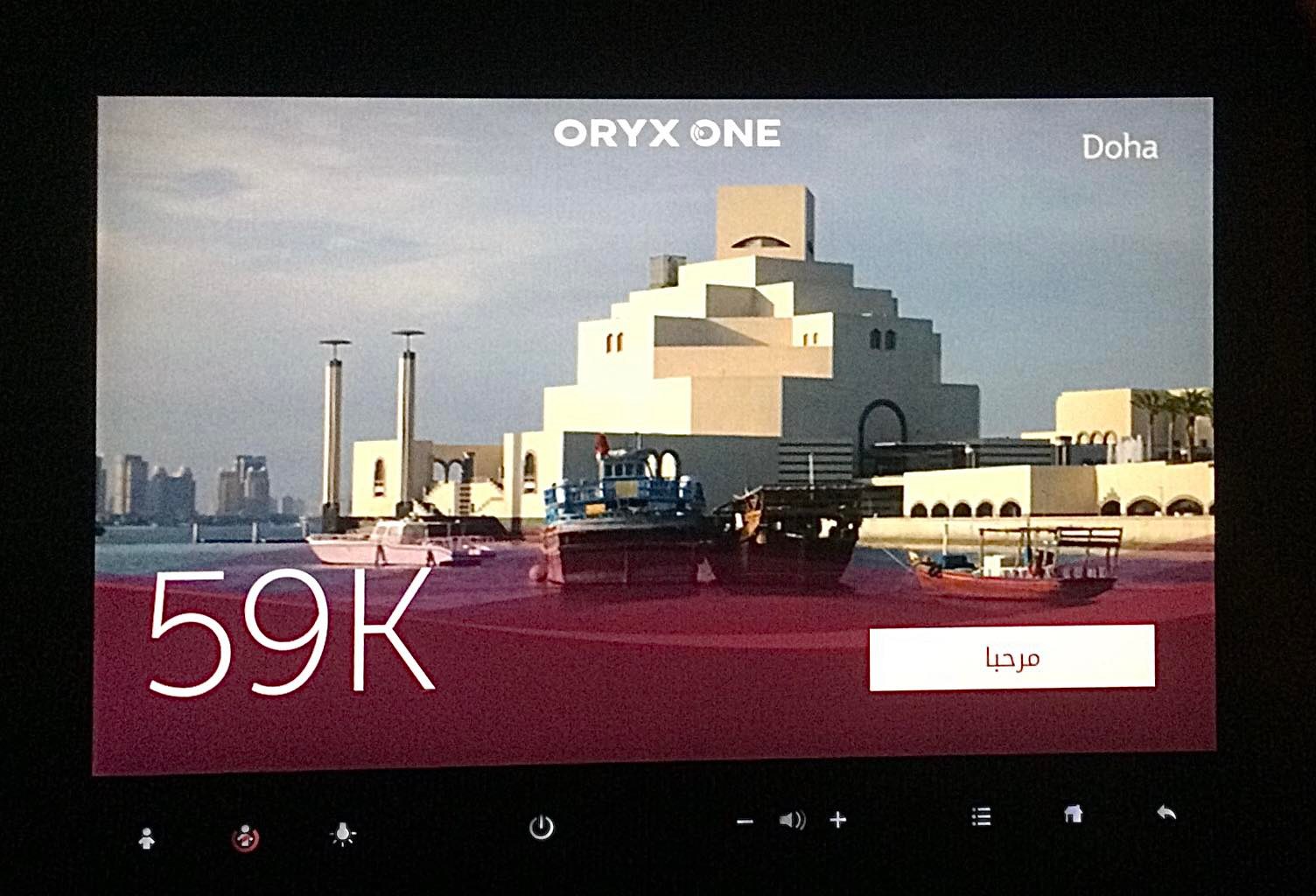
Image by Karl Powell, Qatar Airlines Seat 59K, 2018

I entered the departure lounge – another set of security checks and identity checks – passport out, boarding pass inspection, water confiscated. My seat was Zone 4. Slowly waited; more passengers than seats – stood and watched the other zones get called. We were the last to board, but I got my seat – a window seat. I sat and watched the other passengers board and the thought appeared that it had suddenly felt like a long time since I was in my own bed. I spoke to the guy next to me (he was from Zambia), then the flight was suddenly ready and cabin crew were told to take their seats. Lights were dimmed.

So, I am leaving Doha after only two days. Grateful for the experience, grateful for the break in journey. Despite the brevity, it was worth it. As Tennyson’s Ulysses tells us, it is never too late to seek a newer world. One of the reasons being is that any journey changes us: I am a part of all that I have met. There once was a time when I would have spent most of these flights in silence, writing and recalling most of what I’d just experienced and seen – in colour, in detail, in words. Now I seem happier succumbing to digital distractions: WIFI, editing photographs, watching in-flight movies (it’s easier and less taxing to do). But this book is before me, urging me to write, recite, recall asking me to preserve those fleeting moments before they are forgotten. All times I have enjoyed.

Image by Karl Powell, Doha Waterfront, 2018

*

8 Citizens of Nowhere (Changi Airport)

ARRIVE SINGAPORE       21.35                         DEPART SINGAPORE  07.40         

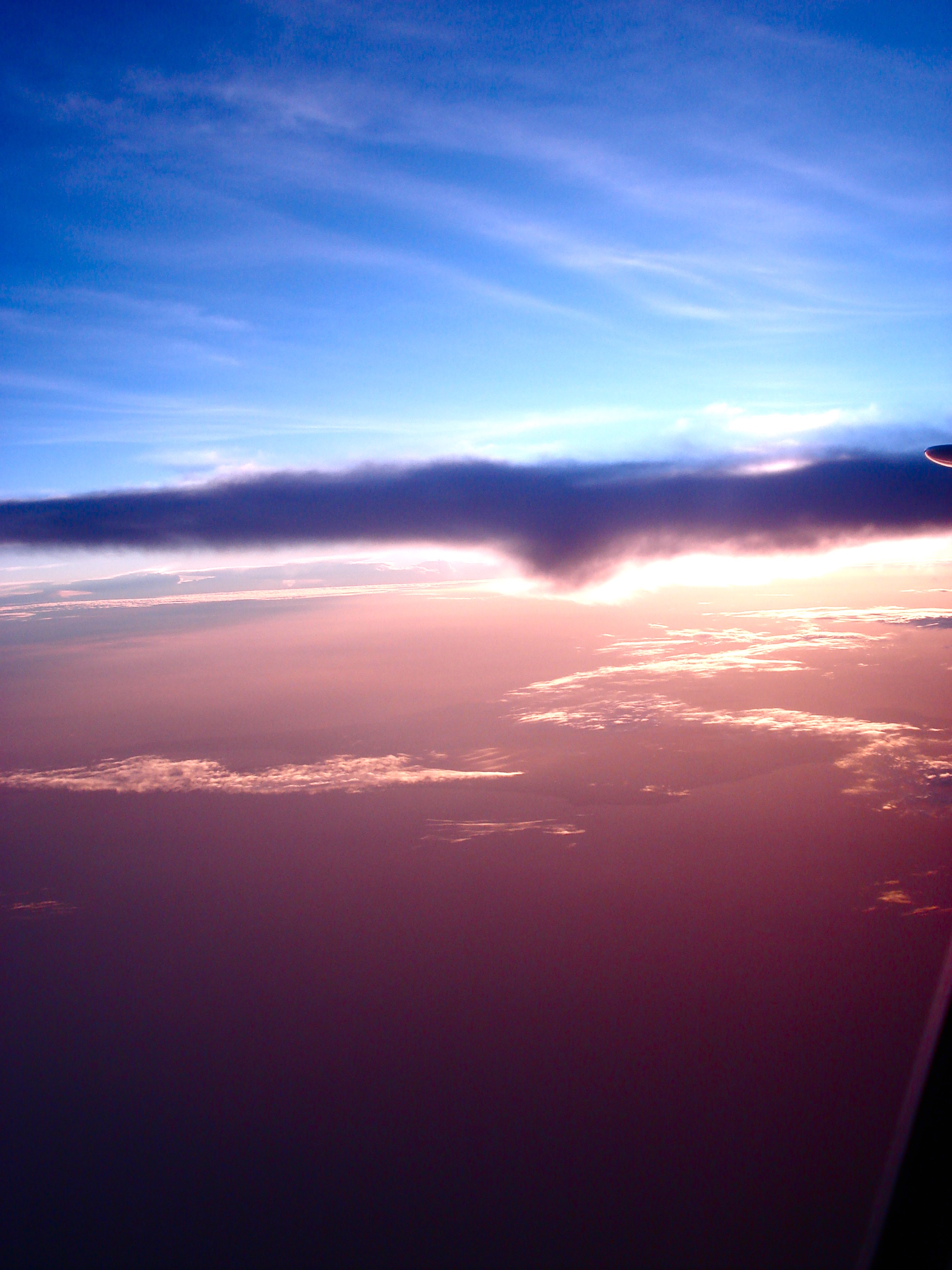
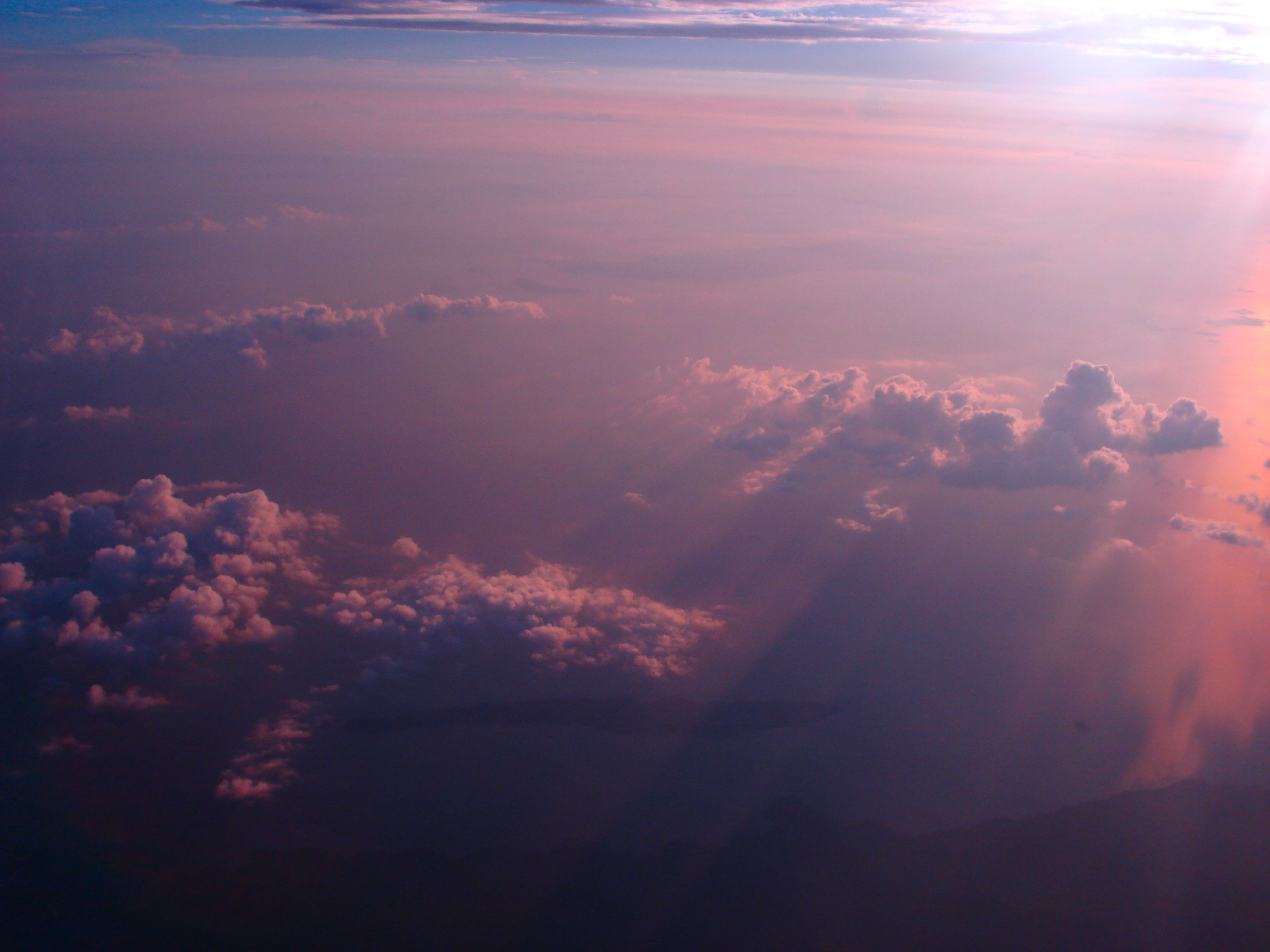
Beginning the descent into Singapore. We’re landing at Changi Airport in about half-an-hour (maybe less). The cabin is preparing to land; a sudden buzz of electricity charges and changes the torpor around me. People fidget, people manically check the overhead lockers, people queue again outside the toilets. An amazing sunset is occurring to my left. A vibrant, burning red blazes beyond the window. The sky is on fire. Ardent colours. I take photos. Don’t feel so good – light and lethargic. Am here for the next ten hours until my connecting flight departs tomorrow morning. There are no real expectations of this layover, now. When I booked the flight, I was looking forward to spending time here at Changi. Of all the times to get food poisoning the day before a long-haul flight was not the best. Seat belt signs chime on. The sun has now disappeared behind a wall of fog, leaving behind a changing kaleidoscope of nebulas and bursting supernovas. Exhausted. All I want is to shower; to lay down on my bed and close my eyes. But like the speaker in Robert Frost’s poem “Stopping by the Woods on a Snowy Evening” there are commitments still to navigate:

The woods are lovely, dark and deep,
But I have promises to keep,
And miles to go before I sleep,
And miles to go before I sleep.

The sky is now filled with colours and magic. Descending through silent clouds. And there are miles to go before I sleep.

Image by Karl Powell, CDG, 2018

I can remember waking yesterday – in the middle of the night – with cramps in my stomach. Laying in the darkness not daring to move I can remember thinking I was lucky to only have been ill this late into the holiday (the last day) and feeling ok with it (like it was some kind of pact). Then the illness struck. For an hour I vomited and struggled to keep down any water. It happened in violent waves. Sitting on the floor of the bathroom I can remember being surprised how physically tired I felt. After the illness had passed, I showered and lay back on my bed. I felt shattered and wobbled between extremes of being too hot or too cold. At one point, I lay as still as I could in the dark, trying not to move, to breathe softly, to not think, to be as motionless as possible. I listened to the sounds of the rainforest outside the room sing through the final arias of the nocturnal symphony. I could hear the ocean against the shore. Eventually I fell asleep sometime in that strange elixir of dawn and first light.

Image by Karl Powell, Approaching Singapore, 2009

At breakfast I felt ok. Nibbled on some fruit, had a coffee. My taxi had been booked to take me from my accommodation to the airport just before lunchtime (an internal flight then an international flight to Singapore at 6pm; ten hours before the second leg of another journey).

It didn’t take long before I was ill again. I made it to the bathroom in the cafe and then again to the one in room without disgrace. I lay on the bed, perspiring and now resigned to the situation; nothing else to do but wait for the taxi. My bag was packed and ready, but I was ill. Seriously ill. Now it was concerning. At what stage could I honestly say ‘the worst of it’ had passed? Would it pass? I plucked up the courage to venture to a chemist a short distance away. The walk there was painful and slow. Lethargy weighted each of my steps in the humidity and wet tarmac. My stomach winced, tender as if it had been kicked. But I made it and explained my story; buying hydration tablets and all manner of pills out of desperation to not vomit on any of the planes (or airports). Can’t remember much of the journey to the airport. Can’t remember much of checking in. Can’t remember much of that first flight. Everything just happened.

Image by Karl Powell, Changi Airport, 2013

There is an acute awareness of entering a parallel dimension inside an airport. Time operates differently. Past and future are no longer fixed. The conventional sequence of existence erodes. Personal time differs from external time; time zones are crossed by the hour, body clocks operate independently of local time, departure times and arrival times become one and the same thing. Time becomes a paradox of metaphysical theories. The airport becomes something of a wormhole – a rogue existence punched through the space-time fabric allowing Citizens of Nowhere to come and go as they please. Time breathes; Time just is. There are no longer the fixed coordinates which order our everyday lives. The airport is a journey into an alternative reality, where, to paraphrase the French phenomenologist Maurice Merleu-Ponty, the flow of time broods before us like a storm on the horizon and we are merely floating downstream towards it, always aware of its presence. 

Image by Karl Powell, Above Singapore, 2009

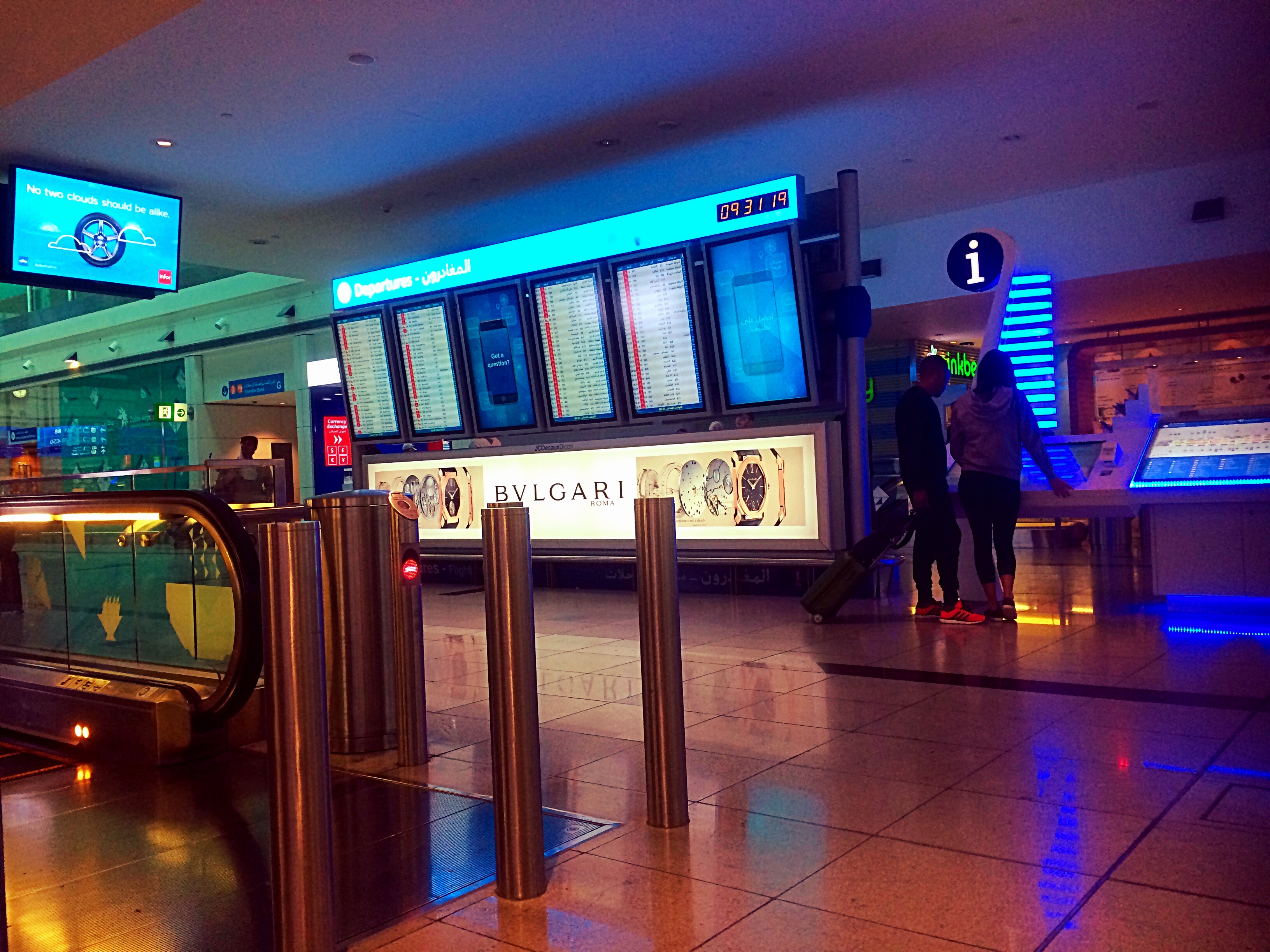
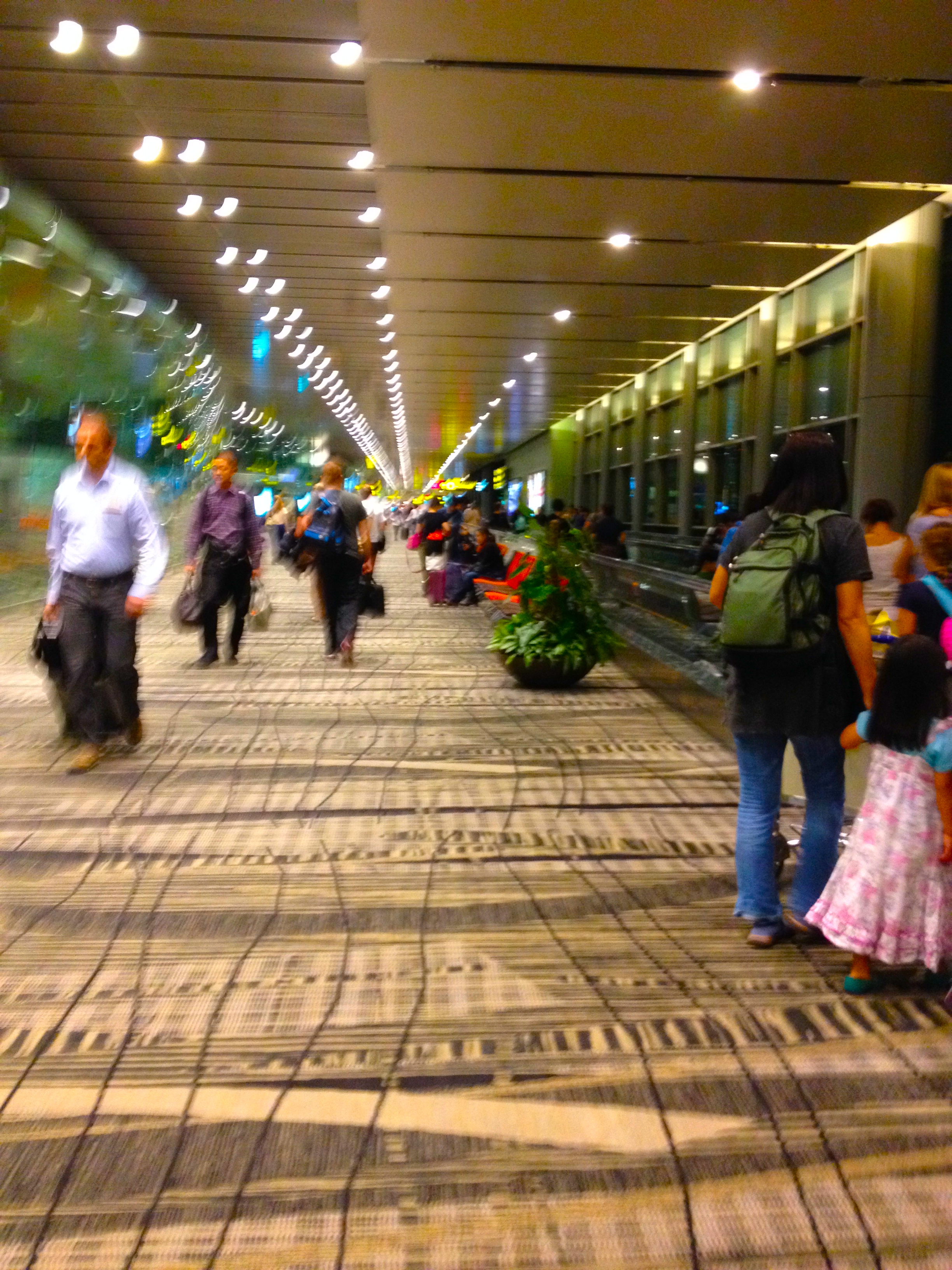
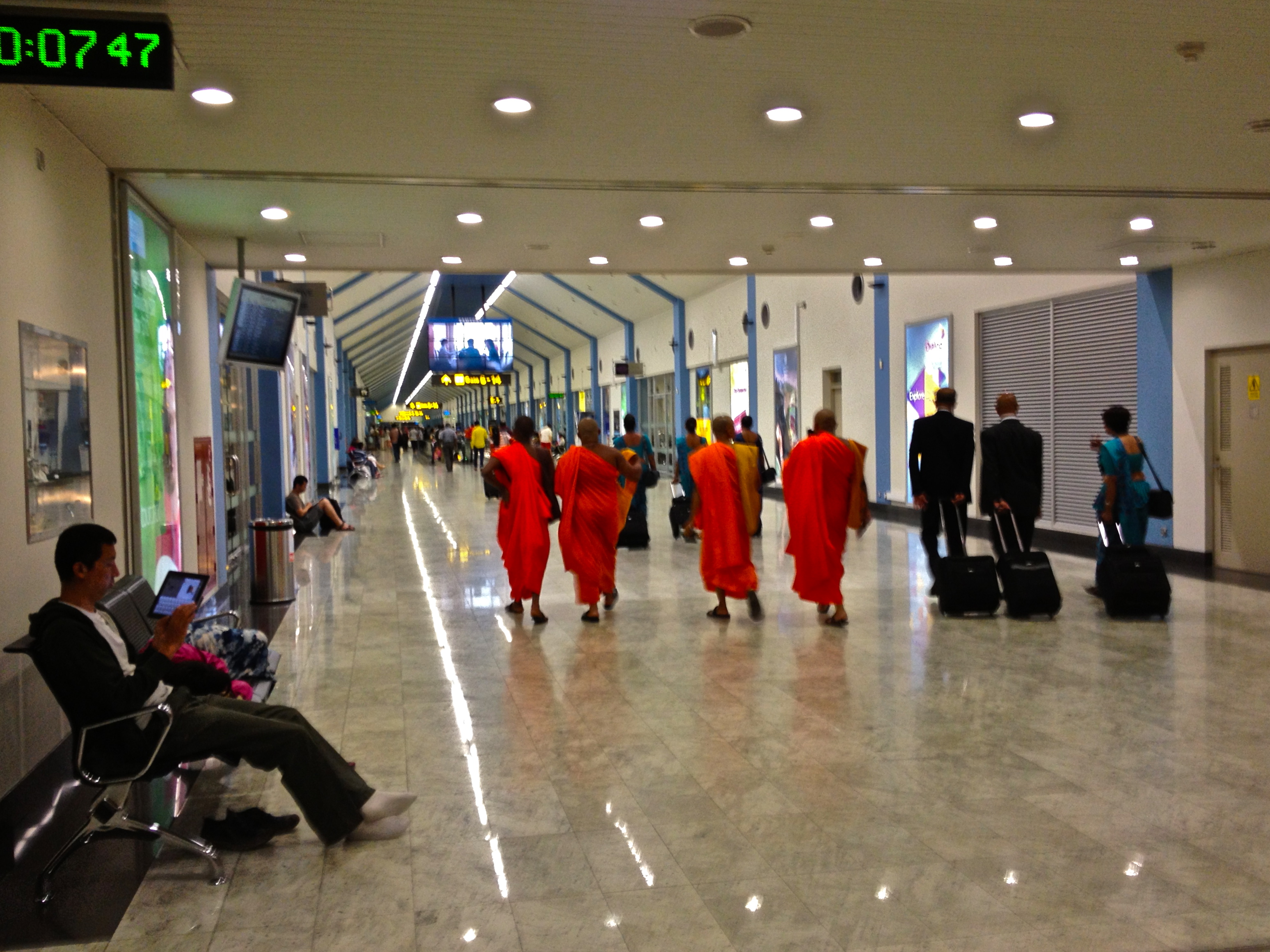
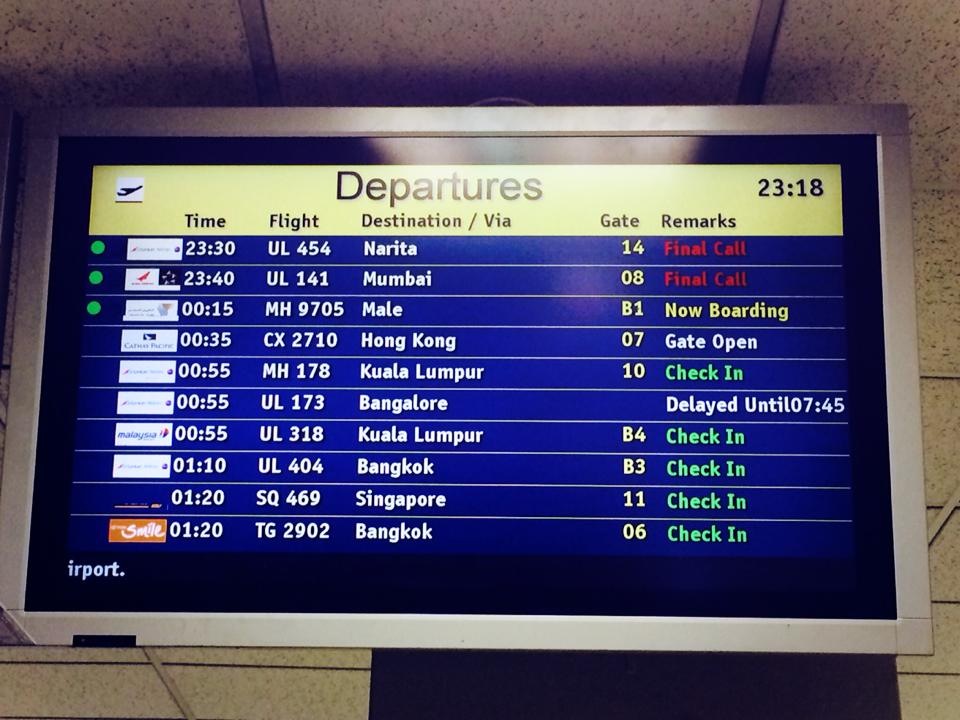
On arrival at Changi Airport (21.35) I flowed out into a terminal with the rest of the flight. And here in Singapore airport, like any other big airport, colours of confusion swirl and move without any familiar anchorage. Colours of clothes, of currency, of passports. Citizens of Nowhere all in transit, all in symphony, all in situ, searching for screens bearing information of the brooding future: details of flights, departure gates, destinations so far away. Staring at screens, pockets of silence eddying in the flow of motion, simultaneously reassuring and unnerving. I walked along coloured corridors, on moving walkways, weaving in and out of people as they weaved in and out of me. I could not go fast – my body ached and I felt drained. I looked at maps. I searched screens. Couldn’t find my flight. I walked through shops selling duty free and magazines. I found an information desk. They took my boarding card, checked something on a computer, confirmed my flight the next morning, advised me what terminal to go to. Before leaving, I asked about the airport hotel. Someone had mentioned it to me weeks ago – a transit hotel in Changi Airport where you could stay overnight. I was given a map of the airport; it was circled here and there, showing me where I was, where to find the hotel (and my departure gate at 07.40). 

Image by Karl Powell, Three Friends BKK, 2017

From Terminal 3, a Sky Train to Terminal 2. Singapore Airlines, Air India, Etihad Airways, Lufthansa Airlines, Silkair. Transfer Lounges, Walking Times, electric bulbs and neon signs become the canopy of stars overhead. Moving through the fatigue that had weighed me down I passed through coloured lights, busy bars, people moving until I found the Transit Hotel. Leaving behind the flow of people, I entered the silence of a glass door and approached the familiarity of a reception area. A smiling face told me rooms were available. Minimum purchase of six hours (with additional hours added on by the hour). Money paid. A key card in my hand. A room of one’s own.

The hotel room – 422 – was perfect, clean with a shower and a bathroom. Another world within a world. A step off the carousel. My own space again. Stillness and silence; the hum of air-conditioning. Here I could leave my bags, put them down, let them be and walk around without having to drag them behind. The shower – a welcomed shower – left me feeling refreshed (skin, scalp and face). In clean clothes I sat on the bed like a Nighthawk in one of Edward Hopper’s paintings, feeling the weight of my body sink into the solitude of mattress. And then my stomach began to speak again. This time, not tender pangs of anguish, but an eagerness to eat again. The joys that can be found in the smallest of things.

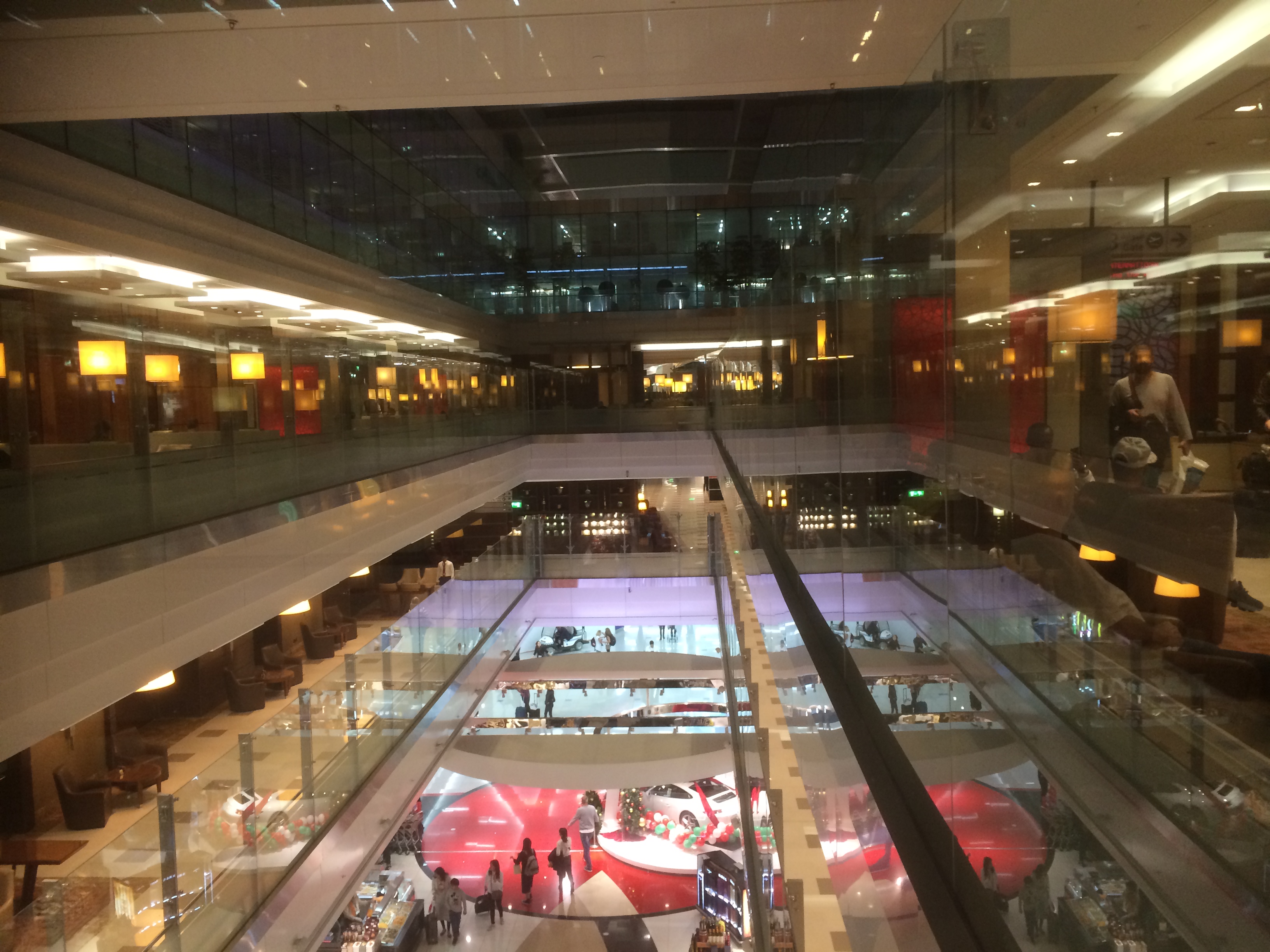
Image by Karl Powell, Doha: World of Business Lounges, 2019

And so, I re-entered the cloud city of Terminal 2 at Changi Airport. I walked slowly now and noticed how amazing this airport really was. Free from the stress of needing to pay attention to small things, of guarding your belongings, of having senses stimulated beyond retention I became a Citizen of Nowhere once again. The legs could stroll and I could marvel. There was a cinema that played movies for those in transit. There was an area playing live music. There were places to eat all about me (Thai, Indian, Italian). And yet despite these temptations all my body craved was a whopper from a Burger King (with fries and a coke). This would be my first meal in nearly a day. I walked and sat in a large, open Sports Bar with a giant screen. It was screening a match between Liverpool and Celtic. It was only a pre-season game but it was of importance as Liverpool had recently appointed a new manager, Rafa Benitez.  I sat and ate slowly, watching the Reds win 5-1, and everything felt good.

At some stage I went back to the room in the transit hotel and slept. I slept well and set my alarm. The illness had passed. And so I slept soundly in Changi Airport as a Citizen of Nowhere – lost in time, unaware of coordinates, transiting beyond borders. And everything felt good.

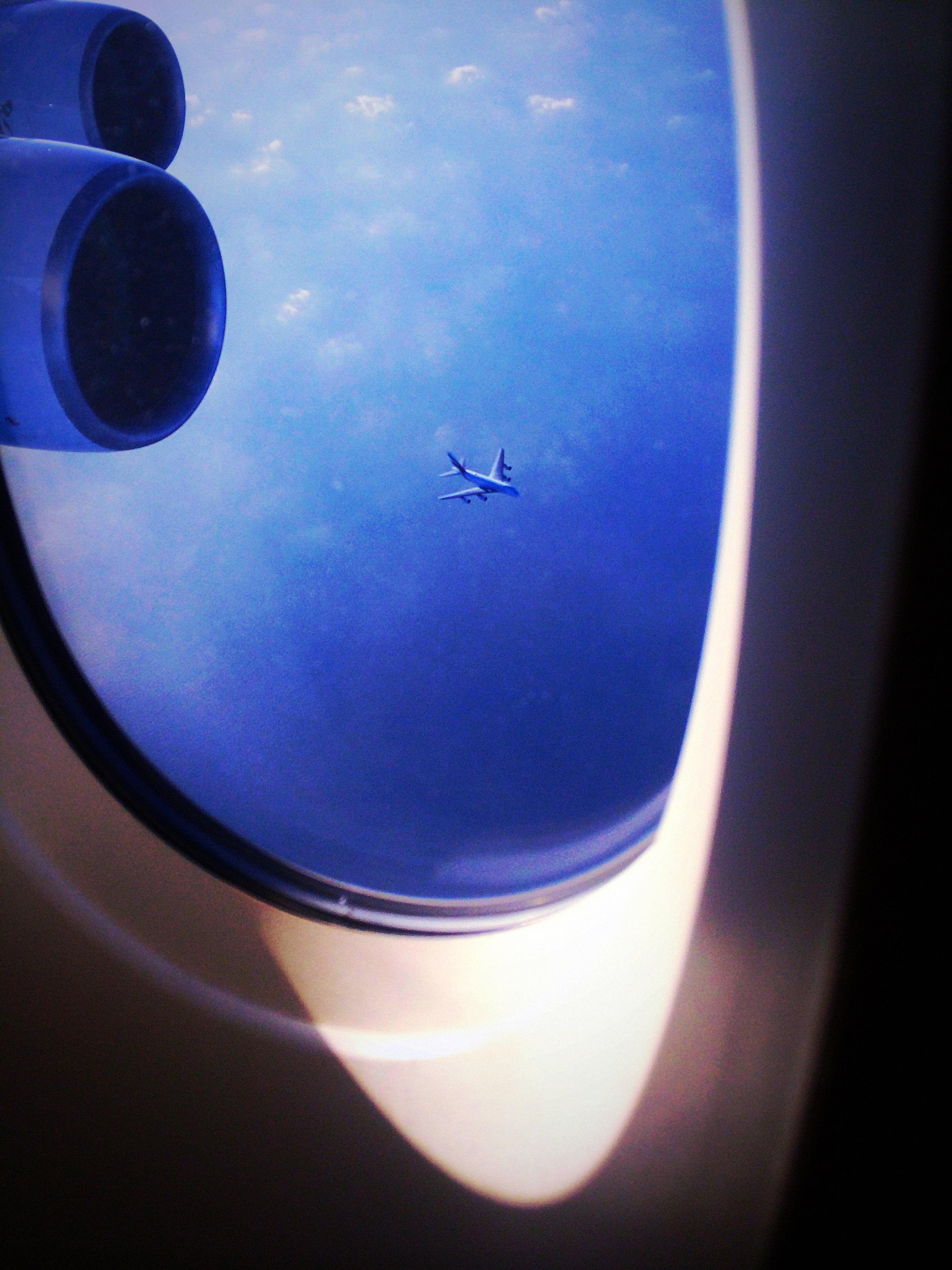
Image by Karl Powell, Approaching DXB, 2016

*

6 In transit, in Colombo

It is late afternoon. The sky begins to slide; peaches and pinks begin to mellow in the clouds, with their pastel hues starting to dance on a few waves far out at sea. The sting of the day’s heat has left now and humidity seems to be building in the air. The sun sags down towards the ocean horizon and is about an hour away from setting. It will be gone soon. The blues in the sky deepen and are filled with moving chunks of cumulus cloud coming in off the ocean, all bloated and saturated with moisture, gliding across the heavens like icecubes in scotch.

Image by Karl Powell, Coconut Trees, 2013

For a while I tried to photograph this changing canvas blooming overhead. One photograph became a frenzy of many, with each one more memorable than the previous (so I told myself). Then you realise the futility of trying to capture some experiences in a photograph. You just can’t. While clouds and colours mesmerise within a private dalliance of time, birds are flying through camera frames – darting past images, evasive when wanted in shot – their songs are audible, everywhere, soft and echoed through the moving leaves of tall, thin palm trees. Row upon row of tall, thin strings of long-lined coconut trees, rise upwards, rustling and alive in this afternoon breeze. Rain occasionally sprinkles. It falls and blots some of the ink from this pen on this page. Words blur as they are written. A rainbow flashes for a moment, radiant in colour, dissolves into nothing in a second. How to capture all this? Maybe it’s better to put away everything those and to just absorb all this beauty as it unfolds, until the day ends (until the adventure ends), all the way to a tangerine twilight. The determination to hold on to the end of something can often blind us to what actually remains; easier, then, to just let go and to be amongst the moments.

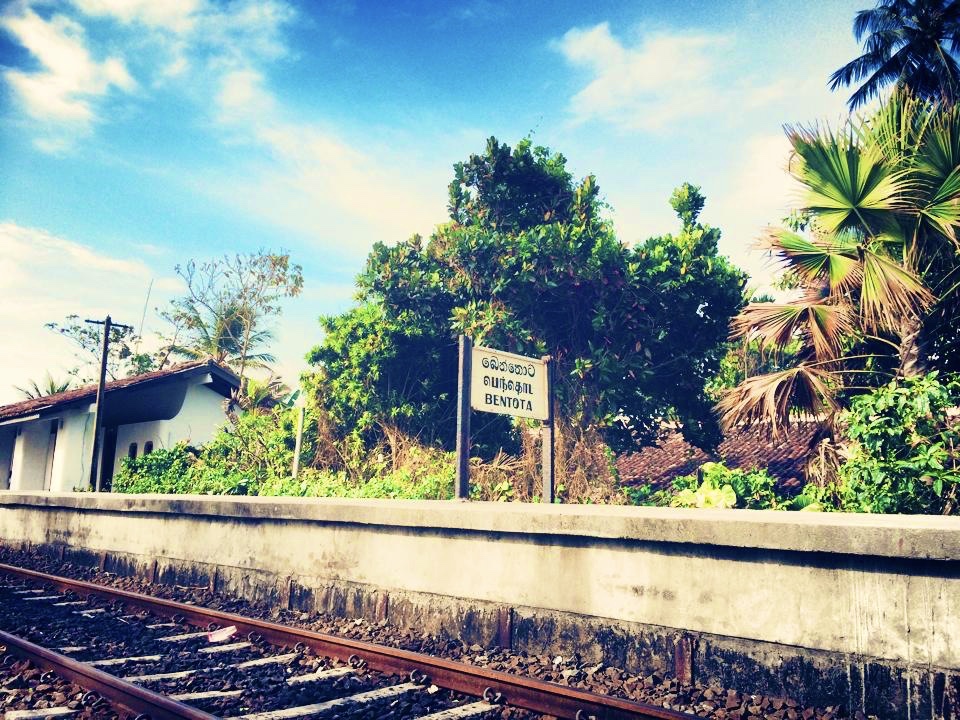
Image by Karl Powell, Bentota Railway Station, 2013

Reflecting, then, on this trip. Today has been lived through a blur of concerns: checking out and checking in, packing and unpacking, haring in and out of taxis. Cannot believe how tired I feel. I left Bentota this morning around 10. It was a three-hour road trip along the coast up to Colombo (arriving some time after 1 o’clock). The driver mentioned some new highway, Express 1 or Galle Road, linking the South to the capital (there wasn’t much conversation). My flight out of Sri Lanka leaves at 1am; rather than wait twelve hours at the airport for an overnight flight, I booked a room at a hotel close to the airport.  I’m glad I did. I’ve showered, slept and am now writing by a pool (only two flights ahead of me now – probably won’t be in my own bed for at least an entire day).

Image by Karl Powell, Galle Road, 2014

Sri Lanka has been an amazing experience. On reflection the trip was too short. I should have stayed for longer, a few weeks more, to travel, to have seen as much of this beautiful place as I could. And yet in the short time here I had, I did what I could. There was Galle Fort, a walled area of homes, churches, mosques, temples, shops and cafes (they even have a literary festival here each year). The journey there from Aluthagama on a train was something so special – a two-hour train line running the length of the shoreline with waves breaking as we thundered past en route to Galle (all windows were open and stayed open). There were many kind souls I met there. I hope I can return properly and spend time there. Think I need more time. Think I need to come back here again. There are many places I had earmarked months ago and wish I had seen: Sigiriya and Sri Pada (Adam’s Peak). Sometimes it’s just not practical or possible to do and see everything – better to leave room for next time. The sun is now setting. Wish I could stay here for a while longer. One more swim, then, one more, then time to let the holiday go, to gather up these poolside things and move indoors once again. Clouds continue to float in. I feel so relaxed. I have loved today so much.

Image by Karl Powell, Happy Passenger (Aluthagama to Galle), 2014

Back at my room in the hotel, time is running out. I am trying hard to slow this endless march towards the buzz of an airport but already it is seven o’clock (my taxi pick up is booked for ten-thirty). Everything is ready, everything is packed, everything is on edge – waiting for a departure lounge, luggage trucks on tarmac, flashing lights, empty seats, criss-crossing lives you will never meet or see again, standing still in swirling madness, inane and endless security checks, burning eyes, aching backs, searching for seats, searching for passports. To take a break from thinking, I go downstairs for a meal rather than room service – opting for dahl, coconut sambal, fish curry and an egg hoppa. On my way to the restaurant area, between the lifts and lobby, I had to walk through a mini mall in the hotel. It had a few transit shops flanking each side. Some were open, some were already closed. One shop open sold souvenirs, silks and clothes. An elderly couple worked there and were very kind and patient when I entered. I bought a few scarves and tea towels as presents. When they were being wrapped I saw a large table cloth for sale. It caught my eye immediately. It was made from cream linen and had five large elephants embroidered on it. It wasn’t cheap, nor was it beyond my budget, but the money I needed to buy it was back upstairs in my room. The shop closed at eight-thirty. I decided to eat first and to come back and buy it.

Image by Karl Powell, CMB > KUL, 2013

Opposite the souvenirs was a book shop. It was hard to resist a quick look inside. As always, on entering, you immediately you remember what magical places bookshops are. Able to transport and transform you through ideas and imagination. Shelves full of thoughts, dreams and observations, willing to be shared, waiting to be heard. A man who worked there chatted as I look to choose something to take on the flight. He asked where I was from. He asked about cricket. He asked me what I thought of his country. I told him the truth; that I had loved my stay and found it to be one of the most beautiful countries in the world. He looked at me in silence somewhat taken aback. I mentioned that I hoped to visit again some day and to see other places. I named those places I hadn’t been able to see. He recommended another place. He repeated the name of the place a few times, before I asked him to write its name down in the book I’d purchased: Nuwara Eliya.

After dinner, I returned to my room. Suitcase still packed, ready. I counted out cash for the tablecloth and put it down on my bed with me. There is something so unique about a hotel room. The silent anonymity of the room and your neighbours, the sanctuary from a bombardment of so many new sensations. A corridor of footsteps and a lobby bringing other worlds together. The wonderment of being a citizen of nowhere and the deliberate choice of being somewhere else in the world for a brevity of time. The bed felt heavy. I put on the television. There was a movie on one of the channels. It was Midnight’s Children, the cinematic version of Salman Rushdie’s novel. It was on in the background as I idled time, (re)checked my departure times, repeatedly wished I could stop time and just stay here for a while longer. I watched pockets of the movie before remembering the tablecloth; picked up my money, carried my door key, caught a lift to the ground floor and walked to the shops. The bookshop was closed. Its lights were out. The souvenir shop was closed; its lights were on. I walked closer to look inside for signs of life and read a sign on the door ‘Back in 5mins.’

Image by Karl Powell, CMB: Waiting to Board, 2014

And so at 10.30pm I waited in my room. I was waiting for reception to call and to tell me my taxi had arrived to take me to the airport. Last minute brinkmanship; I could wait. Maybe the taxi was running late (stuck in traffic). There was no real urgency, after all, it was only a five minute drive. Maybe I had to ring to confirm first. At 10.45pm I gathered up my belongings and made my way down to the lobby. Maybe the driver was waiting there. It was empty. It was dark. It was quiet. The Duty Manager at the hotel rang the number I had been given for the taxi. There was no answer. He rang again and left a message on the answer phone. We waited for a short while, talking together, before he offered me a voucher for a complimentary taxi to the airport. It was a gesture much appreciated. I thanked him. Just as he was about to call a local driver, the one I had booked arrived out of the blue. It was now eleven o’clock. It was now time to go. We drove out of Colombo into the darkness, into the ending of another adventure, leaving behind a wonderful afternoon in the night. We drove out into unknown roads and unseen streets, moving, merging, turning, overtaking and arriving at Colombo international airport. This was it, then. The holiday was now over. Back into another airport. I checked in and wandered off towards the security checks. I stared at a flight board, found my flight and made my way to the boarding gate. Everything was on time.

Image by Karl Powell, The First Leg of the Journey, 2013

*

1 Somewhere

There are clear blue skies everywhere now, as they should always be whenever you leave a place. A new adventure is beginning all around me, and so omens seem to align elsewhere (all at once), in order that the entire cosmos can ferry me through this marvellous conveyance. All journeys must begin somewhere. I am sat here, in transit, at Gate 51, waiting for a flight from somewhere to go somewhere else (it feels as if I have been here so often before). There is a poem by Walter de la Mare titled “Somewhere” where we are asked to wonder what ‘somewhere’ is and what it means to us. Through the rhyme and metre of each stanza, the poet reminds us that it makes no difference whether we go somewhere on foot, or in our dreams, there is an authentic somewhere meant for each of us to reach, “the somewhere meant for me.” These occasional pockets of time, glimpsed lapses of meaning, or just the sense of seeing ourselves slipping through the cracked fissures of our faith in everything – all this brevity becomes legitimised through the poem’s mapping of somewhere.

Image by Karl Powell, LHR > DXB, 2017

So here we are again. Waiting in a departure lounge. Hungry. Didn’t have the best of sleep. Woke up at 2.30am and again at 430am, worried that I’d sleep through my 5am alarm – but it went off anyway, on time and I got up and got ready. I made my way into the city to catch the first bus to the airport. It arrived on time (although the city was quiet, still asleep). Moving through the streets I arrived at the airport without really realising – it just appeared there on the left having sped through a blur of tail-lights, traffic lights and eternal stars hung across the silent Heavens. In the Terminal – the right Terminal – I checked in, dropped off my suitcase, was processed through the scans and security checks, passports no longer stamped at passport control but it still took an age to get through.

I bought a coffee (an espresso) and sat near my gate. The plane was announced as late and is now leaving in about 30minutes. Patiently waiting and watching. I am alone with my thoughts for the first time in a long time. And for the first time, in a long time, with all the preparation behind me, I am really up for this adventure. It feels like the first day of something new already. The last time I flew from here, I sat on a flight next to a man from Laos whose name was Cracker; the flight went quickly (eight hours), I read a little, slept a bit, spoke, talked, laughed, listened, ate and watched clouds morph and change colour before the memory of that flight still marvels at some guy from France who wore sunglasses through the entire flight and sung along loudly to the music he listened to (Lionel Richie’s “Dancing on the Ceiling” was a particular highlight for the Economy Class cabin aboard flight TG249). We all arrived on time, that time.

Moments earlier, I spoke to a couple from India. They had been here on honeymoon. They were worried about the announced delay and the possibility of missing their connection. There was no information, no signs. Eventually they went and found someone to speak to at the front desk. I watched them for a while and then they suddenly dissolved into the rest of us here sat waiting: all in a big hall facing boards of changing signs with so many other people. A family from Europe is now getting frantic about missing a flight. A man and a woman, with two small children are worried about missing their connection. The man speaks loudly to a member of staff for our flight and keeps pointing out of the high panes of glass stating, “The plane is there: on the tarmac.” People look. Some understand. Eventually his voice quietens, but stressed passengers make others doubt. We all recheck our connection times, arrival times, departure times.

The P.A. system sounds to make an announcement. A voice speaks but people nearby talk louder than the information is audible.

So I wait and wish this time away. I try to visualise the events so that they may manifest sooner: a queue will form and begin to move. Slowly. Next I will make the decision to gather up my things and walk towards the queue. The blur of boarding will then unfold. We will show our boarding passes, printed earlier, along with our passports (opened at the page to show our photograph). Once through these final checks, we will move again, onwards and towards escalators, stairs or ramps leading to the cabin deck. We’ll begin to pool, orderly, nervously knowing that the plane cannot leave without us now, but an eagerness will build to board before those around us, to find our seat before anyone else. To sit, click on our seat belts, close our eyes and wait for lift off. Emotions will swirl. The realisation of no return. We are leaving. We are departing. We will be departing. We will be airborne. No longer in transit. Until then, we wait.

In stillness the mind operates differently. Thoughts and memories arise from nowhere, sometimes flashbacks of the airport blur occur (like walking through the Duty Free lounge), sometimes they are specific only to travel. I recall one flight that blessed the voyage, crew and passengers just prior to take off. On a trip to Borneo, years ago, with Royal Brunei, once the videos had been shown to educate passengers about what to do in the event of a crash-landing, a lack of oxygen in the cabin or how to hold the brace position, a travel prayer (dua) was broadcast. The prayer gave praise and blessings to the Prophet before the name of Allah was invoked for our journey. The prayer asked the Creator to lighten the burdens and hardships of our passage, to bridge the distance of our journey, to be our Companion for the duration of the flight and to be Protector to those we loved and had left behind. It was subtitled in Arabic, Malay and English for all passengers to take comfort in. 

Image by Karl Powell, Arriving in Bangkok, 2019

Another memory appears from the depths. Being in transit at Auckland. First by being struck at how genuinely friendly everyone was at the airport – from security guards, transit checks through to passport control. Everyone seemed to realise we were travelling and made the effort to take care of us. I bought a book at a shop, bought something to eat, sat down at a plastic table and then noticed a girl walking around the terminal with odd socks (no shoes in sight). After that – and I’m not sure if it had been my lack of sleep from the journey to be in transit – the airport became full of doppelgängers. There were people there who looked like people I knew (people I knew who could not be in Auckland); there were people there who looked like certain celebrities (plausibly, they may have been there, too – but I lacked the courage, and energy, to discover if it really was ‘them’). In the end I surmised I was probably becoming short-sighted, fatigued and just staring at strangers. In fact, the only other thing I saw with clarity was the generic (but appreciated) message next to my onward flight: relax. All other flights said Delayed, Departed or Boarding. But mine had said “Relax.”

And here I am, now, relaxed. In transit. Waiting. And time has ceased to be.

I am content being somewhere and nowhere; that somewhere, that Walter de la Mare, wrote about being “the Somewhere meant for me.” And true to the words of the poet, there is room for all of us in this Somewhere. At Gate 51, we are waiting to board our flight and there is room enough for all.

*