31 Christmas in Wales

PART ONE: MOONLESS NIGHT… STARLESS AND BIBLE BLACK
And so begins the long jet lag into darkness. Woke about an hour ago. Still only 2am local time. Wide awake. Everything silent. Everything dark. Everything Christmas. Blurred memories of the past twenty four hours – from airport to here – are distilled. Day began early long ago. Bit of a headache as I entered the airport. Did the check-in. Made my way through customs and immigration. Lots of people about. Felt hungry. Huge queues, overpriced food. Went and waited by my gate for the flight to board. Called in zones. Boarded. Had an aisle seat. Flight full. Quiet. Can’t recall watching much (if anything), just slept. Felt so tired. Looked at upgrade offers. Managed to sleep ok. Changed flights hours later. Half way home. Transit. Airport big so big. Airport easy to navigate. Escalators. Security checks. Walked through Duty Free (last minute Christmas gifts). Made my way over to gate E4. Lounge organised in zones ready to board. Guy sat nearby coughing, coughing, coughing.
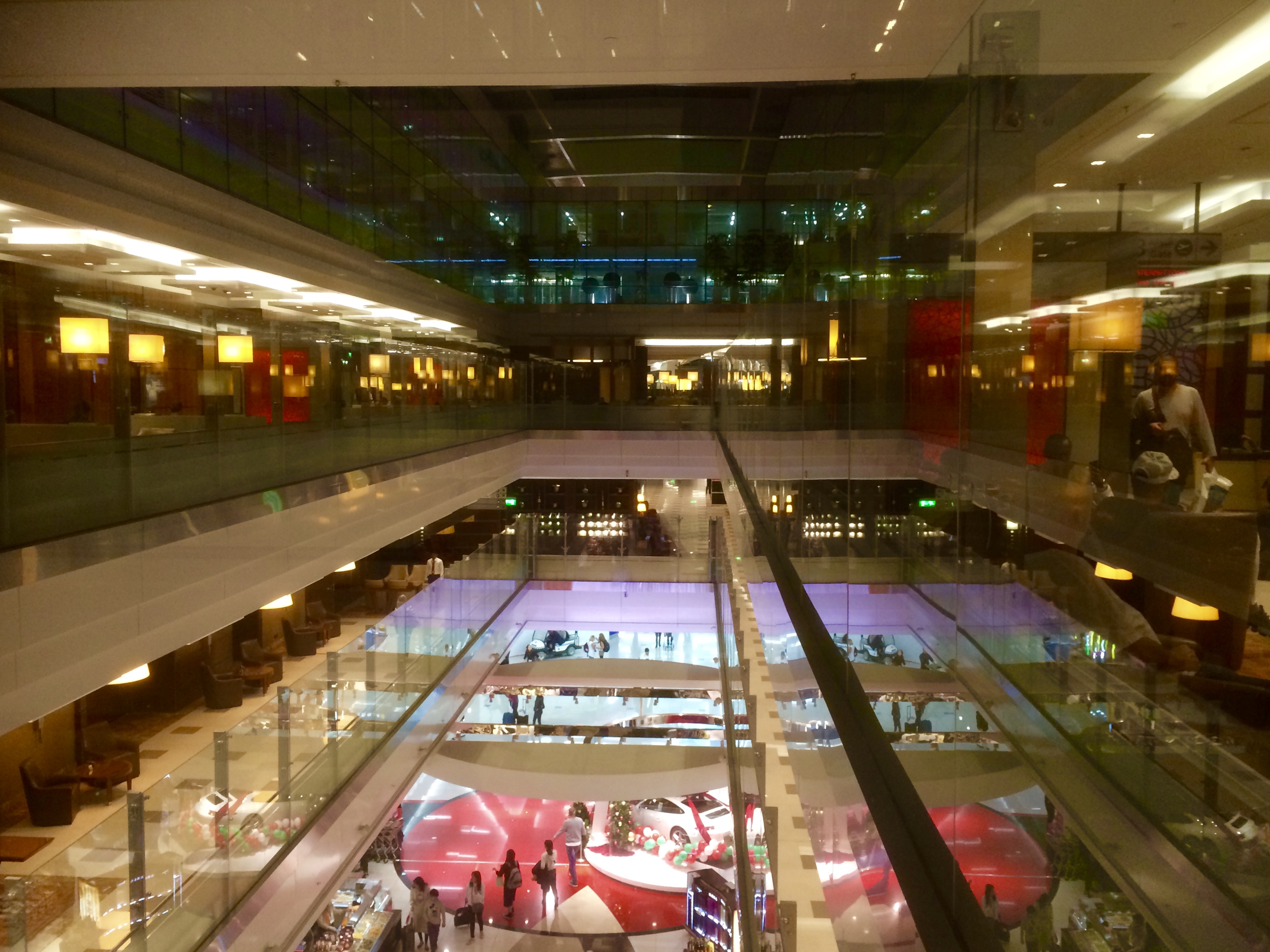
Image by Karl Powell, DXB: Transit (Dubai), 2017

Flight home called on time. No delays. Had a window seat. Girl sat next to me and slept most of way. Guy sat next to her and kept his bobble hat on for entire flat. Awake for most of the flight (wish I’d brought a book to read). Runway lit up in darkness as we took off. Could see the lights on buoys and boats floating in the sea.

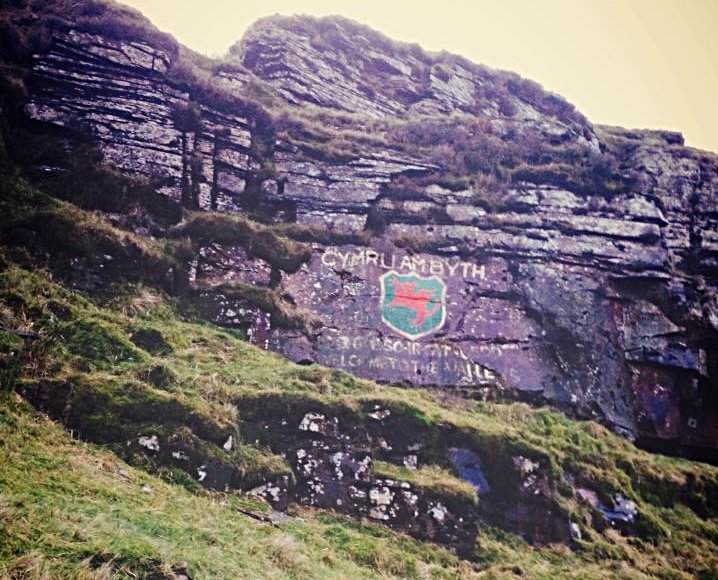
Flight soon passed. Time went fast. Flew over names of countries. Some parts seemed to take longer than others. Eventually landed. Home. Croeso i Cymru. Familiarity of the airport. Two languages side by side. Nadolig Llawen. Immigration stamped my passport. Home. Red Dragon visible everywhere. Y Ddraig Goch. Words of Dylan Thomas sound in the air:
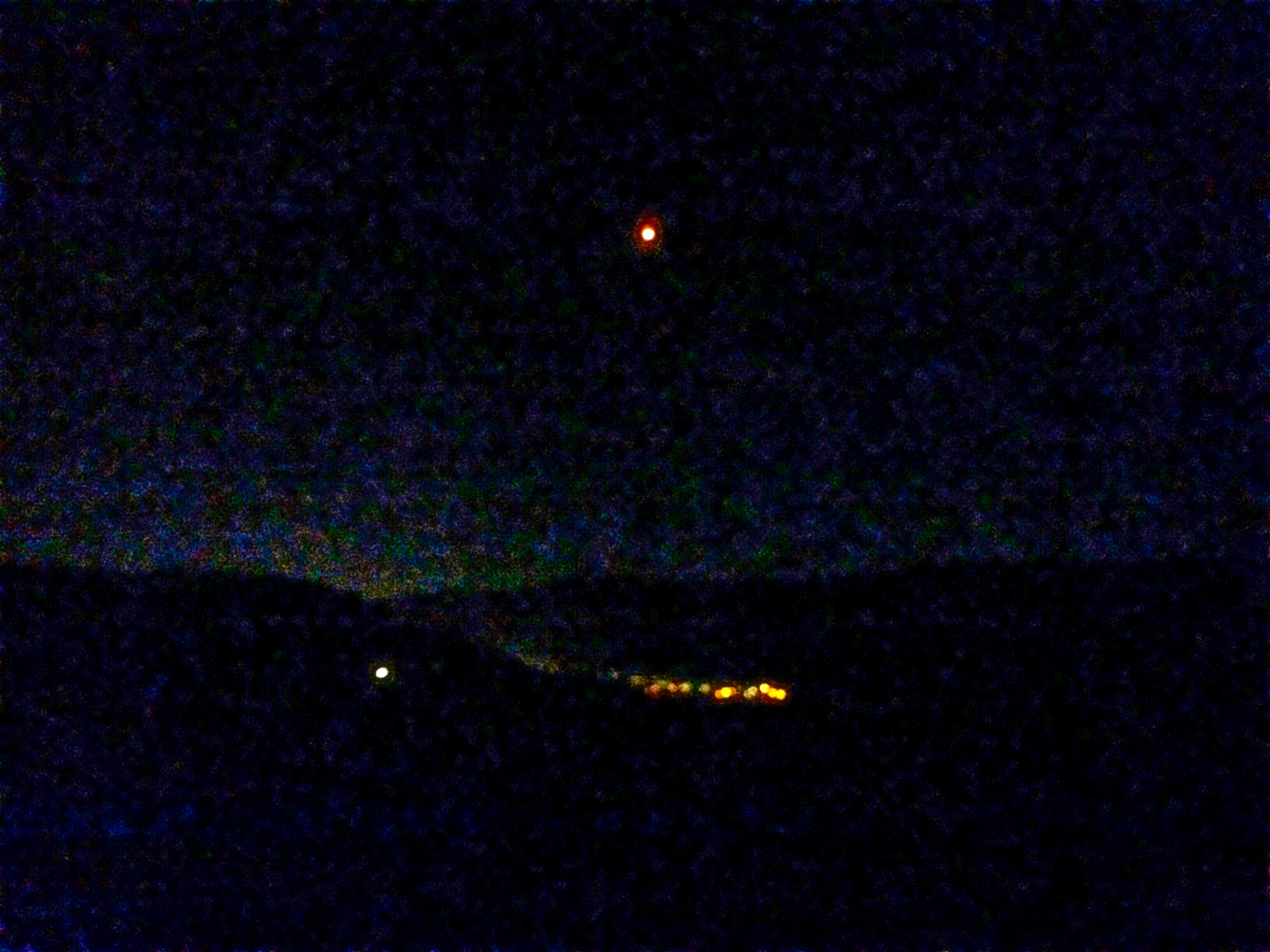
Image by Karl Powell, Magic Lanterns Above PenyPych (Rhondda), 2017

To begin at the beginning:
It is spring, moonless night in the small town, starless and bible-black, the cobblestones silent and the hunched, courters’-and-rabbits’ wood limping invisible down to the sloeblack, slow, black, crowblack fishingboat-bobbing sea.

Familiar faces waiting to greet me. Familiar car. Familiar drive home. Familiar shapes and shadows of landscape. Arriving home for Christmas. Outlines of mountains against the night sky – frozen stars cast out across the endless black. Christmas lights shine in the Rhondda darkness below. Orange lights in homes and pubs, people talking, people coming and people going. Radio songs. Dreaming of whisky and open fires. Driving home. Familiar sights. Across the Bwlch mountain road, the lights of Cwmparc down below, the lights of Penrhys on the mountain across the valley, Cwm Saerbren with its back turned facing out instead towards Treherbert, temperatures close to zero. And then roads home that I know with my eyes closed. Body and eyes heavy. Home. Eat around a table. Talk and conversation. Body and eyes heavy. Crashing through the stars and the singing, hymning dreams. Home again. And then sleep.
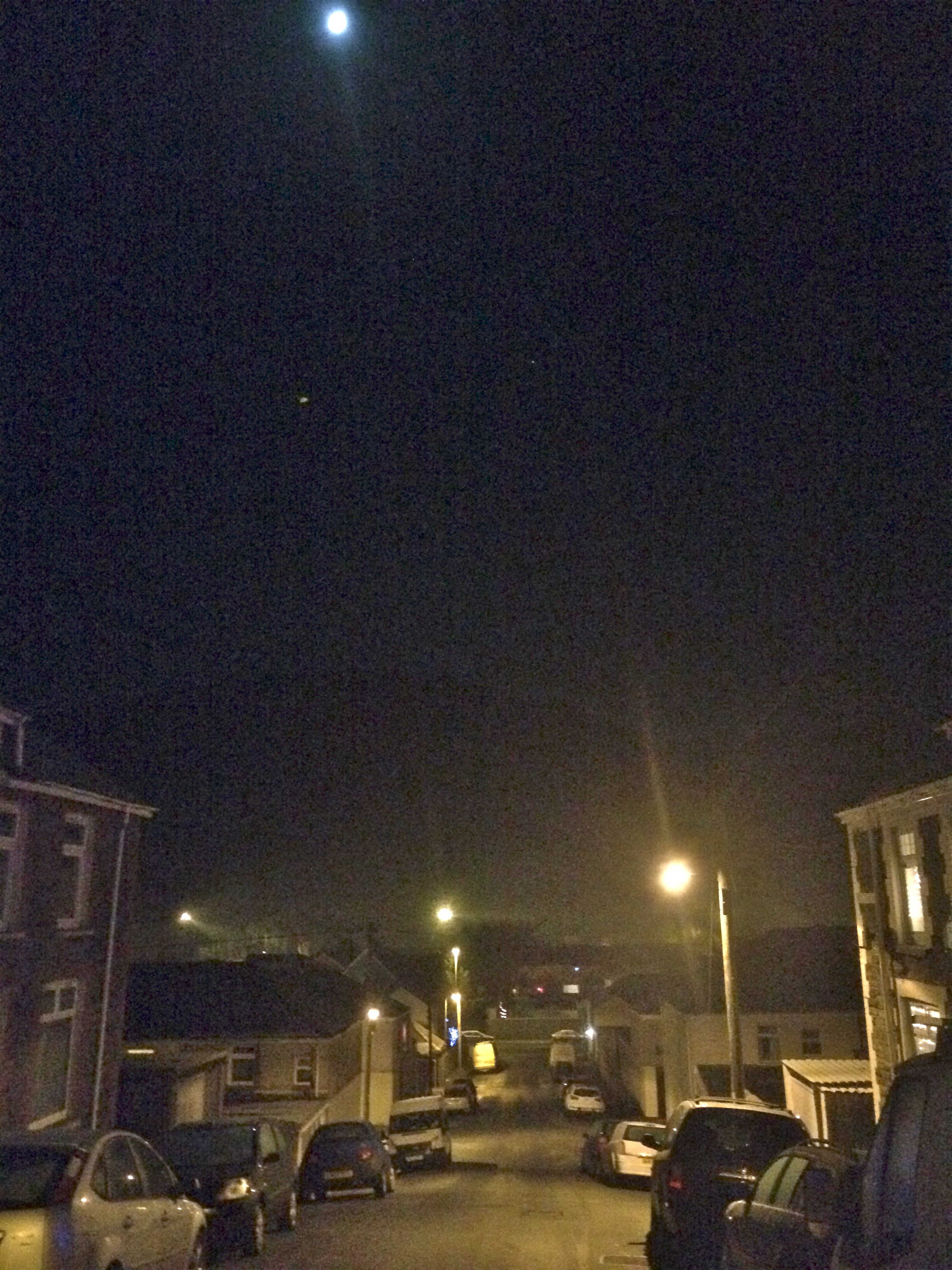
Image by Karl Powell, Ninian Street (Rhondda), 2016

Wide awake. And so I decided to get up. Crept around the sleeping house. Showered. Ate breakfast. Coffee on the stove. The slow wait. Watching the silence of the blue gas flame dance around the metallic stovetop coffee pot. Waiting. Looking out into the darkness beyond the windows. Nothing else but the darkness of night. Endless night. Silent Night. Christmas Night. The coffee pot gurgles, hisses and steams through the silence. Golden brown aroma fills the chill of the winter kitchen. Slowly pour the coffee into a patterned cup. Steam rises into the dark moving slowly like the Star of Bethlehem. The house is still; the house is silent. The whole world is asleep.

Image by Karl Powell, The Baglan Field (Rhondda), 2015

Here at the kitchen table, this table which has seen so many family dinners, Christmas dinners, birthdays, sadness and all the joys you can hope to imagine; here at this kitchen table there exists a stillness which is known only within this family home. And so, with a lighted fire heating the air, coloured lights casting Christmas shadows far and bright, I sit and drink my coffee. It will be hours before daylight comes. There is a book on this table – Dylan Thomas. And so, in this stillness, I sit and drink and read.

PART TWO: A CHILD’S CHRISTMAS IN WALES
The poet Dylan Marlais Thomas was born in Wales in 1914. An output cut short but ultimately prolific and fulfilled – words and verses sung across the rooftops in a brevity of colour, alive in moonlight, carried across the ages, spoken still, captured in celluloid, dancing in the waves along coastal shores and the deeper waters. There were poems. There was a play. There were short stories, too. Despite having Welsh-speaking parents, Thomas wrote only in English (his was a generation of people who had been discouraged from speaking the Celtic language of their parents and so were eventually passed down as ‘Anglo-Welsh’ writers). Despite this, the richness of sounds alive in the Welsh language – and its poetry, such as the chimed consonants which sound within verse known as cynghanedd – finds itself present in much of the prose and craft of Thomas. This mesmerical use of vocabulary (once described as a wrongness sounding right), plays a creative reinvention of the English dialect and conveys the sounds of an older language through it and on to a non-Welsh speaking audience.

Image by Karl Powell, Treherbert from Cwm Saerbren (Rhondda), 2017

Dylan Thomas wrote ‘A Child’s Christmas in Wales’ in 1945. The story draws on a flashback of an imagined childhood of the poet, borrowing from nostalgic memories of Christmas and his upbringing in South Wales. The story also highlights the way that Christmas can draw us home – physically or in our imaginations and memories; how it remains a tangible link to the embers of childhood and the blur of memories collected there from a time we can no longer access.
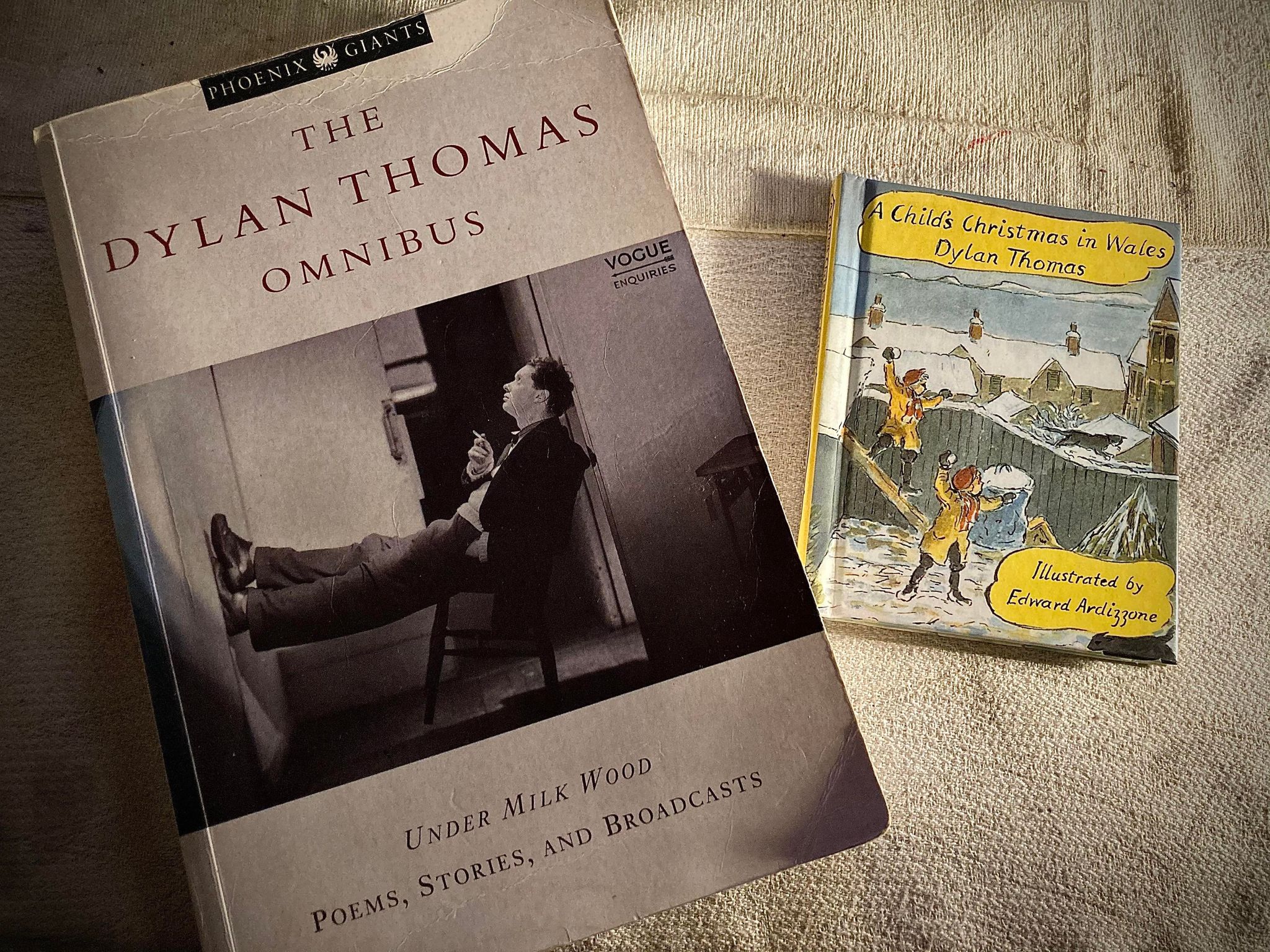
Image by Karl Powell, Dylan Thomas (Perth), 2023

It belongs to his collection of short stories, although originally appeared as a BBC radio broadcast a couple of years earlier; its title, then, ‘Reminisces of Childhood.’ As with all bodies of work, the draft keeps evolving – wants to improve – but at some stage you must let go. The myth of Icarus speaks to us of the dangers of flying ever upwards towards the Sun – the quest for high ambition. And if you hold on to a vision for too long, striving to create an unparalleled perfection, an awful realisation awaits you in that it has consumed every aspect of your life. As with all bodies of work, you must let go eventually in order for them (and you) to belong in the world. And so, amalgamating other talks, broadcasts and drafts, ‘A Child’s Christmas in Wales’ was published in Harper’s Bazaar in 1950 (before a final version was recorded commercially by RCA in New York in 1952).
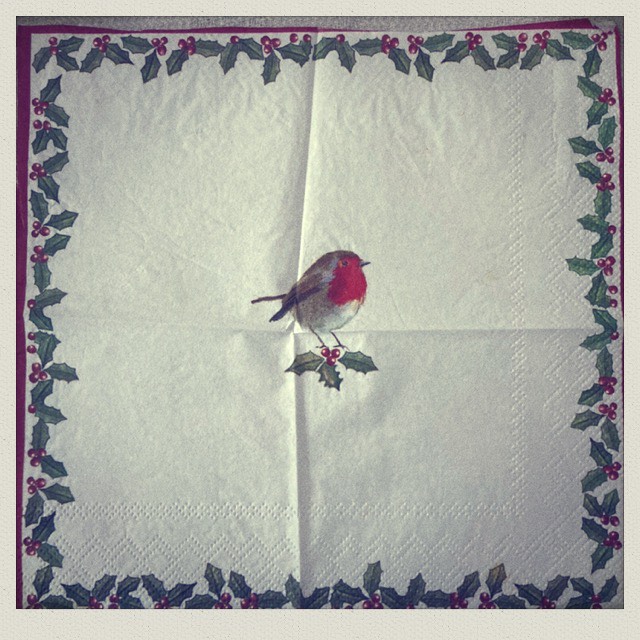
Image by Karl Powell, The Robin (Perth), 2023

It was this final version that helped establish the popularity and admiration of Thomas as a poet and a writer following his death in New York the following year.

Image by Karl Powell, Sunrise, Boxing Day (Rhondda), 2013

PART THREE: SAINT STEPHEN’S DAY – GŴYL SAN STEFFAN
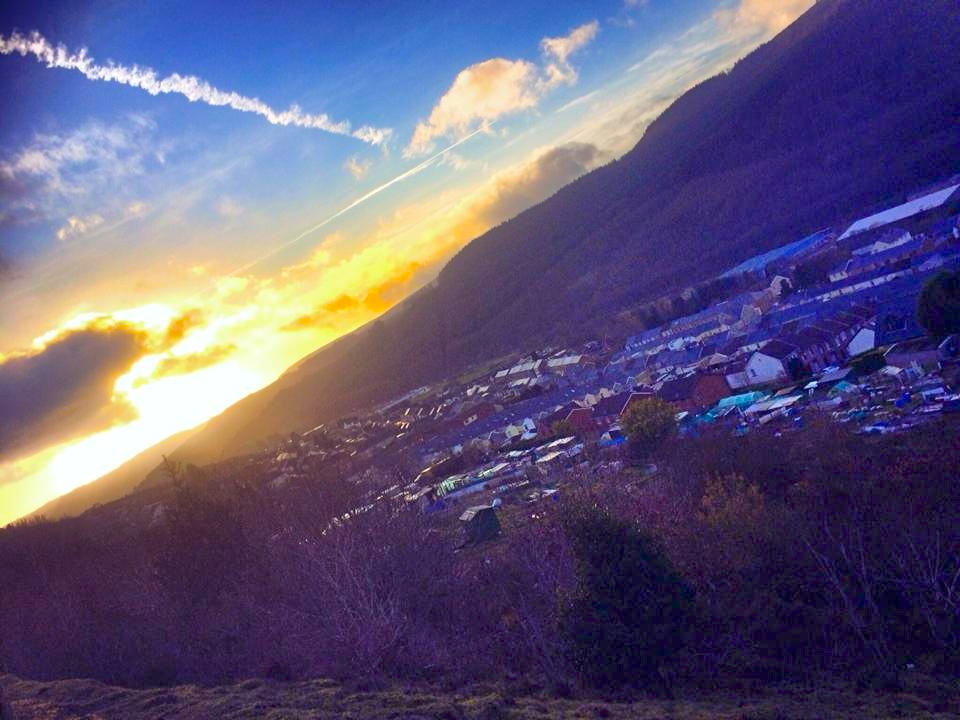
The sun is rising. From the vantage point of the horse-shoe bend up on the Rhigos mountain road I look down the Rhondda Valley and see the low-angled sunlight pierce through the freezing fog that clings to the landscape. Morning has broken. The sky is clear – its veil of night has now gone. A thin, crescent moon shines bright with Venus (both visible in the Eastern sky). The first light appeared at about a half-past seven. Slowly, darkness began to lift. Outside in familiar streets, frost sparkled. Coated on blades of grass, tarmacked roads, frozen stones, frost sparkles now. Everything is painted cold.

Image by Karl Powell, Station Street & Cwm Saerbren (Rhondda), 2013

Vapour trails from passing planes catch the streaks of yellow sunshine high in the blue winter sky, turning white in amongst the Christmas reds and rose of the morning chill, and hang suspended there in the glacial heights. Everything is so quiet. My eyes move along the valley, across the shivering homes and the trees without leaves. There are allotments empty and frozen on the mountainsides. There are horses roaming there and billowing great clouds of heat into the air from their nostrils. I watch a train pull in from Cardiff; sunlight blinking in reflections against the windows as it moves along the Baglan Field towards the station and the end of the line. From here I can see all the landmarks of home: the tall, clock tower of the old Ninian-Stuart Con Club in Station Street, the giant monkey tree now standing over the Marquis of Bute Hotel, roads and streets criss crossing as they always have, smoke rising from the Nag’s Head as it sits in the lap of the majestic Cwm Saerbren basin. And then in the silence of Christmas I realise that everyone I have ever known and loved has once lived there, down there, was from there, was once there.
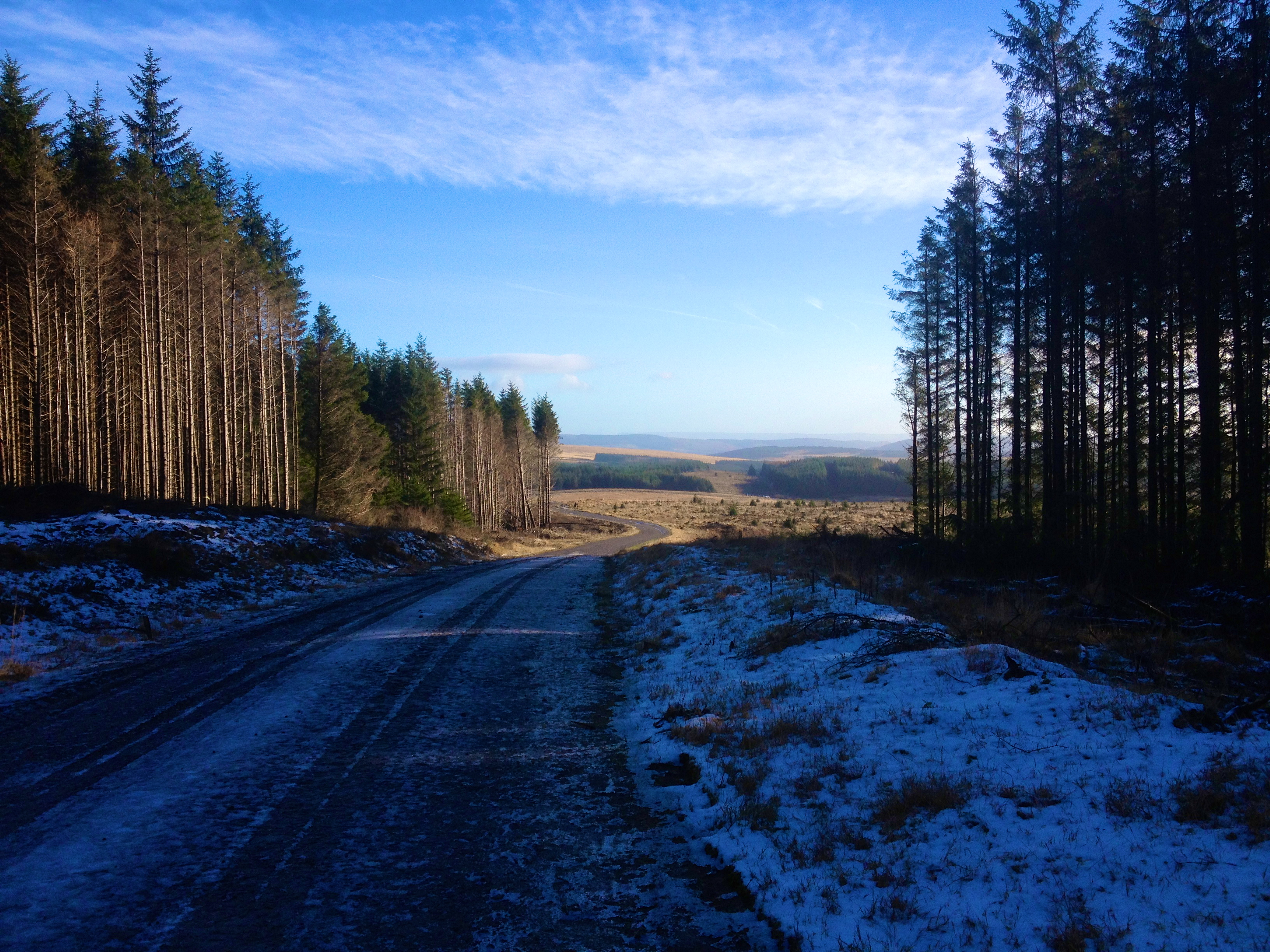
Image by Karl Powell, Rhigos (Rhondda), 2013

The holy silence is complimented by the song of the robin. It is the robin’s winter song. This sacred bird sings so clear from the woods of the Rhigos mountainside behind me, and the song carries out across the valley bringing familiarity and meaning to the cold, Christmas morning. And then the words of Dylan Thomas reappear again. There’s a wonderful line that appears in  ‘A Child’s Christmas in Wales’ – right at the end – where the child narrator leaves the adventures of the December snow and the cold and returns back into the warmth of his family home: Everything was good again, and Christmas shone through all the familiar town. And here is home and everything is good, and Christmas shines on throughout all of Treherbert.

Image by Karl Powell, Christmas (Rhondda), 2014

*

15 Voices of Men (Adelaide, Australia)

Fireworks thump hard into the springtime night sky. It is dark. No starburst of colour is visible in the smooth velvet stillness. Occasional light illuminates in patchwork shadows, finding pockets of space crushed between the city buildings which reach up to obscure all horizons. Noise booms through the warm evening air. There have been fireworks sounding most evenings this week. The holy festival of Diwali has been celebrated here – a time, when it is said, the goddess Laksmi visits homes to bring happiness and prosperity during this Festival of Light. There are fairy lights blinking in some of the frangipani trees in nearby apartment gardens, pinpricks of yellow colour flashing light in the dark. Outside my window, the city itself is quiet. An easterly wind moves through the branches of trees, bringing hot desert air from the Goldfields towards the metropolis. Some of the skyscrapers have coloured neon lights; mainly logos and names – some are just illuminated facades. Crickets sound. A full moon is forecast within a week, but as I write no moonlight is visible within the cosmos (yet). And then, for some reason, I think of the description of the moonless night given by the First Voice in Dylan Thomas’ play for voices, Under Milk Wood:

It is spring, moonless night in the small town, starless and bible-black, the cobblestreets silent and the hunched, courters’-and-rabbits’ wood limping invisible down to the sloeblack, slow, black, crowblack fishingboat-bobbing sea.

Image by Karl Powell, Bwlch Mountain, 2017

I think of home. Being a migrant on the other side of the world is a curious existence to have. It is both transient and of belonging to other places simultaneously (the old and the new). It is an existence between things; of being changed forever, almost in limbo. Sometimes caught in a concussion of cultures, languages and other identities. Looking in this box tonight I found a small folder of photographs, titled: Treorchy Male Voice Choir (Adelaide). Opening the wallet, I look at these physical pictures and can see and hear sounds and people from over two decades ago. There is a disc of their music here, too, which I am playing now.

Image by Karl Powell, Backstage with the Choir, 2009

Some twenty years ago I was transported home by the voices of men. It was the first time I had possibly understood the true breadth of homesickness. Months earlier, I had been made aware of the famous Treorchy Male Voice Choir touring Australia (for the first time since 1986). In the choir, I had family friends, familiar faces and my woodwork teacher, Mr (Meurig) Hughes – and it was he who had first told me of the choir’s intention to tour. And so dates were confirmed: the choristers would perform twenty-four concerts within a month moving through locations predominately on the eastern side of the sunburn continent: singing in New South Wales, Queensland, Victoria before concluding in South Australia. This final leg of their tour is were I decided to meet them. A long weekend in Adelaide. I was forwarded a copy of their itinerary and was able to plot dates, book flights and secure accommodation in the city of Churches.

Image by Treorchy Male Choir, Parliament Square (Adelaide), 1999

And so, near the conclusion of their Australian tour, I crossed the Nullarbor Plain to fly three hours or so into Adelaide. It was my first time into South Australia. The city centre was a grid of navigable right angled streets, divided in half by a long, straight avenue called King William Street. Sandwiching these interlocking inner-city roads were North Terrace and South Terrace. As luck would have it, the choir was on the South and I the North. On arrival to the capital, I took a taxi from the domestic airport to my hotel, checked in and then walked down to the Chifley Hotel where I had been told the choir were staying. It was now late afternoon. There were two big buses, or coaches, parked opposite the hotel advertising their tour. Outside a few choristers in uniform blue polo shirts were smoking. Their accents told me I was were I was needed to be. Inside the hotel lobby there were lots more blue polo shirts – their official tour shirt when not dressed in black tie for performances. The choir had spent the day travelling from Mount Gambier in the morning, to sing in front of National TV cameras on Parliament Square promoting the tour, to then check in briefly at the hotel before preparing to go to the Festival Theatre to sing. It sounded an arduous schedule. In the hour or so that I was in the Chifley Hotel I managed to find a family friend, Clive Taylor, who told everyone – particularly designated officials – that I was his nephew. This half-truth became my passport to going everywhere with the choir during the weekend in Adelaide.

Image by Karl Powell, Dad, 2008

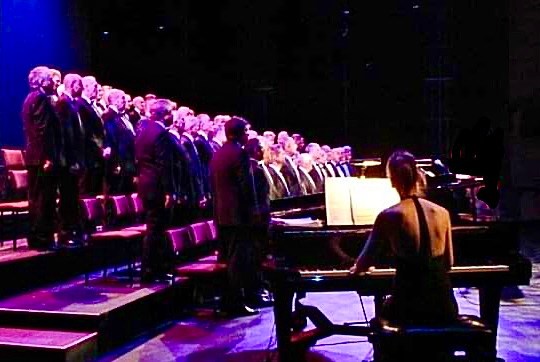
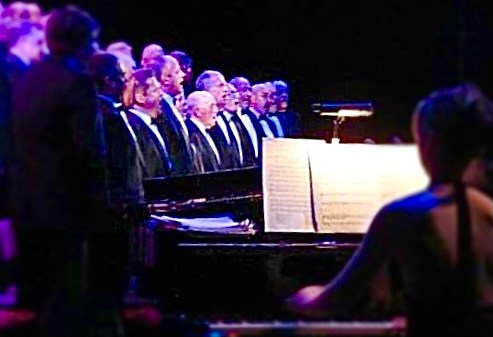
Later that night, I sat with some two-thousand people in the Adelaide Festival Theatre. It was the first time I had seen or heard the Treorchy Male Voice Choir sing as an adult. These were men I had known all my life, some there from childhood, up on stage in front of us all. After the applause of their entrance, after the muffled hush of taking places, after the first sound of melody from their voices, I was transported elsewhere. They sang songs in Italian, English, Xhosa Zulu and Welsh. They sang songs I had grown up with and grown accustomed to. There were songs sung that I knew the names of, there were some songs sung whereby I only knew the sound. The power and beauty in their voices carried through the air and thumped deep upon some hidden space of the heart. There, the emotions of exile shattered in starburst. The power within their spoken words transported me back to childhood, back to a place I left before I truly understood it; with closed eyes, I could see the colours Max Boyce sung about in his ballad ‘Rhondda Grey‘ – that it was the faces of people who lived in the old mining community that coloured the world existing there. When the choir sang the spiritual hymn ‘Oh My Lord What a Morning’ an old man in a dark suit, sat in front of me, began to cry. And in that swell of emotional longing – the brooding ache of hiraeth – there was also present a deep and never-ending bond of belonging to place and time.

Image by Karl Powell, Sunrise over Treherbert, 2017

The performance lasted across two halves. There had been an intermission and interludes from solo performances of choristers and singers, such as the rendition of Unwaith Eto’n Nghymru Annwyl from the compere and publicity officer of the choir, Dean Powell. There was an encore at the end. After the performance, Uncle Clive smuggled me on board one of the buses back to the choir’s hotel. There, in the lobby of the Chifley Hotel, the mood with the choristers was gregarious. We drank together and I met many friends (old and now new). There was also a grand piano there and someone began to play, and the men sung. I stayed until late, very late, before the bar closed and I caught a taxi back to North Terrace. It had been a long day. Before leaving, I had been told to report back to the hotel the next morning to accompany the choir into the Barossa Valley to see them perform in an afternoon concert at Tanundra.

Image by Karl Powell, On Top of the World, 2016

It was an early start the next day. There were two buses of choristers departing the city towards the north east. As to plan, I was smuggled on board one of the buses, sitting next to Uncle Clive. Most of the men were obviously tired, some hungover. The long and demanding schedule was beginning to catch up on their bodies and vocal chords. Throw in the stresses of jet-lag, an eight hour time difference, a month-long separation from families, as well as the transient nature of living in hotels, many were happy to see the long tour draw to a close. This, their final day, required them to perform twice; once at Tanundra before returning to Adelaide for a second evening at the Festival Theatre. Due to ill-health, Uncle Clive sat out the matinee performance, so we were able to sit together in the audience and watch the choristers sing. It was a much smaller audience than the previous night. But it was the first time Uncle Clive had been able to see or hear the choir since becoming a member. During their rendition of Joseph Parry’s Myfanwy, he kept saying how proud he was to belong to them, whispering aloud to himself how good the choir sounded. And they did.

Image by Karl Powell, Choristers in Rehearsal, 2009

On the drive back to Adelaide one of the buses broke down. No one paid any real attention to what was happening until it was announced that the soloists and elderly choristers should go back to the hotel on the other bus, while the rest of us waited on a hard shoulder. We waited for over an hour. It was a hot afternoon, in that dry heat Australia can have, and without a working engine there was no air conditioning either. Only the radio worked. There was nothing that could be done until assistance arrived. We were in the middle of nowhere. Yet no one complained. Most slept or tried to rest. The radio helped – some sung along to the music played to pass time; an impromptu accompaniment of Cat Stevens’ Moonshadow was one which remains in the memory. Eventually help arrived, the engine was fixed and we made it back to Adelaide with enough time to return to Festival Theatre before the curtain went up. The performance – the last performance of the Australian tour – went well. Sitting among the cheering crowd as the curtain came down I felt so honoured to have been adopted by the choir over the weekend, as well as in admiration for these men who had given up their time and money to sing. They had carried their songs across oceans and continents, sung from a place deep within despite being close to exhaustion. Watching them all stand, wave and bow I felt immense sense of admiration for their craft and desire to share their passion and create belonging.

Image by Karl Powell, Tommy’s Bend, Bwlch Mountain, 2017

There was sadness the next morning. There was sadness because I was saying goodbye to family friends (some old, some new). They were going home. Back to where I had once belonged. There was also sadness because I was leaving their familiar reality, this understanding without explanation, to journey three hours west across the Nullarbor Plain. I did not want the connection to end. Our departing flights from Adelaide were scheduled more or less at the same time – albeit from different terminals (them the International, me from the Domestic). The choir made sure I was on their bus to the airport. In fact, they had even smuggled me to an official engagement immediately after the final concert – a sit down reception with an open bar. It had been a late night, but one which I had enjoyed, creating many new friendships – sharing in that special bond that travel can easily create between strangers. With suitcases stacked up in rows outside the bus we said our goodbyes.

Image by Karl Powell, Rockin’ Roger 2007

Looking out now at the silent cityscape tonight, the fireworks have stopped. The sound of the wind still blows through the branches of nearby trees. Tonight I am listening again to the voices of those men singing. Their music is alive here tonight. And I know, that some twenty years later, some of those voices are no longer singing. But they are singing. They are singing in concert out across the darkness of this night sky, this moonless spring night sky. The voices of those men colour the darkness from the twinkling neon lights up towards the shining Southern Cross. Across oceans and continents. Their voices are alive here tonight.

Image by Karl Powell, Boyo, 2009

*