12 Dreams of Mauritius

The world is asleep but I am wide awake. This beautiful room, with its table of shells and walls of coloured art, is quiet. The balcony doors are closed, their green gossamer drapes hang motionless. 4.29am. Awoke about ten minutes ago. Had a really deep sleep. Dreamt of nothing – just one of those bottomless, velvet starless sleeps where the shoreline of contentment never moves beyond the tides of breathing in and breathing out. Everything feels still and at peace. But I am awake and four hours ahead of local time. The rest of this guesthouse sleeps. Most of the other guests are from France (and they are a further two hours behind). Breakfast is served at 8.30am; some of us are meeting at 6.30am to walk to the beach. There is nothing I can do to make the time go faster.
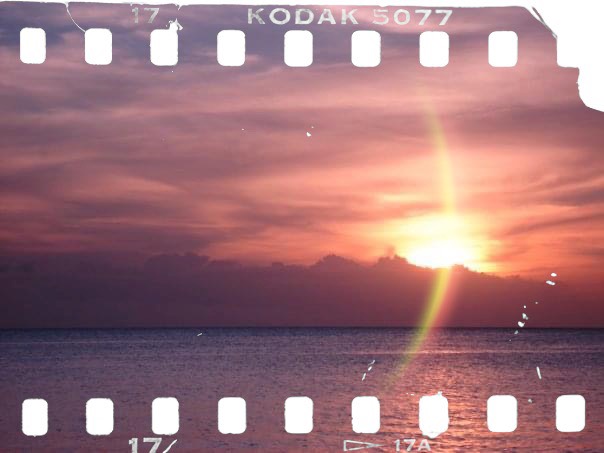
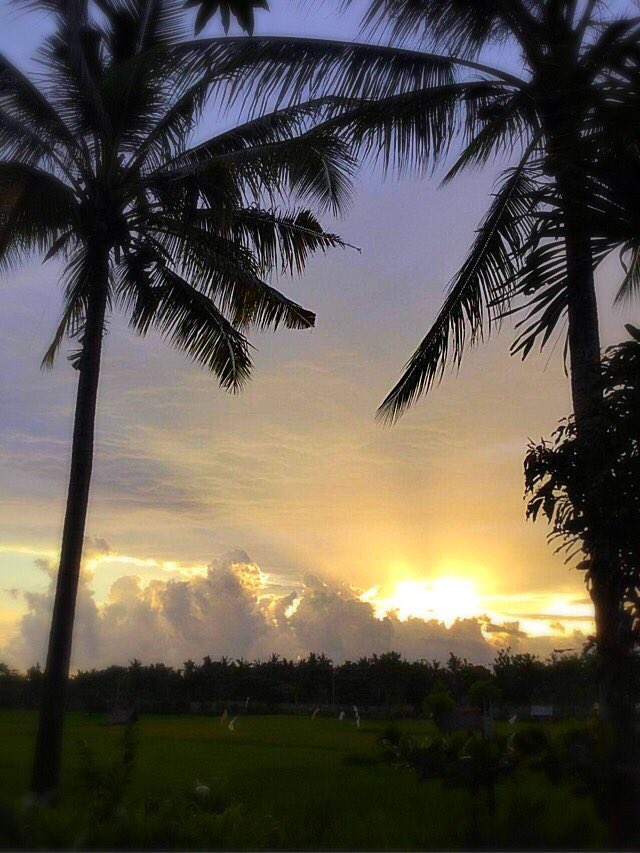
Image by Karl Powell, Sunset Mon Choisy, 2007

Along a road, along a lane was a house in Pointe aux Cannoniers. I stayed there for only a short while, but long enough to love it and the experiences it gave. Due to my jet lag the mornings were longer than the nights. I began each day by boiling a kettle to make some vanilla tea (thé à la vanille), and would sit on the floor of one of the small balconies waiting for the hues of dawn to blend and change across the sky. My room was large, on the top-floor. The space inside generous: white washed walls with the owner’s artwork on display (in essence it was a living gallery). Ocean shells could be found on tables and shelves. In the corner of the room was a small desk. I wrote there a few times (especially during the afternoon), but found preference with one of the balconies seated within its cast iron railing surrounding the drop. This balcony overlooked the al-fresco courtyard where meals were served; it also overlooked the long laneway linking this little world with the long road out of Grand Baie, and to the rest of Mauritius. For that time before daylight, I would sit and write. As my vanilla tea cooled in its red rum colours, I ate mangoes, oranges, pineapples and wrote about the previous day. On reflection, I probably spent no more than an hour there each morning writing, lost in the thing I loved to do.

Image by Karl Powell, Grand Baie, 2007

The sun would rise around six, bringing a honey-coloured light into the sky, creating pastel hues within the thin drifts of cloud smudged high above. Before then, the silence existing at the edge of night would give way to a dawn chorus. The other balcony, at a right angle to where I sat, reached directly into a tree – much taller than the guest house – this was home to a number of small, orange songbirds. At breakfast they would come to tables and eat any crumbs fallen to the floor. But the day would only begin when they sensed the moment before sunrise. At first one solitary voice would begin to chirp in soft, regular trills. Then, within minutes, the entire tree was alive with the most beautiful sounds and songs of morning praise. These birds would sing all day until sunset. Few moments will ever come close to replicating the beauty I heard at that hour. In fact, wherever I am, whenever I make vanilla tea, I am immediately back in that room, in the guest-house in Pointe aux Cannoniers, glimpsing those moments before dawn.
Image by Karl Powell, Coastal Road, 2007

Half the world is asleep but I am wide awake. 6.30am. Waiting for Virginie from Arles. We are going to walk to the beach. People are leaving today. The honeymooners are going home; as are Michel and Marie-Claude. Had such a lovely evening last night. Ate at the restaurant here. Last night’s special was a crab salad. It was incredible. Gérard the chef brought it to me himself. Rahma from Paris arrived yesterday; a guy called Benjamin from Kenya was also eating in the restaurant. After the meal, Michel bought rum for all of us and gave toasts to the future. They were such a lovely couple. We’d spent the day together at île aux Cerfs on a day trip when I first arrived. Despite language barriers I enjoyed their company; they were lovely people. At the end of the night, when we came to say our goodbyes, Marie-Claude was crying. She hugged everyone goodbye. She told me that she wished for me good luck, to be happy and to have a beautiful life. She repeated this twice, slowly, wanting me to remember. Michel and Marie-Claude left at 4am this morning for the airport. I didn’t hear them leave.
Image by Karl Powell, Bus to Grand Baie, 2007

The walk to the beach from the guest house was long, but always worth it. There seemed to be an adequate amount of time to walk all the way there, to swim, and to walk back before breakfast. On arriving back at the guest house Yasmeen, from Rodrigues Island, had just begun serving coffee. Flanking the laneway, all the way out to Royal Road, were tall, stone walls. Plants, flowers grew there. A giant cactus held its arms wide to the sky, showing a giant white flower which only seemed to blossom in the morning. There was also a small shrine to the Madonna hollowed out in one of these walls. There were always fresh flowers placed there and weeping wax candles burning. Once I saw an old woman kneeling there praying in the afternoon. There were tears streaming from her eyes.
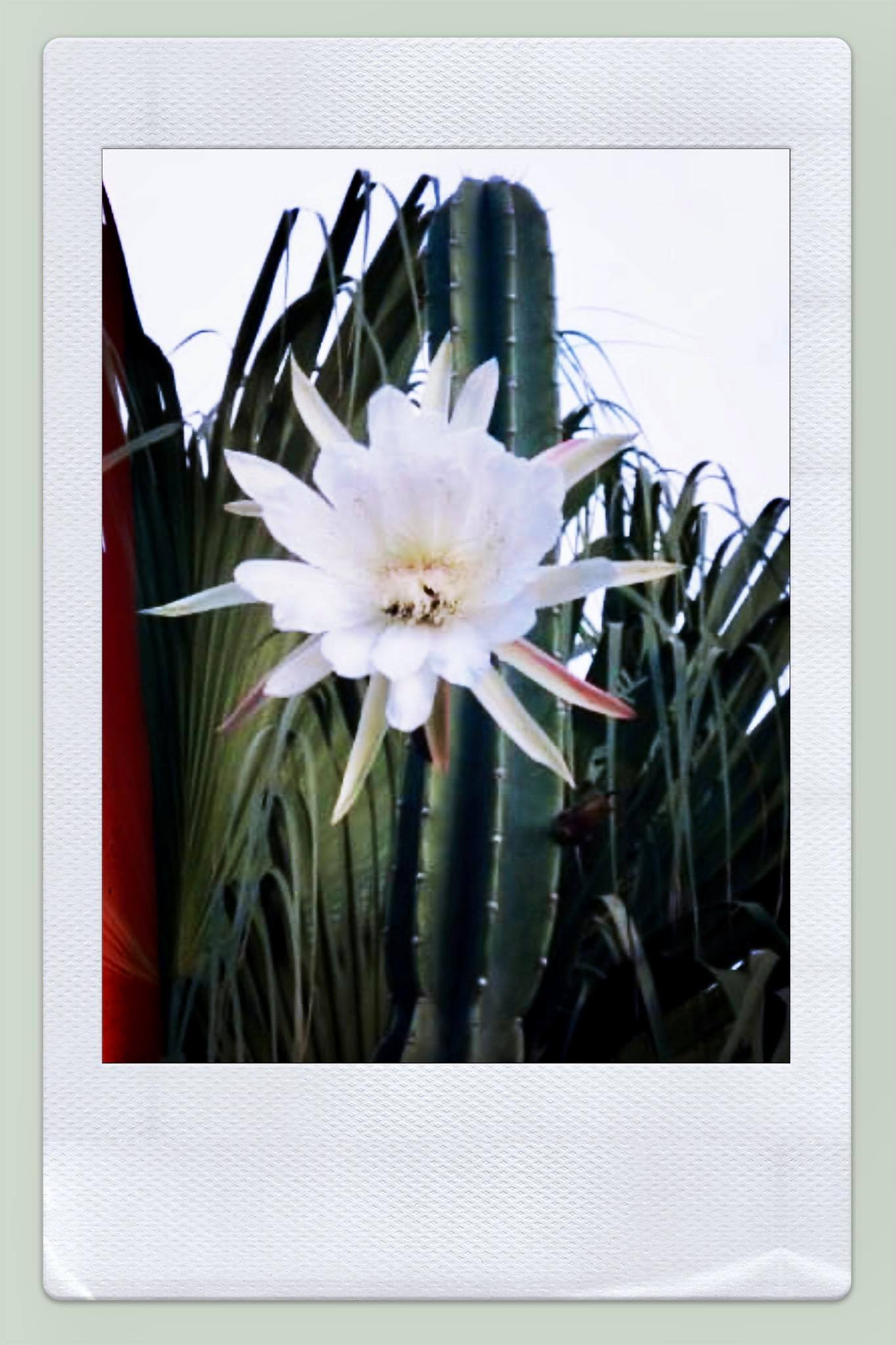
Image by Karl Powell, Morning Cactus, 2007

The end of the laneway faced directly opposite a small grocery shop on Royal Road: Persand Royal Super Market. This had been one of my first navigation points when exploring my surroundings on my arrival. From here, I turned right and walked along the long road to the beach. I had been told it was a long walk, but one which was possible (I had even been given a hand drawn map by one of the staff at the guest house). At that hour there was very little traffic on Royal Road – occasional early buses coming in from the capital Port Louis and suburbs such as Goodlands (where some of the hotel staff lived). Occasionally, I found candles burning on the road side, bottles of rum asleep on their sides, sometimes other people walking the same pathway as myself.
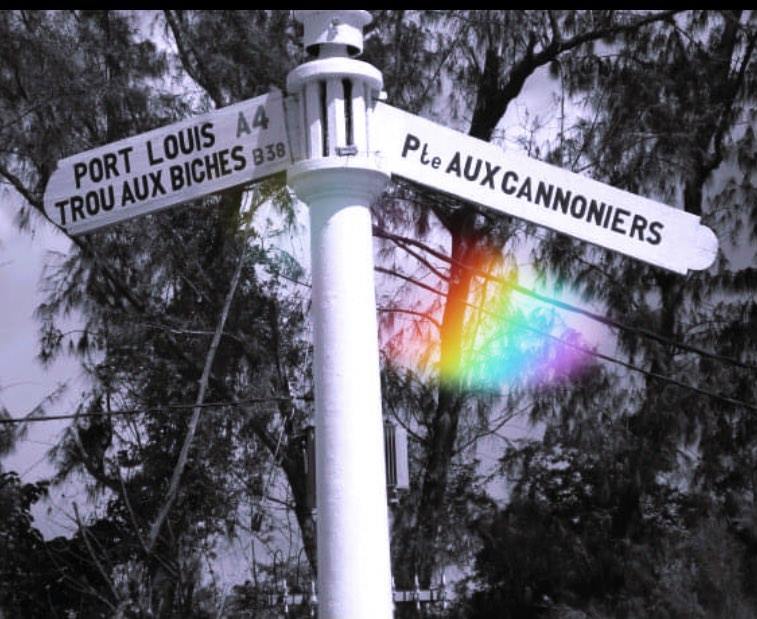
Image by Karl Powell, The Roundabout, Mon Choisy, 2007

At the end of the walk was a roundabout with a confusion of roads all branching off in other directions. As long as I followed a sharp left, hugging a path that curled around a shopfront (facing onto the roundabout), I would stay on track. The shop was large – a kind of supermarket selling everything from food to souvenirs; the owner, a welcoming man from Madagascar, recommended good varieties of rum for me to try. Back on the track, past the shopfront, the pavement ended and I would have to walk carefully along the shared tarmac with oncoming traffic. I came to recognise a row of small houses as my final marker; I crossed the road and made towards a thin forest of trees. Then, there were two beaches alongside each other to choose from: Mon Choisy and Trou aux Biches. Mon Choisy was the one I came to love the most.

Image by Karl Powell, The Spices of Life, Port Louis, 2007

The whole world is wide awake but I am ready to sleep. I am walking back along the narrow tarmac road that leads back to the guest house. With the time difference, it is already way past my bedtime at only 7pm. Dusk has fallen, stars are beginning to pierce the sky. Trees hang tired branches down. The air is warm. Everything smells of a day in the sun. I have been down to the beach to swim and watch the sunset. It was not so busy there tonight. Last night was amazing – it was packed with makeshift tents erected between trees, sheets and blankets pulled together; several camp fires danced with leaping flames, people moved to sega and reggae, the sound of drums thumped into the sand. Before my walk there, I went down to Grand Baie to sit by the water’s edge. I saw Gérard the chef there fishing. Not sure if he caught anything. Virginie leaves for Reunion Island tomorrow afternoon. She told me this morning on our walk to the beach that Marie-Claude had terminal cancer. She thought I knew. It had been Marie-Claude’s dream to visit Mauritius. “Good luck, be happy, have a beautiful life.”

Image by Karl Powell, Fishing, Mon Choisy, 2007

Mon Choisy faced west. The beach played host some of the most incredible sunsets, filling the sky with vibrant colour as the red sun slid behind the horizon and across the rest of Africa. As in the morning, the water was almost always flat and calm at sunset. In the morning, the bright yellow sunlight arrowed out from the surrounding trees and illuminated the ocean. Yet at evening, the setting sun faced you as you sat facing the ocean. The colours were every bit as mesmerising as I had always dreamt they would be. It was difficult not to want to share that beauty with someone close. As with any encounter with the Indian Ocean you come to realise this magical ocean is always awake, always alive, somehow connected to you.

Image by Karl Powell, Le Morne, 2007

To visit Mauritius had been one of my dreams, and the short time I spent in the house at Pointe aux Cannoniers was literally a dream come true. During these experiences of travelling you meet strangers sharing the same path, the same moments in time; invariably, they become woven into that dream’s unfolding. From his home in Souillac, the poet Robert Edouard Hart wrote from a house facing the Indian Ocean. In one of his poems he spoke about how the ocean, like many of our shared dreams, has a natural quality to touch, inspire and include all people (transcending cultures, countries and difference):

Tous les songes d’Asie, Tous les parfums d’Afrique, Toute le poésie chimérique, me viennent ce soir avec cette brise de la Mer Indienne…

All the dreams of Asia, All the perfumes of Africa, All the chimeric poetry, comes to me this evening with this breeze from the Indian Ocean…

One of the great indulgences that writing can provide is the opportunity to drink from these wells once again; to travel back in time, to revisit these places and to meet old friends again for the first time. In just a short time, I had met so many wonderful people – from Mauritius, its surrounding islands, Europe – who all gave their kindness and friendship freely. For the whole of today I have been able to see and feel all what I experienced there so many years ago. Individual, separate moments joined together in a whole, shared experience – now colours a part of a dream that lives forever.

Image by Karl Powell, The House in Pointe aux Cannoniers, 2007

*

9 The Balinese Fishermen

The day had been spent writing. It was important to find a routine that worked; for good writing it was necessary to find a rhythm (or to let the rhythm reveal itself to you) – something, in the words of the Poets, which enabled you to hear the Muses sing as clearly as possible. When you committed to creating momentum, and worked patiently within in, then the words just flowed and the magic happened in front of your eyes. Waiting for inspiration is as pernicious as blocks, procrastination or the fear of a blank page. Much has been said about how to write, when to write, how often to write. In the end what works for you is probably best: but you have to find your own rhythm. For some, the most potent time is around dawn – brahma muhurta – when creativity literally comes down to meet you; for others the alchemy is best experienced after dusk, as documented in the verses of Dylan Thomas:

In my craft or sullen art
Exercised in the still night
When only the moon rages
And the lovers lie abed
With all their griefs in their arms,
I labour by singing light.

Image by Margi Currey, Sultry Sunset over Seminyak, 2017

For almost a month I had found a routine that really worked for me: a walk along Tuban Beach before breakfast; to write for several hours at a desk in a room I had rented until lunch; a couple of afternoon hours editing sitting outside; finishing with a walk near the ocean at the day’s end – leaving the nights free. Long mornings were spent sat at a desk overlooking a garden with green, flat tropical leaves, which moved and swayed in what little breeze dared whisper. After lunch, I moved onto a balcony, a bar or cafe, editing what had been written the day before – all the while watching the afternoon skies grow heavy and then burst with rain. The flat palm leaves were drummed into a kind of submission by the downpour of raindrops – the surrounding greenery seemed to become more vibrant in sound and colour because of the rain. This routine had worked, the project I was working on was almost complete.

Image by Margi Currey, Sunset , 2017

Walking along the beach at late afternoon (before the sunset) helped rejuvenate and untangle the mind from words and ideas. It was a good way to avoid burnout on any long project. The beach was not far from my room – a short walk through several narrow streets (jalan or gang). Roughly, I would arrive there at that time of day when shadows had begun to fall through the trees and stretch themselves out across the shoreline where wet, tropical tarmac gave way to the sand. The strength of the sun had long begun to fade. Mosquitos were beginning to make themselves known, nipping and biting. The day itself felt tired in some way.

Image by Karl Powell, Kartika Gang Jalan (Tuban), 2005

Some days I would walk there as the tide crept its way back up the beach. The incoming waves growing in noise from a still and silent ocean. Local children would play in the foaming surf; tourists taking photos of the flat silver ocean beyond them, waiting for the pink sun to set and burn Titian colours across the sky. Planes flew upwards from Ngurah Rai Airport, passing the beach, reaching up overhead journeying home. Sometimes patches of yellow light broke from above the clouds and over towards the north, the mists would clear and Mount Batukaru drifted into view. 

Image by Karl Powell, Jenni, 2005

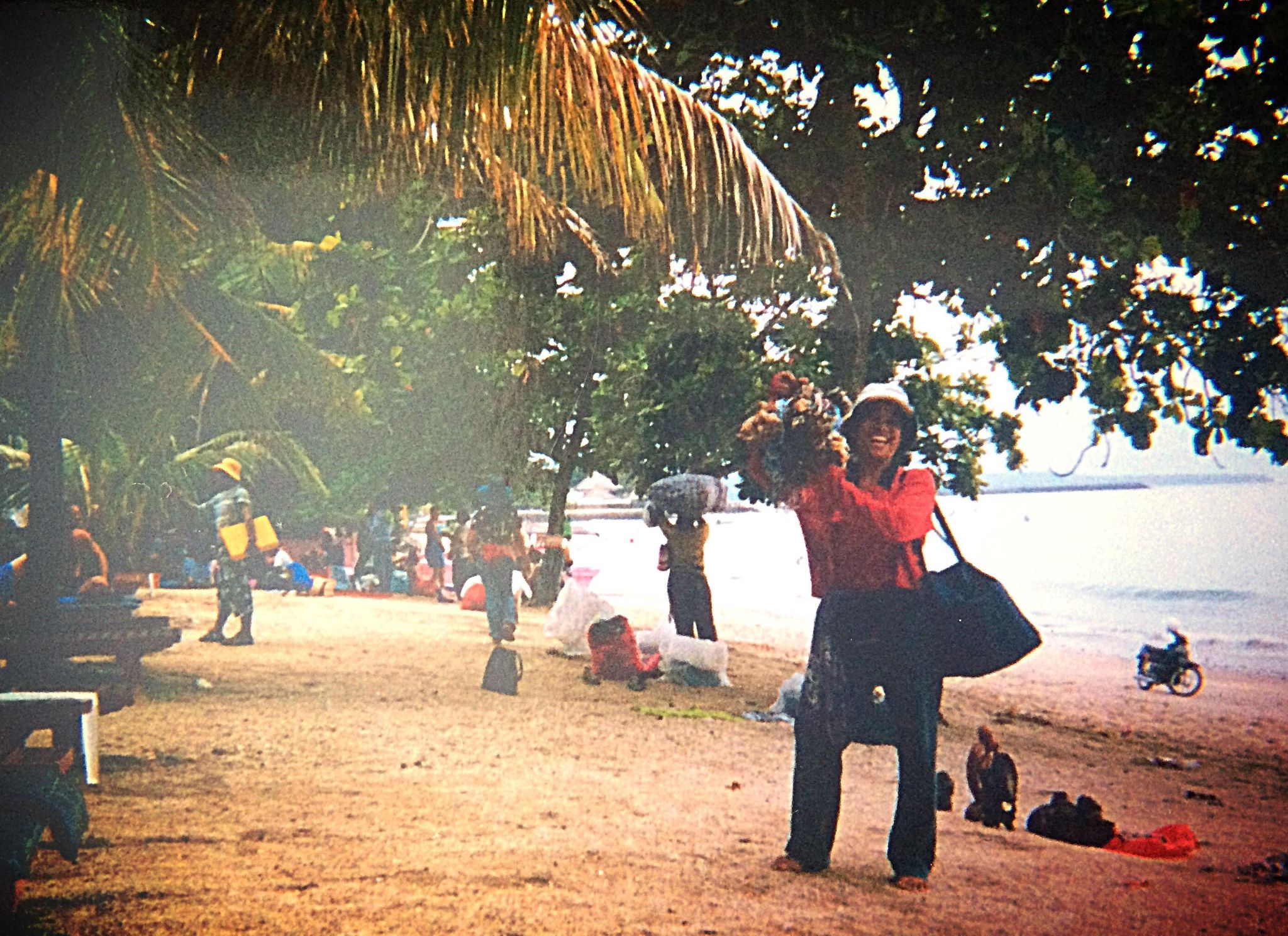
At that time of day, many of the sellers would be packing up – taking home what had not been sold to try again tomorrow. The odd tourist would walk past but the last sale of the day had possibly come and gone. Heads low. Some of these sellers worked on the beach the whole day. Time to count up the rupiah and see what has been made for the family today. Not much left to say. No more customers will come now. Through the familiarity of routine I got to know some of these faces. Andrew sells necklaces. He wears a yellow hat with his name on it. He has four children, three boys and one girl. He tries to sell me a temporary tattoo. OK don’t forget me tomorrow – remember my name. Eric is selling a crossbow. He also has a blow-dart for sale.  Eric speaks Italian. He learnt it on the beach. He speaks fluent Italian. A friend bought him a book. Each day he learns a little more. Step by step. Eric also speaks Javenese, Balinese, Indonesian, English, Spanish, French and a little German. He learnt it all on the beach – a la spiaggia. Most of the sellers here have their own patch.  Some sit under frangipani trees during the heat of the day. They sell for good price, cheap price, welcome to Bali price. A blond tourist has three Balinese women braiding her hair on the beach outside her hotel. They say all the right things to her: she is pretty, she smells nice, she has beautiful hair. They ask if she is Australian, or American, or English. They each repeat their names if she needs anything else – You want to buy a hat tomorrow? You come to Jenni. Kiki, Lisa, Jenni – all three braid her hair.

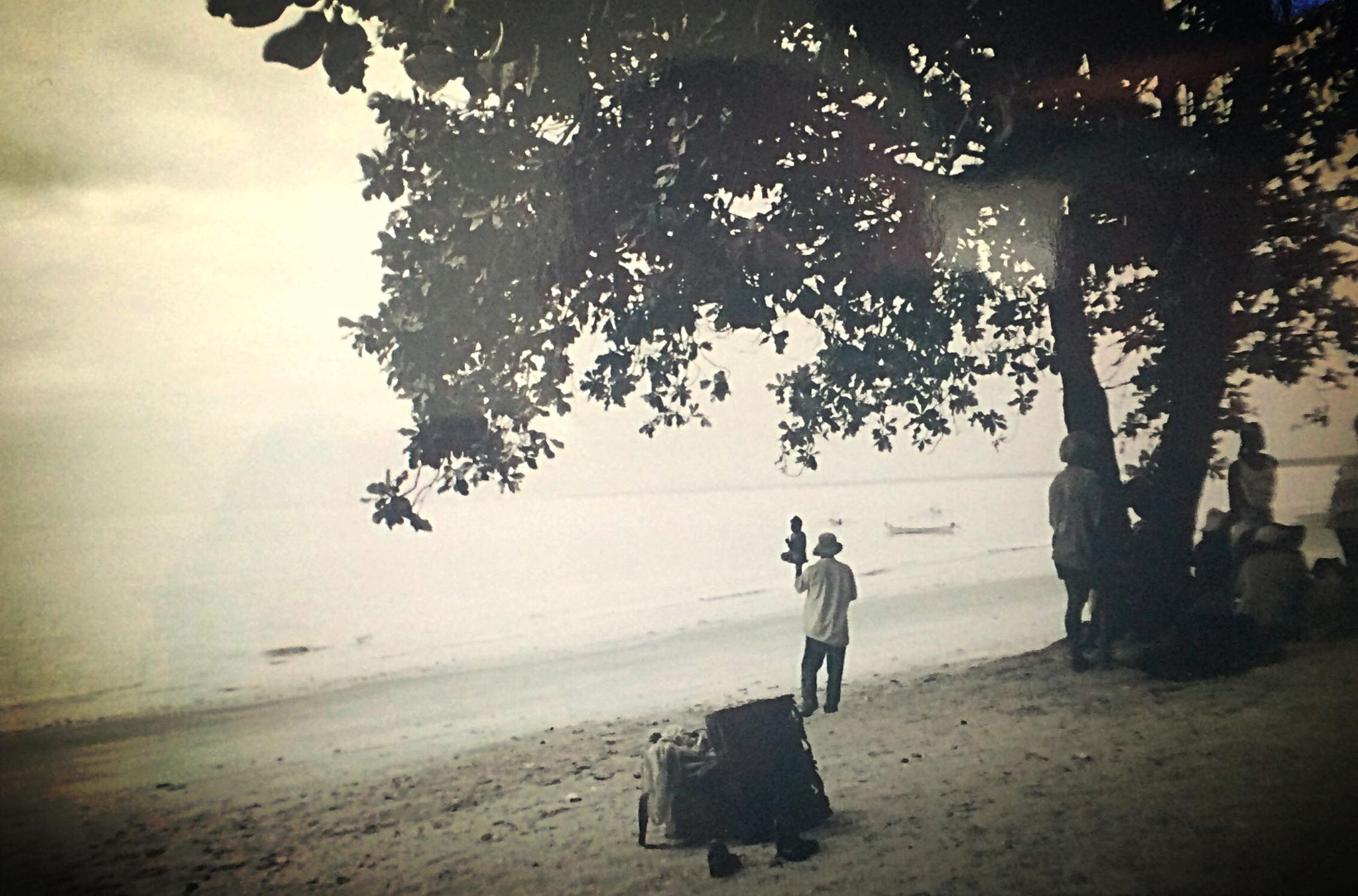
Yayan Nuken sees me and comes and tells me his name.  He writes it in the sand so I can see it. ‘YAYAN NUKEN.’ He gets me to pronounce it.  He sells wooden statues of the Buddah. He sells the most beautiful shells in the world (laid out on the sand in three, neat rows). He says, I make nothing for one week. I pray to make a little more money for next week. The rain keeps the tourists away. No tourist, no money. You want a tattoo, Boss?

Image by Karl Powell, Yayan Nuken, 2005

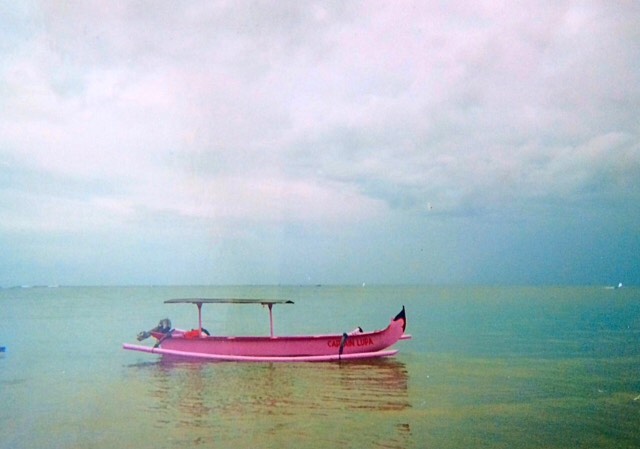
Further along the beach, the Lupa floats about without care on the flat silver ocean. It is visible from a distance, being a distinctive bright pink. Lupa is a boat – a jukung – a long, hollowed wooden outrigger with long, lateral supports. It is anchored in waist-deep water and having spun and drifted all day it now bobs and nods on the easy sea. Clouds move east filling the Balinese sky with moisture and heat. Captain Nyoman stands looking out to sea. No tourists. No good. No money. Arms folded over his chest he walks along the water’s edge. He sees something, bends down to pick it up. He looks at it in his hand, then tosses it out for the ocean to keep.

Image by Karl Powell, Lupa, 2005

Some days it was nice to walk the full length of the beach – to go right down to a perimeter fence that segregated something from the rest of us. One of the first times I ventured that far, I saw a lone black silhouette standing in waist-deep water ahead of me. By the time I reached him, he was standing up behind a stone breakwater facing the ocean, holding a thin fishing rod with the line sunk under the water. As I got closer I could see he was a young man, maybe in his twenties, hidden underneath a navy blue polythene poncho. He wore a baseball cap. On seeing my approach, he nodded and said, ‘Look for the stones to stand on.’ I looked down and there in the sand was a hopscotch smattering of octangular shaped stones sunk in the water, big enough for feet to walk on.

Image by Margi Currey, The Hidden Crystal Waters of Bali, 2017

I joined the fisherman on standing on the breakwater. Elevated up, he water stood around our knees with the breakwater at our chest.

‘Have you caught anything?’ I asked.
‘No, not yet.  I try to catch something.’
‘You work on the beach?’ I asked.
‘Yes.  Every day I work here,  I sell ice-cream for the tourist.’
‘You are from Bali?’
‘No, I am from Java.  But now I work in Bali.’
‘Do you have family here?’
‘Only my brother,’ he pointed to a smiling figure standing behind us up on the shore.
They both wore the same plastic ponchos.

The soft waves of the pushing ocean rolled around the front of the breakwater, bouncing back into the face of the Indian Ocean before being washed up on shore. The brother pointed out to sea and shouted something to his brother. I turned, but the fisherman already knew what the brother meant; his line was taut.  He caught something on his line. He clicked his reel and began to play with the fish. His line bent, with the nose of the rod dipping down into the water, pulled harder before flexing and relaxing and flexing again. The brother said something, wading in the water, across the octagonal stones and up onto the concrete ledge behind the breakwater. All the while, the fisherman kept focused, holding the rod with his left hand, spinning the reel with his right. His bare arms poked out of the poncho, with veins working hard beneath his skin. The rod kept being pulled beneath the waters, engaged in a frenzy of tight, spasmodic combat. The fisherman reeled and began to pull the fish in from the deep.

Crack!

And then the line snapped.  It just broke. 

The three of us stood there for what seemed a moment in time. I heard that sound that falling rain makes when it hits the ocean’s surface to create pockmarked rings. The fisherman stood holding what was left of his rod and turned half smiling in a kind of apology for something.

‘It’s gone,’ he said to me. 
The brother turned and jumped into the sea, wading back to shore, head bowed.
‘That was going to be our dinner,’ the fisherman said.
Instinctively my hand slapped the pocket to my shorts for some kind of recompense. But it was empty.  There was nothing there to give. The fisherman smiled, and jumped down into the sea. I stood still on the ledge for a moment, looking out at sea, listening to the rain.

The two brothers stood at the edge of the shore waiting for me to join them.
‘Where do you go now?’ I asked them.
‘Home,’ they replied. 
I shake their hands.  ‘I’m sorry about your fish.’
‘Don’t worry God will look after us,’ said the fisherman. 
‘I wish I had something to give you.’
‘Don’t worry.  Wassalam Mualaikum.’
And then we parted.

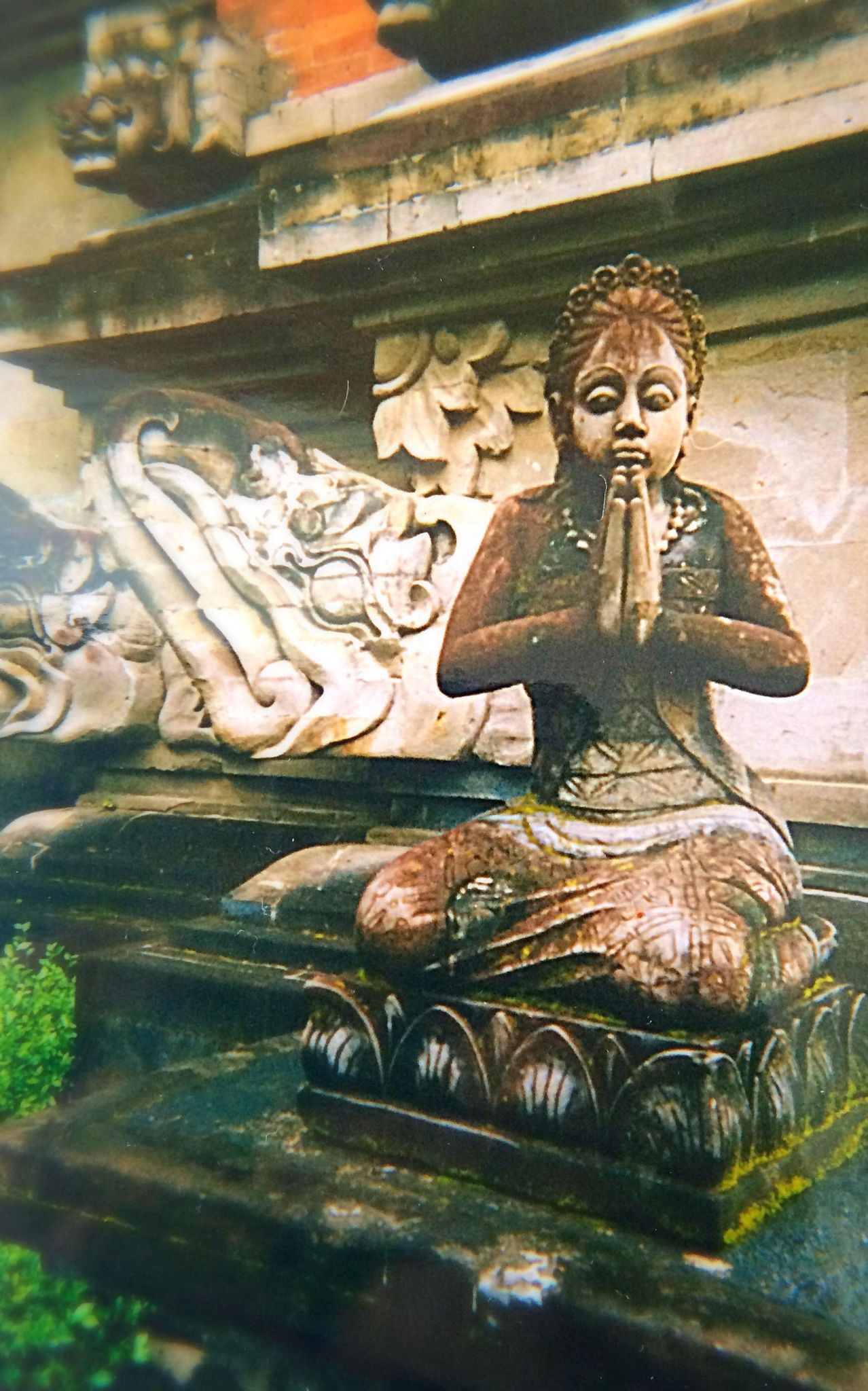
Image by Karl Powell, Goddess of Bakung, 2005

Each night, my body would feel better for the walk and my mind would be at rest (free from thoughts and ideas for another day). Back in my room I could often hear the evening rains falling on Tuban Beach. It was a time of day many gave thanks. It was a time to give thanks to the gods who protected them, and for the good luck and for the day that just happened. It was a time to say thank you for what prosperity had run through your hands. It was a time to express gratitude for family, for the love to which we belong, and for what roof spans above our heads this night. It was a time for offerings, to ask for the chance to try again tomorrow. To hope for a better day tomorrow. Terima kasih. The rain fell often on Tuban Beach.

*

6 In transit, in Colombo

It is late afternoon. The sky begins to slide; peaches and pinks begin to mellow in the clouds, with their pastel hues starting to dance on a few waves far out at sea. The sting of the day’s heat has left now and humidity seems to be building in the air. The sun sags down towards the ocean horizon and is about an hour away from setting. It will be gone soon. The blues in the sky deepen and are filled with moving chunks of cumulus cloud coming in off the ocean, all bloated and saturated with moisture, gliding across the heavens like icecubes in scotch.

Image by Karl Powell, Coconut Trees, 2013

For a while I tried to photograph this changing canvas blooming overhead. One photograph became a frenzy of many, with each one more memorable than the previous (so I told myself). Then you realise the futility of trying to capture some experiences in a photograph. You just can’t. While clouds and colours mesmerise within a private dalliance of time, birds are flying through camera frames – darting past images, evasive when wanted in shot – their songs are audible, everywhere, soft and echoed through the moving leaves of tall, thin palm trees. Row upon row of tall, thin strings of long-lined coconut trees, rise upwards, rustling and alive in this afternoon breeze. Rain occasionally sprinkles. It falls and blots some of the ink from this pen on this page. Words blur as they are written. A rainbow flashes for a moment, radiant in colour, dissolves into nothing in a second. How to capture all this? Maybe it’s better to put away everything those and to just absorb all this beauty as it unfolds, until the day ends (until the adventure ends), all the way to a tangerine twilight. The determination to hold on to the end of something can often blind us to what actually remains; easier, then, to just let go and to be amongst the moments.

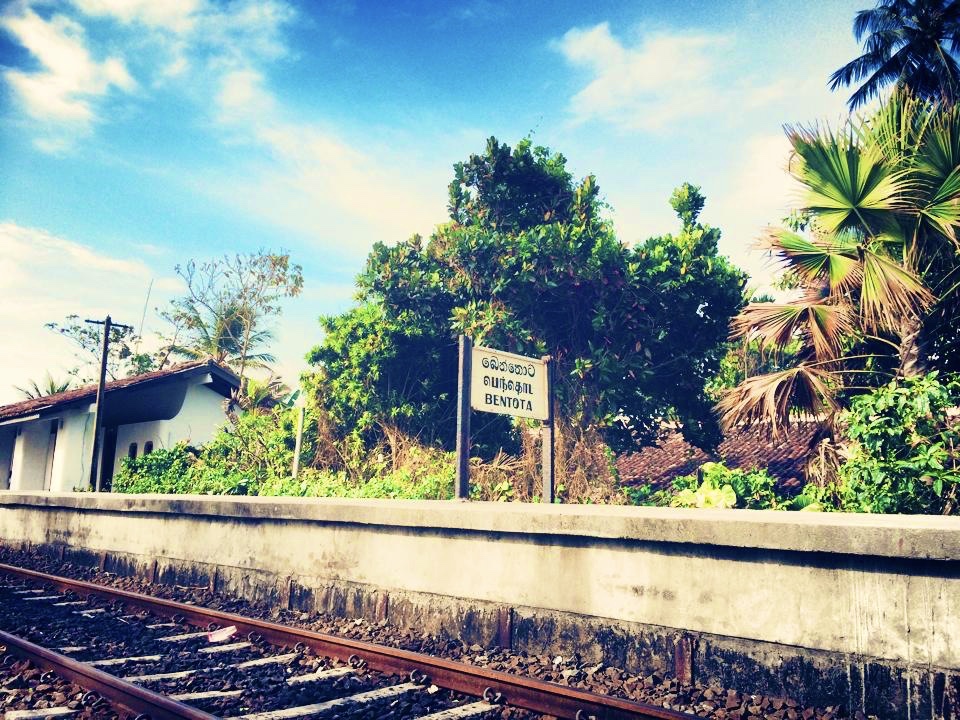
Image by Karl Powell, Bentota Railway Station, 2013

Reflecting, then, on this trip. Today has been lived through a blur of concerns: checking out and checking in, packing and unpacking, haring in and out of taxis. Cannot believe how tired I feel. I left Bentota this morning around 10. It was a three-hour road trip along the coast up to Colombo (arriving some time after 1 o’clock). The driver mentioned some new highway, Express 1 or Galle Road, linking the South to the capital (there wasn’t much conversation). My flight out of Sri Lanka leaves at 1am; rather than wait twelve hours at the airport for an overnight flight, I booked a room at a hotel close to the airport.  I’m glad I did. I’ve showered, slept and am now writing by a pool (only two flights ahead of me now – probably won’t be in my own bed for at least an entire day).

Image by Karl Powell, Galle Road, 2014

Sri Lanka has been an amazing experience. On reflection the trip was too short. I should have stayed for longer, a few weeks more, to travel, to have seen as much of this beautiful place as I could. And yet in the short time here I had, I did what I could. There was Galle Fort, a walled area of homes, churches, mosques, temples, shops and cafes (they even have a literary festival here each year). The journey there from Aluthagama on a train was something so special – a two-hour train line running the length of the shoreline with waves breaking as we thundered past en route to Galle (all windows were open and stayed open). There were many kind souls I met there. I hope I can return properly and spend time there. Think I need more time. Think I need to come back here again. There are many places I had earmarked months ago and wish I had seen: Sigiriya and Sri Pada (Adam’s Peak). Sometimes it’s just not practical or possible to do and see everything – better to leave room for next time. The sun is now setting. Wish I could stay here for a while longer. One more swim, then, one more, then time to let the holiday go, to gather up these poolside things and move indoors once again. Clouds continue to float in. I feel so relaxed. I have loved today so much.

Image by Karl Powell, Happy Passenger (Aluthagama to Galle), 2014

Back at my room in the hotel, time is running out. I am trying hard to slow this endless march towards the buzz of an airport but already it is seven o’clock (my taxi pick up is booked for ten-thirty). Everything is ready, everything is packed, everything is on edge – waiting for a departure lounge, luggage trucks on tarmac, flashing lights, empty seats, criss-crossing lives you will never meet or see again, standing still in swirling madness, inane and endless security checks, burning eyes, aching backs, searching for seats, searching for passports. To take a break from thinking, I go downstairs for a meal rather than room service – opting for dahl, coconut sambal, fish curry and an egg hoppa. On my way to the restaurant area, between the lifts and lobby, I had to walk through a mini mall in the hotel. It had a few transit shops flanking each side. Some were open, some were already closed. One shop open sold souvenirs, silks and clothes. An elderly couple worked there and were very kind and patient when I entered. I bought a few scarves and tea towels as presents. When they were being wrapped I saw a large table cloth for sale. It caught my eye immediately. It was made from cream linen and had five large elephants embroidered on it. It wasn’t cheap, nor was it beyond my budget, but the money I needed to buy it was back upstairs in my room. The shop closed at eight-thirty. I decided to eat first and to come back and buy it.

Image by Karl Powell, CMB > KUL, 2013

Opposite the souvenirs was a book shop. It was hard to resist a quick look inside. As always, on entering, you immediately you remember what magical places bookshops are. Able to transport and transform you through ideas and imagination. Shelves full of thoughts, dreams and observations, willing to be shared, waiting to be heard. A man who worked there chatted as I look to choose something to take on the flight. He asked where I was from. He asked about cricket. He asked me what I thought of his country. I told him the truth; that I had loved my stay and found it to be one of the most beautiful countries in the world. He looked at me in silence somewhat taken aback. I mentioned that I hoped to visit again some day and to see other places. I named those places I hadn’t been able to see. He recommended another place. He repeated the name of the place a few times, before I asked him to write its name down in the book I’d purchased: Nuwara Eliya.

After dinner, I returned to my room. Suitcase still packed, ready. I counted out cash for the tablecloth and put it down on my bed with me. There is something so unique about a hotel room. The silent anonymity of the room and your neighbours, the sanctuary from a bombardment of so many new sensations. A corridor of footsteps and a lobby bringing other worlds together. The wonderment of being a citizen of nowhere and the deliberate choice of being somewhere else in the world for a brevity of time. The bed felt heavy. I put on the television. There was a movie on one of the channels. It was Midnight’s Children, the cinematic version of Salman Rushdie’s novel. It was on in the background as I idled time, (re)checked my departure times, repeatedly wished I could stop time and just stay here for a while longer. I watched pockets of the movie before remembering the tablecloth; picked up my money, carried my door key, caught a lift to the ground floor and walked to the shops. The bookshop was closed. Its lights were out. The souvenir shop was closed; its lights were on. I walked closer to look inside for signs of life and read a sign on the door ‘Back in 5mins.’

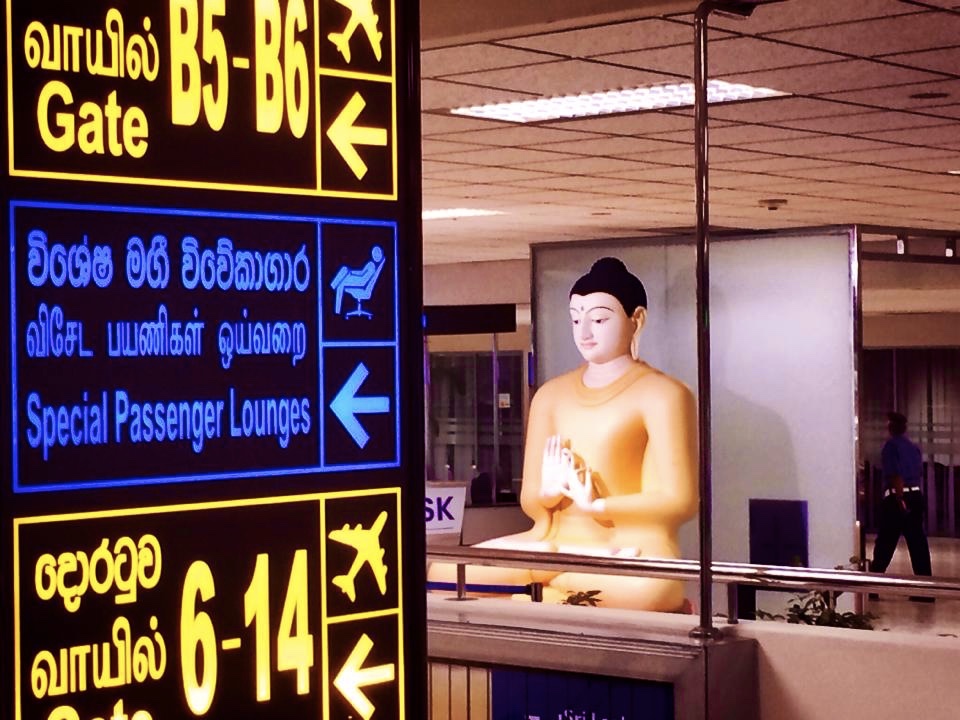
Image by Karl Powell, CMB: Waiting to Board, 2014

And so at 10.30pm I waited in my room. I was waiting for reception to call and to tell me my taxi had arrived to take me to the airport. Last minute brinkmanship; I could wait. Maybe the taxi was running late (stuck in traffic). There was no real urgency, after all, it was only a five minute drive. Maybe I had to ring to confirm first. At 10.45pm I gathered up my belongings and made my way down to the lobby. Maybe the driver was waiting there. It was empty. It was dark. It was quiet. The Duty Manager at the hotel rang the number I had been given for the taxi. There was no answer. He rang again and left a message on the answer phone. We waited for a short while, talking together, before he offered me a voucher for a complimentary taxi to the airport. It was a gesture much appreciated. I thanked him. Just as he was about to call a local driver, the one I had booked arrived out of the blue. It was now eleven o’clock. It was now time to go. We drove out of Colombo into the darkness, into the ending of another adventure, leaving behind a wonderful afternoon in the night. We drove out into unknown roads and unseen streets, moving, merging, turning, overtaking and arriving at Colombo international airport. This was it, then. The holiday was now over. Back into another airport. I checked in and wandered off towards the security checks. I stared at a flight board, found my flight and made my way to the boarding gate. Everything was on time.

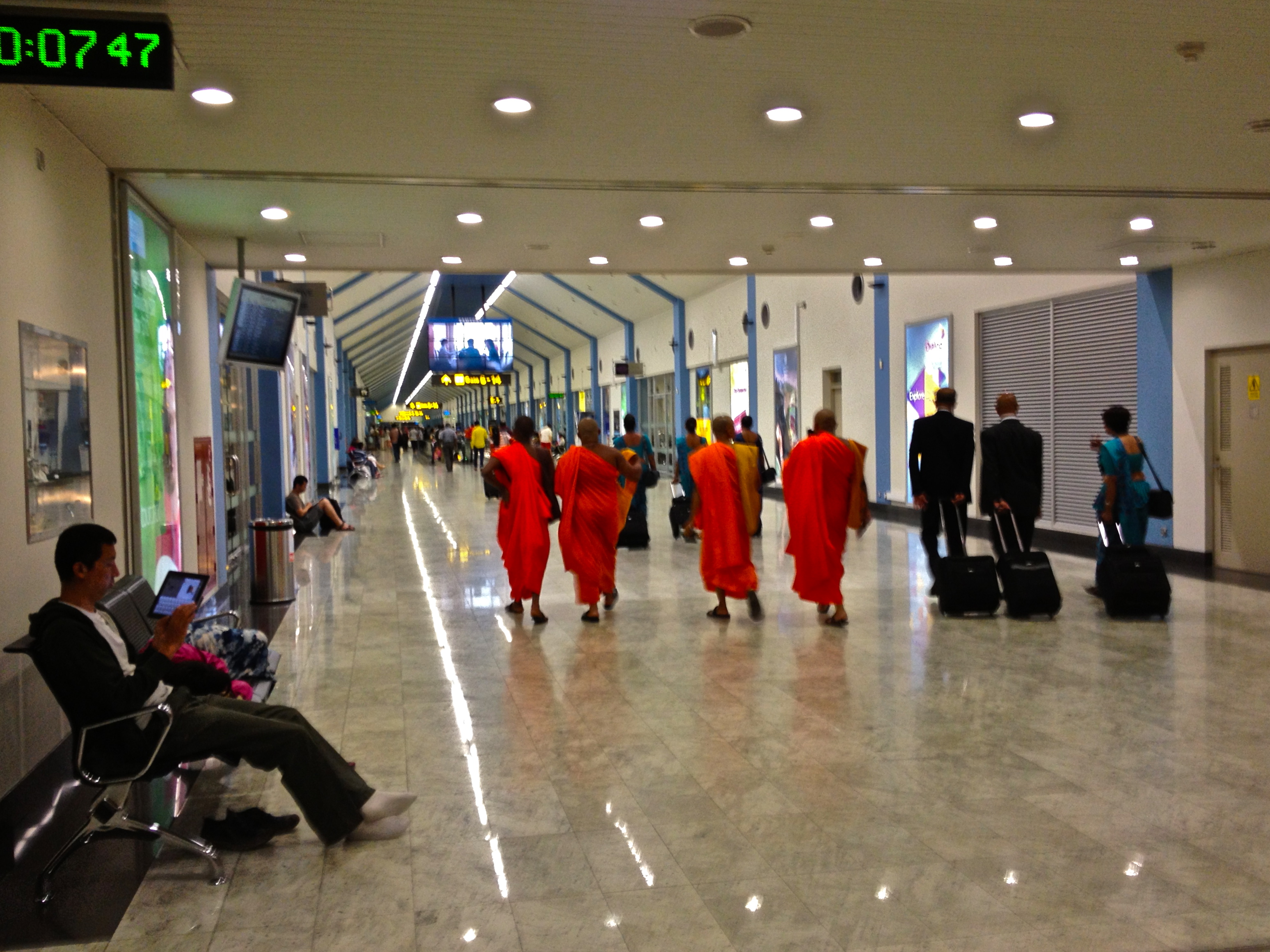
Image by Karl Powell, The First Leg of the Journey, 2013

*

5 Saturday Morning King Street

Morning. My eyes are closed. The early bus is leaving the beach. We are heading back to the city.

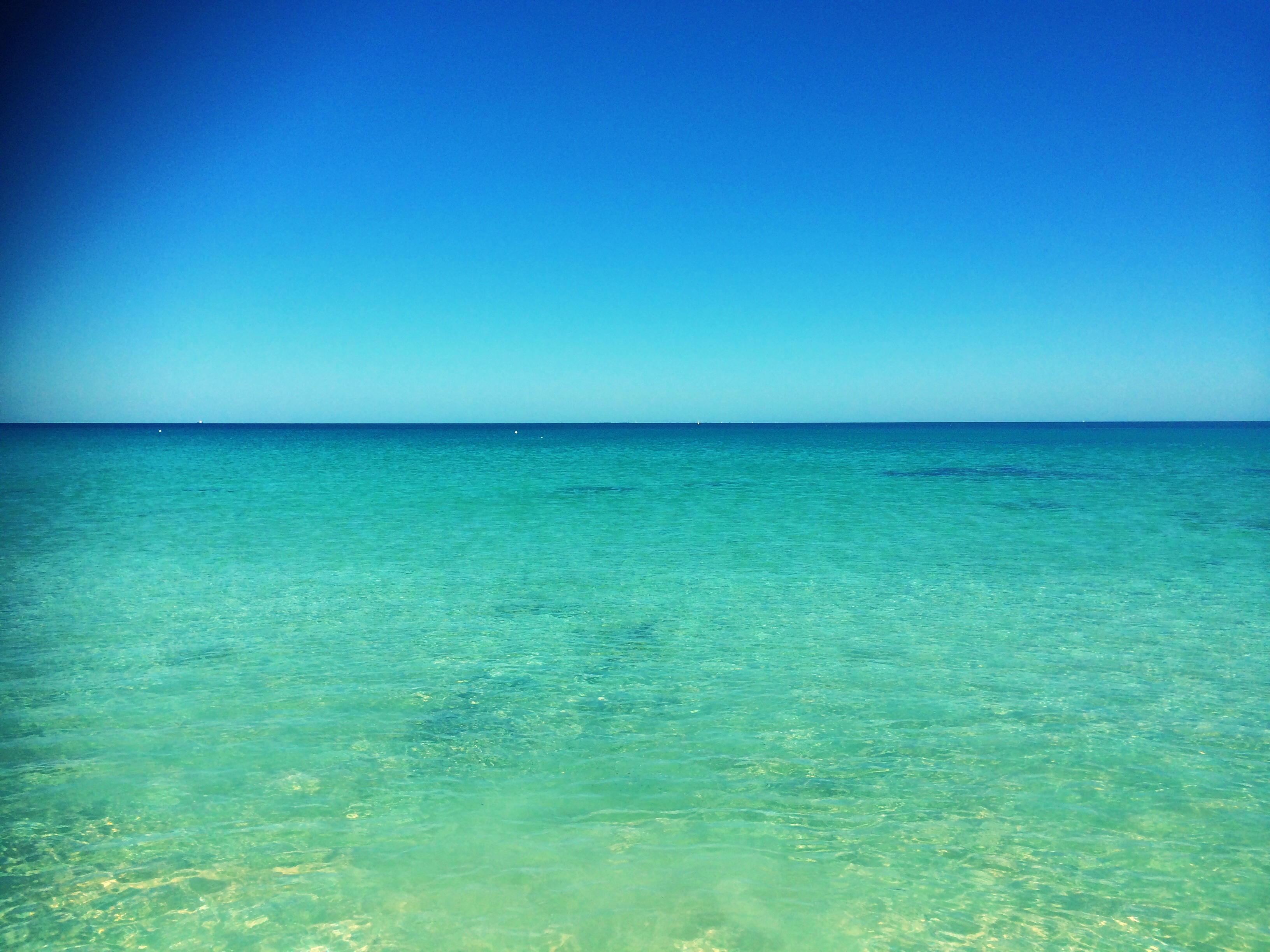
Eyes closed – I can see wave upon wave shining ashore, clapping hard down on shoreline sand, spraying sunlight and rainbows into the morning blue. Cool, blue sea breeze moves along the far horizon, flecked white tips dance with ships far out at sea. The moon and stars fell not long after dawn and now only the white hot sun burns down on alabaster sand, filling the pure blue sky with glare, arrowing down on the surface of the Indian Ocean.

Image by Karl Powell, Beach, 2019

The early bus is moving, uphill downhill, turning, heading back to the city. Eyes stay closed. I can feel the sunlight still moving through my skin, saltwater cooling the sting, drying now, hair still wet, body heavy, eyes closed, sand stuck between my toes. Arrived at the beach around 7am when all was still cool. Lay on my back, slept off the night, digging toes down into soft sand. Could feel the sun moving across my skin, shadows walking past (all dark for a moment then light again). Sounds of people all around; happy people laughing. Ocean kept lapping waves on the shore. Opened eyes and nothing but blue – no clouds, no commitments, no sense of time. A plane flying high above, climbing higher in silence, moving off, up along the coast. Someone laughed, three big waves crashed with children screaming in distant laughter. Thought about reading my book, but it stayed there half-open on the beach (pages rippling with occasional sea breeze). Eyes close again.

Image by Karl Powell, Indian Ocean Blues, 2018

As the sun angled up and shone down, I eventually made my way towards the blue to swim. I stood at the shoreline for a moment; I saw one endless sheet of shining blue, glittered and large. I saw cormorants swimming and swooping for shoals of fish; I saw my friend Bruce swimming out past the reef (his yellow swimming cap moving parallel to the coast in a group of four splashing out in the deep). And into the water I waded, deeper until I dived. Underneath the water the great dance of sunlight swayed in buoyant silence, flying with me in the ebb and flow of twirling shells in the gin jade emerald blue, moving back and forth, swaying in hammocks, looking at these gemstone wonders swirling around you until you have to surface once again for air.

Image by Karl Powell, Beach Bruce, 2017

The bus stops suddenly. Eyes open. The driver jumps out from his seat apologising to the congregation – he wants to take a photo of the ocean. Yes, it really is that good today. An entire ocean so flat. Nine huge tankers sit out along the horizon, waiting for a berth at the docks. Then out of nowhere a wave moves in so fast, swelling, racing, arcing up then with an intake of roar it collapses with a bang of surf onto the wet sand. The driver has his photo and jumps back onto the bus. The bus is moving again, leaving the beach behind, heading back to the city. Eyes closed now.

Even on this bus I can still feel the saltwater, the morning, the sunshine moving across me.

Image by Karl Powell, de Chirico in King Street, 2021

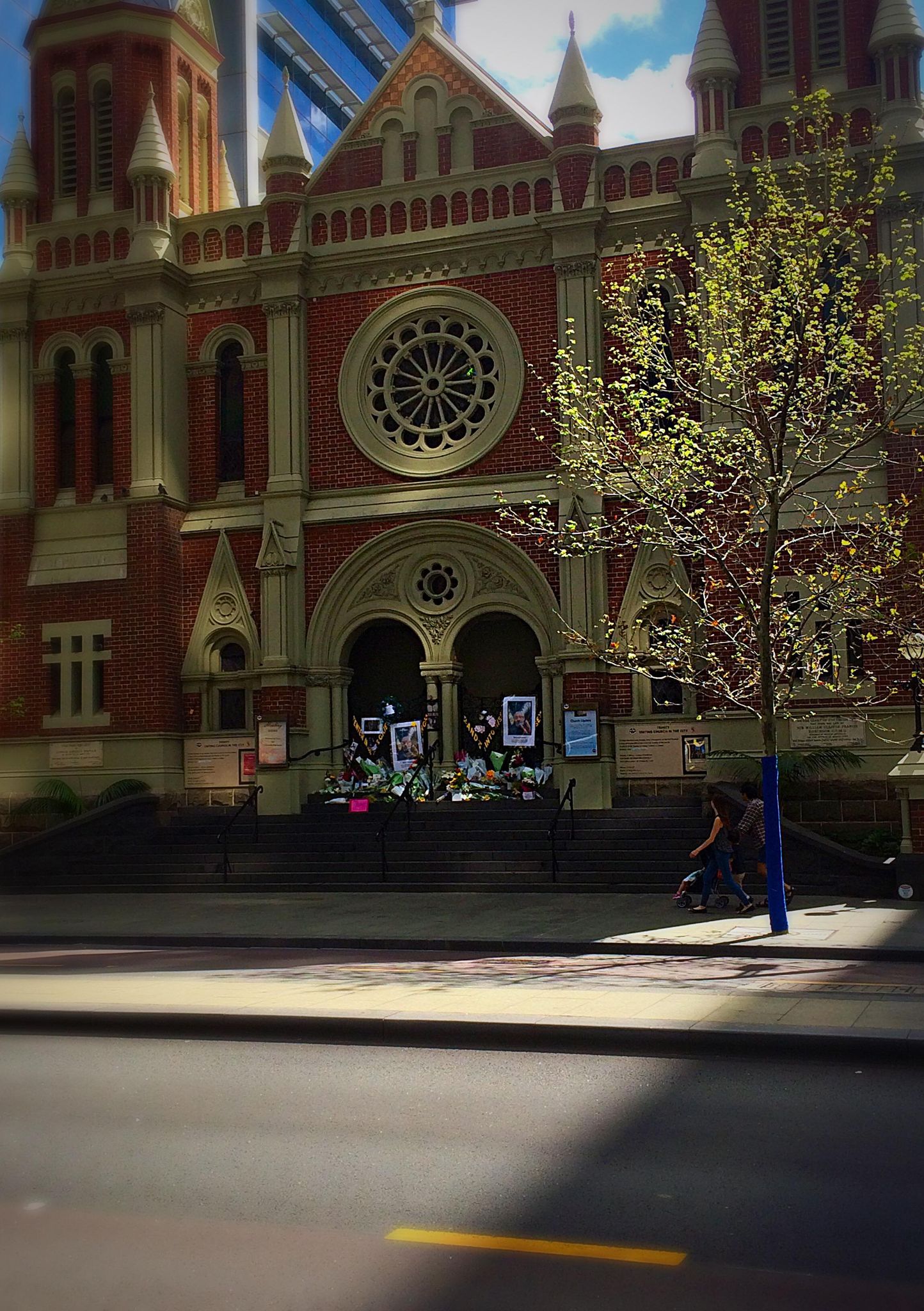
Mid Morning. Stepping off the bus and into the white heat of the city felt like walking into the artwork of Giorgio de Chirico. Silhouettes, sloping shadows, empty spaces. The forecast for this week predicts we will reach 40.c. Burning, blistering heat. Footsteps slow down a pace. Elsewhere, indoors, the shade is the best place to be. Towards King Street, for a coffee, I cross the road, the busy street, shimmering tarmac, heated fumes, passing traffic. I look up and see Neil sitting at the steps of the Trinity Church. Neil on the Trinity steps. Usually, he’s there sat reading; today he’s there sat talking to somebody. He looks up and sees me. I wave, he flashes a peace sign back with his fingers. I think he’s a writer, I think he’s homeless; he’s always on those steps reading, writing, talking to somebody.

Image by Karl Powell, Neil on the Trinity Steps, 2020

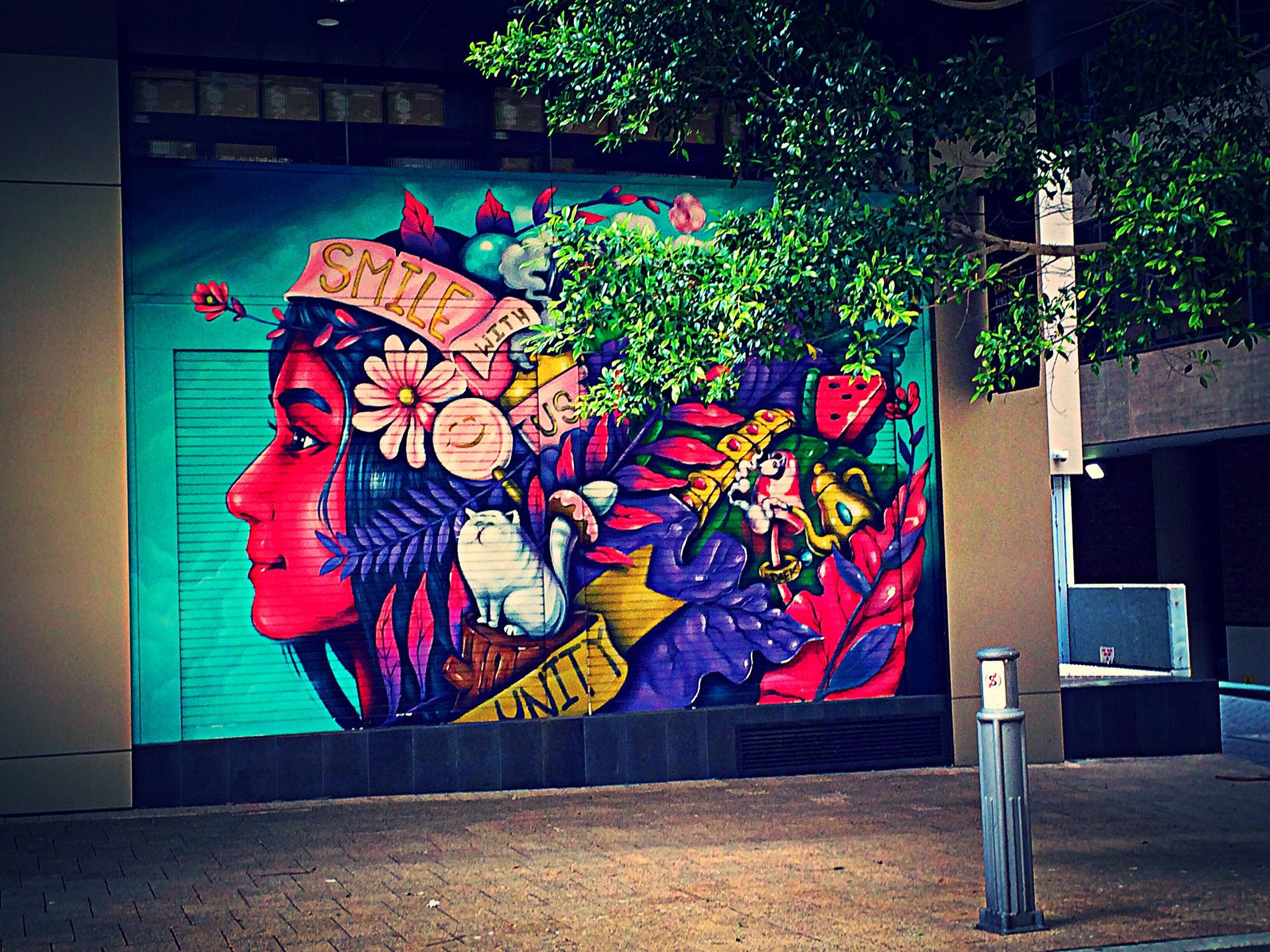
Along King Street, the flow of shade stretched past each intersection. It was cooler here and colours could emerge from the bleaching, blinding sun. Murals of art shared space with open armed palm trees, which stood at the corners wriggling thin fingers of palm leaves in what little breeze breathed. A white cockatoo flew high above the street casting a moving shadow over bookshops and buildings, and the two stone lions lazing in sunshine on top of the old theatre, while a Mauritian restaurant began to prepare for its lunch service with the sounds of sega music moving through the heat.

Up at the café, I found the best seat in the house (outside, to the right, tight up against the windows, on the pavement, facing out). There, everything felt like a Saturday should. There, everything always felt as if today would be one of those days in which you would be destined to meet a special someone, someone special, at some stage during the day, one of those once-in-a-lifetime dalliances that starbursts immediately and sparkles throughout the summer. There, it would easier to watch the world walking past, to waste time productively, to idle, to daydream, to convince yourself that this was an essential part of being.

Image by Karl Powell, King Street Mural, 2021

Sunshine was falling into the street, causing parked bicycles to shine as they leant up against white walls. I watched a woman cross the road. She left the shade to walk over into the sunshine. Her hair lit up at once. Shoulder length blonde curls that bounced in life. A man with long, black sideburns growing down his face and a paunch hanging out of a red t-shirt, gunned past on a skateboard; his wheels tore up a sound on the hot, dry tarmac. A taxi pulled up in front of the café. A man dressed in a suit and a white shirt (no tie), got out. He went into one of the apartments above one of the shops opposite my seat. Next door, two girls sat in the sunshine on the steps to their flat. Gloss black hair, sunglasses screening eyes. Brickwork and white paint, two concrete steps that led up to their open doorway. Three shoppers walked past them, each carrying bags and sullen faces. I saw another friend, Jean-mic, walking slow, slow walking (and I mean s.l.o.w.w.a.l.k.i.n.g), broadchested in his t-shirt and shorts, sunglasses on, arms swinging at his side, overtaking us all. Then the cars came. A blue car turned up the street making noise. A speeding white car followed up, slowed down and sounded its horn echoing on the narrow walls – a bald, smiling face waved at me. I only recognised my friend Antonio moments after his car sped off. An elderly couple walked gently past the cafe holding hands and shopping bags in silence.

A small, dragon fly came to rest at my table just as my espresso arrived. It sat there, warming its wings and moved only when I went to drink my coffee. The golden crema cooled in the white demitasse. Sweet on the palate, warm, sip, swallow, bitter, leaving the taste of roasted smoke cooling through the lungs.

The table next to me – a family of four – got up and left the café. The sound of scraping chairs carried in the air. They left behind a newspaper on one of the chairs and it was open at the horoscope page. I leant over and checked over for mine. I read it – it was pretty good without being accurate. It said it was time for legs to be up and running, telling me I was smart enough to strip away flattering words in order to see what was really on offer; creative skills linked to writing would open the way to new successes. So it said. A child came running up the pavement, his footsteps stopped suddenly at the café to say hello – out of breath and panting, it was Gavin, the son of a family I knew. Carrying a copy of Ian Fleming’s ‘Live and Let Die’ he was running late for an acting class but wanted to say hello. I watched him run off up King Street.

Image by Karl Powell, Caffeinated Scribbles, 2016

The sun was high, much higher than when I arrived and now almost overhead. A spinning disc of burning light. The street was hot. The blues and greens were bright. Passing people blurred and my eyes ached. It was time to go home, to sleep a siesta, and then to find a way to make all the words and sentences of the morning breathe and flow into stories that meant something to me. If they made other people happy, then great. But there was an indulgent purpose in being able to spend an afternoon touching and sculpting the moments of your time from fleeting thoughts and visions into captured language on paper. To defy the running rivers of Heraclitus and to step into that same water twice, to swim beneath the great dance of sunlight, to sway in buoyant silence and to look at all the gemstone wonders swirling about you until you had to surface once again for air. And then, when all the writing had finished, and the Muses subsided, the night would fall flat like the morning ocean, to reveal great pools of starlight and the opportunity to dance again.

Image by Karl Powell, Another Sunrise, 2021

*