33 Fragments of Venice

Image by Karl Powell, Venice (Venezia), 2007

Few things can prepare you for your first sight of Venice. It is a place like no other. It is one of the rare places – the very rare – that is difficult to describe. Words elude each page as you try to write honestly about it. Venice is living magic: a floating city regal in an Adriatic lagoon. To visit Venice is like stepping into a dream; time seems to behave differently (there is a kind of timelessness existing there). There is an other-world quality about the beauty created and expressed in its architecture. It is to look at someone else’s vision of a dream made manifest in this world and to realise that belief in creative ambition and imagination should always be fostered and encouraged. It is like hearing a wonderful story that meanders through such a wonderful choice of language and expression that you can often forget to listen for its aim or purpose; whatever is spoken is captivating enough to keep you spellbound throughout the narration. And for the artists, the dreamers, those who want to create beauty in their lives, Venice serves as a reminder that we should pursue our dreams and desires without concern or fears.

Image by Karl Powell, Approach to Venice (Venezia), 2007

There are two ways to arrive in Venice: one is by boat and the other by rail. If possible, arrive by boat. In Thomas Mann’s Death in Venice (1912),as the main character Gustav von Aschenbach makes his way to convalesce in the Venetian republic, the novella’s narrator shares this piece of advice:

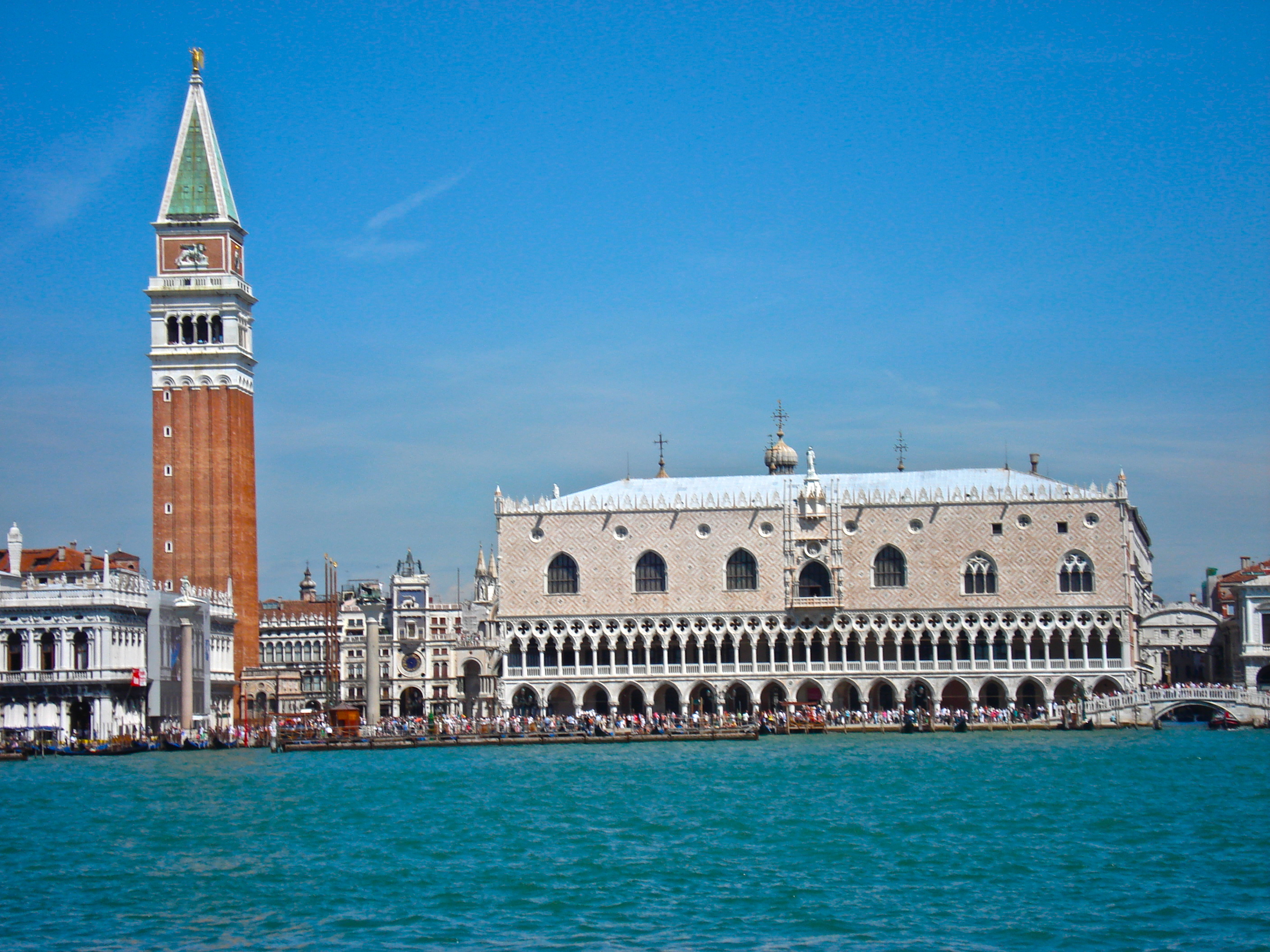
Aschenbach saw it once more, that landing-place that takes the breath away, that amazing group of incredible structures the Republic set up to meet the awe-struck eye of the approaching sea-farer: the airy splendour of the palace and Bridge of Sighs, the columns of lion and saint on the shore, the glory of the projecting flank of the fairy temple, the vista of gateway and clock. Looking, he thought that to come to Venice by the station is like entering a palace by the back door. No one should approach, save by the high seas as he was doing now, the most improbable of cities.

I had deliberately chosen to arrive by boat having been captivated by the opening scene in Luchino Visconti’s cinematic adaptation of Mann’s text. In Visconti’s movie we share the view of von Aschenbach’s own arrival into the Venetian capital at dawn, ferried across the Laguna Veneta, accompanied by Mahler’s Adagietto from his Fifth Symphony. Floating along the Canale di San Marco, we see Aschenbach lost in a trance at the appearance of the Venetian republic; there is a sense of weightlessness as the character drifts towards the Piazza de San Marco. This approach is described by Mann as one which was ‘set up to the meet the awe-struck eye of the approaching seafarer.’ The approach to Venice remains one of the most amazing things I have ever seen.

Image by Karl Powell, Piazza de San Marco (Venezia), 2007

For the past month I’ve replayed that arrival back in my mind. Each time I close my eyes and return there I still feel a quality of magic in that approach. The journey by boat across a flat, open lagoon – travelling towards something unseen beyond the dip in the horizon. Small, solitary islands occasionally appear either side of the boat and glide past you in silence. Some islands have small buildings on them. In the distance a shape begins to take form. It is directly in front of you. A shape, a silhouette, something like an apparition. Landmarks appear, emerging out from the blur. The more you journey towards it, the more a familiarity makes itself present – you immediately recognise Venice. It is as if the great paintings of Canaletto are coming to life and you are about to step into a canvas – to touch the canals, its bridges, its buildings. All the while you and Venice ebb ever closer. You can almost see the wind flap at the flecks of crumbling paint on the facades of old houses; you can hear the sound of water lapping at the stone steps leading up into this masterpiece. Open your eyes and you will be there.
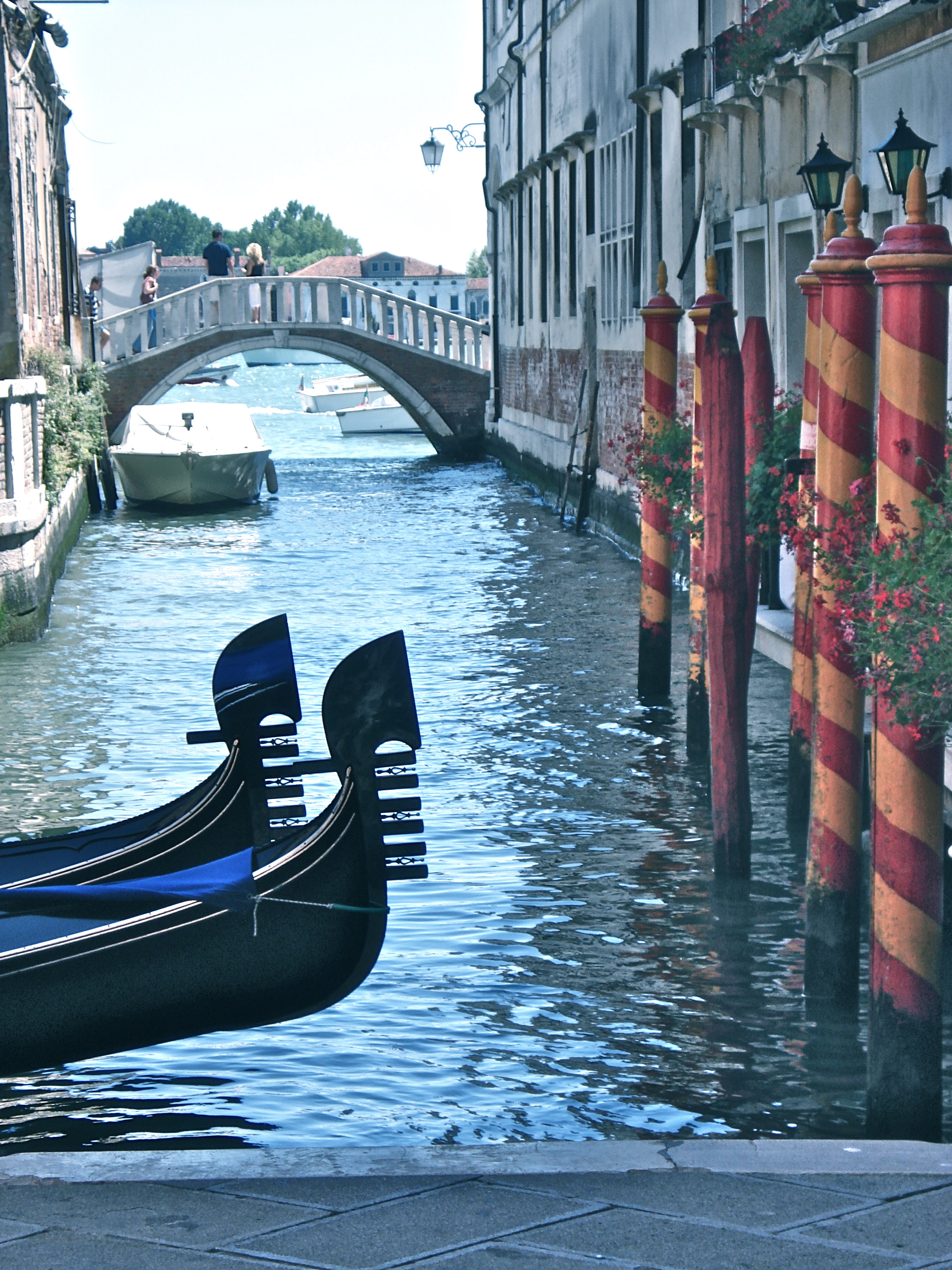
Image by Karl Powell, Sights of Venice (Venezia), 2007

For the past month I’ve tried to find anything that I wrote when I was in Venice. But there’s nothing there. I’ve read and re-read the journal I kept when I was in Italy but each time I go through those notes there are no entries for Venice. No sketches. No sentences scribbled on scraps of paper. Nothing. Just a gap. Not a word was written down the entire time I was there. And I don’t know why – it wasn’t a deliberate choice. I’ve gone back to that Venetian arrival so many times in my mind this last month and after arriving I can remember disembarking and walking across the Embankment… and then the whole thing becomes a kind of amnesia – a haze of sketches, fragments and impressions. Walking in awe. I’ve used maps to try and retrace my steps: a walk across the Piazza San Marco, saw a narrow calle leading somewhere, found a café and ordered a coffee, stayed a while, started walking through the back streets, found an art shop (bought a print), then wandered off following my footsteps wherever they wanted to go. They walked along narrow canals, past silent corners until they stopped somewhere on the Ponte di Rialto high above the Canal Grande. And there in front of me was the whole of Venice. And there was I suspended high above its waters and transported into a sense of timelessness – my eyes doubting the reality of the dream before me. Everything merged into blurred thinking, overwhelmed with beauty, trancelike looking, captivated with astonishment, buildings and vistas that looked like paintings standing still in moving waters, real as reality can hope to be.
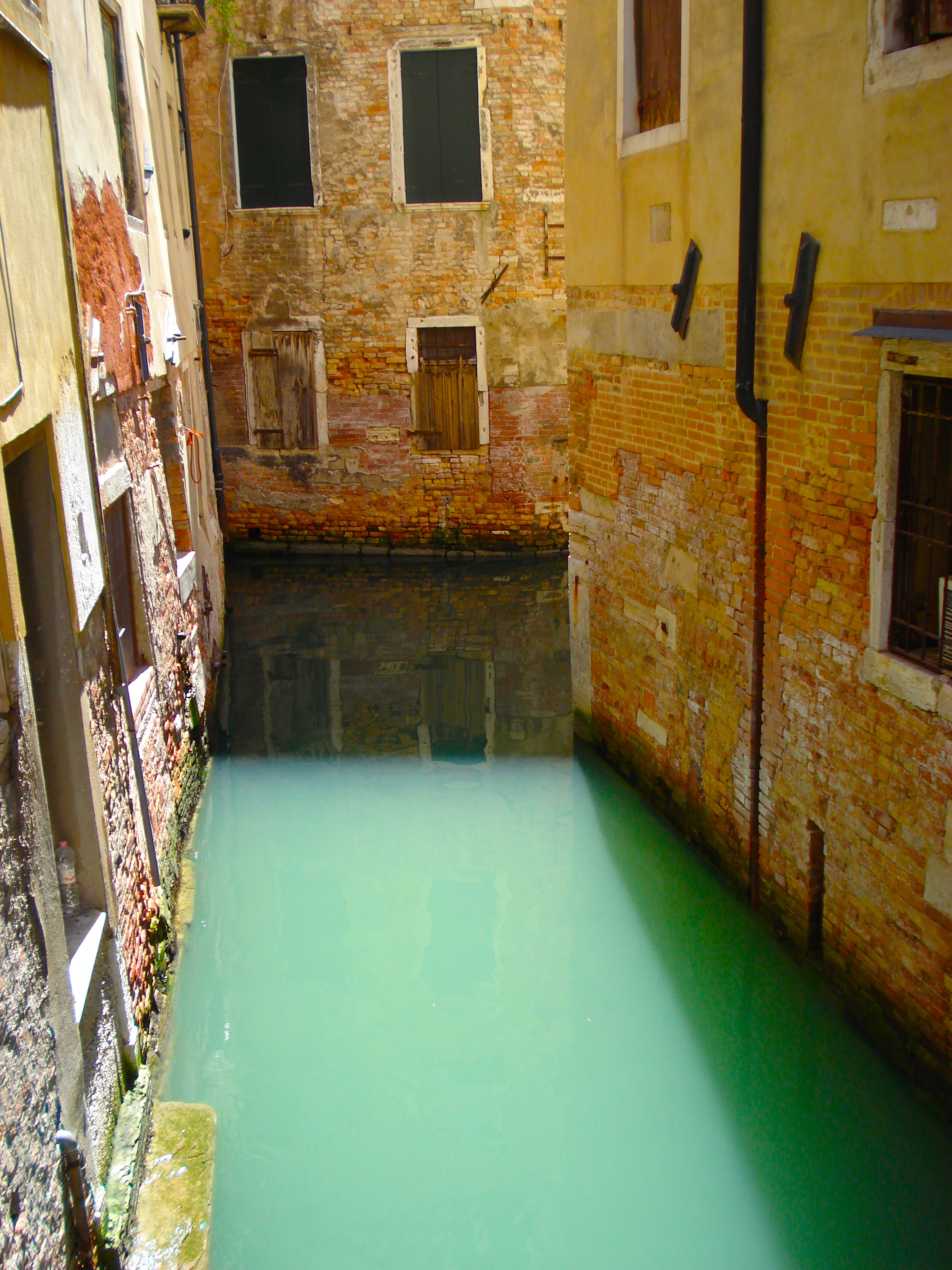
Image by Karl Powell, Solitude (Venezia), 2007

Years later I studied a novel while reading a degree. The book, Night Letters, was about an Australian traveller who was coming to terms with an illness as he travelled through Italy and Switzerland. During the narration, the author, Robert Dessaix, visits Venice and experiences a similar disorientation of time and place. One morning, while walking along the Embankment Dessaix stood still and gazed east into the waking morning light. As he stood alone at the water’s edge he felt himself transported into another dimension (coming face to face with the soul of Venice) – the breeze which blew across the lagoon became ‘perfumed with nutmeg and cinnamon, saffron and pepper,’ and he heard ‘scores of strange languages [alive] in the air.’ Like looking directly into a trance, Dessaix seemed to slip through the fissures of reality commenting, ‘Time simply crumpled.  I have no idea how long I stood there.’ The art historian John Ruskin, who stayed in Venice during the 19th Century, even believed there was magic resonating in the stones used to build the Gothic, Byzantine and Renaissance buildings he saw. Ruskin, who campaigned for the preservation of old buildings in The Lamp of Memory (1849), asked us to reconsider the stones of old buildings (especially those in Venice) as we would the jewels in a crown:
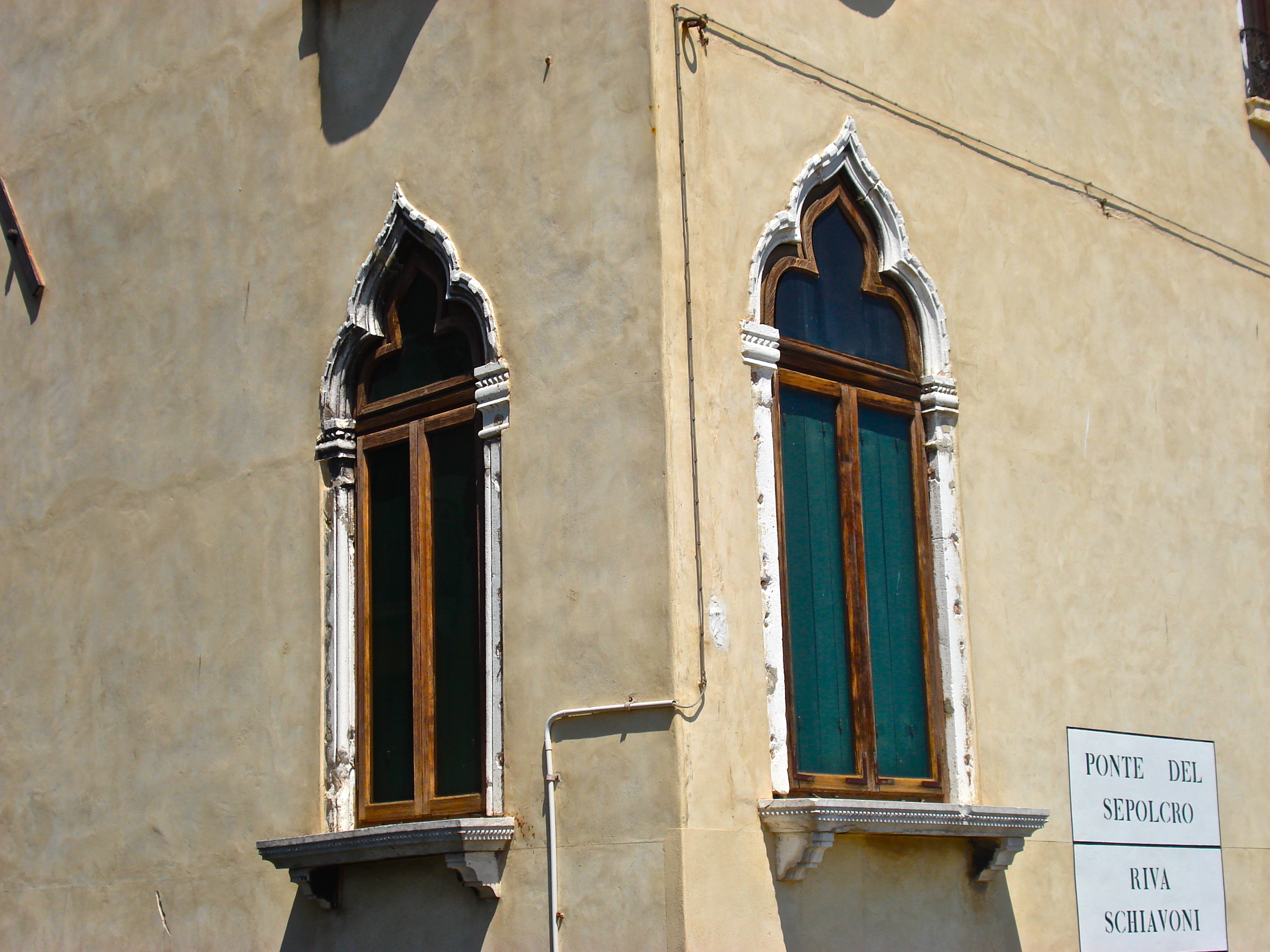
Image by Karl Powell, Street Corner (Venezia), 2007

We have no right to touch them. They are not ours. They belong partly to those who built them, and partly to all the future generations who are to follow us. We have no right obliterate. What we have ourselves built, we are at liberty to throw down; but what others gave their strength and wealth and life to accomplish, their right over them does not pass away with their death in those buildings they intended to be permanent.

Whether the stones of Venice are charged with magic, or can provide a metaphysical vision into a past where mercantile traders carried spices to these maritime ports, either way it is like nothing else on Earth. It is a place like no other.

Image by Karl Powell, il Ponte de Sospiri (Venezia), 2007

When we look at Venice with our own eyes, our understanding of beauty changes forever. When we look out onto Venice we witness someone else’s belief in the power of creativity and an acceptance in the infinite possibility contained within the human imagination. When Lord Byron stood on the Bridge of Sighs – il Ponte de Sospiri – he marvelled at the way that beauty always survives and endures in a world where everything else eventually perishes. And, in essence, this is the challenge we all face in wishing to create beauty in our lives, in manifesting our innermost dreams into an environment which is finite. We have limited time to visit Venice and to also create the things we want; Venice serves as a reminder that we should pursue our dreams without concern, to cultivate beauty in this world knowing that whatever we manage to accomplish with others that beauty will ultimately live forever. To create without attachment to any outcome and once completed to let go.

Image by Karl Powell, Time stands still (Venezia), 2007

Venice is one of those rare places where it is difficult to describe; Venice can only truly be experienced. And should be experienced (at least once if you can). Venice is one of those places where dreamers can feel free to dream knowing that everything is possible again. Some places raise our awareness of the reality we find ourselves in – Venice does this in so many way.  It remains one of the greatest attempts to capture a vision, a dream, something that floats upon the ether for a moment in front of our hearts and minds, and to transform it into something tangible that others like us can see and touch.

Image by Karl Powell, Magic Doors (Venezia), 2007

*

24 Magic Siena (Italia)

CIAO DE LAGO GARDA
Within a few hours we will be leaving Lago Garda. Have been here for a few days. Staying here, walking along this lake each morning, relaxing – yesterday we went exploring Venice… beautiful Venice (and if you have one obligation in this life, it is to visit Venice and to see it with your own eyes). The rest of the tour rumbles on in a few hours, onwards to Rome, along the Tyrrhenian Sea down towards to the Amalfi Coast chasing the sonnets of Byron and Shelley into the sea.

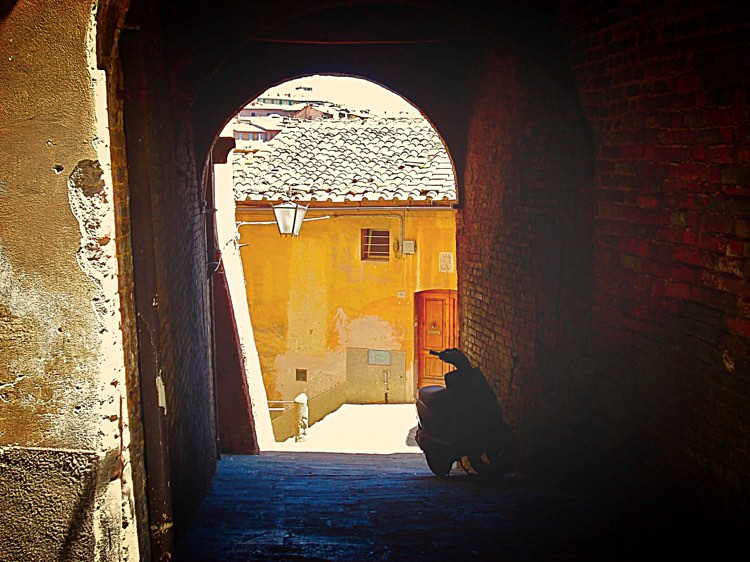
Image by Karl Powell, Magic (Siena), 2007

This morning, before the leaving, I wanted one more coffee, one more moment in the streets of Torbole as the world wakes up. I found a café, near the main square, and have come here early each morning. The street cleaners are out early brushing the kerbs, collecting leaves and rubbish; shops are sluicing the pavements with water and the owners scrub them clean. People and traffic are moving. Slowly. Buildings in front of me are painted blue – and either side of them buildings in pastel green. Another in yellow. The closer I look, the more I notice that almost all of the buildings are pastel coloured: blues, greens, pink, yellows, rose. All with wooden shutters – asleep or half awake – all with terracotta roofs. You sit and wonder and imagine who lives there. Coffee arrives. Espresso. No zucchero needed. Small birds hop between saucers and plates, eating the crumbs on the tablecloth.

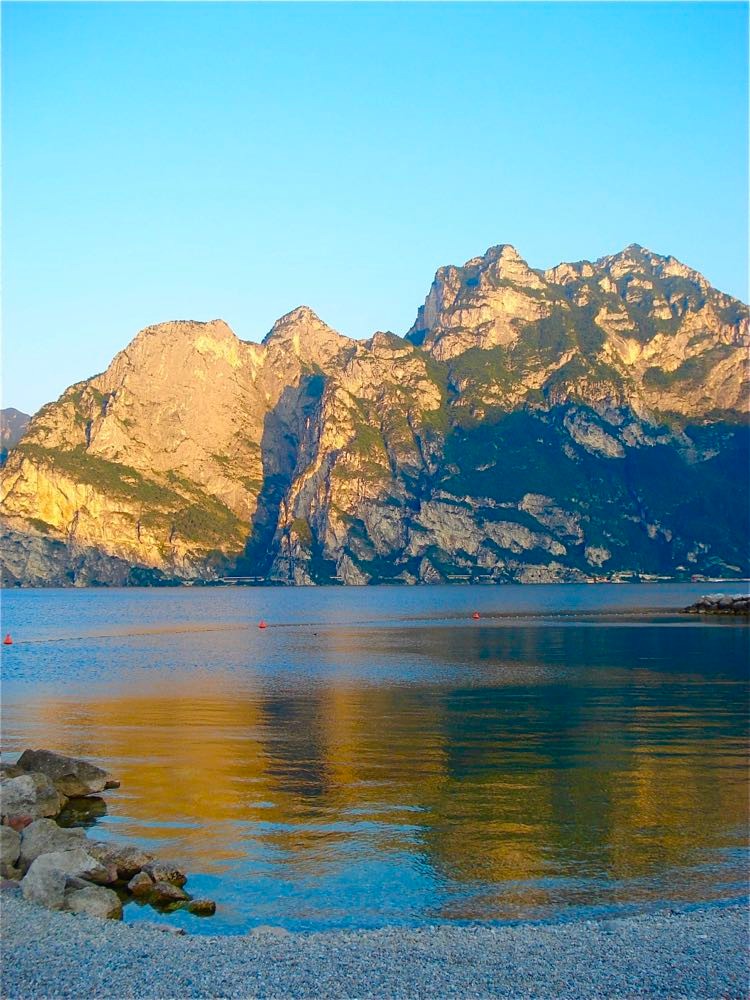
Image by Karl Powell, Sunrise (Lake Garda), 2007

The waters of Lago Garda are within earshot. The banks of Torbole rise all around. Sunshine pours down over one side of the surrounding mountains and over into the clear, still waters far out in front of me. A gentle breeze blows. Already it’s a warm wind. Ducks float in the quiet shallows; looking, preening feathers, one standing on a large stone near the water’s edge. Rolling waves gently ripple onto a shingled shoreline. A few people are up and about: runners, an old man cleaning the beach with a rake, and a lone yellow canoe gliding in silence across the water’s surface. Over to my right, giant cliffs rise up out of the blue waters and are coloured white as if the rocks are smudged in chalk dust. Tufts of green sprout in many places there, as do the clusters of villages and houses barnacled to the steep slopes. The slow descent of traffic slides down the long mountain road towards the lake; processions of vehicles moving with occasional glints and sparkles of sunlight reflecting from their windows and windscreens. They move towards the waters of Lago Garda like distant shooting stars – burning bright in some far off corner of the heavens for a brevity, then gone.

CIAO DE EMLIA-ROMAGNA
Another hot day. Watching scenery passing by, watching the world from behind a moving window. Passing fields and fields of green, which look like crops growing. The green stretches out on both sides of our bus. Endless grids of green replicate and duplicate, fanning out towards the falling sunshine at the ends of each horizon. We are on a road cutting through. Small, terracotta villages, farms, are dotted about this countryside. We never get close enough to stop, to peer in, to visit. The wheels on the bus keep going round and round. Mountains hint at being there, somewhere, flirting with our attention in the shifting mists low on the horizon. There. Winking. Disappearing. Gone. Then in a few minutes the earth seems to flatten out again and pure sunlight begins to burn the land from directly above. The fields seem to change colour and the green seems more intense, almost iridescent. Two white herons fly overhead. Lucky omens.

Image by Karl Powell, Brickwork (Siena), 2007

The driver of the bus has just announced that we should be in Siena within the hour. Not sure where we’re staying tonight, but think he said it’s close to Rome or Florence. Just looked at the itinerary: Fiuggi. Roger and Margaret are seated in front of me both looking out of the window into the sunlight. It’s their Golden Wedding Anniversary in a few days. Have really enjoyed their company on the bus so far. Have a feeling we’ll be friends for a long time; it’s amazing how friendships can establish when travelling in short spaces of time. Have enjoyed chatting with them – both have a great sense of humour and a meaningful approach to life. ‘Treat everyday as a bonus,’ – he’s said that a few times. He’s cracking jokes now, she’s telling him to lower his voice. There’s another couple on the trip, sat further down the bus, who like to talk about their wealth, what they’ve achieved and who they know; they both actually fell into a gondola at Venice the other day (which some of the other travellers saw). Roger’s laughing to himself and says something which I couldn’t hear – Margaret tells him to ‘shhh’ and opens a magazine to read.

The bus is quiet again.

Horoscope in Monday’s newspaper says: You are smart enough to strip away the flattering words and see what is really on offer before you make a choice. When it comes to love, a heart-to-heart chat is the start of good things, creative skills linked to writing or voice-recording opens the way to new successes. The paper has aged during the journey; it feels well-read, dog-eared, folded, thinner but the ink still smudges on your fingertips (the print is still alive).

Image by Karl Powell, Tuscan Sun (Siena), 2007

CIAO DE SIENA
Am sat near the pick up spot, on a wall, close to the Porta San Marco, high up on a vantage point looking out over Toscano. The bus to Rome departs here at 3.15pm. Behind me is a postcard of blue and green. Tufts of shrubs dot about the flat green grass carpeting over the rise and fall of the land. Tall, dark green cypress trees rise up and stand out – many surround the storied boxes of buildings, bunched up in burnt brickworks and sunlit shadows. The sky has a blue so clear and pure that it shines without apology, stretching above and overhead with colour – little wonder Shakespeare’s Hamlet was moved to described it as “this most excellent canopy… this brave o’er hanging firmament, this majestical roof, fretted with golden fire.” What an unexpected surprise Siena has been. I hope the impression it has made on me never fades – I hope on some dismal, overcast day I will remember to close my eyes and travel back here in my memory and walk these streets and feel this same sense of wonder.

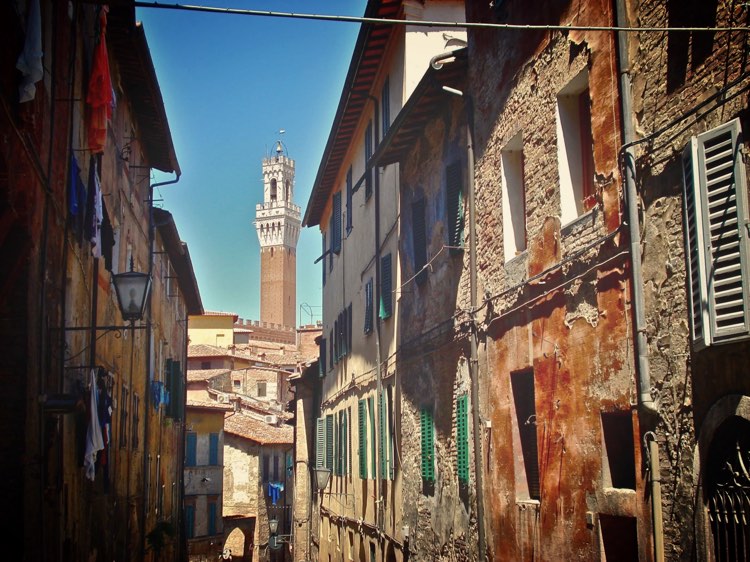
Image by Karl Powell, Torre del Mangia (Siena), 2007

Our day here began here, close to the Porta San Marco. We were all keen to get to the Duomo di Siena and to see the Piazza del Campo. There was enough time to do both before the bus departed. Together, we all walked up a long street, which stretched and twisted, changing its name, changing its course, eeling, merging eventually into the Via Giovanni. It led up into one of the corners of the Piazza. At every step, every pause, every checking of our maps, the Torre del Mangia remained a fixed pole star above the rooftops. That was our destination. Warrens of side streets ran off in haphazard right-angles, leading up, sloping down, offering shade and arches, alleyways and allurement. Scorched old bricks, piled high on top of each other, homes within, parchment plaster peeling and sunburnt, colours singing in the heat. The imagination wandered and dawdled in these old streets, wanting to stay, to conjure scenarios, to create visions of living there. The quiet windows and doorways concealed so much. The heart began to beat that much deeper.

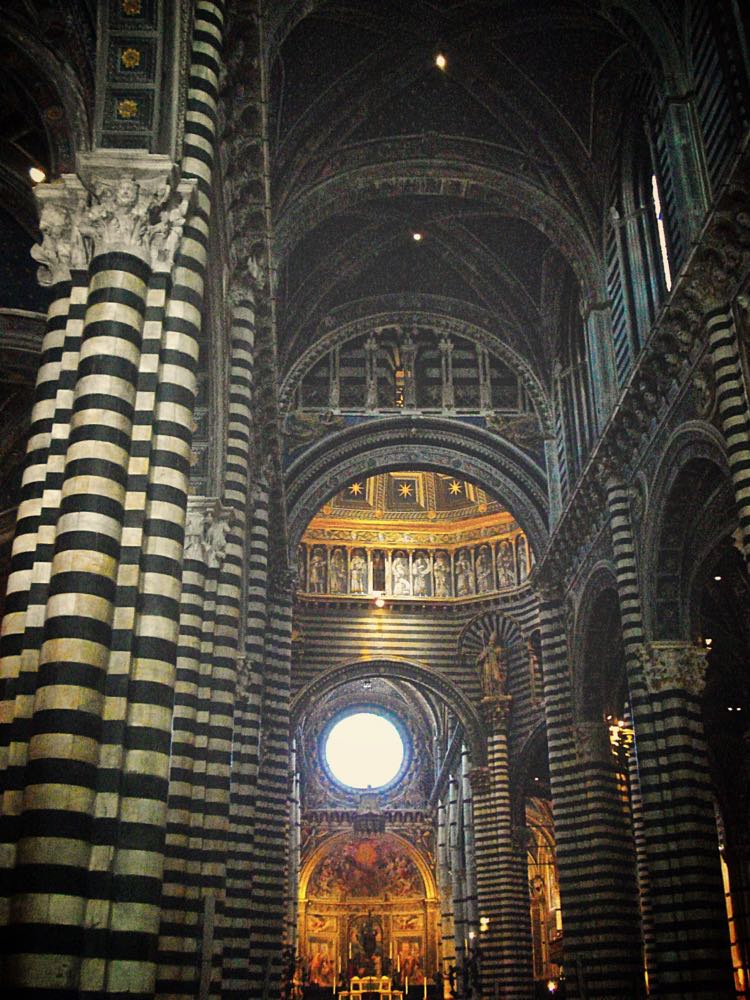
Image by Karl Powell, Inside the Duomo (Siena), 2007

At the Piazza we all went our separate ways. I did a circuit around the surrounding roads and shops. Eventually, I sat and had lunch in the shade, beneath arches, surrounded by voices speaking Italian, German and English (that I could hear). I watched a woman in a purple dress, black shoes, walk across the piazza towards a one-way street. She disappeared into the side entrance of a shop selling paintings. Sunshine reflected on the gold trim of her sunglasses for the briefest of moments before she disappeared. Afterwards, I found my way up to the Duomo and went inside. The air was cooler, a silent refuge from the heat. The air smelt sweeter and the space rose up towards a canopy of golden stars collected from all seven heavens and painted onto the ceiling, hoisted up by giant marble columns hooped in black, white and gold stripes. The floor, where I entered, had a mosaic of Hermes Trismegistus receiving divine gnosis – some of the alleged origins of hermeticism, alchemy and the Arts. And now, sitting on a wall, close to the Porta San Marco, our bus arrives. I see Roger and Margaret – they wave and are smiling; they loved Siena, too. Roger tells me he that he got talking to someone that told him that the Piazza is used for horse racing and a flag throwing parade and that we only just missed the festival by a few days.

Image by Karl Powell, Via San Agata (Siena), 2007

ARRIVERDERCI
Over a decade later and I still remember our goodbyes at the end of our bus tour around Italy. There were some wonderful friendships made on that trip, some wonderful moments. Siena had been at the start of the journey; we then ventured on to Rome, then down to the Bay of Naples before driving back up towards Florence, Pisa and then the Alps. In the two weeks that the journey took place, my friendship with Roger and Margaret continued to grow. There were other friendships and one evening we all celebrated their 50th Wedding Anniversary with a bottle of champagne, but it was Roger and Margaret I ended up keeping in touch with. They were just lovely people who I was lucky enough to cross paths with for a moment in time. As our bus arrived at Dover the coach became edgy, falling silent, everyone looking out of the windows, starting to say goodbyes and swapping addresses. It was sad as you knew you’d all never be in the same place all together again. Maybe never see them again. But everyone had been a part of each other’s journey. Then it was time to go our separate ways. Goodbye, goodbye, goodbye. Keep travelling. Keep looking for what it is you’re searching for. Treat everyday as a bonus. Then the silence. And we began to make our own ways home.

*

– Vale: Dedicated to Roger Fox –

2 A Day in Sorrento

There is no blue like the Mediterranean blue. It has its own complexion and light which shines throughout it depths. It is made all the more intense when it comes into contact with the endless sunshine of July. When this happens, a timeless summer returns to dance on the water’s surface once again, allowing a clear blue to flood this breathing body of water with a vibrant hue. The colour produced begins to speak of an ageless, living link to those other worlds long since dimmed. These are, after all, the waters that Odysseus sailed upon – as he desperately sought to return to his island home of Ithaca. There were numerous obstacles he faced on his journey: a battle with a cyclops, a storm sent by Poseidon, even his crew were almost seduced by the apathetic lifestyle in the Land of the Lotus Eaters. But despite all this, Odysseus did make it home – even evading the Sirens of Sorrento (those mythical creatures who lured passing sailors onto the rocks of the Amalfi Coast through the hypnotic lure of their songs and music). Here in Sorrento, I spent time today.

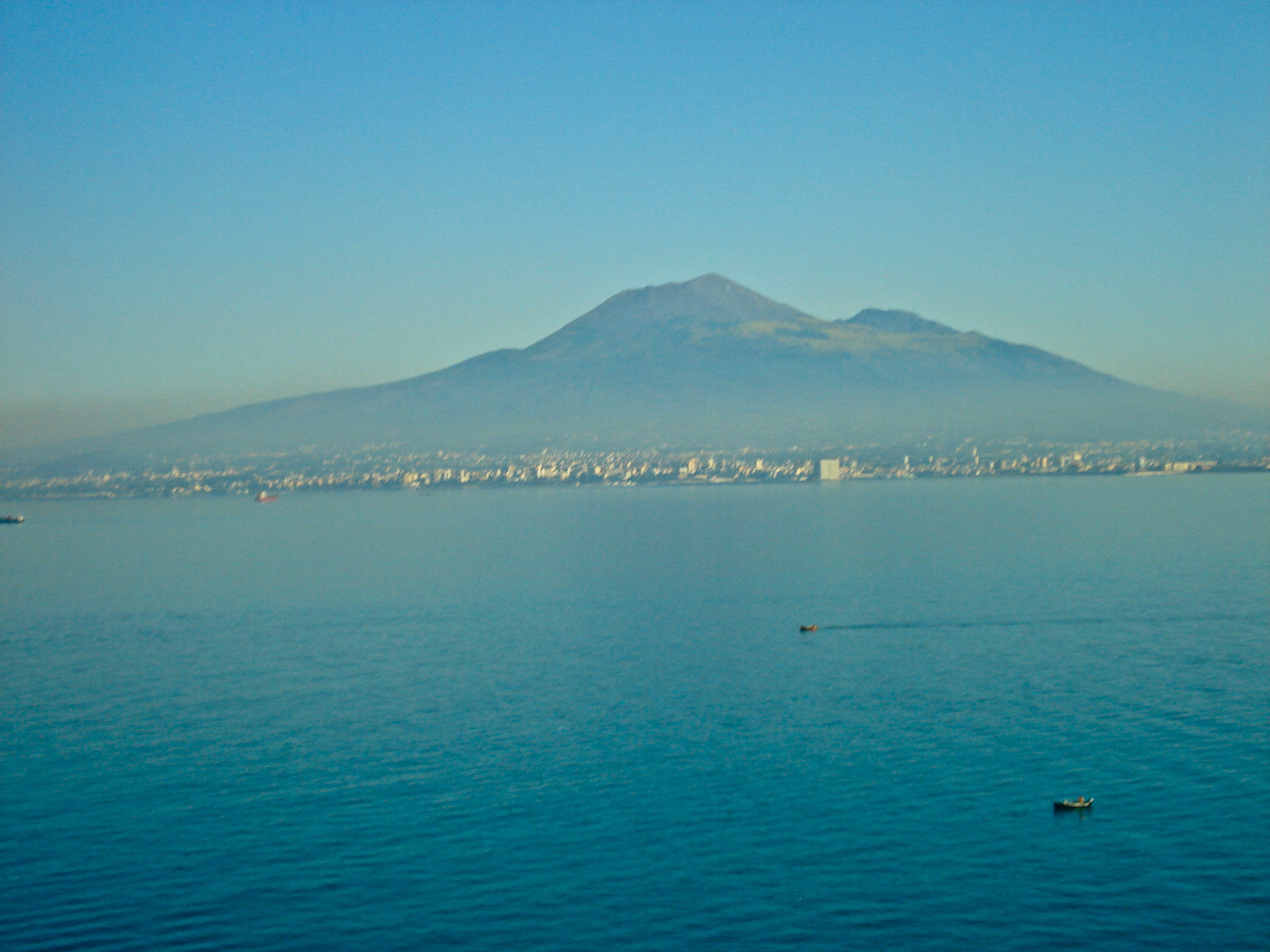
Image by Karl Powell, The Bay of Naples, 2007

Somewhere off the Piazza Tasso I have found a place to sit in the shade. It is eleven o’clock in the morning and I am drinking coffee at a bar somewhere in these narrow, back streets which slope down towards the sea. The sun is already very strong. People now stay in the shadows. Many are smoking. Only giant stone buildings brave the direct bite of the sunlight. One, with a sand coloured façade, is decorated with large sprayed-on black graffiti reading, ‘Ti amo Giugglieta’ – another scratched in ink warns, ‘Don’t waste your time or you time waste you [sic].’ Birds sing, phones ring and small scooters scuttle off to unseen adventures. Time stands still. The streets here in Sorrento, smell so different to that of anywhere else; it is as if they are perfumed with citrus or lemons. Many of the streets house tall, overhanging trees and vines with coloured flowers of bright purple, crimson and pink. Beyond the blossoms and terracotta air, there are dozens of zigzagging steps leading down from cliff-top heights towards the waters of the Mediterranean blue. Sunlight dances on the face of the water. The Bay of Naples, visible along the coast, catches each rhythmic rolling wave moving in from the deep. The silent silhouette of Vesuvius sleeps on the horizon.

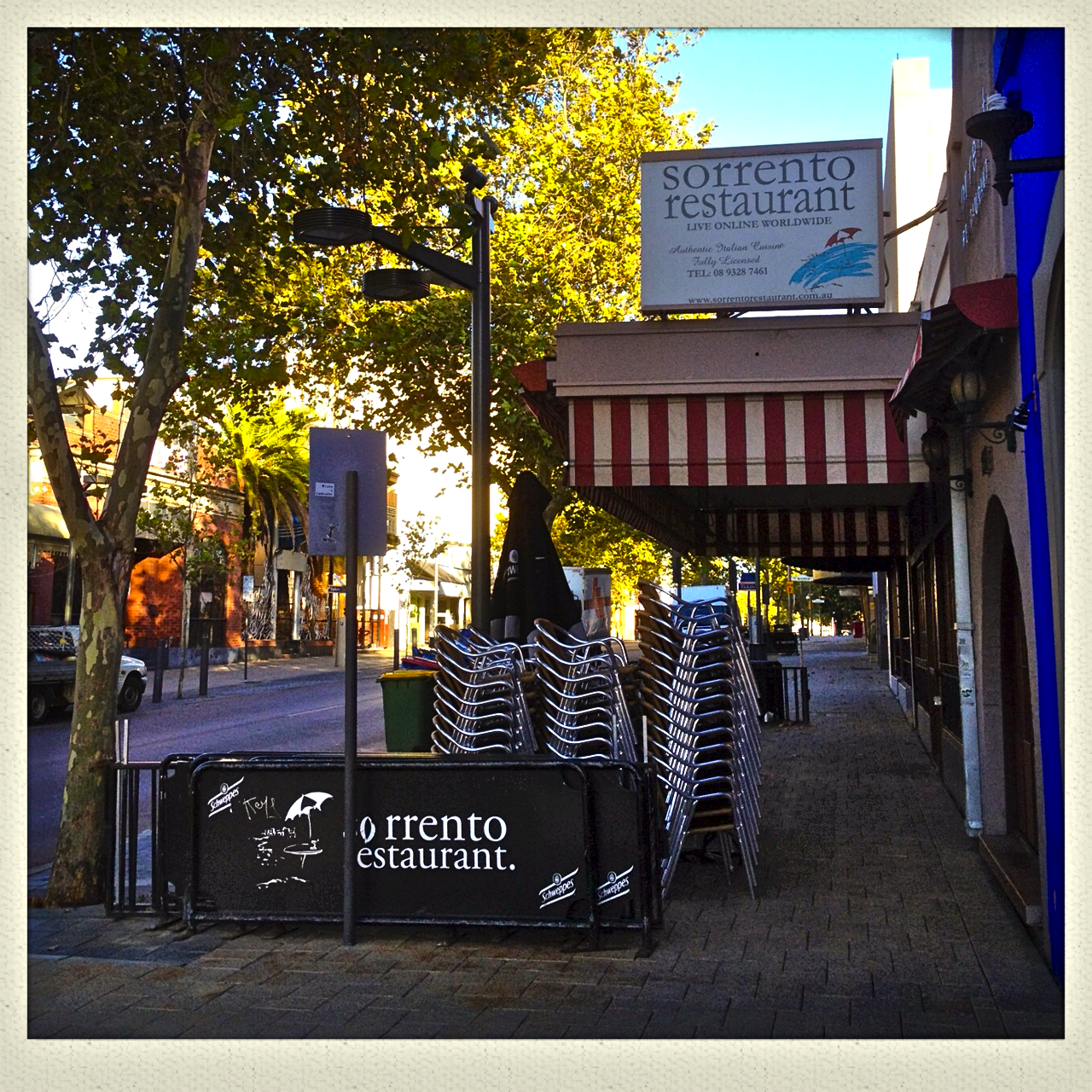
One of the first things I did on arrival here was to buy a postcard from the first tourist shop I found. Ciao de Sorrento. I wanted to send it to an Italian restaurant in Northbridge, Western Australia, which shared the same name. Years earlier I had worked as a barista there. I had loved that job so much. The family who owned the restaurant had been extremely kind to me when I was a migrant, and I had been keen to send them a postcard from the place which shared its name. Ciao de Sorrento.

Image by Karl Powell, Ciao de Sorrento, 2014

As I finished my coffee and wrote my postcard, I thought of the restaurant and the people I had met there. During the summer months, when I helped to open the restaurant in the mornings, a flow of regulars (mainly old men) would come inside to socialise with each other over a coffee. All had been born in Italy. All spoke Italian. They freely shared their stories – stories of Italy, stories of Australia, stories of migration. These stories were shared amongst each other and with the staff – many of whom were young migrants and travellers. They were from all parts of the world. People from Italy, Brazil, Czech Republic, Germany, Slovakia, Canada, Norway. Many stories and stories of adventure were shared across the generations. Friendships arose from that restaurant and some still endure. The lingua franca was the commonality of journeying. Being travellers they all shared an awareness in the finite currency of Time – the precious moments that could be shared together; never urgent, never wasteful, Time was always used to share something together.

Image by Karl Powell, Sorrento Restaurant, 2016

The rest of my afternoon in Sorrento led me down to the ocean. There at the Marina Grande I stood for a while and watched small, bobbing boats sigh slowly in the sheltered sea. Fishing nets had been hung up and dried on anchored sails, small red buoys, strung out across the dancing shoal of moving waves, rose and fell. Shops and houses toppled forward from staircases of stone steps which moved through shaded arches, carrying the call of the Catholic Mass for midday with chiming bells sounding loudly in the ocean air. Colours seemed so pure. I bought a bottle of limoncello from a woman called Carmel who was celebrating her name day in her shop near the water’s edge. I ate a meal of seafood for lunch – I tasted butter, olive oil, garlic, basil, parsley, tomatoes, mussels, clams, calamari, fish; I tasted the Mediterranean. I remember sitting there thinking that had it not been for that restaurant in Northbridge I would not have visited this beautiful place and would never have experienced this moment.

Image by Karl Powell, The Fruit of Carolina, Sorrento 2007

After lunch there was still time to kill until my coach departed Sorrento at dusk. So, I wandered, slowly, through the streets. Scooters and tourists mingled without conflict or collision. I saw an old woman sat on some stone steps, drying herbs and chillies in the fierce sun. Crushed, packaged and labelled she sold them in small, white paper sachets from a basket. Shops lionised the afternoon shade and displayed their goods outside. Beautiful glass vases, coloured and swirled, were stacked on flat white shelves. Other shops paid homage to an Argentinian genius who once played for SSC Napoli. Endless rows of azure shirts carried the name ‘Maradona 10’ reminding us that he, too, once danced in this sunshine – winning two Serie A Scudetto Championships in another time.

The myth of Odysseus was used by another shop to promote its produce of large, coloured ceramic plates. A giant mosaic had been created on one of its exterior walls. Sitting in the middle of this artwork were three plates – all differing in size – featuring ships and mermaids. On one of these plates a lone figure, silhouetted and bound in white ropes, stood at the bow of the ship, with the foam of crashing waves sending spray upwards around him, while looking straight ahead at the floating shape of a woman with wings and the tail of a large fish. On the large mural were words written Italian: Secondo le leggenda le sirene, erano donne ucello le qua questo mare matarono in donne pesce dopo che Ulisse riuste a resistere al loro canto (“Legend tells that in the beginning the mermaids were birds, and that, in this sea, Odysseus survived their singing, so that the strange creatures, deceived, changed from birds into fishes.”)  This local legend still celebrates the link between Sorrento and the ancient myth of Odysseus – namely that the Sirens in the story had once belonged to these coastal waters.

Image by Karl Powell, The Mediterranean Blue , Sorrento 2007

Of all the writers who have devoted their time to understanding the potential purposes myths can still give us, Joseph Campbell is perhaps the most celebrated. In The Hero With A Thousand Faces, Campbell is at pains to remind us that Odysseus was often at the mercy of the winds of an angry Poseidon, driving him around the Mediterranean without reason or apparent purpose. The myth of Odysseus, like any myth, reminds us of an extraordinary event that happened long ago, linking time and place together. But myths can do much more than that. They can also remind us that we never travel alone. To quote Campbell, ‘where we had thought to travel outward, we shall come to the centre of our own existence; where we had thought to be alone, we shall be with all the world.’ According to the myth, it took Odysseus ten years to reach his home. For those travellers who search the world for a place to call ‘home’ or those who just ache to experience the feeling of belonging they need for a moment in their lives, the voyage of Odysseus around the Mediterranean reminds us that despite the travails which can arise in moments of our own existence – and even threaten to shipwreck our dreams and searches – his resolute vision of returning ‘home’ to Ithaca ultimately prevailed.

It was almost sunset when my coach departed Sorrento. From my seat at the back of the bus, I watched a setting sun begin to coat the Bay of Naples in a glowing, orange dust. Then the sun burnt an intense ruby red as it sunk. Silhouettes of palm trees passed in front of my window. The silhouette of Vesuvius towered upwards towards a clear sky. As the dusk and twilight gave way to the night, a new moon appeared – its thin, white crescent shone clearly as it rose.

*