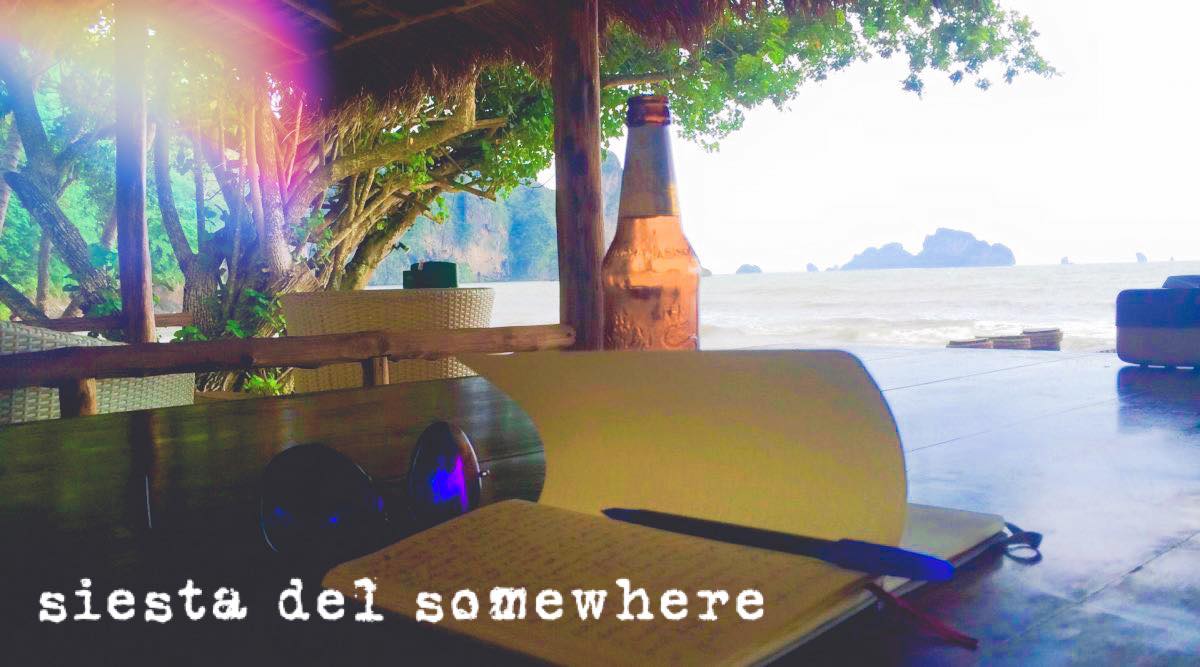
Been here in Qatar for almost 24hours. Here for the first time. Here for two days. I took the opportunity to stopover; for practical reasons, a chance to sandwich a transit between two long-haul flights – for the indulgence of curiosity, to experience something new. In essence, it is the same ache that Alfred, Lord Tennyson’s Ulysses talks about: being unable to rest from travel… to always roam with a hungry heart. Despite being in this destination for just a moment, the desire is try to glimpse along the edges of a world unknown – to sail beyond the sunset.

Yesterday was much of a blur. Off the plane. Into the unknown. Corralled queues for security and immigration. People in motion, crowding, pushing, moving all around. Passport stamped with a hand tattooed in henna. Out into a huge hall. Facing taxis holding names – found mine, escorted outside the airport. Sat on a bench and waited while the driver went to get his car. He returned and we drove in to Doha. Only a 15minute drive to the hotel. It was dark and dawn and light and morning all merging. The first call to prayer sung and carried with its divine beauty through the cool air. Roads were quiet. The driver told me I had arrived on a good day: Qatar’s National Day. He said there would be fireworks and a parade. He also told me everything was preparing for the 2022 World Cup. In fact, in a few days, the FIFA World Club Championship Final will take place: Liverpool v Flamengo. On my flight I remembered there had been a man from Zambia flying in to attend the match – decked in the red of the European Champions.

At the hotel I checked in. Room 127. The Front Desk was patient and helpful. Unhurried, he photocopied a map of Doha for me, telling me most shops would be closed because of the public holiday. Found my room, showered and went for breakfast. Food was lovely. So much to choose from – buffets of everything, chefs cooking orders, waiters pouring hot, black coffee. Everything clean and spacious. After eating, back to my room – got lost on the first floor (turned left instead of right from the lifts). Rooms and corridors. Bed huge. Slept a deep sleep. Then tried to walk around, to see something of the National Day, but unprepared and disorientated (forgot my map). Got lost. No sense of bearings. I found a policeman near the Al Corniche – one of the main roads. He told me there would be a parade in a few hours. I stayed for a while, felt tired, felt unsettled not knowing my bearings or where to go. Retreated back to the hotel. Disappointed. Front Desk presented with a beautiful cake iced in the maroon and white colours of the Qatari Flag to celebrate the National Day. Went back to my room and slept another deep sleep (missed the parade – can vaguely remember hearing fireworks).
Going to go down for breakfast soon. Not sure what today will bring. This hotel, though, does seem close to everything. Will have to walk around and explore. Planning on seeing what I can: to walk along the Corniche, to see the waterfront, to visit one of the big museums – maybe the National Library – and to explore the main souk. No idea of the distance (or how long this adventure may take), but am taking my map with me this time. Hope to be back at the hotel around 3pm (8pm body clock), sleep til 10pm, taxi to airport at 10.30pm. Flight is at 1am.
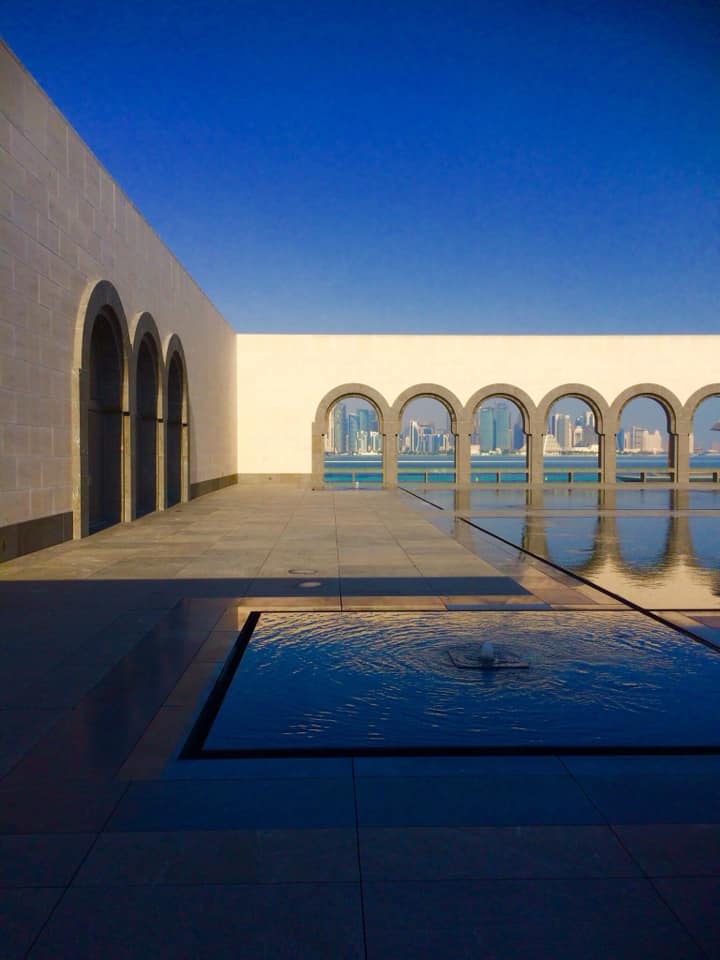
After eating, I left the hotel early and made my way along the Al Corniche. So clean and accessible, beautiful footpaths. The Museum of Islamic Art was straightforward to find; it sits like a landmark on the waters of the Persian Gulf. As I approached it the road suddenly silenced and closed. Police pulled up in motorbikes and began blowing whistles. They motioned at me to stop crossing the road, to move back to the kerb. Something was approaching. A fleet of cars sped through. The policeman told me it was members of the Royal Family. The road opened again and the policeman thanked me for waiting.

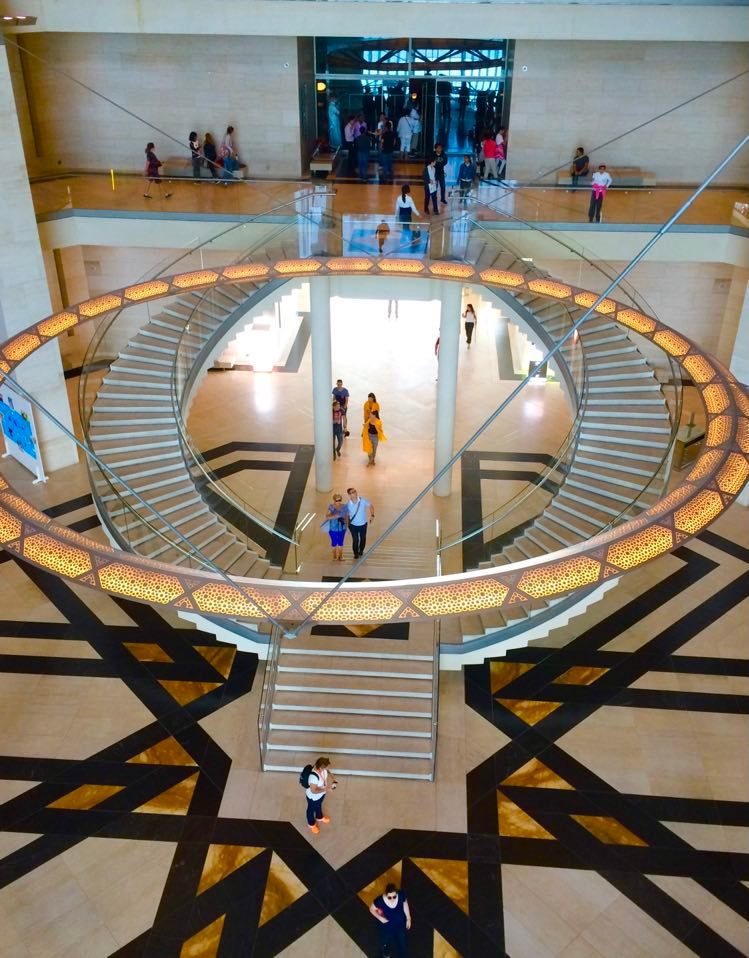
The Museum of Islamic Art opened at 9am and I must have been one of the first ones admitted. From the outside it was beautiful: sharp, straight lines of a cream white building contrasted against the blues of sky and water. Inside, the main hall was a large central space, with a staircase and fountain. Natural clear light fell inside, creating an immediate sense of serene stillness. I spoke to a lady on reception who was helpful; she explained what I could see in the museum, as well as in Doha (drawing on my coloured map of the city places I was interested in seeing). There were four floors in total at the Museum. There was also an exhibition on Syria – showing its art, culture, and history before the civil war. I went and looked at each floor. There was so much to see on each – all the patterns, beauty and geometries of Islamic art expressed through ceramics, calligraphy, textiles and astrolabes. School children were on guided tours; guards were present in each room (courteous, softly spoken, all knowledgeable about the art).
Outside the Museum, I walked along the waterfront. There were lots of boats at the Dhow Harbour empty and floating on the water’s surface. As a tourist, voices called out to me in every language to take a trip. It looked fun – something that should be done – but maybe next time. It was getting noticeably warmer. I kept walking along the Al Corniche towards the souk (following the directions written on my map). The conical swirl of a mosque was my landmark to aim for. Through a jumble of traffic lights I eventually found an entrance into Souq Waqif. Walkways were wide, clean and easy to navigate. Colourful bunting hung and fluttered in the maroon and white national colours; portraits and photos of the Emir were visible, too. Most shops had stock stacked outside on display: shops selling lanterns, lampshades, clothes, bags – giving away welcoming smiles and salam mualikum. Everyone I encountered had been kind, attentive and gentle in manner.

Eventually, I found an alleyway that led into an open-air courtyard. The area housed cafes and restaurants. It was still early, mid morning, but I was five hours ahead of local time and now hungry. I went inside a Moroccan café called Tajeen, which had just opened for service. A woman greeted me and gave me a menu. I ordered and sat outside among one of a number of tables up against a wall in the shade, facing out into the sunshine, facing out into courtyard. Everything was orderly and interesting. Where I sat, I heard lots of birds caged and free all chirping, their songs echoing through open spaces; I watched smoke float through the air in drifts of blue and grey, twisting twirls of tobacco; I heard an old man sneeze loudly and an another voice close by say something to him, to which he replied shukran (thank you -شكر ). A guy with a black beard sat a few tables away from me, bubbling his inhalations through a large, turquoise shisha, tapping endlessly into a red laptop. His coffee arrived in a small pot, which a waiter tilted to one side over a white cup; a thick black soup with a golden hue emerged smoothly. Curls of steam were visible. Instantly the air was fragranced with coffee. And in that courtyard, in that moment, waiting for my meal, I realised Tennyon’s Ulysses had been right:
How dull it is to pause, to make an end,
To rust unburnished, not to shine in use!
Opportunities to travel should be taken if you have wanderlust in your spirit or born under a wandering star. While this stopover was short – painfully short – every hour was something out of the ordinary. To quote Tennyson again, every hour was saved… a bringer of new things.

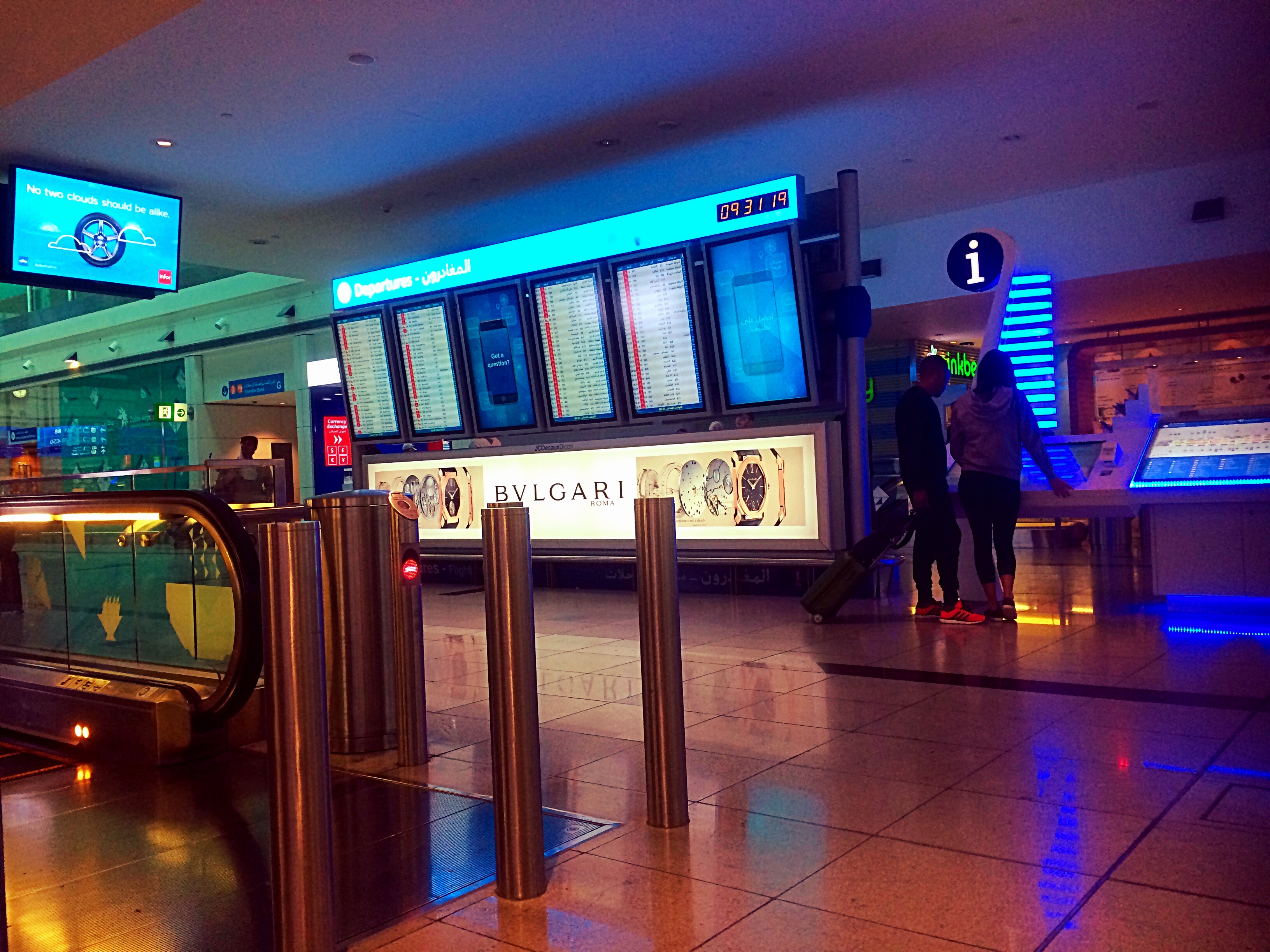
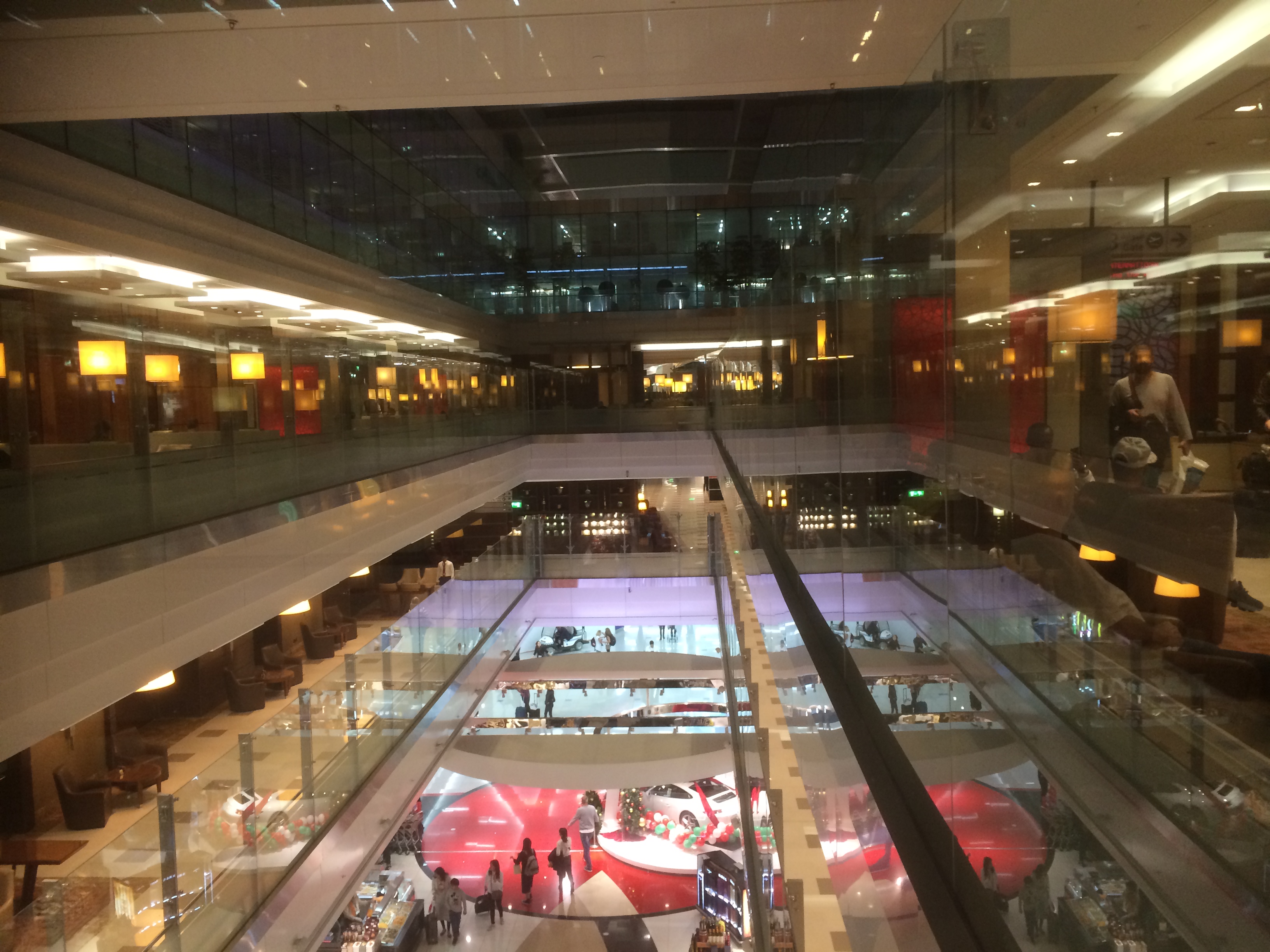
Waiting now to board my flight onwards. Tried to sleep this afternoon after arriving back at the hotel from the souk. Nodded off a bit. By 5/6pm decided to order room service and had something to eat. Ate, dozed, kept the lights off as it grew dark outside. Alarm eventually went off at 9.45pm. Settled up at the hotel: only room service and a taxi to the airport (50QAR). As always, staff so courteous. The taxi was quick, driver polite, my mind dancing between airline scenarios and departure times. At the airport, once again I entered the organised confusion of check-in, immigration and security (belts off, shoes off, laptops out). Into the transit halls I couldn’t find my departure gate at first. Someone with an iPad was there to help me: C13.
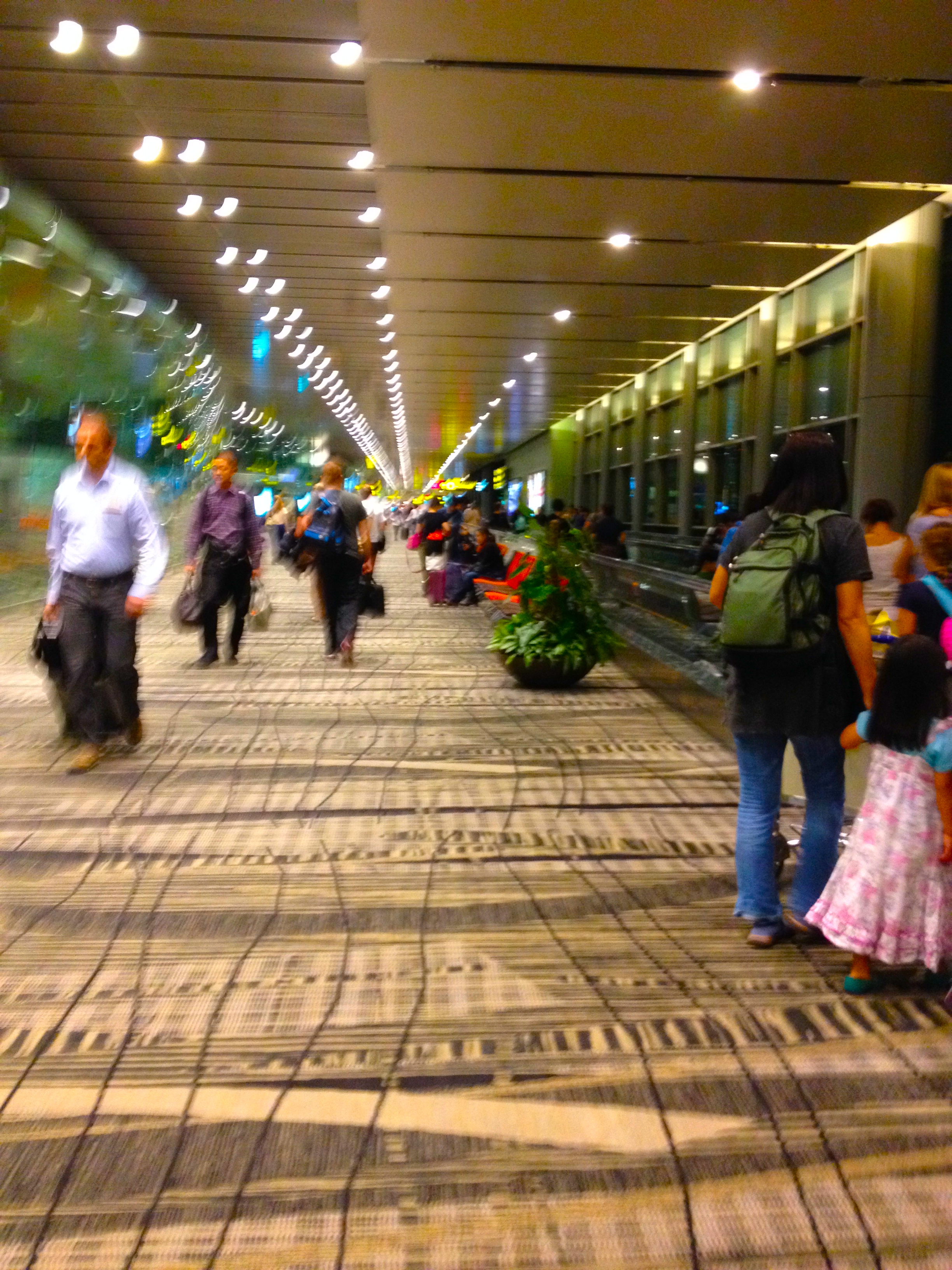
Saw a man handing out flyers for Burger King. I asked him directions to the Food Court. He couldn’t do enough to help me, practically escorting me there. I was so grateful. I found a restaurant, Azka, serving biryani. I bought a meal and a bottle of water. The chef was generous in his portions, trying to give so much food; I thanked him. Took me a while but I found somewhere to sit. Most tables of four were occupied. People, bags, noise. Soon, I found a seat on a kind of long, curved wooden bar overlooking the food court; wide enough for the plastic trays provided. There were tall stools underneath to sit on. There were gaps and spaces to find and push in. As I put my food down, three women next to me had finished their meals and were gathering up their bags and duty free. They began to walk off. One had (almost) left their green passport on the bench next to an empty tray. The image flashed: it sat there so visible and yet unseen when the mind is tired and focused elsewhere. I caught her attention before she disappeared into the moving sea of travellers. Sat there reflecting on how much of a nightmare that could have been.
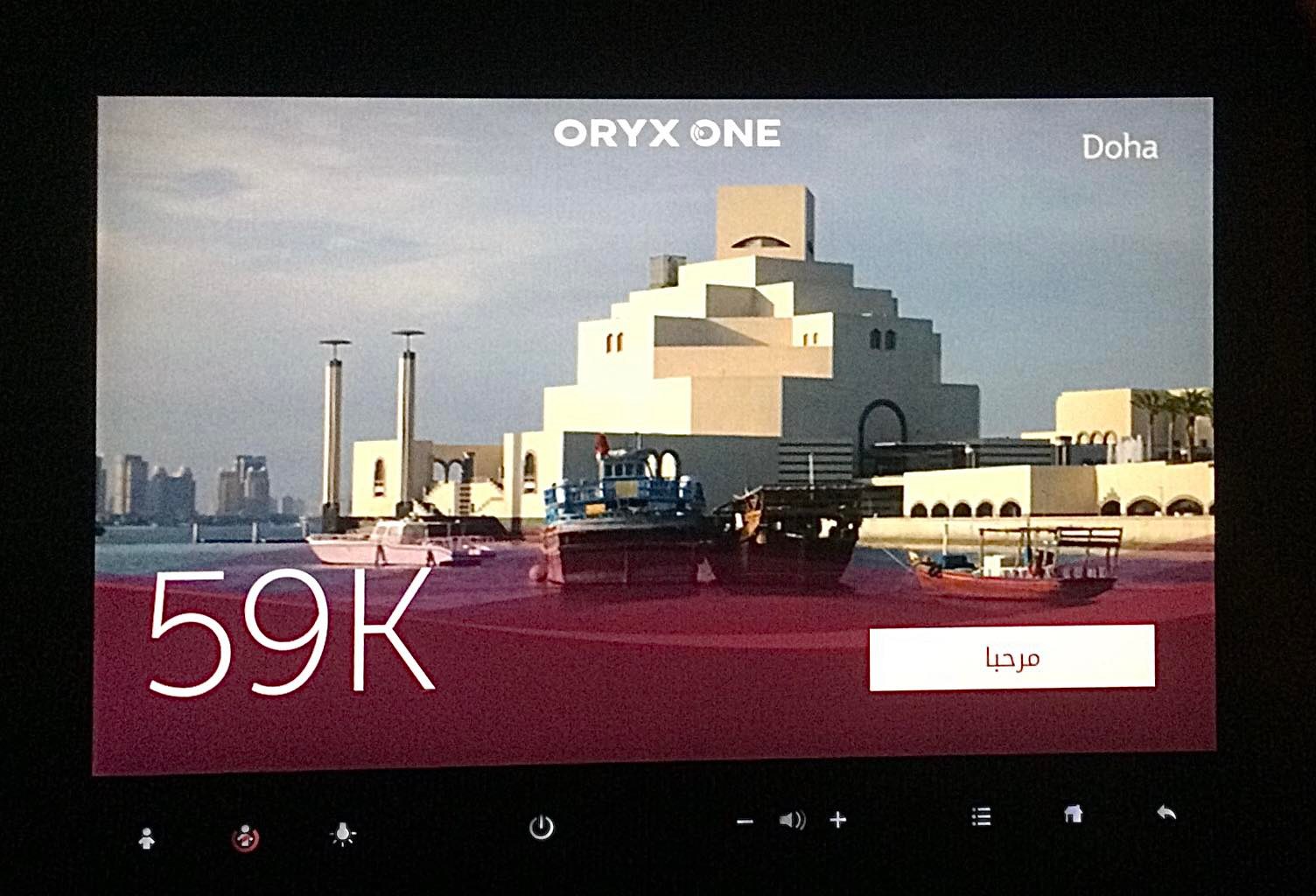
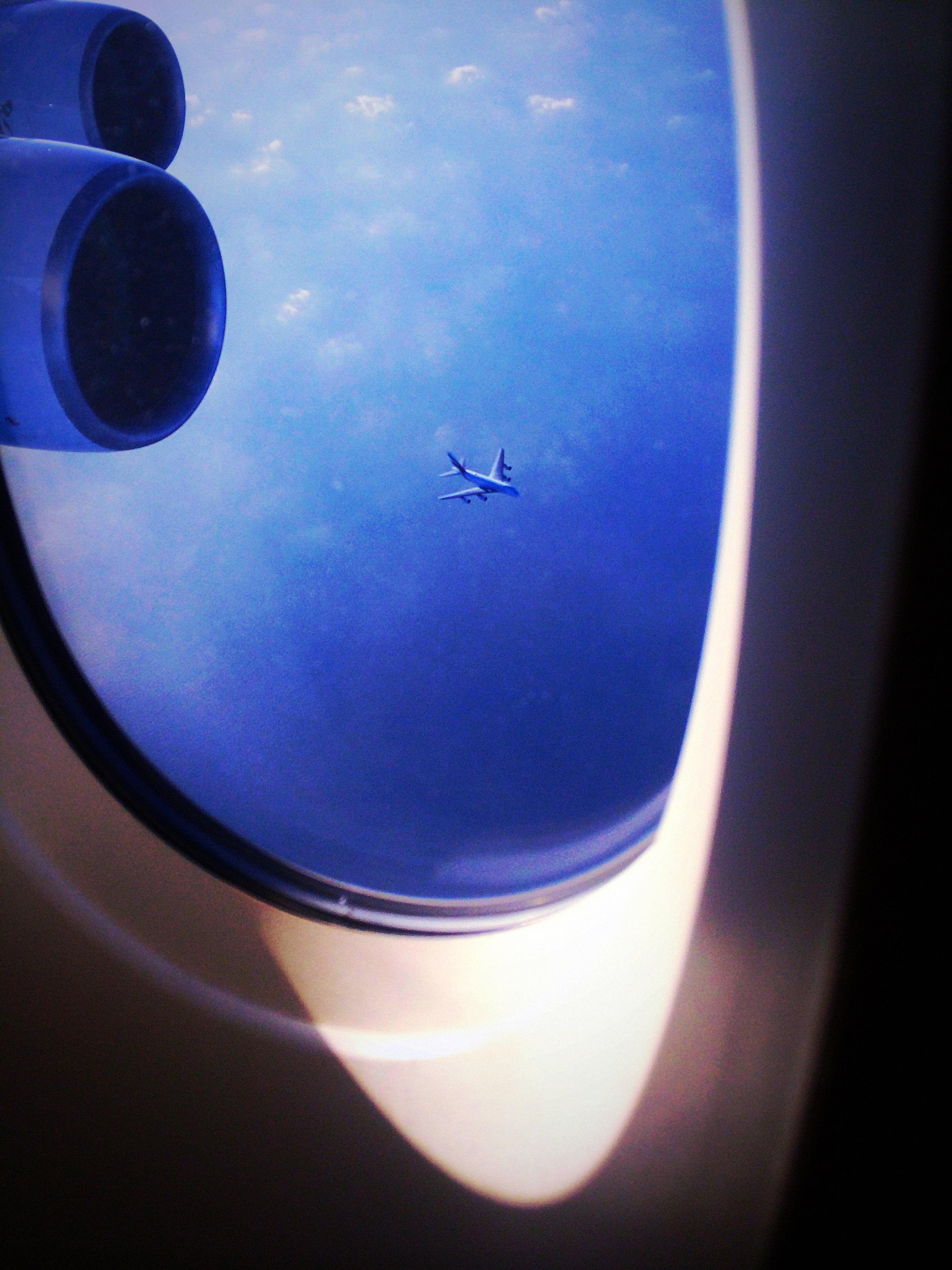
I entered the departure lounge – another set of security checks and identity checks – passport out, boarding pass inspection, water confiscated. My seat was Zone 4. Slowly waited; more passengers than seats – stood and watched the other zones get called. We were the last to board, but I got my seat – a window seat. I sat and watched the other passengers board and the thought appeared that it had suddenly felt like a long time since I was in my own bed. I spoke to the guy next to me (he was from Zambia), then the flight was suddenly ready and cabin crew were told to take their seats. Lights were dimmed.
So, I am leaving Doha after only two days. Grateful for the experience, grateful for the break in journey. Despite the brevity, it was worth it. As Tennyson’s Ulysses tells us, it is never too late to seek a newer world. One of the reasons being is that any journey changes us: I am a part of all that I have met. There once was a time when I would have spent most of these flights in silence, writing and recalling most of what I’d just experienced and seen – in colour, in detail, in words. Now I seem happier succumbing to digital distractions: WIFI, editing photographs, watching in-flight movies (it’s easier and less taxing to do). But this book is before me, urging me to write, recite, recall asking me to preserve those fleeting moments before they are forgotten. All times I have enjoyed.

*

 siesta del somewhere