22 Sunsets of Rottnest (Australia)

LAZING ON THE SAND
Must be nearly six by now. There or there abouts. The late afternoon stretch to sunset has somehow lumbered into being – dragging itself from out of the bite of the white hot heat of the day. The air feels easier to breathe. The sun seems more relaxed now. The whole world – horizons of sky and ocean – are seared blue. Every shade of blue. And blue they will stay.

Image by Karl Powell, Indian Ocean, 2009

Down at the jetty, down at Thompson Bay, the ferries were readying to leave, readying to depart, returning back to Fremantle, North Port and Hillarys. Hot tarmac and summer heat shimmered, boats floated, growing queues stretched, bikes rested in rows patiently waiting to be hoisted on board those vessels heading home. People slowly file on board. Those on the outdoor, upper deck turn to face the island. Some laugh in groups. Many are lost in their thoughts, watching the honeyed light soften in the  sky.

Up at the Settlement all had been busy. It had had an air of chaos to all its moving parts – the kids, the crows, the bicycle bings. People sitting and eating, talking and calling. Noise and colour moved in and around the shops, merged and blurring, sometimes sounding the echoes of peacocks from over at the Lodge. A table had made itself vacant and I sat down there to open my bag and to drink from a bottle of water I had carried in there. Lost in the moment, sat in the shade, a woman came and sat at my table opposite me. She looked at me until I looked up. Two brown eyes I recognised. Lost in the moment, sat in the shade, we said everything that needed to be said with our smiles. She spun a shell upon the table and our hands met. Lost in the moment, sat in the shade, she looked into my eyes and everything in the dream said, I’m in love with you.

Image by Karl Powell, The Basin, 2009

The path out of the Settlement had led forwards, then split and fractured and meandered into several different directions. Orange chalets with white, wooden verandas were dotted about in the dust of the day’s heat. Busy villas overlooked the still waters of Thompson Bay. Pelicans glided across the serenity of gondola waterways. We walked towards the ocean, through a grove of silent trees, over holy ground, along the perimeter fence of an oval. Bicycles flitted past. Quokkas hopped in the bushes and on dried leaves. Sand had began to appear at the edges of the tarmac. And so we left the moment and walked on into the sunshine, moving towards the Basin and down to the ocean waters that pooled there. Giant Norfolk pines rose up before us as silhouettes. Rows of mounted bicycles stretched across, locked and parked (helmets hanging from handlebars). Below, just below them, the sound of waves called. And everything became blue again.

Image by Karl Powell, Silhouettes, 2019

AT THE BASIN
At the Basin the tide was right in. Never seen it so high. The sky was high and wide and everywhere all at once. All clouds had evaporated long ago. The air was hot and smelt of salt water and sunscreen. The waters of the Indian Ocean, as always, were charged with magic. Patches of dark blue allowing long, flat sheens of dancing colour to illuminate and float beneath the sounds of crashing waves. Far beyond them, rolling waves curled and foamed over surrounding reefs hiding in the depths.

We found some sandstone rocks to sit up on, perched up, looking down onto the sand. They were comfortable enough to sit on. Warm rocks, roasted all day by the January sun. Hardly an inch of sand to spare. Normally there was ample space, gaps and pockets among the towels to sit and stretch out. If the tide was right out then it was possible to walk across the reef, ankle deep, out towards the blue and dive off into its endless silence.
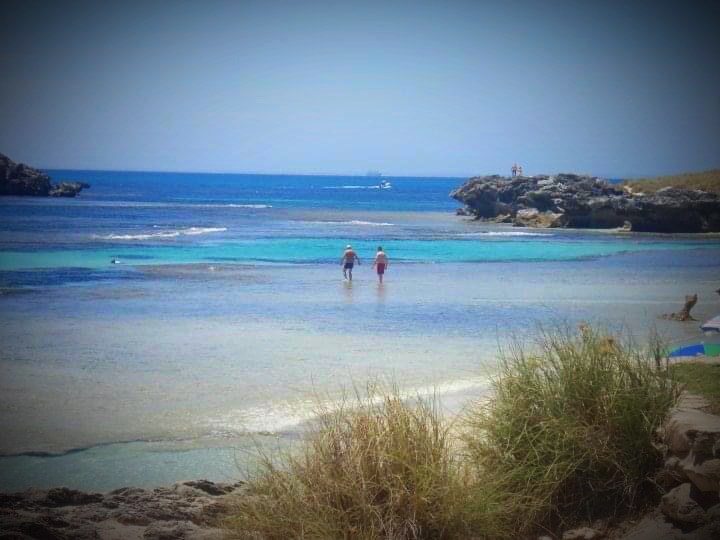
Image by Karl Powell, Low Tide, 2009

There was a big, white lighthouse basking in the sun at the far end of the beach. It was mounted on a cluster of rocks, barnacled and bleached by the sunlight. In my line of vision, bloated waves rose up and smashed their moving topaz against the protrusions of limestone stuck in the sand; wild sprays of rainbow coloured the air. Foam and ocean fell to the shoreline. Then long lulls of silence lapping up onto the sand. The air barely breathing. Nothing hardly moving. The fingers of nearby palm trees desperately seeking something to breeze through them. But only the waters were moving. And those waters shone with its divinities of blue – tinted gins, Moroccan majorelles, clichés of turquoise.

Image by Karl Powell, Blues, 2022

A lone seagull flew overhead. I watched its shadow move across the floating ocean. The bird eventually dropped to the sand, just where the shoreline soaked itself into saltwater. It walked about looking for insects to eat until one enthusiastic wave almost claimed it. And just beyond the reef, a boat full of young men played music; they took turns in occasionally jumping off into the blue. I watched for a while, then their music stopped suddenly and the silence encroached again. Several unsuccessful attempts to start up the boat’s engine engulfed the vessel in choking billows of black smoke. It drifted and twisted for a while before the engine revved up again and then took off slowly around the lighthouse back towards Thompson Bay. There were now only a handful of people remaining; some dotted about the sand, most in the ocean, a few snorkelling around the reef. A small child was throwing a tantrum because his snorkel was not working (his face mask was leaking water). His arms were waving everywhere in frustration. Eventually he threw it into the sand and sat on a towel (ignoring his family’s calls to return to the water).

INTO THE BLUE
And so into the blue. Into the Basin. Cool, cool water, endless and weightless. Stillness and silence. Great drapes of sunlight moving through the floating depths. Fish shimmer nearby. I touch the seabed with my hands, my fingers churn up clouds of sand. Like a mermaid she swims beneath the rolling waves. The slender shoal of long, black hair dances in her every move. The world glints in sea-soaked sunshine. Buoyancy brings us back to reality. She pops up in front of me. I feel her arms around my neck. We kiss. She tastes warm and of the salt water. Her body shines with the ocean dripping from her skin. And that kiss loses itself somewhere between the one hundred sonnets of Pablo Neruda:

There where the waves shatter on the restless rocks…

  Al golpe de la ola contra la piedra indócil…

You and I, amor mío, together we ratify the silence…

  Juntos tú y yo, amor mío, sellamos el silencio…

…we make the only permanent tenderness.

  … sostenemos la unica y acosada ternura.

But these were the dreams you had to follow. These were dreams that ached for you to find them. These were dreams you had to realise to touch.
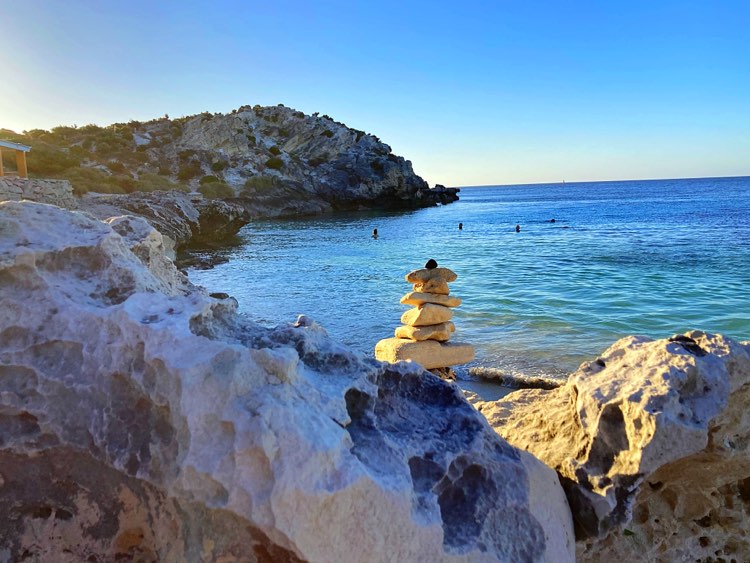
Image by Karl Powell, Sunset at Basin, 2022

EYES CLOSED
Back on the rocks, above the sand, sleeping in the late afternoon. Side by side. Eyes closed and the sound of the ocean keeps calling. Feels so good. Rhythmic lullabies, hushing and moving. Sun feels so warm on my skin, can feel its warmth on my eyelids. The ocean keeps calling until I sit up and look out across it. Waters in the shallows crash then criss-cross and sigh at the shoreline. Sunlight dances through them. Shells are spinning on the beach, smashed corals within the sand (whites, yellows, oranges – flecked and speckled, pinks and greys); some shells are left upturned on their backs transformed into hollowed cups of seawater. A big wave rolls in from the depths. Over to my right a fisherman casts a line from his yellow fishing rod out into the sea. Pockets of sunshine glow in underwater iridescence, shining bright in the navy darkness. A white yacht sails across the horizon from right to left. After a few more crashes, the world is silent again. Over to my left, above the rise of rocks crumbling down to the ocean, the sun has started a noticeable descent; it’ll end up behind them within an hour or so. The sand is already tinted with pinks and softer hues. Hands touch hands. Eyes close again.
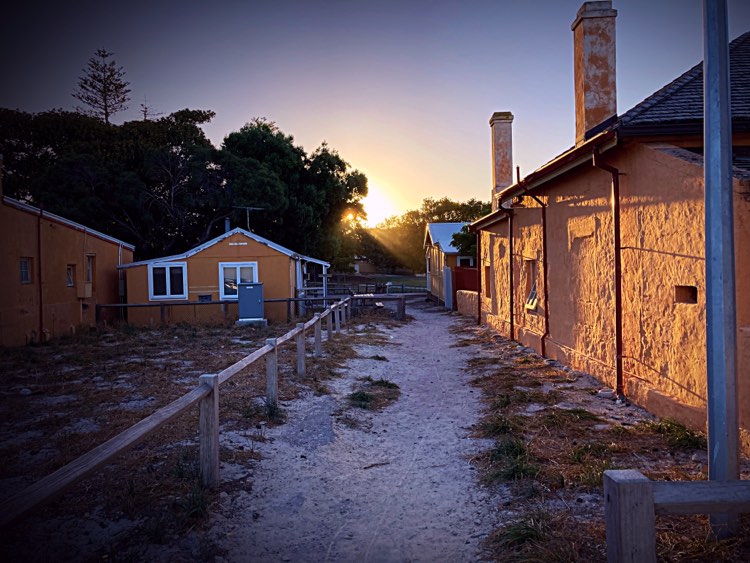
Image by Karl Powell, At the End of the Day, 2022

THE STARS AT THE SETTLEMENT
Colours fill the sky. The blue is there, but fading, waning. The sun is setting behind the island coating the landscape in golden warmth. The sun burns its last in a large orange glow. Silhouettes appear everywhere. The lightest of evening breeze skims across the surface of the water. A small boat pulls out. A man in a denim shirt stands on board skippering a voyage into the dusk. Over at the hotel a string of coloured fairy lights and lanterns sway, illuminating the branches there. And you feel so relaxed because after only a few hours this feels like an entire holiday. And you feel so happy when you overhear a girl ask a guy if he’s still here tomorrow night. And the day is ending. Looking at the blinking lights of the buoys anchored in the bays I know I’m in love with you. What a way to watch the day end. The words begin to leave you bit by bit by bit. But I’m in love with you and everything is so quiet and so very peaceful. Grains of sand stick to the skin on your arm. And the stars begin to shine. These are the things that can last for only a day. And I’m so in love with you.
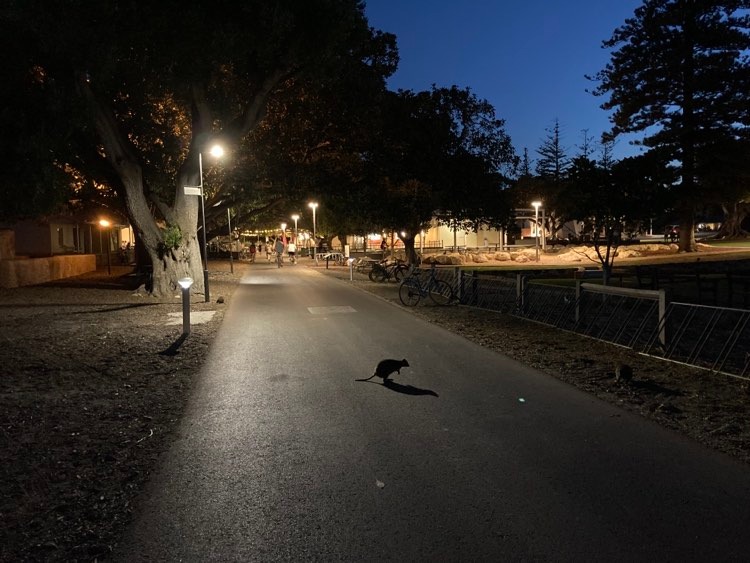
Image by Karl Powell, Quokka at Night, 2022

*

9 The Balinese Fishermen

The day had been spent writing. It was important to find a routine that worked; for good writing it was necessary to find a rhythm (or to let the rhythm reveal itself to you) – something, in the words of the Poets, which enabled you to hear the Muses sing as clearly as possible. When you committed to creating momentum, and worked patiently within in, then the words just flowed and the magic happened in front of your eyes. Waiting for inspiration is as pernicious as blocks, procrastination or the fear of a blank page. Much has been said about how to write, when to write, how often to write. In the end what works for you is probably best: but you have to find your own rhythm. For some, the most potent time is around dawn – brahma muhurta – when creativity literally comes down to meet you; for others the alchemy is best experienced after dusk, as documented in the verses of Dylan Thomas:

In my craft or sullen art
Exercised in the still night
When only the moon rages
And the lovers lie abed
With all their griefs in their arms,
I labour by singing light.

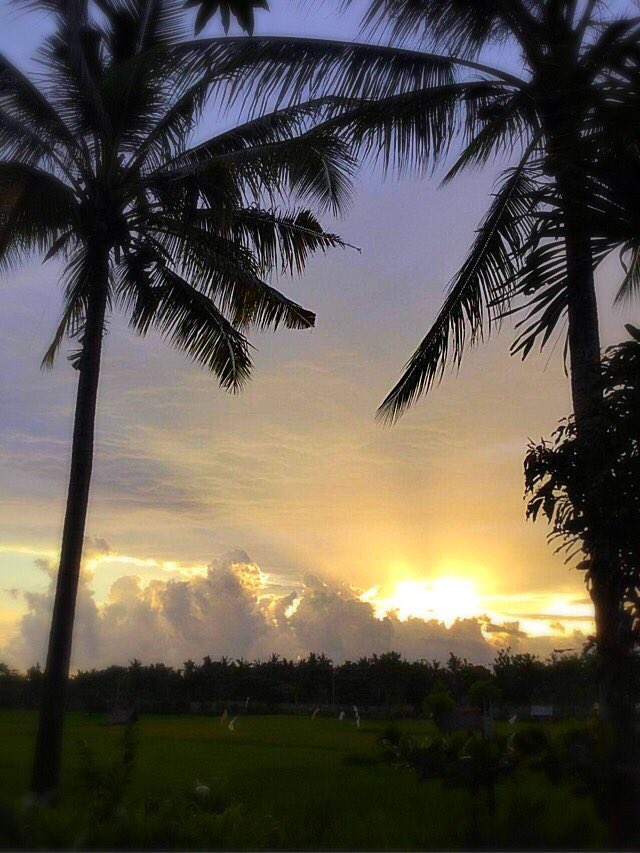
Image by Margi Currey, Sultry Sunset over Seminyak, 2017

For almost a month I had found a routine that really worked for me: a walk along Tuban Beach before breakfast; to write for several hours at a desk in a room I had rented until lunch; a couple of afternoon hours editing sitting outside; finishing with a walk near the ocean at the day’s end – leaving the nights free. Long mornings were spent sat at a desk overlooking a garden with green, flat tropical leaves, which moved and swayed in what little breeze dared whisper. After lunch, I moved onto a balcony, a bar or cafe, editing what had been written the day before – all the while watching the afternoon skies grow heavy and then burst with rain. The flat palm leaves were drummed into a kind of submission by the downpour of raindrops – the surrounding greenery seemed to become more vibrant in sound and colour because of the rain. This routine had worked, the project I was working on was almost complete.

Image by Margi Currey, Sunset , 2017

Walking along the beach at late afternoon (before the sunset) helped rejuvenate and untangle the mind from words and ideas. It was a good way to avoid burnout on any long project. The beach was not far from my room – a short walk through several narrow streets (jalan or gang). Roughly, I would arrive there at that time of day when shadows had begun to fall through the trees and stretch themselves out across the shoreline where wet, tropical tarmac gave way to the sand. The strength of the sun had long begun to fade. Mosquitos were beginning to make themselves known, nipping and biting. The day itself felt tired in some way.

Image by Karl Powell, Kartika Gang Jalan (Tuban), 2005

Some days I would walk there as the tide crept its way back up the beach. The incoming waves growing in noise from a still and silent ocean. Local children would play in the foaming surf; tourists taking photos of the flat silver ocean beyond them, waiting for the pink sun to set and burn Titian colours across the sky. Planes flew upwards from Ngurah Rai Airport, passing the beach, reaching up overhead journeying home. Sometimes patches of yellow light broke from above the clouds and over towards the north, the mists would clear and Mount Batukaru drifted into view. 

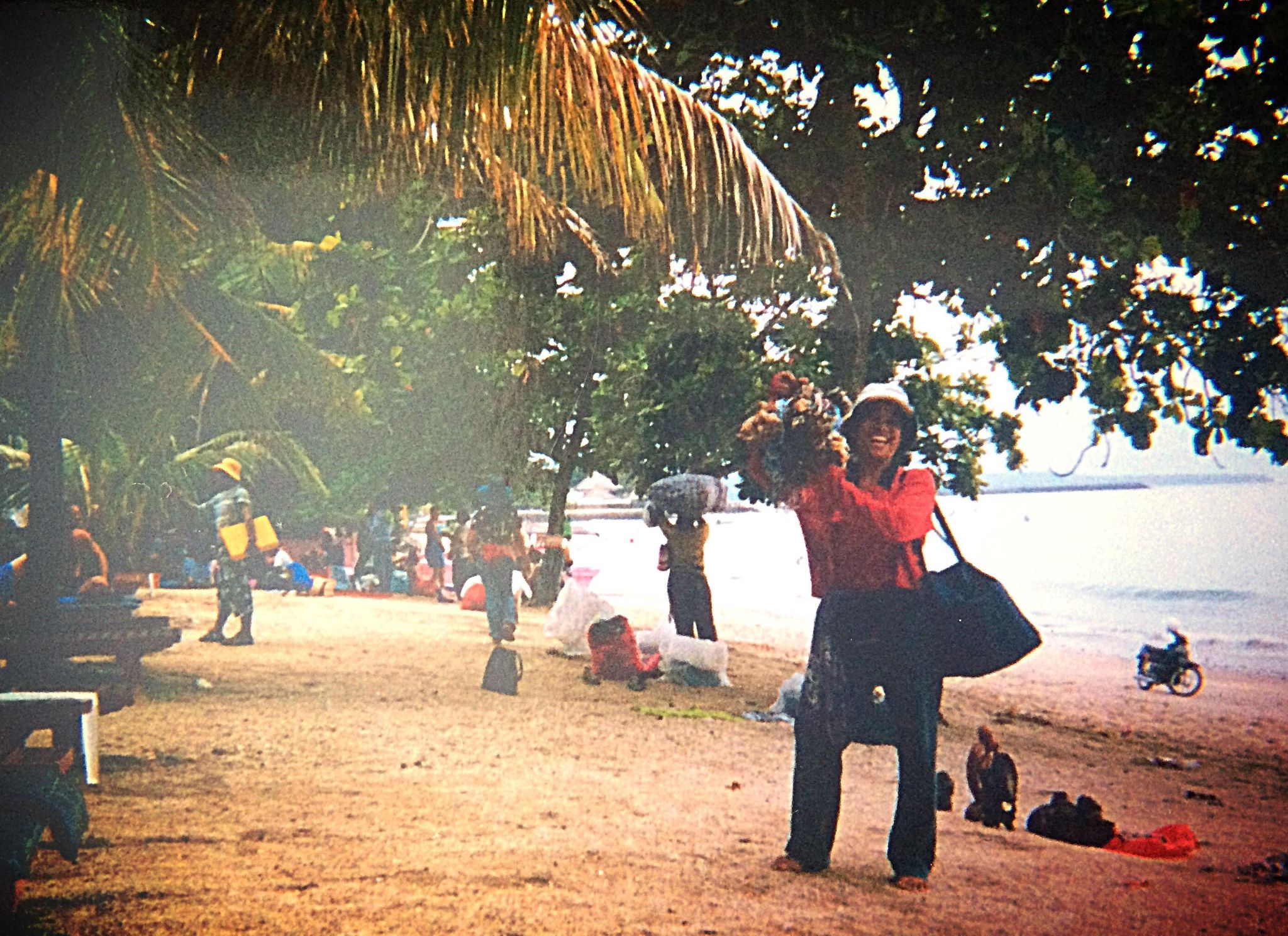
Image by Karl Powell, Jenni, 2005

At that time of day, many of the sellers would be packing up – taking home what had not been sold to try again tomorrow. The odd tourist would walk past but the last sale of the day had possibly come and gone. Heads low. Some of these sellers worked on the beach the whole day. Time to count up the rupiah and see what has been made for the family today. Not much left to say. No more customers will come now. Through the familiarity of routine I got to know some of these faces. Andrew sells necklaces. He wears a yellow hat with his name on it. He has four children, three boys and one girl. He tries to sell me a temporary tattoo. OK don’t forget me tomorrow – remember my name. Eric is selling a crossbow. He also has a blow-dart for sale.  Eric speaks Italian. He learnt it on the beach. He speaks fluent Italian. A friend bought him a book. Each day he learns a little more. Step by step. Eric also speaks Javenese, Balinese, Indonesian, English, Spanish, French and a little German. He learnt it all on the beach – a la spiaggia. Most of the sellers here have their own patch.  Some sit under frangipani trees during the heat of the day. They sell for good price, cheap price, welcome to Bali price. A blond tourist has three Balinese women braiding her hair on the beach outside her hotel. They say all the right things to her: she is pretty, she smells nice, she has beautiful hair. They ask if she is Australian, or American, or English. They each repeat their names if she needs anything else – You want to buy a hat tomorrow? You come to Jenni. Kiki, Lisa, Jenni – all three braid her hair.

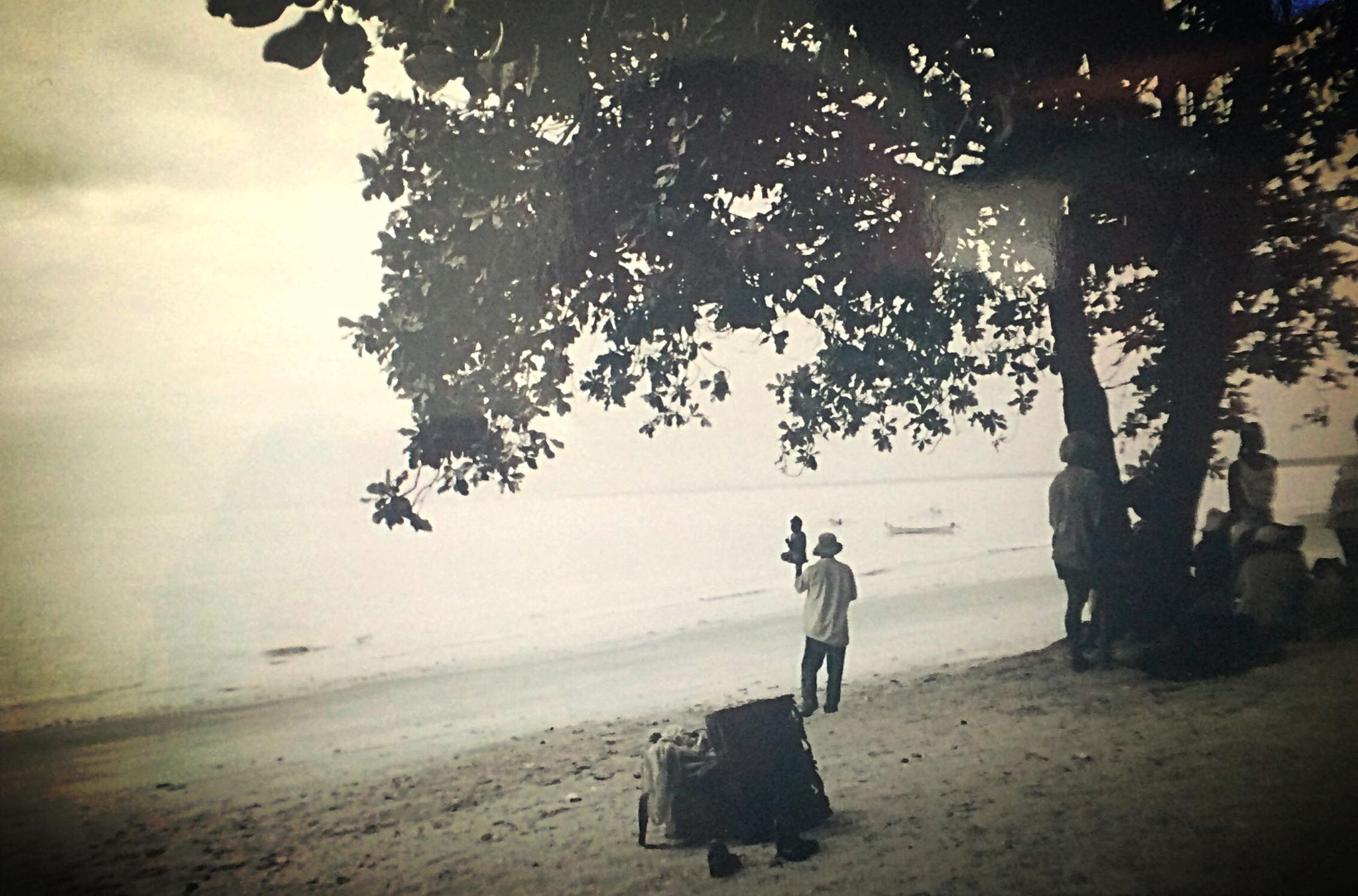
Yayan Nuken sees me and comes and tells me his name.  He writes it in the sand so I can see it. ‘YAYAN NUKEN.’ He gets me to pronounce it.  He sells wooden statues of the Buddah. He sells the most beautiful shells in the world (laid out on the sand in three, neat rows). He says, I make nothing for one week. I pray to make a little more money for next week. The rain keeps the tourists away. No tourist, no money. You want a tattoo, Boss?

Image by Karl Powell, Yayan Nuken, 2005

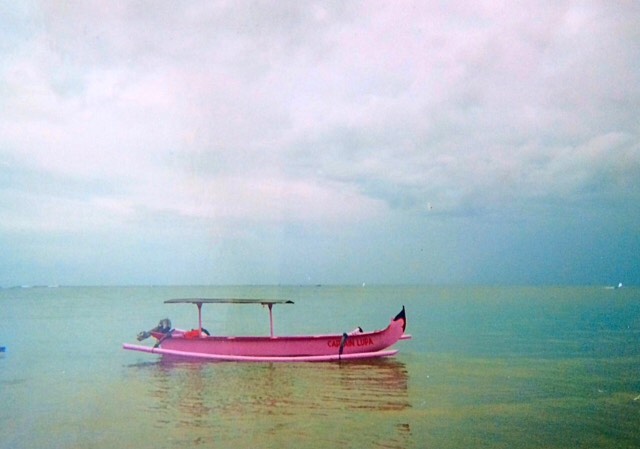
Further along the beach, the Lupa floats about without care on the flat silver ocean. It is visible from a distance, being a distinctive bright pink. Lupa is a boat – a jukung – a long, hollowed wooden outrigger with long, lateral supports. It is anchored in waist-deep water and having spun and drifted all day it now bobs and nods on the easy sea. Clouds move east filling the Balinese sky with moisture and heat. Captain Nyoman stands looking out to sea. No tourists. No good. No money. Arms folded over his chest he walks along the water’s edge. He sees something, bends down to pick it up. He looks at it in his hand, then tosses it out for the ocean to keep.

Image by Karl Powell, Lupa, 2005

Some days it was nice to walk the full length of the beach – to go right down to a perimeter fence that segregated something from the rest of us. One of the first times I ventured that far, I saw a lone black silhouette standing in waist-deep water ahead of me. By the time I reached him, he was standing up behind a stone breakwater facing the ocean, holding a thin fishing rod with the line sunk under the water. As I got closer I could see he was a young man, maybe in his twenties, hidden underneath a navy blue polythene poncho. He wore a baseball cap. On seeing my approach, he nodded and said, ‘Look for the stones to stand on.’ I looked down and there in the sand was a hopscotch smattering of octangular shaped stones sunk in the water, big enough for feet to walk on.

Image by Margi Currey, The Hidden Crystal Waters of Bali, 2017

I joined the fisherman on standing on the breakwater. Elevated up, he water stood around our knees with the breakwater at our chest.

‘Have you caught anything?’ I asked.
‘No, not yet.  I try to catch something.’
‘You work on the beach?’ I asked.
‘Yes.  Every day I work here,  I sell ice-cream for the tourist.’
‘You are from Bali?’
‘No, I am from Java.  But now I work in Bali.’
‘Do you have family here?’
‘Only my brother,’ he pointed to a smiling figure standing behind us up on the shore.
They both wore the same plastic ponchos.

The soft waves of the pushing ocean rolled around the front of the breakwater, bouncing back into the face of the Indian Ocean before being washed up on shore. The brother pointed out to sea and shouted something to his brother. I turned, but the fisherman already knew what the brother meant; his line was taut.  He caught something on his line. He clicked his reel and began to play with the fish. His line bent, with the nose of the rod dipping down into the water, pulled harder before flexing and relaxing and flexing again. The brother said something, wading in the water, across the octagonal stones and up onto the concrete ledge behind the breakwater. All the while, the fisherman kept focused, holding the rod with his left hand, spinning the reel with his right. His bare arms poked out of the poncho, with veins working hard beneath his skin. The rod kept being pulled beneath the waters, engaged in a frenzy of tight, spasmodic combat. The fisherman reeled and began to pull the fish in from the deep.

Crack!

And then the line snapped.  It just broke. 

The three of us stood there for what seemed a moment in time. I heard that sound that falling rain makes when it hits the ocean’s surface to create pockmarked rings. The fisherman stood holding what was left of his rod and turned half smiling in a kind of apology for something.

‘It’s gone,’ he said to me. 
The brother turned and jumped into the sea, wading back to shore, head bowed.
‘That was going to be our dinner,’ the fisherman said.
Instinctively my hand slapped the pocket to my shorts for some kind of recompense. But it was empty.  There was nothing there to give. The fisherman smiled, and jumped down into the sea. I stood still on the ledge for a moment, looking out at sea, listening to the rain.

The two brothers stood at the edge of the shore waiting for me to join them.
‘Where do you go now?’ I asked them.
‘Home,’ they replied. 
I shake their hands.  ‘I’m sorry about your fish.’
‘Don’t worry God will look after us,’ said the fisherman. 
‘I wish I had something to give you.’
‘Don’t worry.  Wassalam Mualaikum.’
And then we parted.

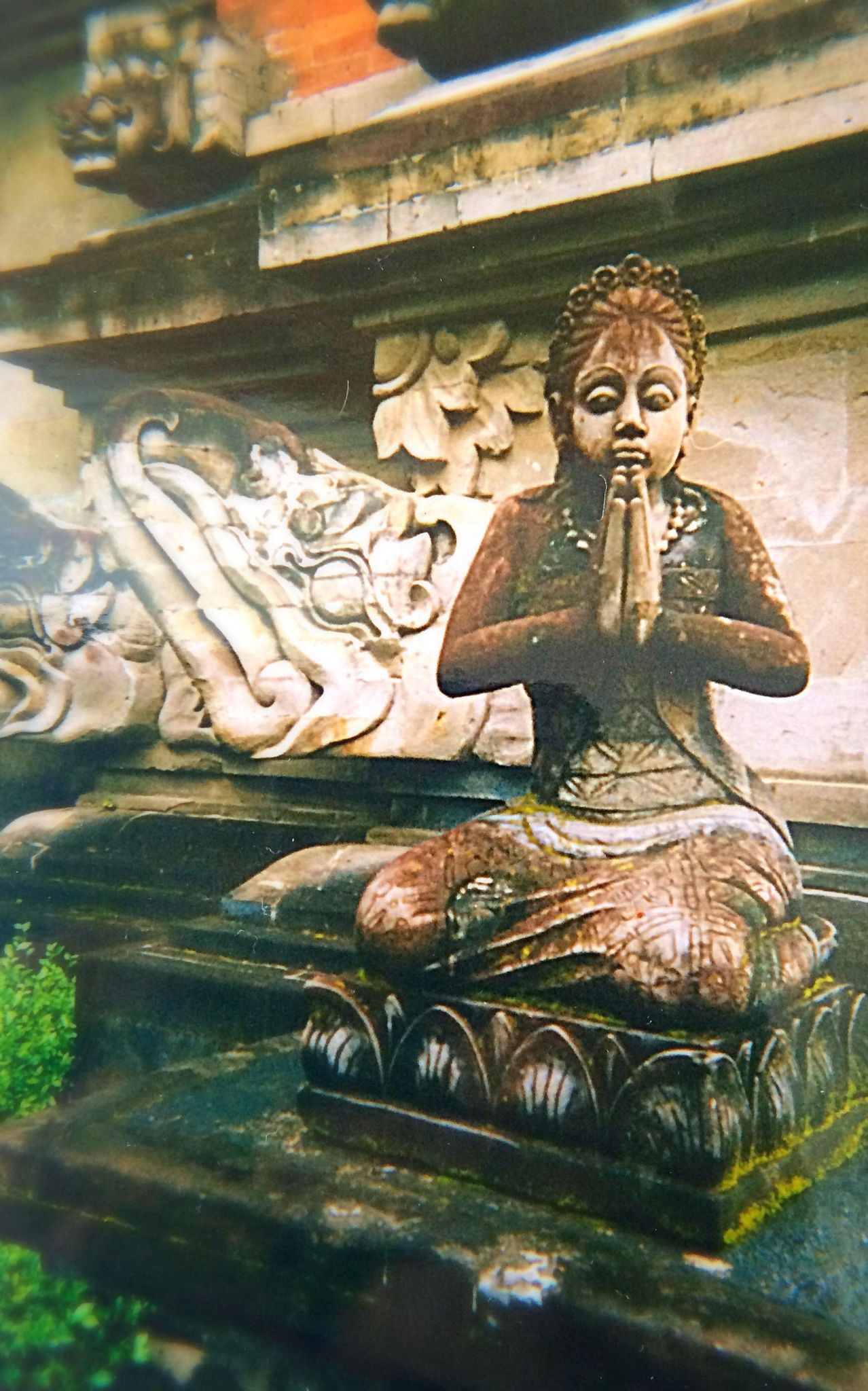
Image by Karl Powell, Goddess of Bakung, 2005

Each night, my body would feel better for the walk and my mind would be at rest (free from thoughts and ideas for another day). Back in my room I could often hear the evening rains falling on Tuban Beach. It was a time of day many gave thanks. It was a time to give thanks to the gods who protected them, and for the good luck and for the day that just happened. It was a time to say thank you for what prosperity had run through your hands. It was a time to express gratitude for family, for the love to which we belong, and for what roof spans above our heads this night. It was a time for offerings, to ask for the chance to try again tomorrow. To hope for a better day tomorrow. Terima kasih. The rain fell often on Tuban Beach.

*