PART ONE: CAN’T WE BE FRIENDS (Ella Fitzgerald)
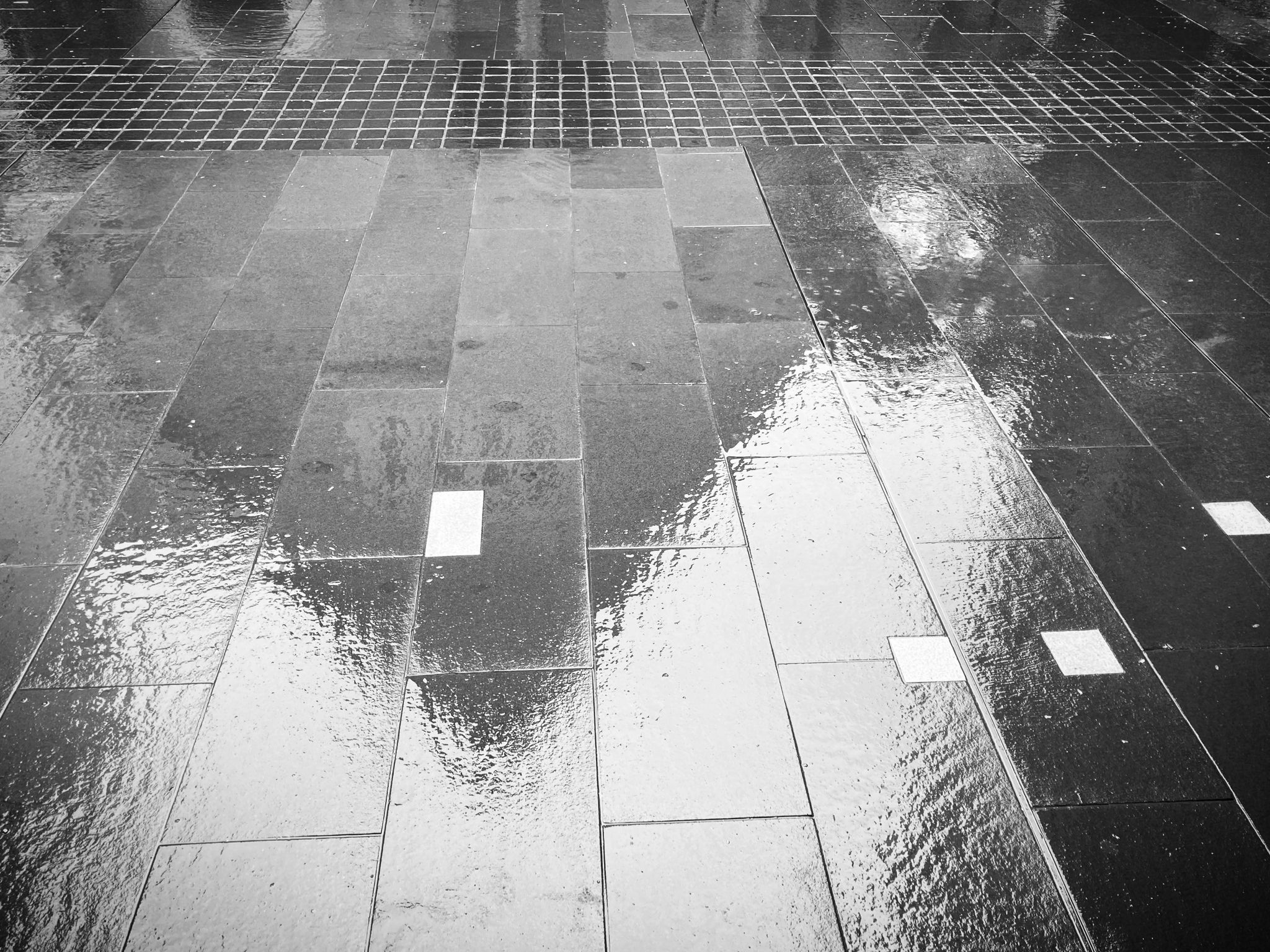
And then the rains came down again. They fell in a single sheet of grey noise just after midday. King Street disappeared from view. The pavement and flagstones became lakes alive with dancing splashes of raindrop circles. Fallen leaves, flat and brown, once curled, stuck fast to the puddles and wet tarmac. Winter storms had hung around the city all week. Everything had been cold and wet, and wet and cold, so much so that if felt as if the winter had always been there. The river had been languid and grey, reflecting the damp overcast sky which tried its best to censor the sun and any fragment of blue sky. The only colour visible most days had been the red flame flowers showing in the poinsettia trees dotted here and there. And now, another storm blew through, smashing in from the Indian Ocean, scattering people in all directions from St George’s Terrace, making them seek refuge, needing cover from the cold, wet air, obscuring any afternoon plans in an instant.
Two people caught in the squall huddled in a cuddle underneath the bus stop by Westralia Square for the 935 to Kings Park. They were visible for occasional moments here and there between the pouring spray. They stood with their hoods up. One attempted to put up an umbrella, but was rebuffed by the wind at every opportunity. The wind blew so much into them that the umbrella bent, buckled and was eventually blown inside out. A man ran past them, into the rain. He ran with one hand holding onto his hood, carefully trying to plant his feet, as if not to slip. The hint of a flash of lightning blinked in the peripheral vision then was confirmed with the sound of thunder. A 27 bus pulled up to the bus shelter – yellow headlights on – the two people declined the offer of sanctuary and the vehicle pulled off up towards the top end of the Terrace, leaving behind shifting curtains of rain dancing in the city air – drifting, billowing, blowing. As the winds blew harder the trees moved in concert with each other in the downpour. Branches twisted. Splashes fell everywhere. Rhythmic patterns drummed onto roofs and buildings. Smoke chugged out and upwards in a heated plume from an unseen vent. The rain kept falling.
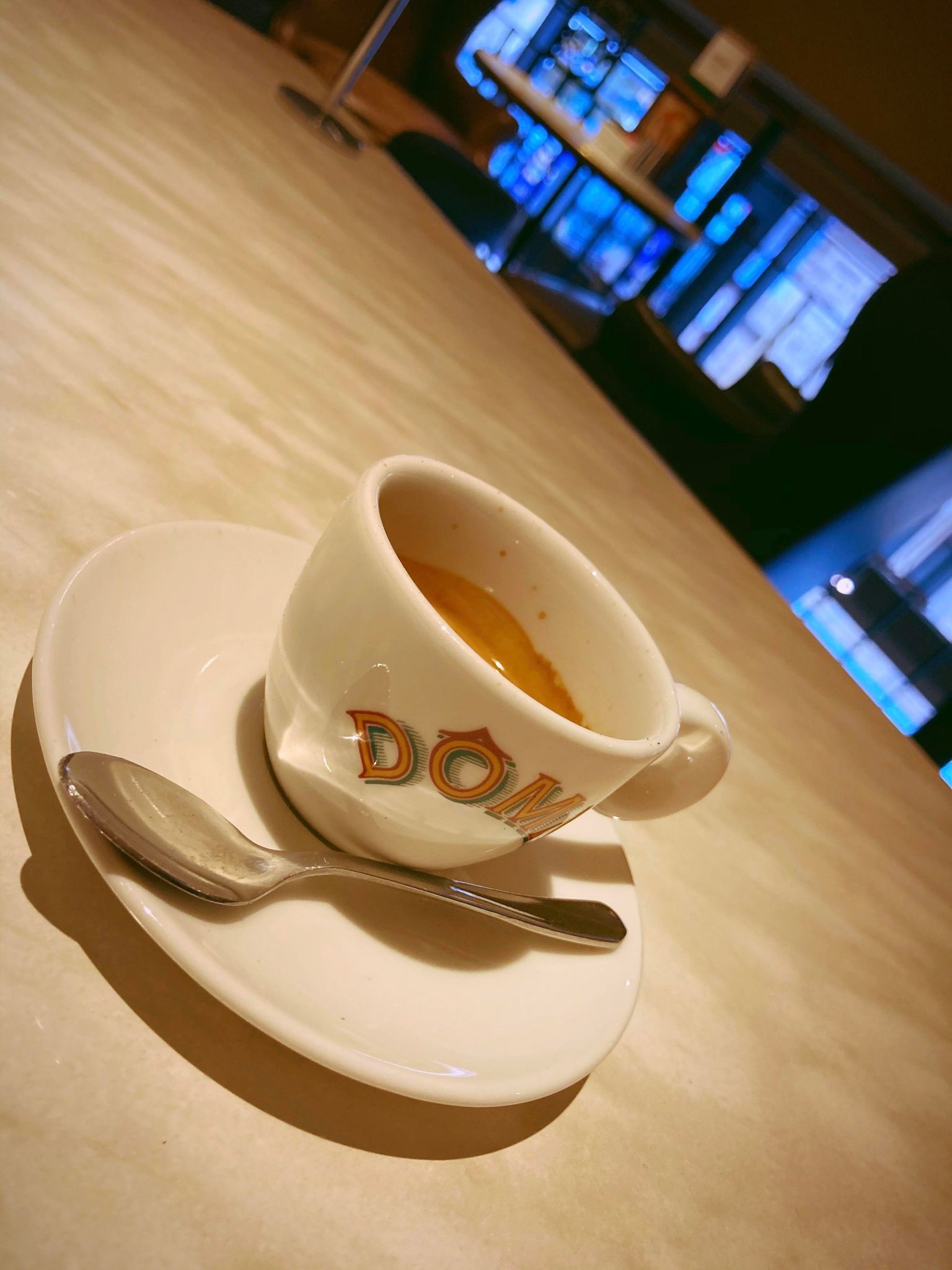
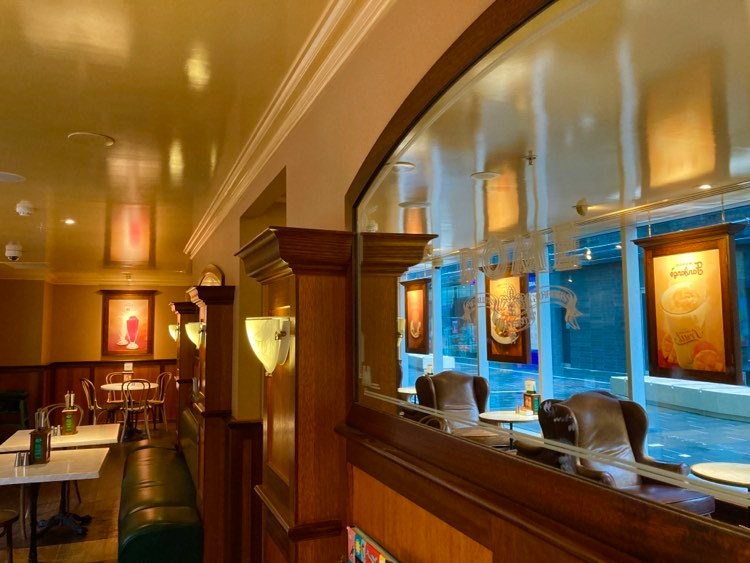
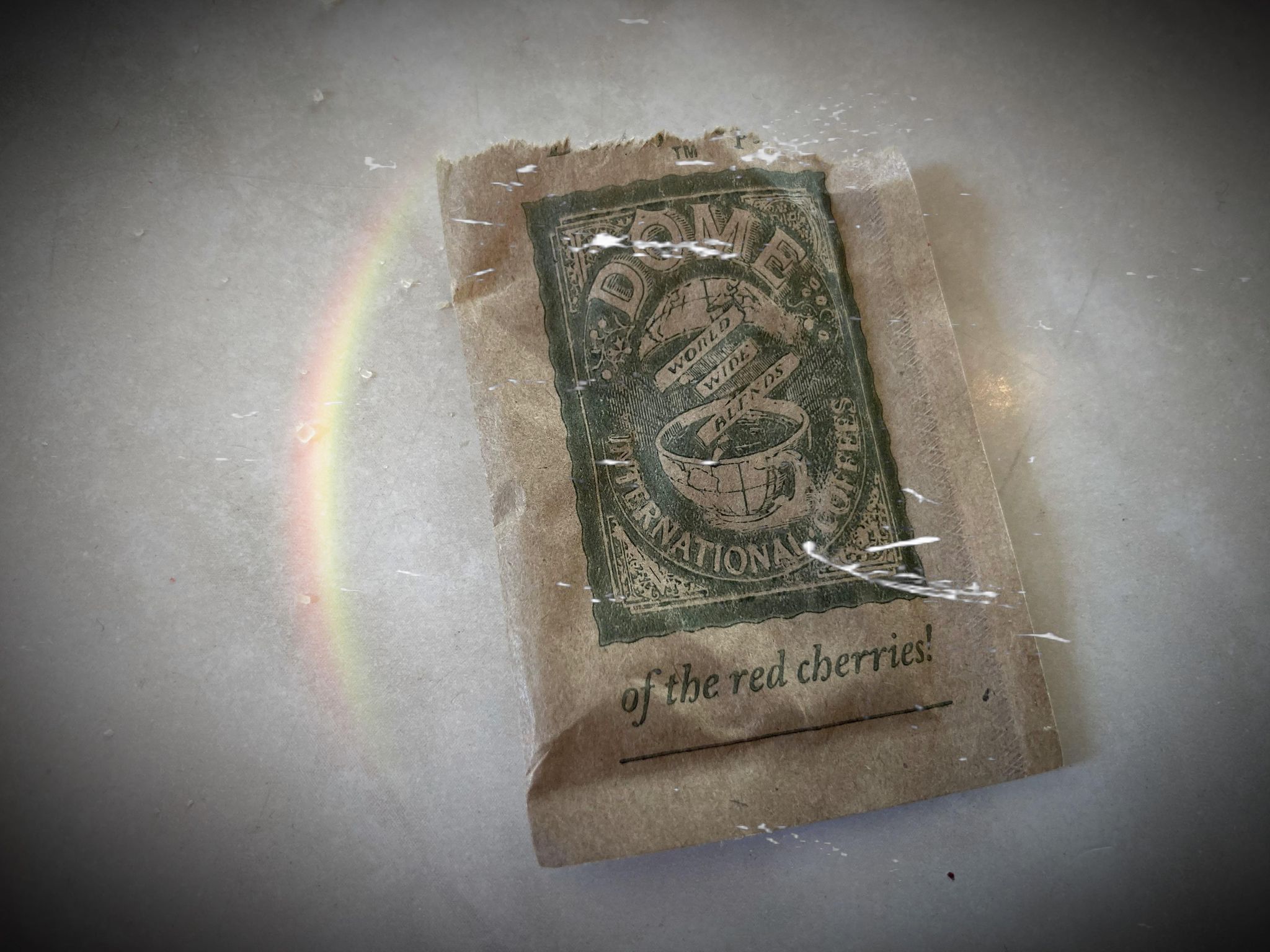
Inside the café everything felt warm. Music played and was a soft contrast to the noise outside. As the mood of the downpour grew darker, the intensity of colour glowed brighter within. The lights inside the café – oranges and lemons – were reflected as the greys outside rose and fell. My order had arrived at about the same time as the rains: an espresso and a croissant. The coffee sat smoking in a white demitasse on white saucer. A small spoon rested there. Sachets of sugar sat next to menus near stainless steel salt and pepper shakers. I didn’t take sugar, but today I felt the need. The espresso was gone in three gulps. I began to pull apart the croissant and ate it slowly watching a man walking in the rain with a barely functioning blue umbrella; half collapsed behind his head, his exposed shoulders looked soaking wet. I had been trying to shazam a song that had been playing a few moments earlier. It was a cover version of Roxanne by The Police. It had been sung by a female and an acoustic guitar; it was a slow adaptation and I had liked it. Despite numerous attempts I could not get it identified, and then when the order arrived with the rains, the song changed and the moment was lost forever.
PART TWO: BEGIN THE BEGUINE (Sammy Davis Jr.)
A family of four sat on the table next to me. Table 104. They spoke quietly amongst themselves in a language I was unfamiliar with. Two read newspapers, two looked at their phones. Patiently they waited for their order. Most tables were rectangular (mine was – as was theirs), white-marbled tops, wiped clean. A row of circular tables ran the length of the café, alongside a glass window that looked out onto Brookfield Place. A member of staff who was sweeping the floor looked up occasionally from her task out at the rain outside. It was not stopping anytime soon. She moved down the café, brushing along the dark, wooden floorboards, sweeping under chairs and tables without intrusion. Two leather, chesterfield chairs faced each other, empty, tucked snug in a corner. In the kitchen, sizzles sounded and cooked together, perfuming the air with edible aroma. Sammy Davis Junior began to sing from the café’s playlist (I recognised his voice, confirmed by the song). The waitress moved down the café, her footsteps audible, until a bell sounded from the kitchen. Service out. The sound of collected cutlery could be heard. A door squeaked open and swung shut. More footsteps. Table 104 had their food delivered. Two servings at a time. They put away their newspapers and phones and ate as a family.
The rain was not stopping anytime soon. I took out my notebook and pen. For a few days, I had been sketching out an idea I had about Italy. It was a story about friendship and how some journeys can see friendships develop with strangers and eventually soak deep into the memory of a trip. I had been breaking down the story into parts; mapping out each section I thought to be important and required inclusion. The colour, prose and order would be added much later but for now it was important to birth out the idea. This process of the draft was like writing a shopping list; little effort was required, concentration was light but it was effective in teasing out what needed to be said: here I want to write about x, and then I want to describe about y. I watched as the story began to carve itself into being near where the shadow of the pen met the page; where the ink met the paper; where the idea met the world. There was something magical about writing in a café – thoughts and ideas were always there, willing to sit down beside you. There was nowhere else to be. Just there. Looking at pages, looking at people, looking out of windows. A place to put down the routines and responsibilities, to blot out the distractions and to just drift in the flow of a brevity in time. Daydreams. Space to be.

And then, as I paused from writing, the opening lines of Coleridge’s poem “Kubla Khan” came into memory. From out of nowhere. The flashes and fragmented impressions presented themselves between the incoherent thoughts and haphazard recollections of my trip through Italy. The words sounded and I stopped writing to love them once again:
In Xanadu did Kubla Khan
A stately pleasure-dome decree:
Where Alph, the sacred river, ran
Through caverns measureless to man
Down to a sunless sea.
I had first encountered that poem on an international flight several years earlier. It had been printed in its entirety in a book purchased on the Romantics, at a shop in an airport prior to departure. During the long flight I read it, and it had made no sense, but the words kept sounding whenever I had looked out of my small window across the clouds and sunlight at 40,000 feet: In Xanadu did Kubla Khan… The book told the story about how the poem came to be: Coleridge had taken an anodyne – opium – and had fallen into a deep sleep at a country inn. As he dreamt he encountered a vision and began to compose the poem in his sleep (some 200-300 lines so he claimed). On waking, he set about dragging the words from his dream into reality and wrote with a fervour. So the story goes, Coleridge was interrupted from his task by “a person on business from Porlock.” An hour or so later Coleridge returned to writing but the vision he had seen in his dream had gone, and he struggled to recall the words he had claimed to have composed in his memory. The task could not be completed. Eventually, he gave up and the poem remained a fragment of what he envisioned – unfinished at 54 lines. For twenty years it remained something Coleridge recited only at private readings to friends, until Lord Byron persuaded him to publish it in 1816: “Kubla Khan, or A Vision in a Dream, A Fragment.”

PART THREE: ON THE STREET WHERE YOU LIVE (Doris Day)
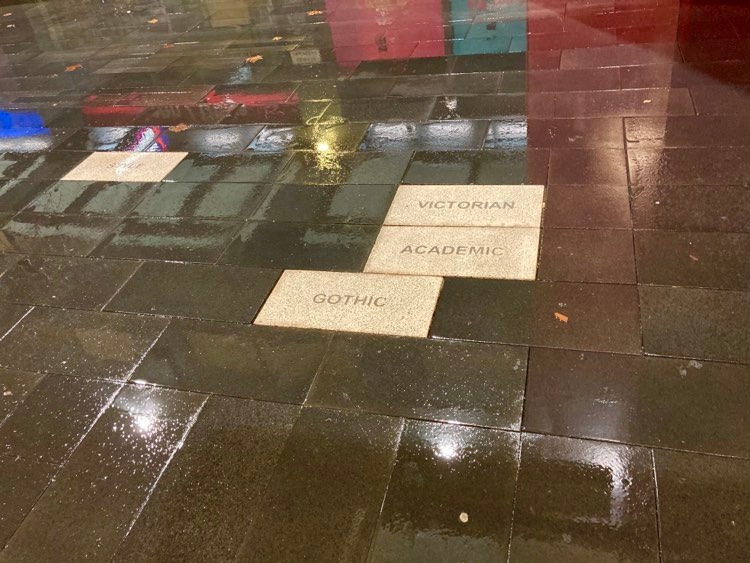
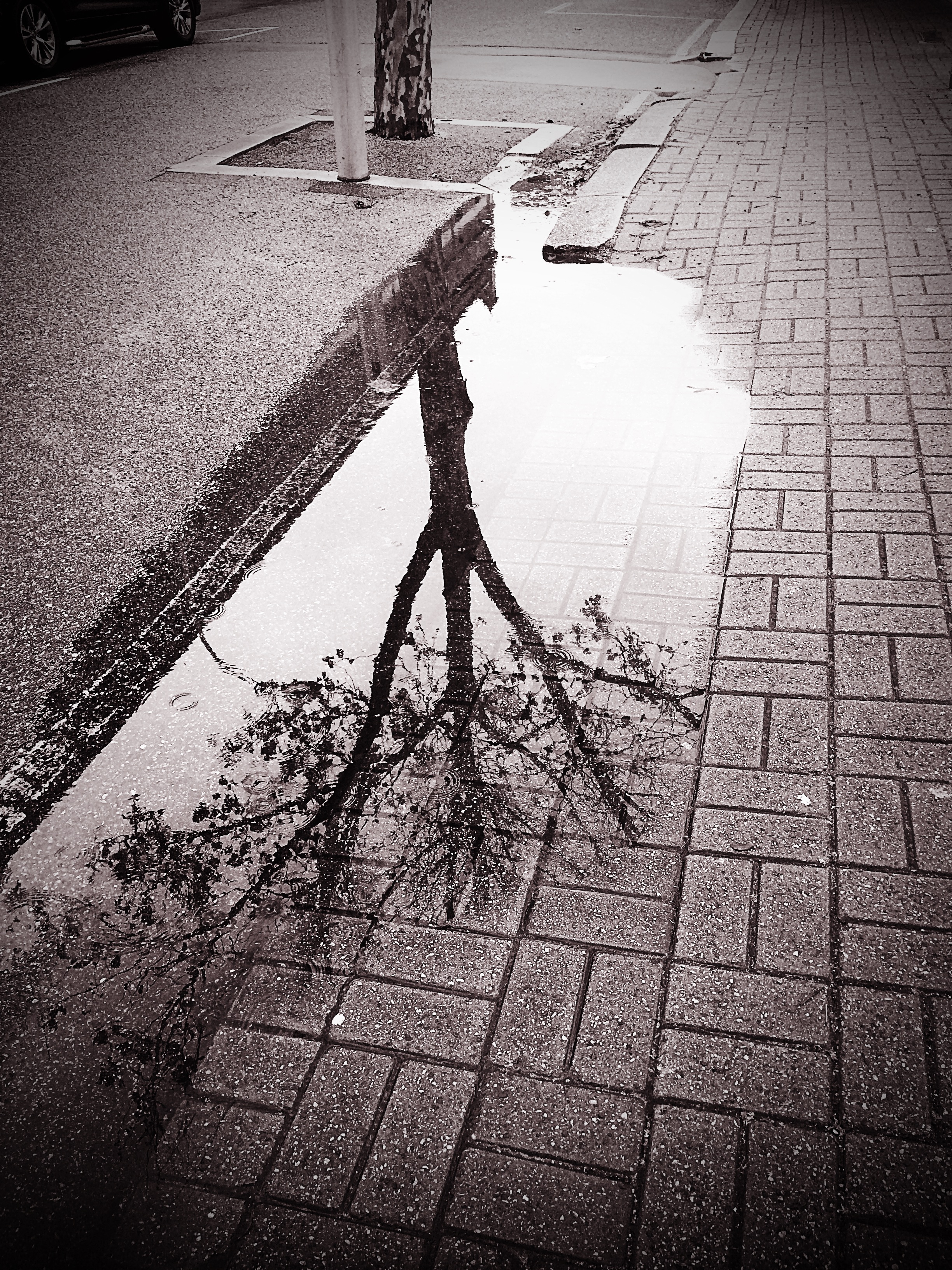
And so time passed. The rain had finished falling. A gap between storms. Drops of water dripped down from rooftops and treetops, replicating the splashing and crashes which had danced in the courtyard of Brookfield Place an hour or so earlier. The air remained cold. Leaves were wet. The space in the courtyard was free and empty. The paving stones shone with a sheen of the leftover downpour; unable to evaporate, the wetness reflected the damp daylight and sodden shadows. The greens of some young trees began to gain vibrancy. A larger tree near an old building – an old boys’ school – spanned itself out wide and gave the illusion of its branches floating on the moving air. Music continued to play inside. Out of the corner of my eye I saw reflections of customers entering and leaving the café at the top end of the building. A couple near the door stood up and put on their coats. He waited as she picked up her white handbag. They looked at each other and prepared to walk outside together. They held hands as they crossed the courtyard and moved towards St Georges Terrace, their heads cowered down from the threat of more rain. The colours of their clothes walked into the cold afternoon air.
The kitchen’s bell sounded again. Service out. The family on table 104 had finished their meal and relaxed talking quietly to each other (their plates already collected by waiting staff). A group of new people came in and sat nearby. Their voices were loud and vacuous – their conversation bounced off the walls and ceiling. They looked at menus without reading them and laughed a lot in loud shouts. Noise echoed in the café. As they carried on, I looked up and along the building. There was something magic about this café. Maybe it was because it was so close to King Street. Maybe it was because of its long bottle-neck shape – complete with a mezzanine floor. Maybe it was just me: it was a good place to write. The city sprouted up and around it, in blocks and buildings, squares and rectangles. There was something magic about this place; thoughts and ideas always sat down beside you. The kitchen’s bell sounded again (this time in two sharp pings, almost irritated). Service out. It was my cue to carry on with the rest of the day and its chores. It was time to go.
*
 siesta del somewhere