31 Christmas in Wales

PART ONE: MOONLESS NIGHT… STARLESS AND BIBLE BLACK
And so begins the long jet lag into darkness. Woke about an hour ago. Still only 2am local time. Wide awake. Everything silent. Everything dark. Everything Christmas. Blurred memories of the past twenty four hours – from airport to here – are distilled. Day began early long ago. Bit of a headache as I entered the airport. Did the check-in. Made my way through customs and immigration. Lots of people about. Felt hungry. Huge queues, overpriced food. Went and waited by my gate for the flight to board. Called in zones. Boarded. Had an aisle seat. Flight full. Quiet. Can’t recall watching much (if anything), just slept. Felt so tired. Looked at upgrade offers. Managed to sleep ok. Changed flights hours later. Half way home. Transit. Airport big so big. Airport easy to navigate. Escalators. Security checks. Walked through Duty Free (last minute Christmas gifts). Made my way over to gate E4. Lounge organised in zones ready to board. Guy sat nearby coughing, coughing, coughing.
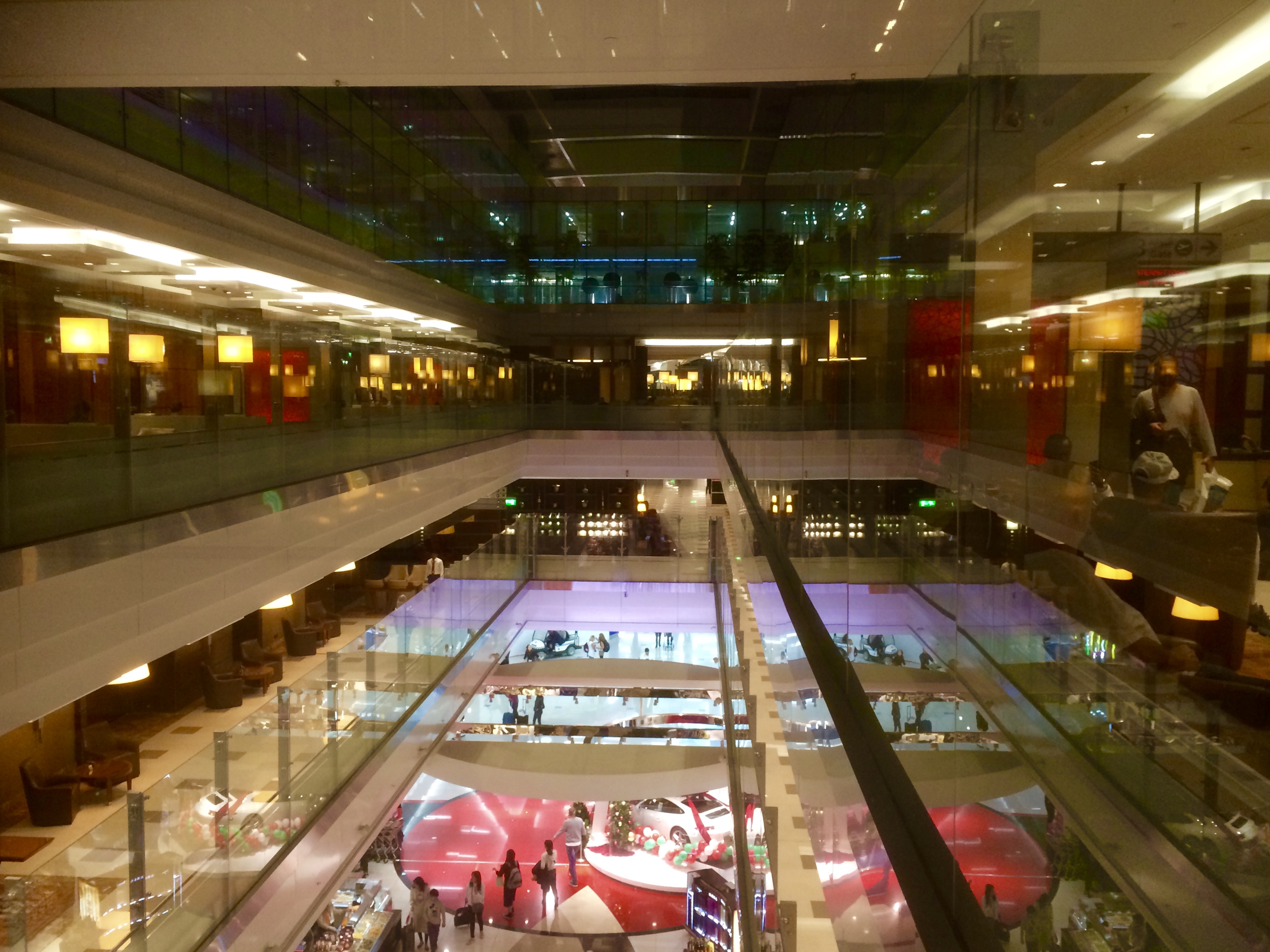
Image by Karl Powell, DXB: Transit (Dubai), 2017

Flight home called on time. No delays. Had a window seat. Girl sat next to me and slept most of way. Guy sat next to her and kept his bobble hat on for entire flat. Awake for most of the flight (wish I’d brought a book to read). Runway lit up in darkness as we took off. Could see the lights on buoys and boats floating in the sea.

Flight soon passed. Time went fast. Flew over names of countries. Some parts seemed to take longer than others. Eventually landed. Home. Croeso i Cymru. Familiarity of the airport. Two languages side by side. Nadolig Llawen. Immigration stamped my passport. Home. Red Dragon visible everywhere. Y Ddraig Goch. Words of Dylan Thomas sound in the air:
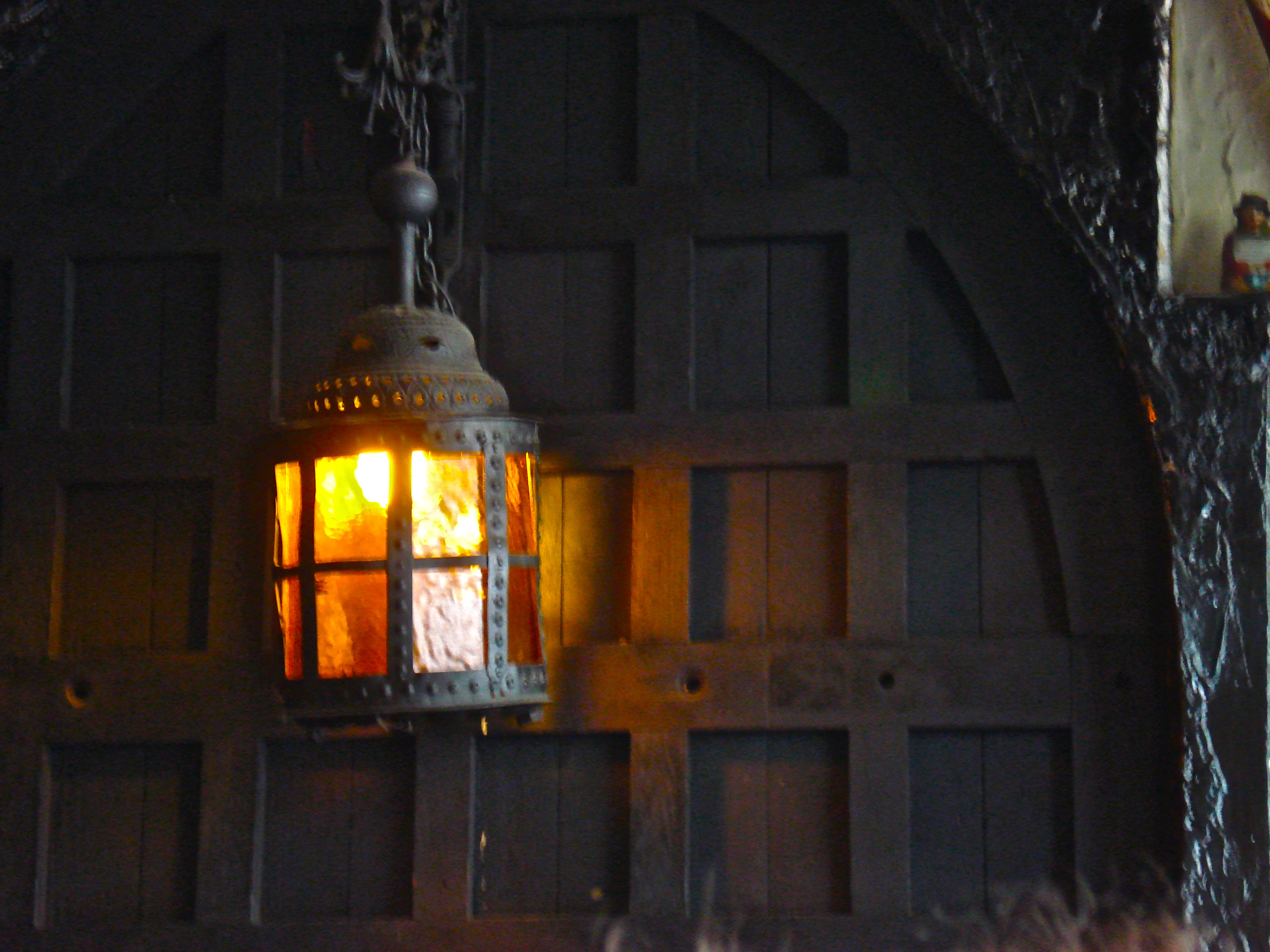
Image by Karl Powell, Magic Lanterns Above PenyPych (Rhondda), 2017

To begin at the beginning:
It is spring, moonless night in the small town, starless and bible-black, the cobblestones silent and the hunched, courters’-and-rabbits’ wood limping invisible down to the sloeblack, slow, black, crowblack fishingboat-bobbing sea.

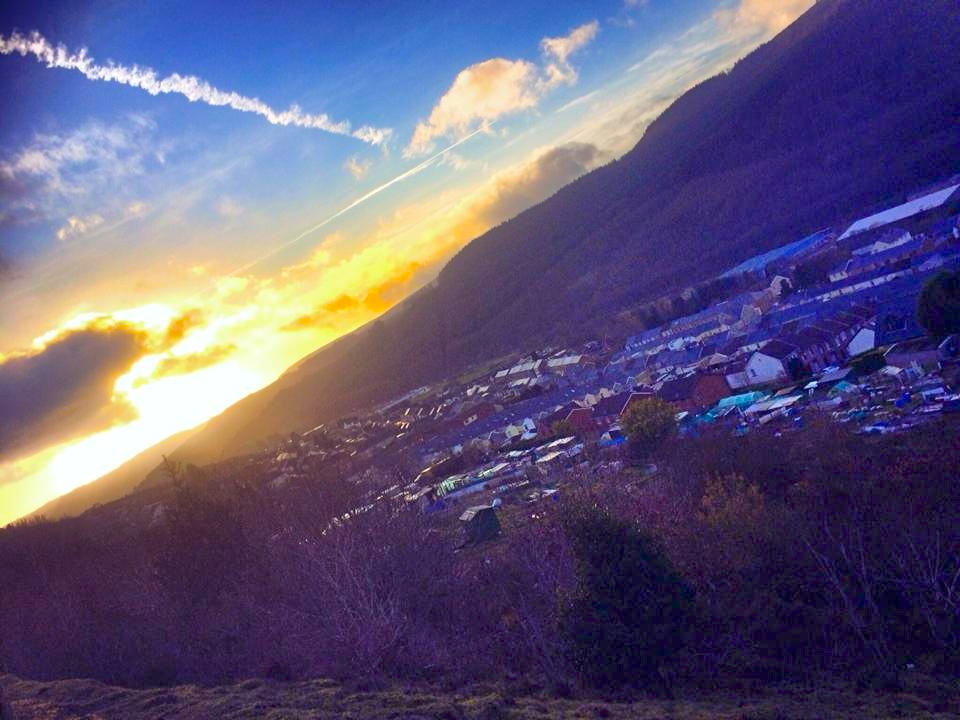
Familiar faces waiting to greet me. Familiar car. Familiar drive home. Familiar shapes and shadows of landscape. Arriving home for Christmas. Outlines of mountains against the night sky – frozen stars cast out across the endless black. Christmas lights shine in the Rhondda darkness below. Orange lights in homes and pubs, people talking, people coming and people going. Radio songs. Dreaming of whisky and open fires. Driving home. Familiar sights. Across the Bwlch mountain road, the lights of Cwmparc down below, the lights of Penrhys on the mountain across the valley, Cwm Saerbren with its back turned facing out instead towards Treherbert, temperatures close to zero. And then roads home that I know with my eyes closed. Body and eyes heavy. Home. Eat around a table. Talk and conversation. Body and eyes heavy. Crashing through the stars and the singing, hymning dreams. Home again. And then sleep.
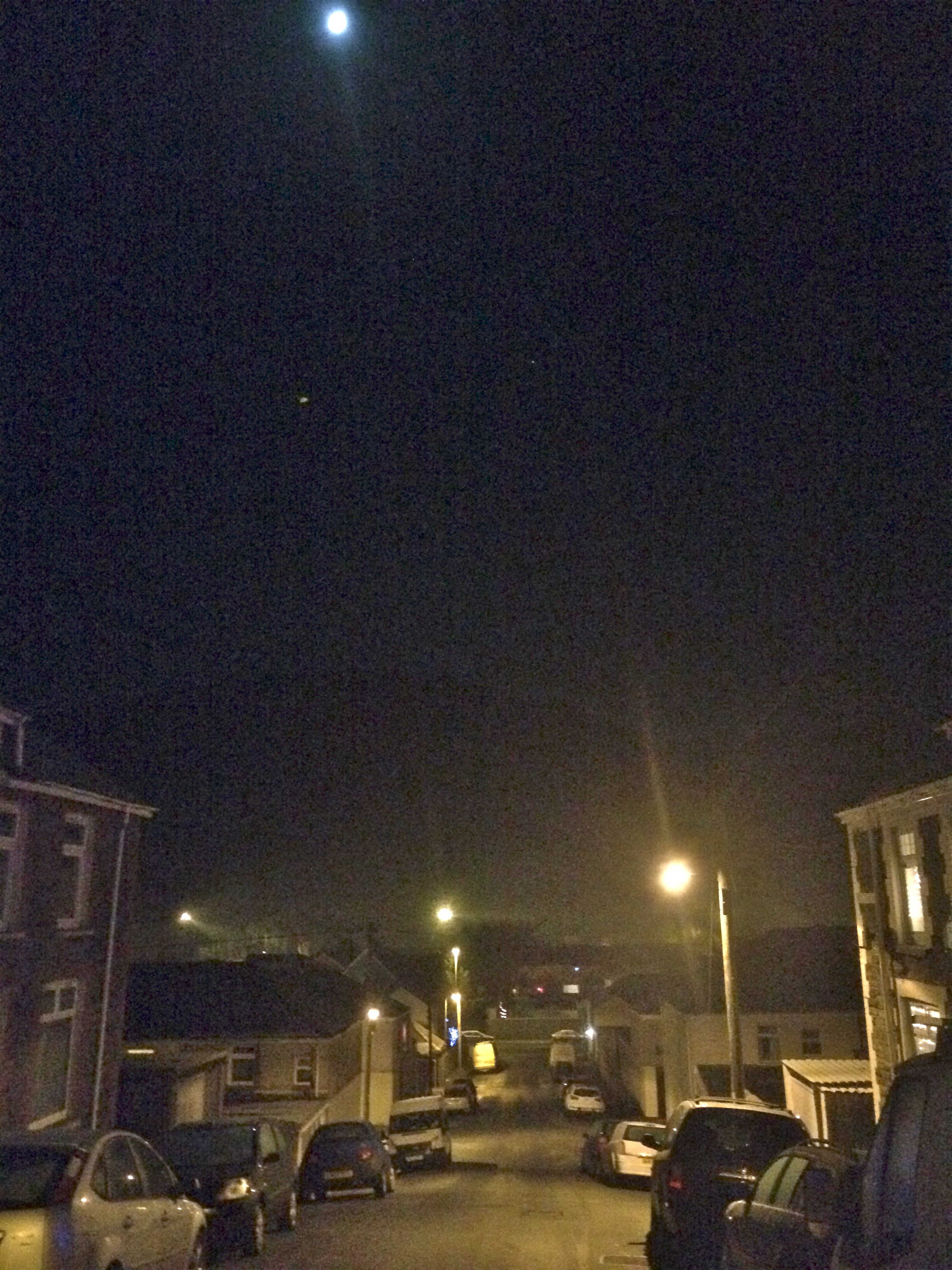
Image by Karl Powell, Ninian Street (Rhondda), 2016

Wide awake. And so I decided to get up. Crept around the sleeping house. Showered. Ate breakfast. Coffee on the stove. The slow wait. Watching the silence of the blue gas flame dance around the metallic stovetop coffee pot. Waiting. Looking out into the darkness beyond the windows. Nothing else but the darkness of night. Endless night. Silent Night. Christmas Night. The coffee pot gurgles, hisses and steams through the silence. Golden brown aroma fills the chill of the winter kitchen. Slowly pour the coffee into a patterned cup. Steam rises into the dark moving slowly like the Star of Bethlehem. The house is still; the house is silent. The whole world is asleep.

Image by Karl Powell, The Baglan Field (Rhondda), 2015

Here at the kitchen table, this table which has seen so many family dinners, Christmas dinners, birthdays, sadness and all the joys you can hope to imagine; here at this kitchen table there exists a stillness which is known only within this family home. And so, with a lighted fire heating the air, coloured lights casting Christmas shadows far and bright, I sit and drink my coffee. It will be hours before daylight comes. There is a book on this table – Dylan Thomas. And so, in this stillness, I sit and drink and read.

PART TWO: A CHILD’S CHRISTMAS IN WALES
The poet Dylan Marlais Thomas was born in Wales in 1914. An output cut short but ultimately prolific and fulfilled – words and verses sung across the rooftops in a brevity of colour, alive in moonlight, carried across the ages, spoken still, captured in celluloid, dancing in the waves along coastal shores and the deeper waters. There were poems. There was a play. There were short stories, too. Despite having Welsh-speaking parents, Thomas wrote only in English (his was a generation of people who had been discouraged from speaking the Celtic language of their parents and so were eventually passed down as ‘Anglo-Welsh’ writers). Despite this, the richness of sounds alive in the Welsh language – and its poetry, such as the chimed consonants which sound within verse known as cynghanedd – finds itself present in much of the prose and craft of Thomas. This mesmerical use of vocabulary (once described as a wrongness sounding right), plays a creative reinvention of the English dialect and conveys the sounds of an older language through it and on to a non-Welsh speaking audience.

Image by Karl Powell, Treherbert from Cwm Saerbren (Rhondda), 2017

Dylan Thomas wrote ‘A Child’s Christmas in Wales’ in 1945. The story draws on a flashback of an imagined childhood of the poet, borrowing from nostalgic memories of Christmas and his upbringing in South Wales. The story also highlights the way that Christmas can draw us home – physically or in our imaginations and memories; how it remains a tangible link to the embers of childhood and the blur of memories collected there from a time we can no longer access.
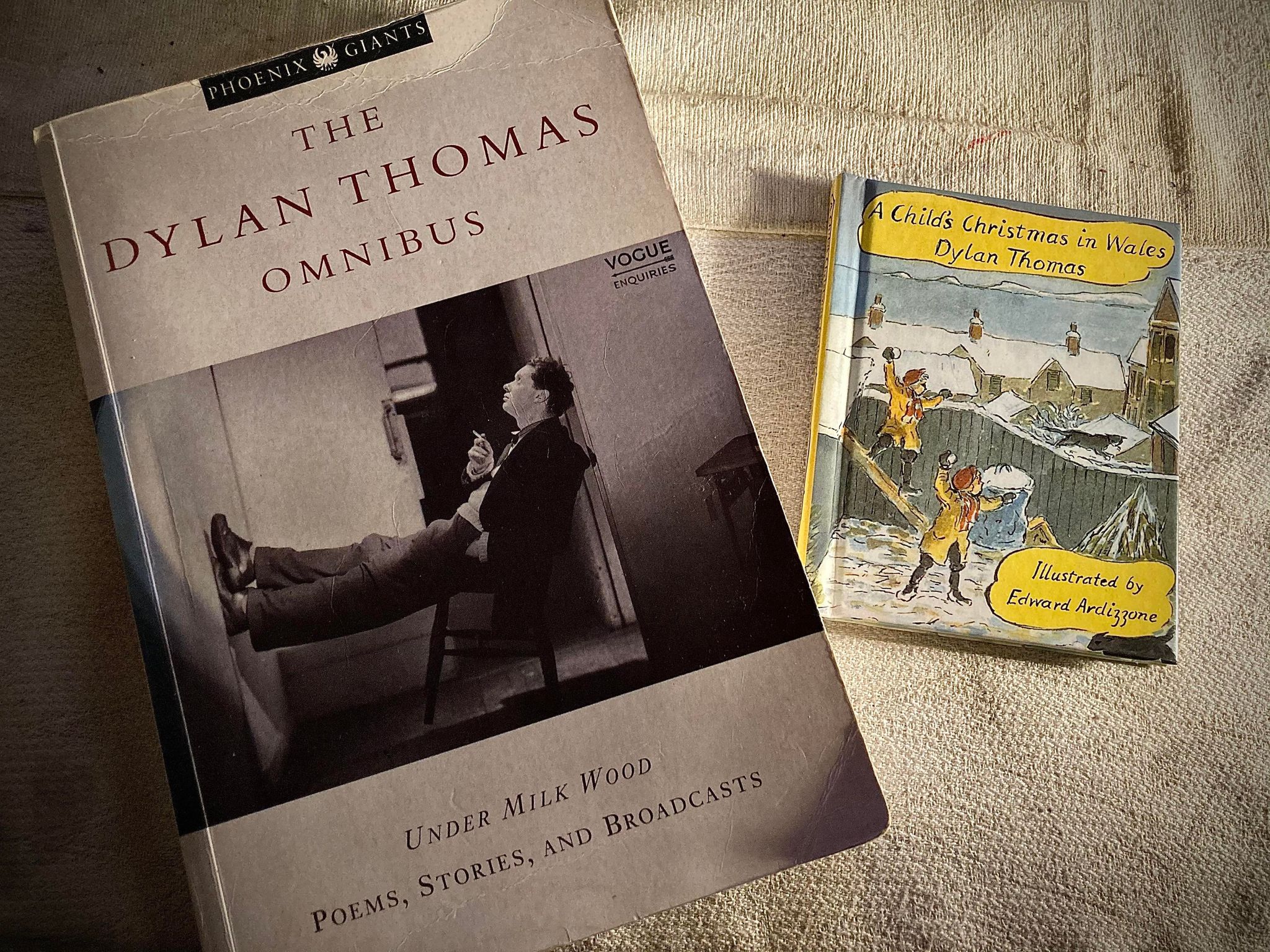
Image by Karl Powell, Dylan Thomas (Perth), 2023

It belongs to his collection of short stories, although originally appeared as a BBC radio broadcast a couple of years earlier; its title, then, ‘Reminisces of Childhood.’ As with all bodies of work, the draft keeps evolving – wants to improve – but at some stage you must let go. The myth of Icarus speaks to us of the dangers of flying ever upwards towards the Sun – the quest for high ambition. And if you hold on to a vision for too long, striving to create an unparalleled perfection, an awful realisation awaits you in that it has consumed every aspect of your life. As with all bodies of work, you must let go eventually in order for them (and you) to belong in the world. And so, amalgamating other talks, broadcasts and drafts, ‘A Child’s Christmas in Wales’ was published in Harper’s Bazaar in 1950 (before a final version was recorded commercially by RCA in New York in 1952).
Image by Karl Powell, The Robin (Perth), 2023

It was this final version that helped establish the popularity and admiration of Thomas as a poet and a writer following his death in New York the following year.

Image by Karl Powell, Sunrise, Boxing Day (Rhondda), 2013

PART THREE: SAINT STEPHEN’S DAY – GŴYL SAN STEFFAN
The sun is rising. From the vantage point of the horse-shoe bend up on the Rhigos mountain road I look down the Rhondda Valley and see the low-angled sunlight pierce through the freezing fog that clings to the landscape. Morning has broken. The sky is clear – its veil of night has now gone. A thin, crescent moon shines bright with Venus (both visible in the Eastern sky). The first light appeared at about a half-past seven. Slowly, darkness began to lift. Outside in familiar streets, frost sparkled. Coated on blades of grass, tarmacked roads, frozen stones, frost sparkles now. Everything is painted cold.

Image by Karl Powell, Station Street & Cwm Saerbren (Rhondda), 2013

Vapour trails from passing planes catch the streaks of yellow sunshine high in the blue winter sky, turning white in amongst the Christmas reds and rose of the morning chill, and hang suspended there in the glacial heights. Everything is so quiet. My eyes move along the valley, across the shivering homes and the trees without leaves. There are allotments empty and frozen on the mountainsides. There are horses roaming there and billowing great clouds of heat into the air from their nostrils. I watch a train pull in from Cardiff; sunlight blinking in reflections against the windows as it moves along the Baglan Field towards the station and the end of the line. From here I can see all the landmarks of home: the tall, clock tower of the old Ninian-Stuart Con Club in Station Street, the giant monkey tree now standing over the Marquis of Bute Hotel, roads and streets criss crossing as they always have, smoke rising from the Nag’s Head as it sits in the lap of the majestic Cwm Saerbren basin. And then in the silence of Christmas I realise that everyone I have ever known and loved has once lived there, down there, was from there, was once there.
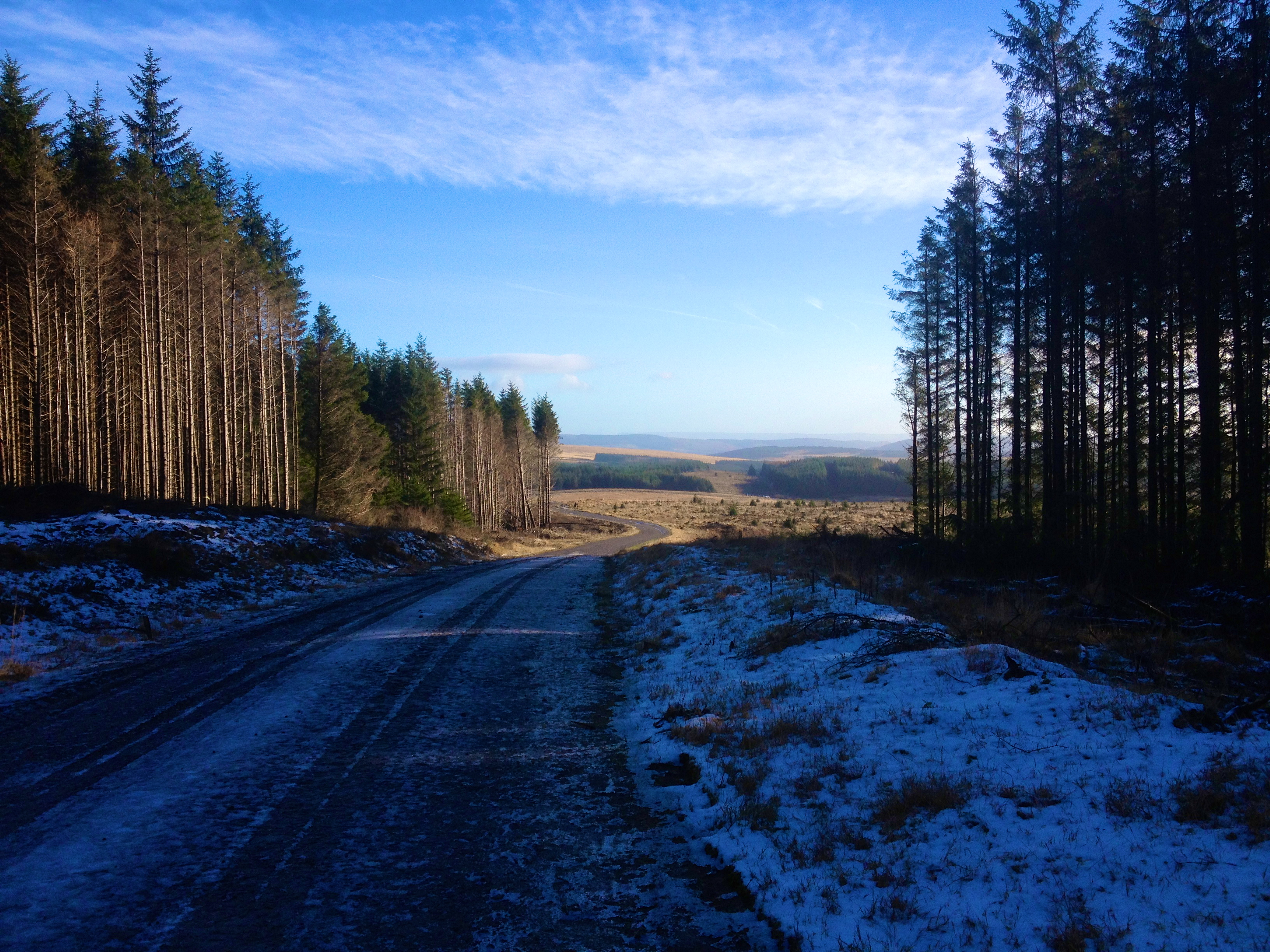
Image by Karl Powell, Rhigos (Rhondda), 2013

The holy silence is complimented by the song of the robin. It is the robin’s winter song. This sacred bird sings so clear from the woods of the Rhigos mountainside behind me, and the song carries out across the valley bringing familiarity and meaning to the cold, Christmas morning. And then the words of Dylan Thomas reappear again. There’s a wonderful line that appears in  ‘A Child’s Christmas in Wales’ – right at the end – where the child narrator leaves the adventures of the December snow and the cold and returns back into the warmth of his family home: Everything was good again, and Christmas shone through all the familiar town. And here is home and everything is good, and Christmas shines on throughout all of Treherbert.

Image by Karl Powell, Christmas (Rhondda), 2014

*

30 Christmas in London

Image by Karl Powell, December (London), 2010

There were many ways in which to enjoy London during those December weekends before Christmas. Of course there were parties and friends to see; the calendar was as full then as it seems to be now. People always wanted to celebrate and share happiness together; in the bleak mid-winters of northern Europe Christmas punctured through the advent of long, cold hours of darkness with tinsel, coloured lights and wrapping paper. Days were busy. Yet London was one of those big cities in which you could just walk into, dissolve into a crowd and enjoy anonymity. It afforded you the opportunity to take some time out of life and to just be, to flow and wander, and become part of a city’s metropolis of passengers. Black cabs and red buses, riding tubes beneath city streets on the London Underground, changing lines heading north, heading south. These were some of my happiest days of my life – over thirty years ago – chasing dreams in a big city. It was one of those times when money never seemed an issue because the focus always seemed on adventure. Everyone I knew then was also following dreams, their vocations and callings – we all lived for our passions and were very happy. London was the type of city that was able to inspire with its spirit; you always knew that you were standing in one of the great epicentres of the world and that life was taking place around you. Wherever you were in London, you knew that you were a part of it and somehow belonged to a greater dance taking place.

Image by Karl Powell, Barons Court Westbound (London), 1994

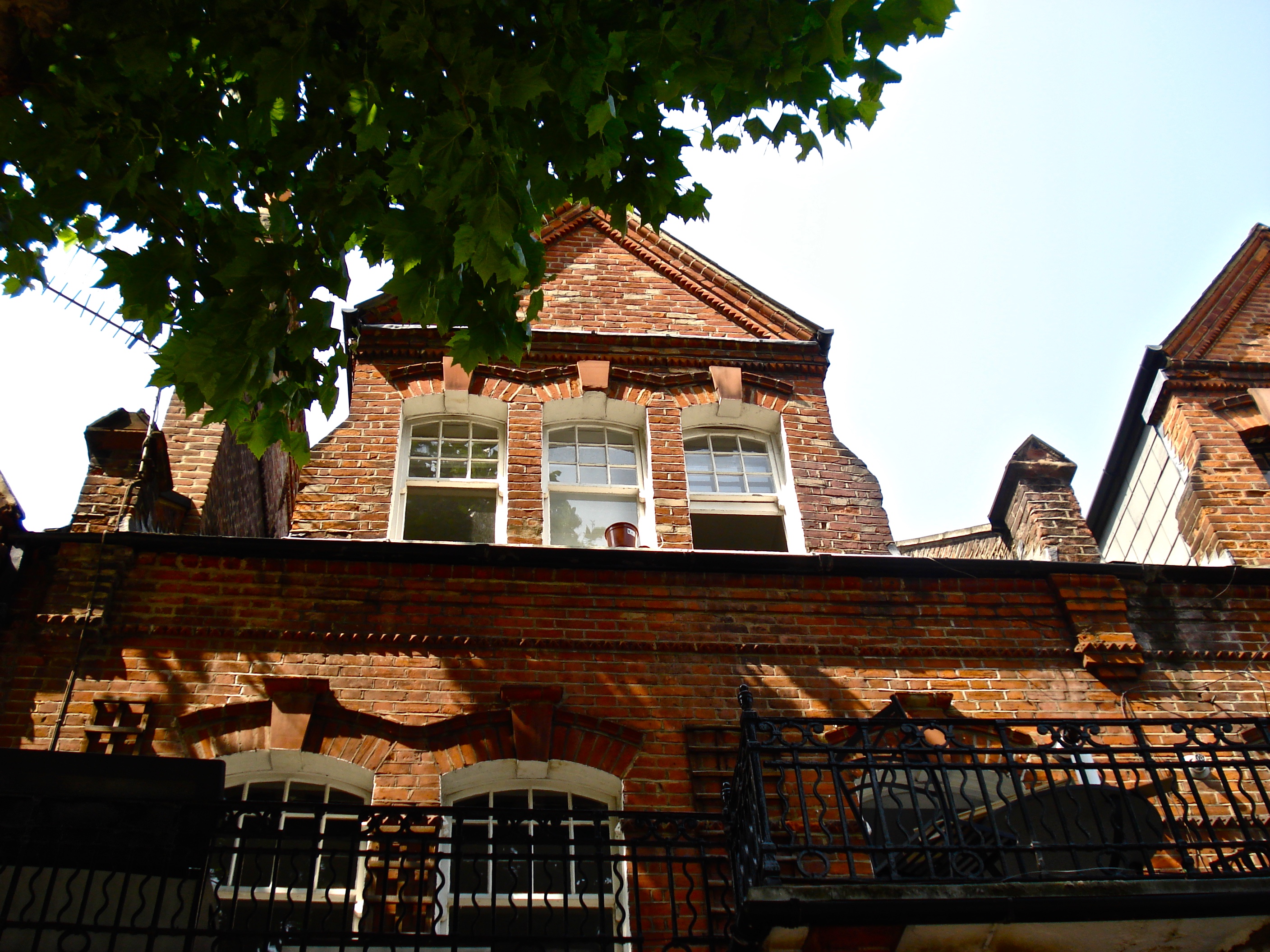
I had moved to London to write and had done so when I was nineteen. It was a wonderful time in which to have written and to have been a writer. I learnt a lot and read a lot. The streets in which you walked were laced with stories waiting to be discovered. There were poems on the Underground. Theatres could be found in the basements of pubs at the end of your road. And in my street I spent many happy hours leaning out of a top floor window people-watching passing footsteps coming and going on the pavement beneath the trees below. Occasionally I would write down what I saw, what was happening; creating snatched impressions from the street scenes below my window. Most of what I wrote during that time has now been lost, however, some scribbles, memories and photographs remain (but not enough).

Image by Karl Powell, London W14 (London), 2006

One weekend in December remains vivid in my memory whenever I think of London and Christmas. It was to be my last Christmas spent living there. At the time I had no way of knowing it; I had been too engrossed living in the moments of each day and in being content. I had arranged to meet some friends in Camden Markets on a Sunday afternoon – the last weekend before Christmas. We wanted to buy some presents for our families and Camden Markets was one of the best places to visit on a weekend. It was one of those spots in North London where you could actively shop for something you needed or passively wander alongside the shoppers who searched for their hidden treasures. Either pursuit yielded its own reward.

Image by Karl Powell, Window Vereker Road, W14 (London), 2007

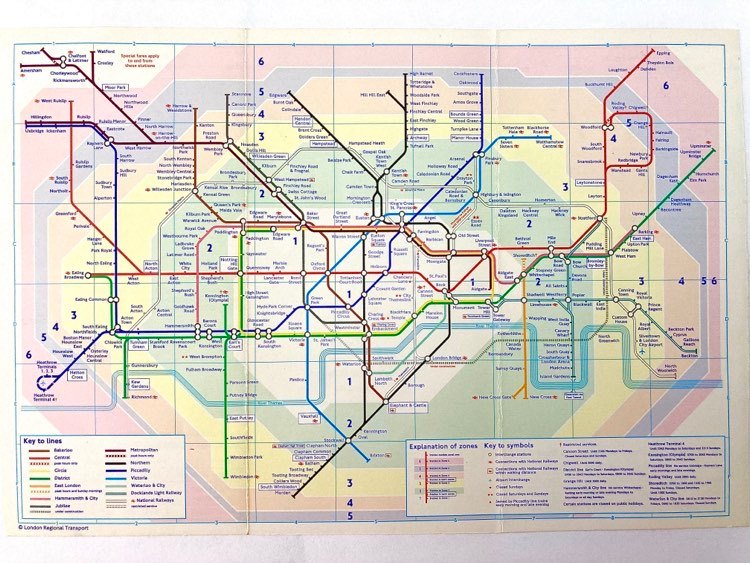
My friends and I, at that time, all lived in West London and were on the District Line of the Underground. We all worked together on the Kings Road in Chelsea. We had arranged to meet at Earls Court station around midday on a Sunday before Christmas. Earls Court was a kind of junction where the three branches of the District line – Ealing Broadway, Wimbledon and Richmond – each converged before moving east across the capital. From there we could travel on towards the Embankment station (where one of Cleopatra’s obelisks stood on the banks of the River Thames), and change tubes onto the Northern Line which ran upwards, north, towards Camden.

Image by Karl Powell, Going Underground (London), 1995

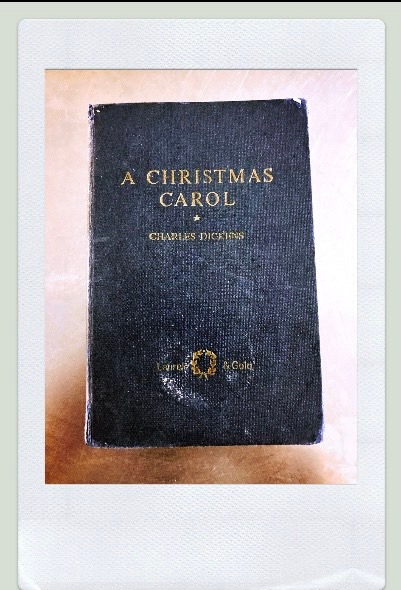
To get to the markets, which were immediately outside the tube station, you had to alight at the internal platform and look for the long, ascending escalators out of the underground and onto Camden High Street. The Northern Line could be busy, congested. People gently pushing, moving slowly, carried in a crowd upwards and out. On this day, at the foot of the escalators, a lone violinist was busking and played ‘White Christmas.’ The melody echoed around us as we moved past him, the sound reverberating in the silent tube tunnels behind as we exited out into the cold. And out into the cold there were market stalls selling clothes, books, jewellery, leatherwear. The air was scented with incense, tobacco and perfumed with chestnuts and almonds being roasted on brazier grills along the roads. People handed out flyers for various things; Big Issue sellers sold their magazines. There were also places to eat. My friends and I found an outdoor place somewhere near Camden Lock – the part of Camden Town where the Regent’s Canal ran through it. I can remember that we found an outdoor restaurant and took turns placing orders at a wooden kiosk while one person held the table. There were three of us and we ate together there. I cannot recall what we spoke about or what we ordered to eat. I can’t even remember where we went afterwards, or what we did but we were happy and live jazz had played that afternoon in the cold. We sat in Camden at Christmastime – around the corner from Bayham Street (the home of Bob Cratchit – the clerk of Ebeneezer Scrooge in Charles Dickens’ novella, A Christmas Carol).

Image by Karl Powell, A Christmas Carol (London), 2013

And when the day had almost ended we made our way back to the tube station, back to West London. In December, the light fades early – the Winter Solstice being on the 21st – and with that the sun dips quite suddenly across the horizon before burning bright yellowed sunshine into the clear skies and frosted cirrus clouds. I know we were keen to leave Camden before the markets closed at five o’clock, so as to avoid a packed Northern Line back into the City. I had bought only one item – a wooden display case with dried flowers, fruit peels and cloves. It was handmade and produced a beautiful fragrance that smelled as warm in the way that mulled wine can in the winter chill. There had been a stall of them being made. I had bought one for my mother, and my friends had bought one each for theirs.

Image by Karl Powell, Underground Map (London), 2007

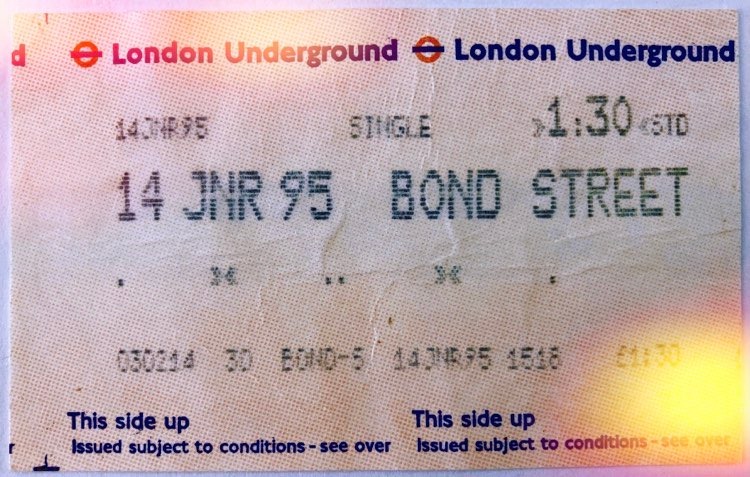
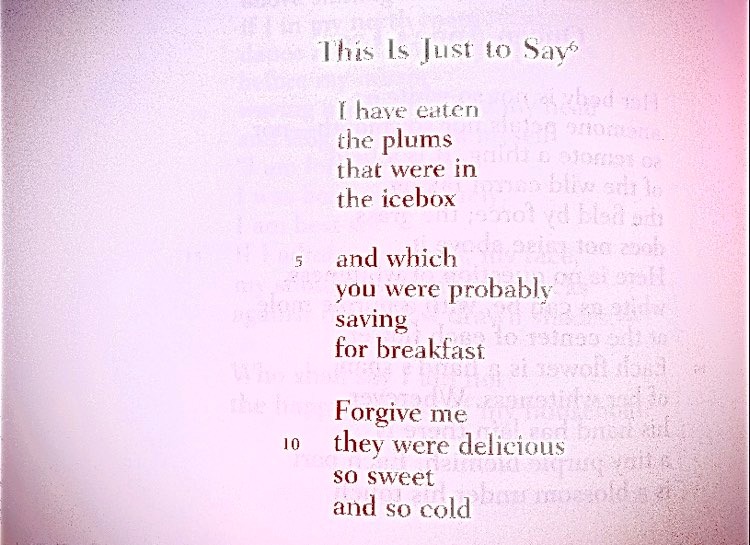
The Northern Line was busy. We squashed ourselves in to the tube, leaning against the crowd as it moved into the tube. Stood clear of the doors. Mind the gap. Doors closed. And the tube moved underground, beneath London. There had been a poem on the carriage that I had seen on my way to Earls Court that morning, and it appeared on that train again. Poems on the Underground had been an attempt to bring poetry to a wider audience of people as they used the tube system by including poems (classical and contemporary) among the advertisements on London Underground. There in the rocking carriage I read, “This is Just to Say” by William Carlos Williams:

I have eaten
the plums
that were in
the icebox

and which
you were probably
saving
for breakfast

Forgive me
they were delicious
so sweet
and so cold

Image by Karl Powell, Poems on the Underground (London), 2007

At Leicester Square we decided to get off the Northern Line with the intention of catching the Piccadilly Line down to Earls Court. But as it was still early we walked over to Trafalgar Square. Each Sunday at early evening a brass band had been playing Christmas carols near the large Norwegian Pine Tree (gifted by Norway each Christmas since the end of the Second World War). It was only a short walk there from the tube station, and as there was still time we entered the National Gallery for the last fifteen minutes of its day. We walked into the Modern art section – which had been on the right hand side of the steps leading from Trafalgar Square. There we looked at the paintings and sculptures of Pablo Picasso, the sunflowers of Vincent van Gogh and a painting by Camille Pissarro that had always fascinated me for no real rhyme or reason ever since I first saw it: The Cotes des Boeufs at L’Hermitage (1877). As we left the Gallery, their gift shop was also closing; they were playing Van Morrison’s song Glad Tidings as we walked down the entrance steps and out into Trafalgar Square. It was now dark, and very cold. Traffic and headlights circled around the square. Moving coloured lights. We made our way down towards the Christmas Tree where a crowd of people had stood. We sat at the feet of one of the giant lion statues and listened to the brass band as they played carols. I remember that we all spoke about our childhoods, about where we had each of us had grown up and how Christmas always seemed a tangible link to the past (a world of blurred memories and feelings). And the brass band played and a choir sang and the black cabs and red double decker buses kept moving. And everything felt right. It felt like Christmas.

Image by Karl Powell, Troubadour Coffee House (London), 2007

At Earls Court Station I said my goodbyes to my friends. We wished each other a Merry Christmas. They caught the line down to Putney and Wimbledon. I had to wait for the Richmond or Ealing Broadway route back to Barons Court. As their tube departed, I stood on the platform and waited for a while. But then something in me made me want to walk home instead. It wasn’t far. Maybe twenty minutes: out of the tube, turn right along Earls Court Road, turn right again and walk down the Old Brompton Road until it hit the North End Road in West Kensington and then home. About half way down I passed the Troubadour Café. As always, lights were on, tables were free, and it was just one of those places that you could go to and sit and eat or drink or sit and read or write. I usually went a couple of times each week at night. I’m sure I ordered something hot to drink that evening – maybe a coffee – and took a seat in one of the small booths beneath the rows of ceramic coffee pots that hung from the ceiling. Music always played in the Troubadour, and had always been part of its being. In the cellar where they held poetry nights and amateur plays, it was rumoured that during the 1960s Bob Dylan, Jimi Hendrix and the Rolling Stones had played there. Most evenings when I had gone there, classical music would sound until about ten o’clock, then the jazz would play. In the summer, with the front door wide open and the trees full of leaves, the jazz sounded amazing; it sounded right. This particular December night as I entered the café, they had been playing Camille Saint-Saens’ The Carnival of the Animals (Le Carnaval des Animaux, 1886). It sounded a good choice of music to reflect the cold outside. Frosted fairy lights twinkled coloured pinpricks of Christmas in the dark, and danced on the inside of the windows.

Image by Karl Powell, Light of the Troubadour Cafe (London), 2007

I stayed for the duration of the drink. The waitress wished me a Happy Christmas as I put on my coat to leave. The last song I had heard that night was Saint-Saens’ Aquarium movement. Out in the dark of the sky, with the brightness of the stars, frozen and transformed into shining glints of ice, it suddenly began to snow. Just a flurry. Snowflakes that fell for a few minutes. It was one of the most beautiful things I had ever seen in London. It had snowed, and it had snowed at Christmas. And all this had happened just a short distance from the Troubadour, outside the entrance to West Brompton cemetery. I stood still watching the snowflakes fall from the blackness above until a flash of colour appeared at my feet – the small, orange face of a fox emerged from between the railings of the cemetery gates. The fox looked up at me. Time stood still. I tried to stand as motionless as I could not to scare the animal or to ruin the moment. Snowflakes kept falling. Snowflakes fell from the dark sky. One landed on its black nose. And then it turned and darted off into the darkness. And with that I kept walking towards the North End Road. Walking in the cold of December.

Image by Karl Powell, Book from Camden Markets (London), 2022

That weekend in December remains so vivid in my memory whenever I think of London and Christmas. Maybe because it was to be my last Christmas spent living there. At the time I had no way of knowing that; I had been so engrossed in living in the moments of each day and feeling content. At that time of my life I never thought I would leave London – I had been very happy there and it felt a very special place in which to write. But adventures have a habit of taking you towards other paths, along other outcomes, far from home, and these are the roads we now tread. And while the past can ache with an emotion of a time now gone, with people no longer at our side, the feelings like all opportunities always remain present in our hearts. One of the great epiphanies of Ebenezer Scrooge was such a realisation when alone with the Ghost of Christmas Present, that all aspects of time need to be embraced in order to honour our lives: “I will honour Christmas in my heart, and try to keep it all the year. I will live in the past, the present, and the future.”

Image by Karl Powell, Christmas Present (Australia), 2022

*

19 Amsterdam Morning

PART I: REMBRANDTPLEIN
From the window of Room 422 inside the Eden Hotel, the Amstel became almost visible. The morning fog was struggling to lift out of the December darkness. A frosted grey hung in the air. Daylight had yet to arrive. Freezing neon signs and coloured Christmas bulbs danced in the tenebrous gloom brooding along the canal. People were walking about, going places, moving along the walkways. A few cafes were open. The scent of the cold and pine trees still stuck with me as I stood looking out across Amsterdam. My luggage, tagged and packed several hours ago in the 40.c summer heat of the Southern Hemisphere, stood cold and unopened against a wall. The hum of heated radiators filled the silence of the hotel room. A two day stopover in Holland.

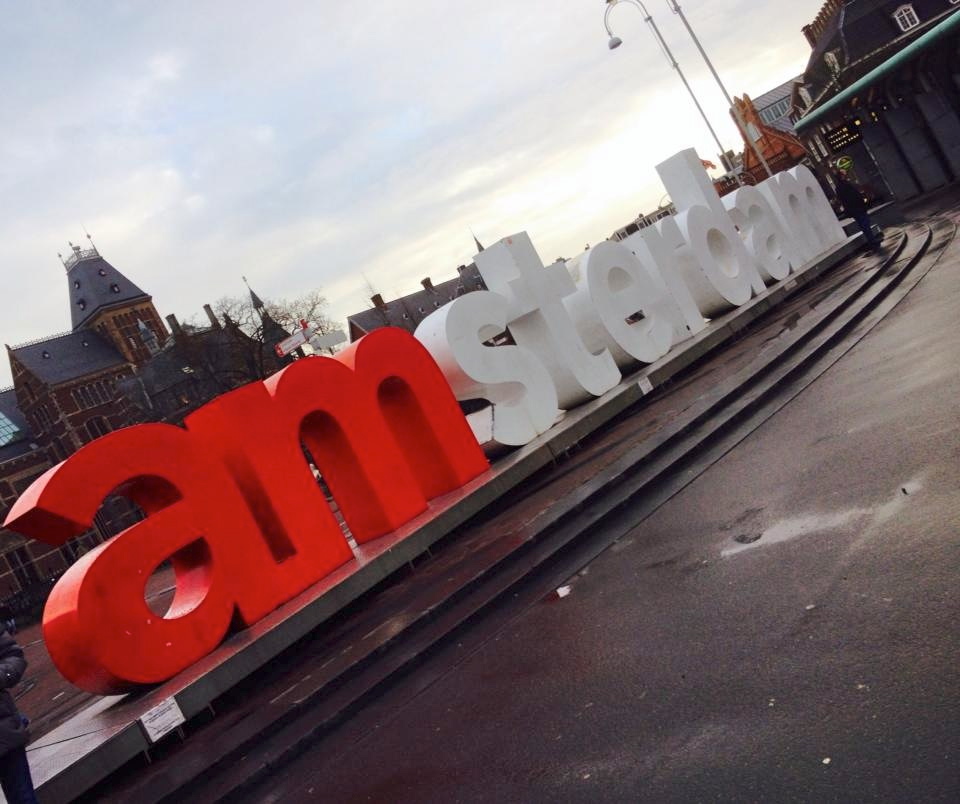
Image by Karl Powell, Amsterdam, 2012

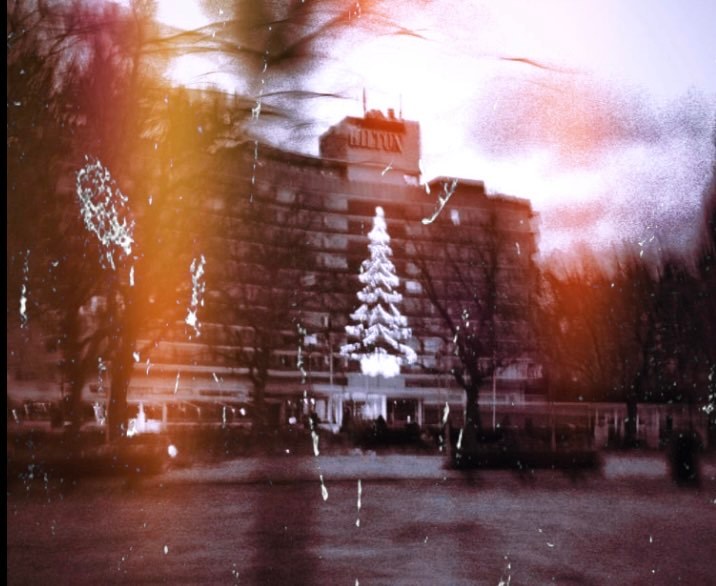
The cold was the first thing I had noticed on arrival at Schiphol Airport. My flight had landed just before six in the morning. As the plane disembarked everyone followed someone to the queues for customs, through passport control, through security checks and out into the arrival hall of the airport. Disorientated, tired and hungry after eighteen hours of journeying I wanted something to eat. A few things were open – a café and a Burger King. An espresso and a burger deal would have to suffice. It was cold in the airport. Despite that, things were open and operating. An Information counter was situated directly in front of me. Three women in blue uniforms were working, helping people (arrivals and departures), directing them here and there, pointing left, right and straight ahead. Escalators slanted down, moving gently, descending slowly towards hidden train platforms beneath the airport. An illuminated Christmas tree towered upwards several meters, dominating the arrival hall. Beyond that, the darkness of morning waited outside with the passing lights of taxis, cars and traffic.

Image by Karl Powell, Rembrandtplein, 2014

The distance from Schiphol to the centre of Amsterdam was not far. At the Information counter I purchased a Shuttle Bus ticket. It was a one-way service for €16 and took me from the airport to my hotel just off Rembrandtplein. The buses left every thirty minutes and I joined a small queue of others who had been waiting near a stand outside. The cold was so cold. It made your joints immediately ache and took the breath from out of your lungs. A driver soon appeared and let us board. Stacked suitcases rattled on the road in darkness as we drove. A heater tried its best to pump warm air in the bus – moving along unknown roads, passing streets and buildings, watching planes taking off and land; familiarity found only in the sight of large, glittered Christmas wreaths lit up in lights and fixed to the front of tall buildings as we drove past. At Rembrandtplein my journey ended and I left the bus to walk the short distance to the hotel. The bronze statues of Rembrandt’s ‘Night Watch’ stood motionless in the lifting darkness – their stoic silhouettes frozen as solid images behind a row of sleeping market stalls. Cold and Christmas lights all around. A city still to wake up. So quiet. So very beautiful. 

Image by Karl Powell, Waiting for the tram, 2014

PART II: LEIDESPLEIN
A night porter, a Londoner just finishing his shift at the hotel, had been kind enough to mark a map with suggestions when I had asked him how to get to Leidesplein (having arranged to meet a friend, Bouchra, outside the American Hotel at midday). The night porter took time to show me how to get there, pointing out places of interest nearby: chiefly, the Rijksmuseum and, if I had time, the Albert Cuyp Market. He also suggested buying a day pass for the public transport; while it was easy enough to walk through Amsterdam the trams could also be a welcome godsend when you needed them.

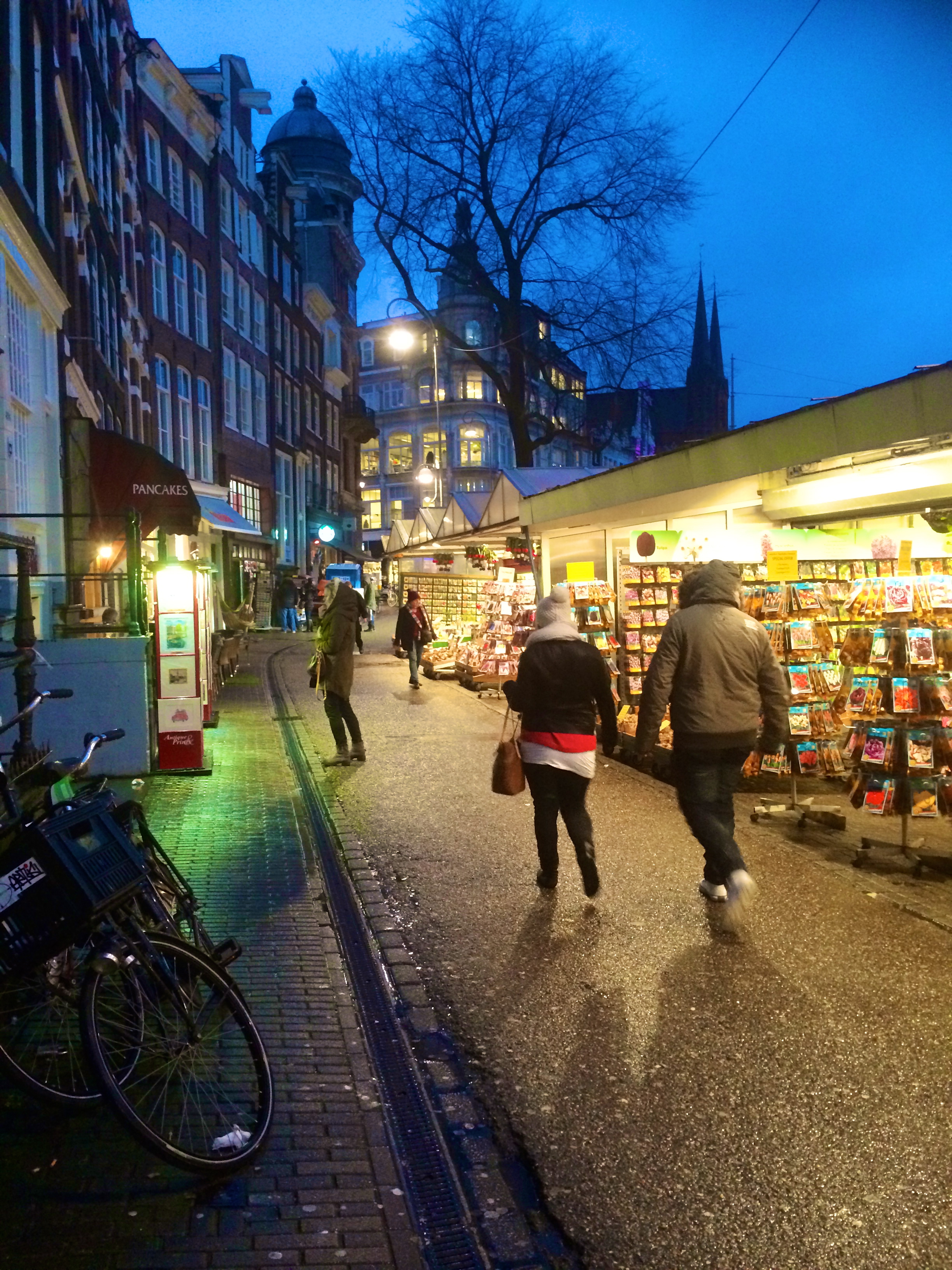
Image by Karl Powell, Coffee in Flower Market, 2014

Just a little after 8am I left the hotel and walked out into the winter’s morning. Rembrandtplein was now awake in daylight – the small row of wooden huts selling Christmas fetes were starting to set up, were lit up and open; the bronze statues of the ‘Night Watch’ more visible and distinct. Following the Amstel, I walked to Muntplein and crossed over the square, descending down into a narrow street opposite the Flower Market. A few shops were open there, selling souvenirs, cheeses, chocolates. I found a café and sat there drinking coffee, idling time for a while, watching people walk in the cold, morning air.

Image by Karl Powell, Tram Lines, 2014

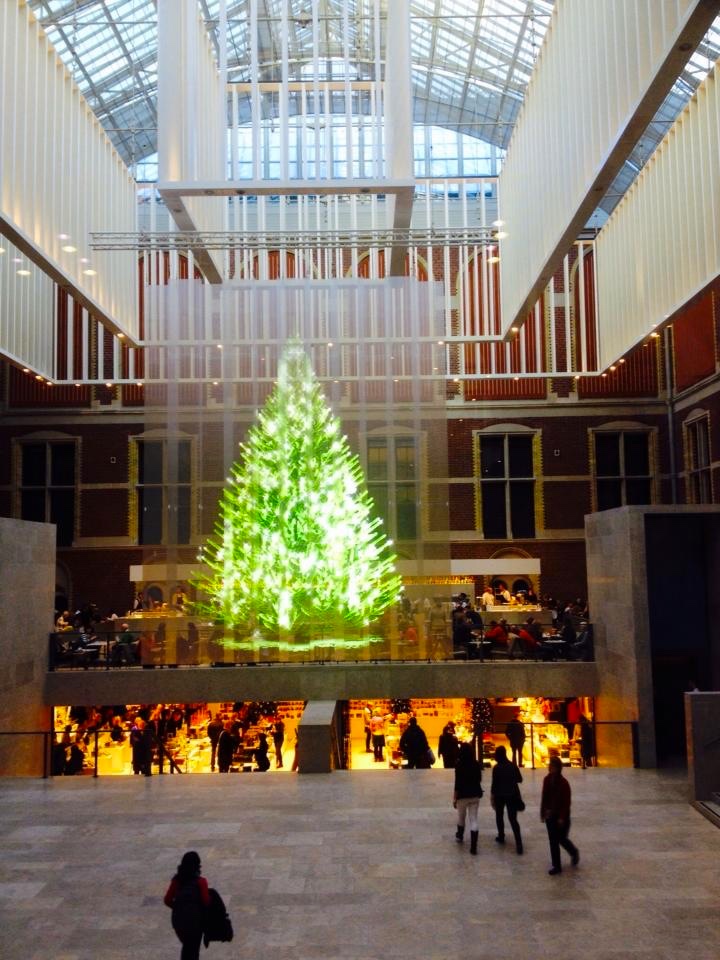
Later, I walked through Koningsplein, navigating my down Leidsestraat, across a few bridges, towards Leidseplein. Here stood the American Hotel, an elegant building sitting in one corner of a large square with other buildings surrounding the perimeter. Cyclists and trams chimed in all directions. Having found my meeting point, I relaxed and went off to explore my recommendations. A short tram ride took me across the Singelgracht canal to the Rijksmuseum. It was an imposing building with three floors of art and history pertinent to Holland. The museum had only just opened for the day and so queues had yet to really form. A large, hologram Christmas tree levitated in the atrium, rising up several floors, suspended in mid air. A flight of stairs led to the upper levels. Rembrandt’s ‘Night Watch’ was housed on the second floor. Once there, I made my way through the Great Hall and along a long, wide central corridor; the painting was visible by the amount of people milling about in front it. The canvas was also a giant in height and breadth. I tried taking photos but it was impossible to really capture any kind of experience, so I stood towards the back of the crowd and tried to absorb its majesty and significance. A woman with blonde hair, possibly in her forties, stood nearby and struck up a conversation with me – telling me that she travelled up from Leiden once a month just to see the painting. Every month she returned to the Rijksmuseum and tried to decide what it was that she loved about the artwork – the historical accuracy, the way the artist had included himself as a character in the picture, the physical attacks the canvas had survived, or just its sheer size. Each time she visited she left with a different conclusion.

Image by Karl Powell, At the Rijksmuseum, 2014

After the Rijksmuseum I made the short distance to the Van Gogh Museum. The queues were bigger and busier. The museum was designed as a visual history to the life of the artist. There were giant recreations of his paintings from Arles – such as  ‘The Yellow House’ and ‘Café Terrace at Night’ – allowing visitors to have their photographs in front of the background, giving the illusion they were part of the artwork themselves. From the Museumplein I walked the distance across to the Albert Cuyp Markets – an open air marketplace running the long length of Albert Cuypstraat. So many things were for sale – clothes, postcards, vegetables, fruits, souvenirs; voices from Europe, Suriname, Morocco, Turkey. The air was perfumed warm with melted sugar and roasted cinnamon; waffles were created in curling clouds of edible fog. A family sold me a bag of roasted cashews from their stall. A mother and son worked in tandem together, allowing me to sample, to purchase, to package, to share smiles of commonality in the cold despite the obstacles of our language barriers.

Image by Karl Powell, Christmas Hologram, 2014

PART III – VONDELPARK
Clanging trams moved along Utrechtsestraat, on the way back to Rembrandtplein. The fatigue of the flight, the morning and the cold had caught up. It had been almost seven years since I had last seen my friend Bouchra and our meeting began again almost exactly where we had last left off. We had initially met in Marrakech, one evening, at a shared hotel. Somehow we had found ourselves engaged in a conversation that did not want to end – we allowed it to dance for as long as we could, carrying it out until the small hours, until realising our early flights out of Morocco (to other ends of he world) was nearing. As there was still more to say and share, we vowed to stay in touch. And so the conversation continued – via emails, phonecalls and messages; it was one of the wonderful attributes of the friendship that although there were great yawns of space and silence between our pockets of dialogue, the conversation always managed to pick up from where it had left off. As arranged, we had met outside the American Hotel at Leidesplein, and proceeded to walk towards Vondelpark. The sun was refusing to emerge from behind the overcast clouds, occasional clouds, swiftly moving, blowing by, low-laying overhead and passing by. Patches of mist drifted and the cold clung to the damp frozen dew caught between blades of grass and fallen leaves.

Image by Karl Powell, Amstel Morning, 2012

Vondelpark was a large seclusion of greenery – a place perfect to walk and talk. The long, meandering pathways lead nowhere and somewhere, circling lakes and ponds and waterways. Routes returned on themselves, offering exits and inroads, walks along perimeter walls. Bouchra and I spent over an hour there allowing the conversation to breath life into us again. We talked about everything and nothing, sharing stories, expressing our experiences, observing commonalities. One story told was about Bouchra’s upbringing in northern Morocco. It was a story that she had not been sure if was factual or fantasy. She had a memory – possibly an imagined memory – from her early childhood, aged around two years old. She had been carried on her mother’s back in a kind of papoose or sling and could remember travelling across a mountain to visit an old woman who lived alone. There her mother and the old woman began talking as a black kettle was placed over an open fire to make some tea. Bouchra, as an infant, was placed on the floor and could remember crawling and playing and eventually sitting upright underneath a table. She described how she looked up and could see a green snake in the underside of the table. She described in detail how she watched it move and how beautiful its colours were and how these colours – lots of colours – were more than just shades of green and how they had fascinated her. In fact, only a few weeks prior, Bouchra had spoken with her mother about this memory and had it confirmed that it had all been true. They had visited an old woman who lived in seclusion; she was quite a grumpy woman who wanted to live away from people. The story of the snake had been that one day it appeared in her home and the old woman chased it out with her walking stick. But it returned the next day. Several times she chased it out, but it kept returning. In the end, she accepted it and it lived with her, underneath the table, never once harming her.

Image by Bouchra Lamkadmi

Bouchra and I parted ways at the entrance at Vondelpark. Our conversation still had many miles to journey, but by mid afternoon, our time together to talk had once again run out. We said our goodbyes and vowed to stay in touch until the next meeting. And it was sad to have had to say goodbye but the conversation was always present, always alive.

Image by Bouchra Lamkadmi

I caught a tram that took me along Utrechtsestraat back towards Rembrandtplein. The statues of the ‘Night Watch’ came into view. I could see the entrance to my hotel. My body ached for sleep. The next stop. But then I felt the folded map in my pocket and remembered that the night porter at the hotel, the Londoner, had told me that if I got the chance to visit the Portuguese Synagogue then I should. He said it was a beautiful space, a place of meditation and clarity in candlelight (he said something about there being over a thousand candles lit there each day). The Portuguese Synagogue was only a few stops away. The tram stopped near my hotel. I waited. The doors opened. And then closed. And so I remained seated as the tram moved past my hotel – just wanting to visit one more thing.

Image by Karl Powell, Portuguese Synagogue, 2013

*

18 Christmas in Paris

Café au Pere Rousseau (Rue Caulaincourt, Montmartre)
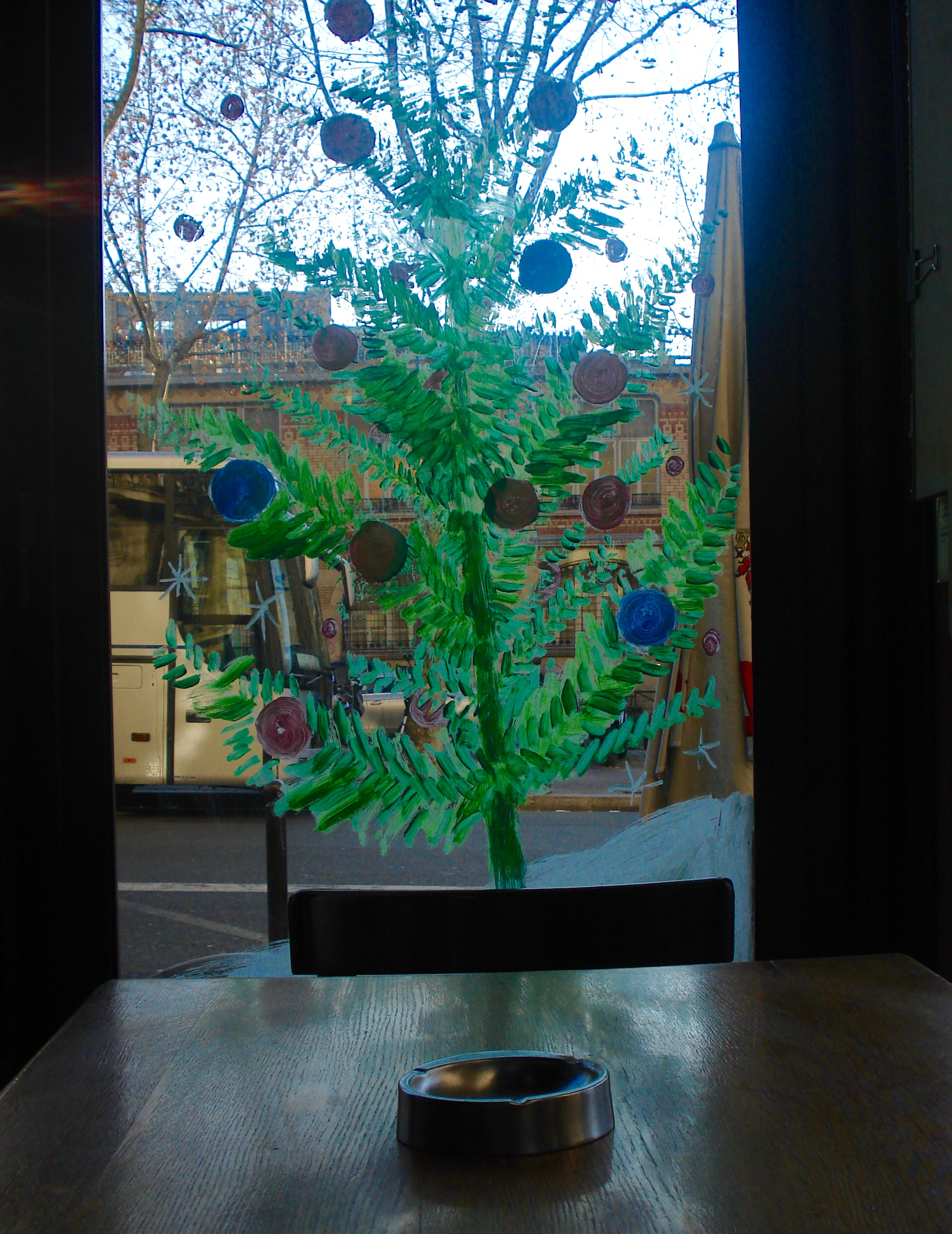
The morning had been stretched out across Montmartre for only a few hours. The December skies sparkled with winter sunlight, but because it angled up from such a low position near the horizon only the tallest rooftops felt the melting benefit. The numerous streets running off Boulevard de Clichy remained below zero in freezing shadows. Despite the brittle cold, the biting cold, Montmartre was filled with warmth. Shops were coloured and decorated ready for the advent of Christmas. There were lots of tinselled trimmings, starbursts of pinpricked coloured light and Joyeux Fêtes painted on shop windows. Pine trees stood outside in the frost.

Image by Karl Powell, Boulevard de Clichy, 2007

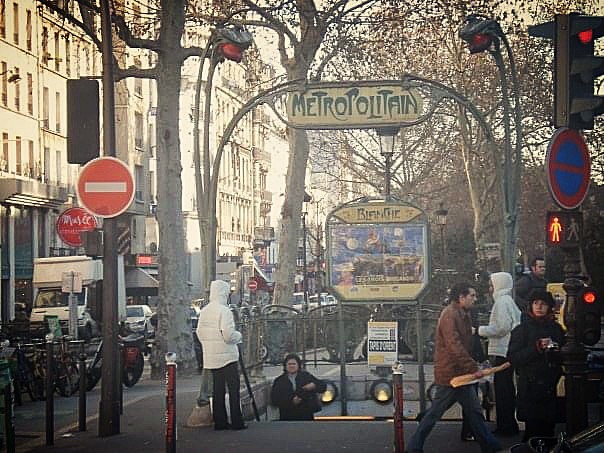
People are walking, busy, going places. Christmas will be here within the week. Everywhere you look on this Saturday morning, people wear scarves. Woollen hats cover heads. Hands are in gloves, or in pockets. Pockets of hot air fur and curl in tumbling clouds above the Metro air-vents, rising up from underground alive with the sound of rumbling carriages approaching the Place de Clichy station. People are waiting to cross the road. An elderly couple stand patiently holding hands, clutching bags of shopping; one is dressed in a coat of brown leather, the other in a coat of tan suede. The trees above them are bare; there is no green left on any of the branches. A woman sits on the steps of a statue (she was there yesterday). All she has is a sign that reads ‘Aidez-moi’ (help me). All I had was an orange. She gave a blessing in exchange. Traffic slows down to a standstill. Lights change colour. People cross the road. A blackbird flies up towards the frozen sun.

Image by Karl Powell, Saturday Morning, 2007

Brasseries and bistros beckon you in from the cold. This one on Rue Caulaincourt opened its doors at eleven. I had watched the owner clean its bay windows earlier this morning from my room. He polished them first from inside, before moving outdoors. Once this was done, he carried a bucket of hot, steaming water outside and cleaned the pavement in front of the café. Steam rose as he brushed the flagstones with a long broom. After he had finished, a large patch of white frost clung to the surface of the walkway. It is still there now (albeit pockmarked with footsteps of those who have passed by). The owner is making a coffee for an old man with no teeth and barely a voice standing behind me at the bar. Moments earlier three men walked in and ordered the first beers of the day. They sit at a table near the window, all looking out at the traffic. The cold seemed to follow them in, concealed and hidden inside the creases of their clothes before thawing into silence. My coffee has been drunk and I wait for my order to arrive (a baguette beurre jambon). It is quiet inside here. The front door opens and again a bell dings. An old woman in a large, red, padded coat struggles in carrying two large, plastic bags. She asks the owner if she may use the toilet. The owner of Au Pere Rousseau stops what he is doing and speaks in a quiet, soft voice ‘Of course.’ He helps her put down her bags, and directs her to the bathrooms. He returns to making coffee and produces an espresso for the old man behind me. It is thrown back in a second. My order arrives.

Words cannot convey just how cold this morning feels.

Image by Karl Powell, Au Pere Rousseau (Rue Caulaincourt), 2007

Église Saint Germain de Prés (Left Bank)
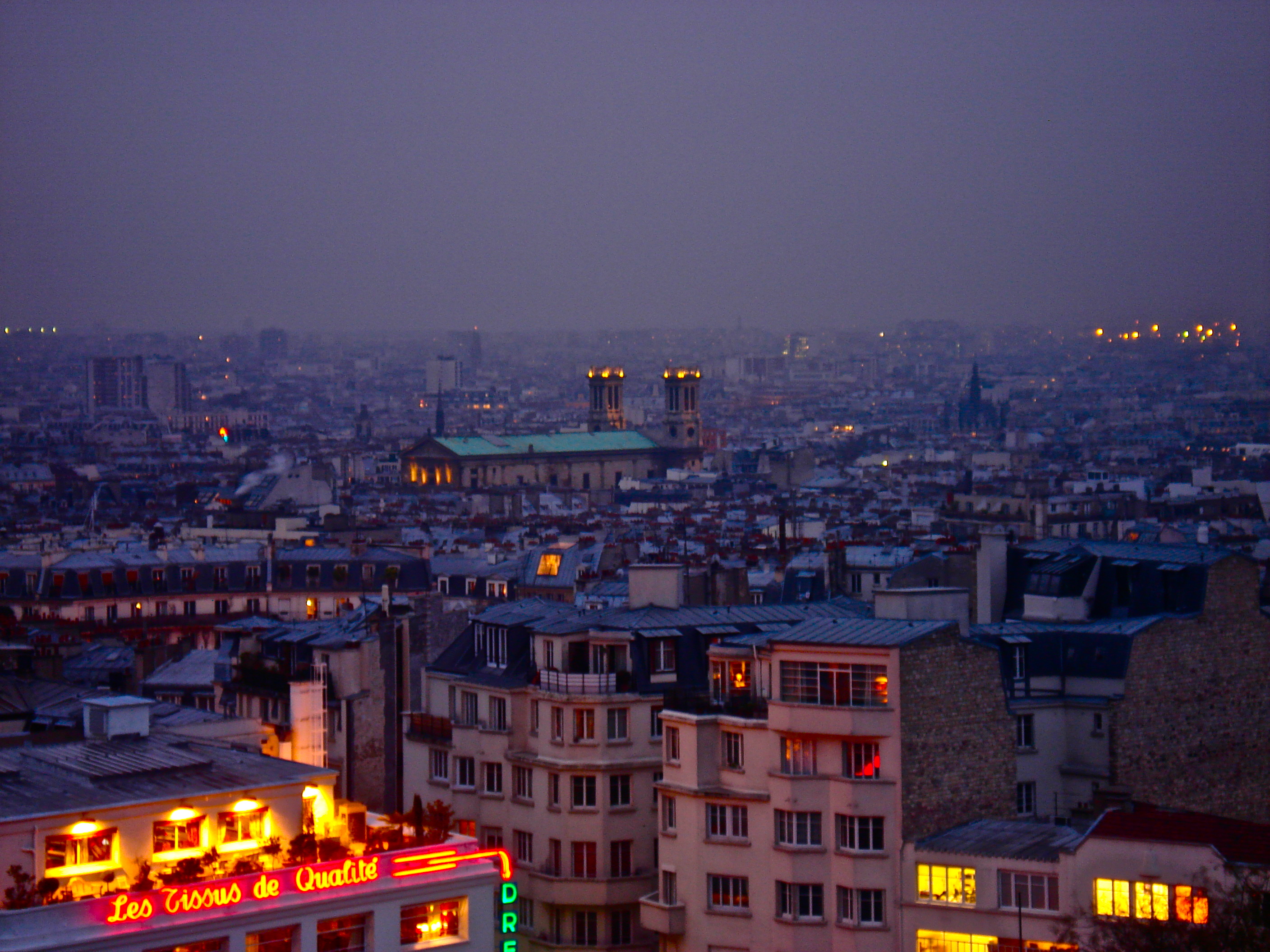
The day unravelled as the sun struggled to climb above the rooftops. I followed Rue Caulaincourt as it curled around the sloping sides of Montmartre, leading up to its summit. The street was longer that I had anticipated, and the laboured climb felt much steeper in the cold. Somewhere near the Moulin de la Galette I saw a street vendor in a small, mobile booth selling hot crêpes. I ordered and watched him pour a mixture of batter across a hot, flat iron. Steam rose. The griddle was circular and he used some kind of spatula smooth the batter, to make it round, so it cooked evenly. Then it was turned over and just before the cooked side began to smoke he added a broad stroke of nutella and a spoonful of chopped almonds, folding the snack up into quarters. The crêpe was hot in my hands and the chocolate melted as I ate it. Within a few minutes of walking the Sacré Coeur came into view (the basilica’s distinctive curved, white dome peered above the rooftops and floated up into the sunlight). Despite the cold there were lots of people milling about outside – tourists, priests, nuns, locals – pushing in together through a doorway to shuffle into the candlelit warmth of the church. Outside were numerous spaces to sit or stand and look out across the city. I sat on some steps to finish eating my crêpe. It was a wonderful view, facing out over a frozen Paris. The difference in height gave the appearance that the entire city was hibernating in a valley frozen in sub-zero shadows. Fog hung along the horizon. Steam and smoke rose from occasional chimneys. Coloured lights lit up pockets of freezing gloom. December sunlight only managed to touch the green roof and twin spires of Notre Dame and illuminate the Grand Palais and Eiffel Tower. Paris stretches out so far and wide from this vista.

Image by Karl Powell, From the Steps of the Sacré Coeur, 2007

The steps in front of the Sacré Coeur led down to where Boulevard Clichy met Pigalle. There was a metro station there called Anvers. It moved sideways across the city towards Gare du Nord (away from Place de Clichy). I journeyed underground, changing lines at Barbés Rouchechoart in order to travel south towards the Seine and the Cité station. From there it was a short walk across the two islands in the middle of the river: l’Île de la Cité and l’Île Saint Louis. Both were alive with people and colour. There were Christmas shoppers mingling with Saturday shoppers; tourists alongside locals. I visited a few shops, buying cheeses and wine, things to eat, things to share, gifts to give for Christmas. The wind stung as it blew across the Seine. The sun looked so tired, so distant, so far away. The narrow streets on l’Île Saint Louis provided some shelter from the wind, but eventually they gave way Pont de Sully and having crossed the river, I followed Boulevard Saint-Germain as it moved through the Left Bank. Outside the abbey of Saint-Germain-des-Prés a Christmas market had been erected – rows of small, wooden stalls all lit up with fairy lights, tinsel and holly. Chocolates, scarves and tobacco were some of the things I saw for sale. The open square was blazing bright with roasted chestnuts for sale. Blue lights shone in decoration from the surrounding trees. The abbey had loudspeakers outside, broadcasting songs from inside.

Image by Karl Powell, Saint-Germain-des-Pres, 2007

To escape the cold for a moment, I pushed open the main door and sat near the back of the church. Warm and candlelit, it was filled with the scent of incense and muffled sounds of the congregation listening to a mass in Spanish. Songs were being sung accompanied with a guitarist. I sat through the remainder of the service, near the back. As it finished, more people filled in from the cold; the French mass began almost immediately. I was too content to move, so stayed where I was. This service lasted about an hour. A choir sang, prayers were given and an elderly priest delivered a sermon in which he spoke about the need for us all to exercise patience and tolerance at this time of year. He spoke quietly but with authority about how Christmas is not always as it appears on television or Hollywood; that Christmas, while a time of celebration, can bring up difficult emotions for others. Hence the need for our patience for all those around us. After the mass, it felt time to head back to Montmartre. It was now dark outside. The sun had set. I began to navigate my route back to Place de Clichy (criss-crossing my way beneath the Left Bank and Saint Germain-des-Prés along a couple of connecting stations all the while heading north).

Words cannot convey just how cold this evening feels.

Image by Karl Powell, Les Chanteurs, 2007

Le Carolus (Boulevard de Clichy, Montmartre)
The light from the Eiffel Tower spins around in the darkness, dancing across the rooftops of Paris and out into the endless reaches of the frosted night sky. Passing by Le Carolus – a bar on Boulevard de Clichy – I enter and sit at the long bar (marble topped, polished and clean with a curling brass bar-rail running all around). Everything is clean and is warm. Colours dance and blend in the tinsel and candlelight. Rugby is shown muted on a large TV screen (a match between Montpellier and Petrarca). Music sounds from a radio behind the bar. It plays a song called ‘Falling’ by Julee Cruise. Somehow the song feels right, fits the evening. People are relaxed and talking, the guy next to me is reading a newspaper, the kitchen sizzles within the stove of an orange glow. Busy hands are working: polishing glasses, delivering food, cleaning cutlery. A waitress walks out from the kitchen feigning injury in an act of theatre to melt the heart of the owner (a big, bearded man who stands behind the bar with his arms folded). He watches her approach. A small game of affection breaks out. She tells him she has been burnt, and holds her hand out to show him. His eyes drop down to the hand. He looks unimpressed. She says something and playfully flutters her eyelashes. His arms remain folded. The pair lock eye contact – her smiling, him impassive. Time stands still. A customer sneezes. Then the big man, the owner, cracks his poker-face façade and breaks out into a loud laugh through his black beard – he grabs both her cheeks and plants a kiss on her lips, she wraps her arms around his wide midriff and the pair hold an embrace. She walks off into the service area smiling, her ‘injured’ hand swinging at her side. He watches her walk off, smiles, and lights up a cigarette.

Image by Karl Powell, Winter Solstice, 2007

Outside the bar, walking back to my room along Boulevard de Clichy, I walk a little further towards Pigalle. The Moulin Rouge was lit up in warm, red neon and light bulbs. It looked so striking in the dark. Tourists and locals walked past – some stopping to take photographs. Words cannot convey just how cold this night feels. The newspaper, which had been read by the man at the bar, had a map of France and forecasted that temperatures would drop to -4.c tonight.

As I write, words cannot convey how cold it is outside.

Image by Karl Powell, Christmas in Le Carolus, 2007

*