31 Christmas in Wales

PART ONE: MOONLESS NIGHT… STARLESS AND BIBLE BLACK
And so begins the long jet lag into darkness. Woke about an hour ago. Still only 2am local time. Wide awake. Everything silent. Everything dark. Everything Christmas. Blurred memories of the past twenty four hours – from airport to here – are distilled. Day began early long ago. Bit of a headache as I entered the airport. Did the check-in. Made my way through customs and immigration. Lots of people about. Felt hungry. Huge queues, overpriced food. Went and waited by my gate for the flight to board. Called in zones. Boarded. Had an aisle seat. Flight full. Quiet. Can’t recall watching much (if anything), just slept. Felt so tired. Looked at upgrade offers. Managed to sleep ok. Changed flights hours later. Half way home. Transit. Airport big so big. Airport easy to navigate. Escalators. Security checks. Walked through Duty Free (last minute Christmas gifts). Made my way over to gate E4. Lounge organised in zones ready to board. Guy sat nearby coughing, coughing, coughing.
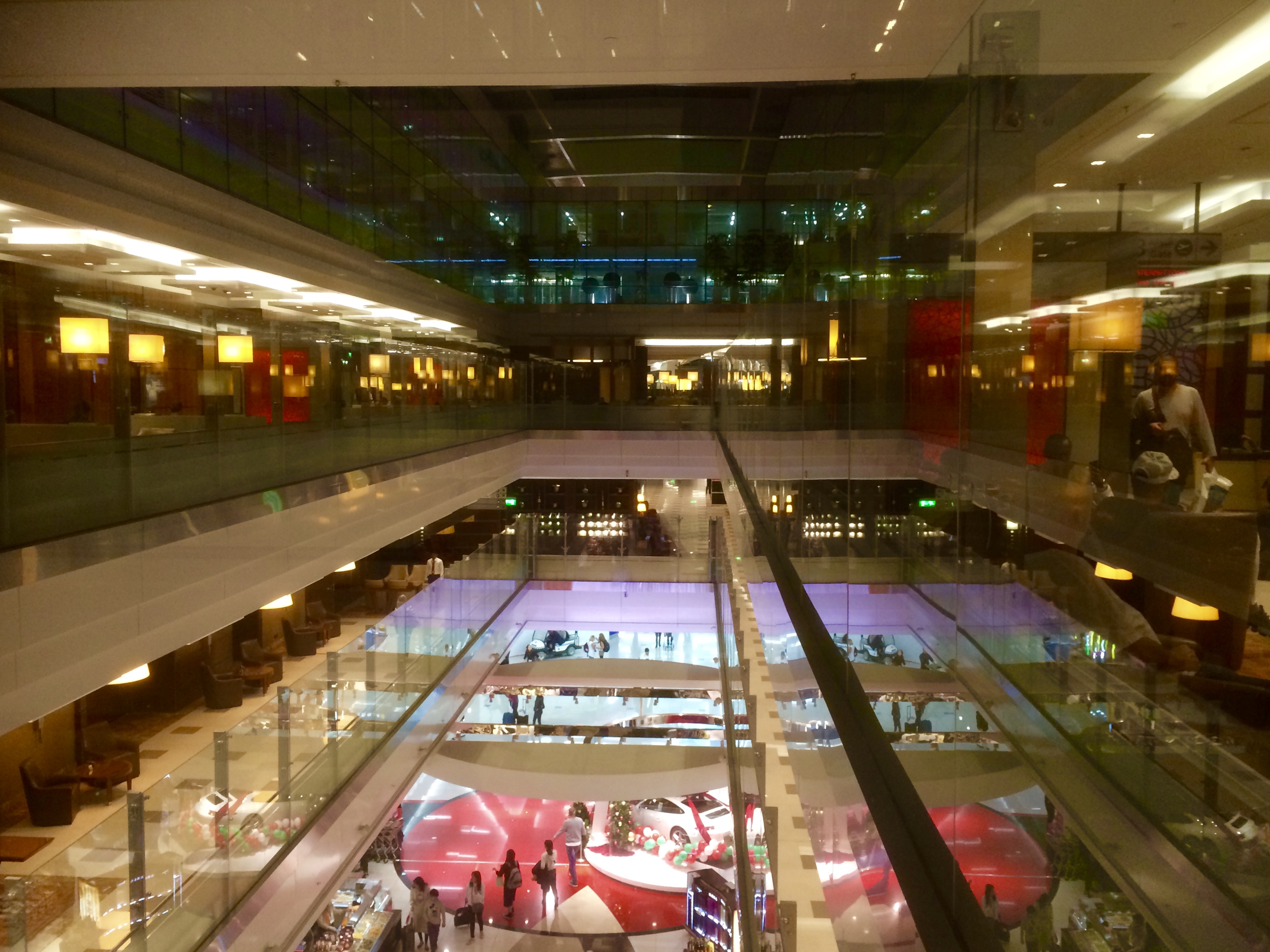
Image by Karl Powell, DXB: Transit (Dubai), 2017

Flight home called on time. No delays. Had a window seat. Girl sat next to me and slept most of way. Guy sat next to her and kept his bobble hat on for entire flat. Awake for most of the flight (wish I’d brought a book to read). Runway lit up in darkness as we took off. Could see the lights on buoys and boats floating in the sea.

Flight soon passed. Time went fast. Flew over names of countries. Some parts seemed to take longer than others. Eventually landed. Home. Croeso i Cymru. Familiarity of the airport. Two languages side by side. Nadolig Llawen. Immigration stamped my passport. Home. Red Dragon visible everywhere. Y Ddraig Goch. Words of Dylan Thomas sound in the air:
Image by Karl Powell, Magic Lanterns Above PenyPych (Rhondda), 2017

To begin at the beginning:
It is spring, moonless night in the small town, starless and bible-black, the cobblestones silent and the hunched, courters’-and-rabbits’ wood limping invisible down to the sloeblack, slow, black, crowblack fishingboat-bobbing sea.

Familiar faces waiting to greet me. Familiar car. Familiar drive home. Familiar shapes and shadows of landscape. Arriving home for Christmas. Outlines of mountains against the night sky – frozen stars cast out across the endless black. Christmas lights shine in the Rhondda darkness below. Orange lights in homes and pubs, people talking, people coming and people going. Radio songs. Dreaming of whisky and open fires. Driving home. Familiar sights. Across the Bwlch mountain road, the lights of Cwmparc down below, the lights of Penrhys on the mountain across the valley, Cwm Saerbren with its back turned facing out instead towards Treherbert, temperatures close to zero. And then roads home that I know with my eyes closed. Body and eyes heavy. Home. Eat around a table. Talk and conversation. Body and eyes heavy. Crashing through the stars and the singing, hymning dreams. Home again. And then sleep.
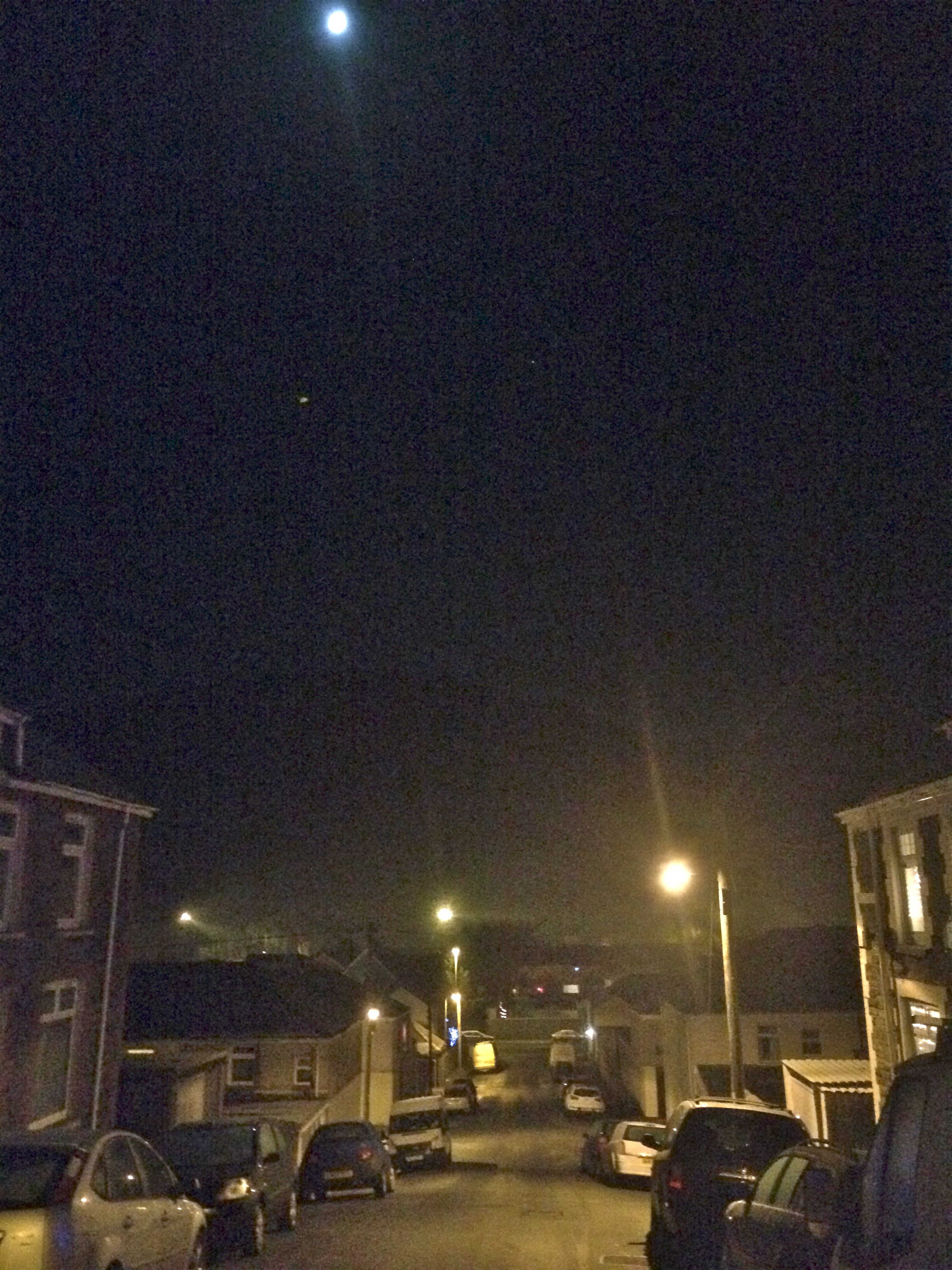
Image by Karl Powell, Ninian Street (Rhondda), 2016

Wide awake. And so I decided to get up. Crept around the sleeping house. Showered. Ate breakfast. Coffee on the stove. The slow wait. Watching the silence of the blue gas flame dance around the metallic stovetop coffee pot. Waiting. Looking out into the darkness beyond the windows. Nothing else but the darkness of night. Endless night. Silent Night. Christmas Night. The coffee pot gurgles, hisses and steams through the silence. Golden brown aroma fills the chill of the winter kitchen. Slowly pour the coffee into a patterned cup. Steam rises into the dark moving slowly like the Star of Bethlehem. The house is still; the house is silent. The whole world is asleep.

Image by Karl Powell, The Baglan Field (Rhondda), 2015

Here at the kitchen table, this table which has seen so many family dinners, Christmas dinners, birthdays, sadness and all the joys you can hope to imagine; here at this kitchen table there exists a stillness which is known only within this family home. And so, with a lighted fire heating the air, coloured lights casting Christmas shadows far and bright, I sit and drink my coffee. It will be hours before daylight comes. There is a book on this table – Dylan Thomas. And so, in this stillness, I sit and drink and read.

PART TWO: A CHILD’S CHRISTMAS IN WALES
The poet Dylan Marlais Thomas was born in Wales in 1914. An output cut short but ultimately prolific and fulfilled – words and verses sung across the rooftops in a brevity of colour, alive in moonlight, carried across the ages, spoken still, captured in celluloid, dancing in the waves along coastal shores and the deeper waters. There were poems. There was a play. There were short stories, too. Despite having Welsh-speaking parents, Thomas wrote only in English (his was a generation of people who had been discouraged from speaking the Celtic language of their parents and so were eventually passed down as ‘Anglo-Welsh’ writers). Despite this, the richness of sounds alive in the Welsh language – and its poetry, such as the chimed consonants which sound within verse known as cynghanedd – finds itself present in much of the prose and craft of Thomas. This mesmerical use of vocabulary (once described as a wrongness sounding right), plays a creative reinvention of the English dialect and conveys the sounds of an older language through it and on to a non-Welsh speaking audience.

Image by Karl Powell, Treherbert from Cwm Saerbren (Rhondda), 2017

Dylan Thomas wrote ‘A Child’s Christmas in Wales’ in 1945. The story draws on a flashback of an imagined childhood of the poet, borrowing from nostalgic memories of Christmas and his upbringing in South Wales. The story also highlights the way that Christmas can draw us home – physically or in our imaginations and memories; how it remains a tangible link to the embers of childhood and the blur of memories collected there from a time we can no longer access.
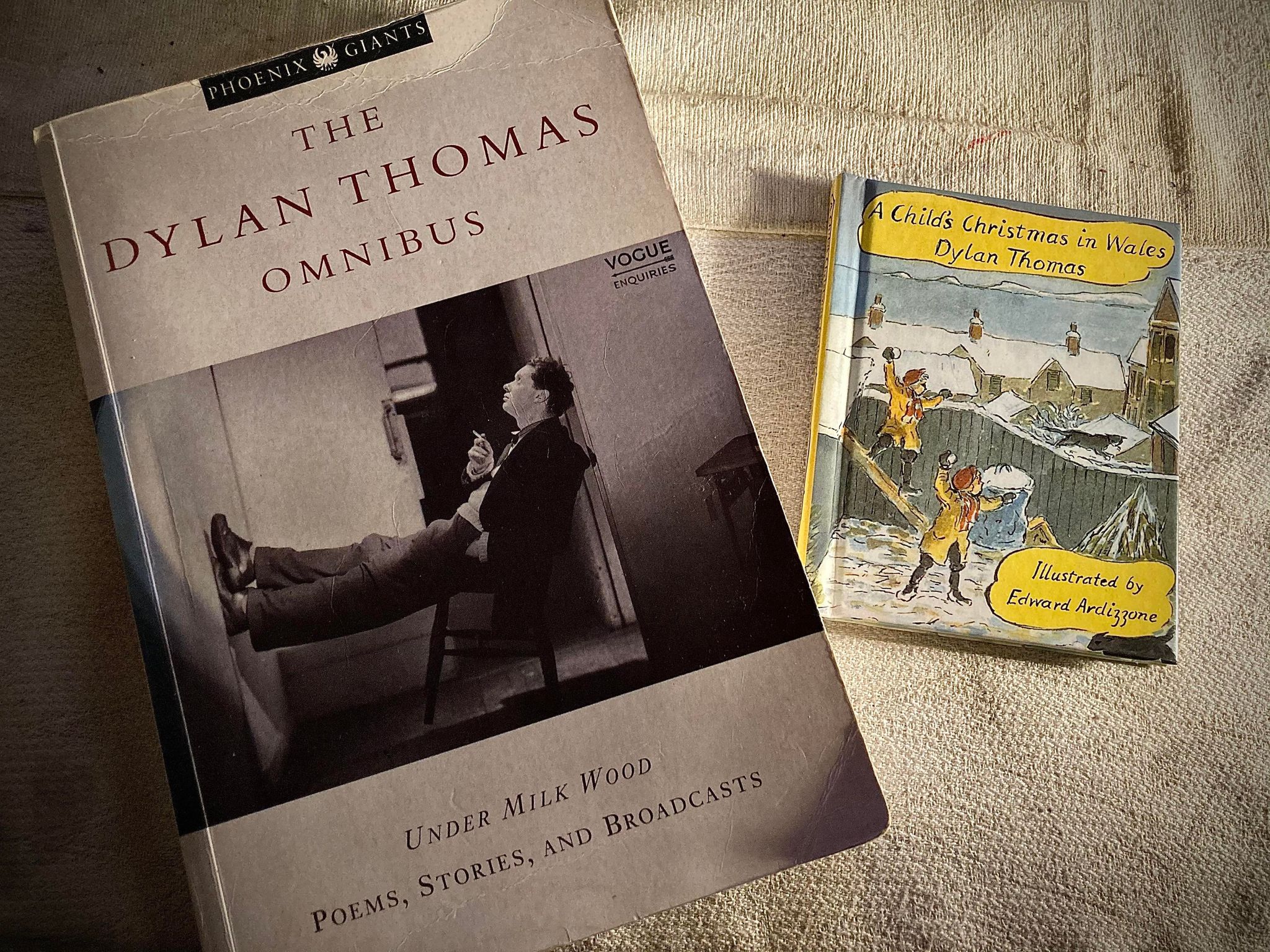
Image by Karl Powell, Dylan Thomas (Perth), 2023

It belongs to his collection of short stories, although originally appeared as a BBC radio broadcast a couple of years earlier; its title, then, ‘Reminisces of Childhood.’ As with all bodies of work, the draft keeps evolving – wants to improve – but at some stage you must let go. The myth of Icarus speaks to us of the dangers of flying ever upwards towards the Sun – the quest for high ambition. And if you hold on to a vision for too long, striving to create an unparalleled perfection, an awful realisation awaits you in that it has consumed every aspect of your life. As with all bodies of work, you must let go eventually in order for them (and you) to belong in the world. And so, amalgamating other talks, broadcasts and drafts, ‘A Child’s Christmas in Wales’ was published in Harper’s Bazaar in 1950 (before a final version was recorded commercially by RCA in New York in 1952).
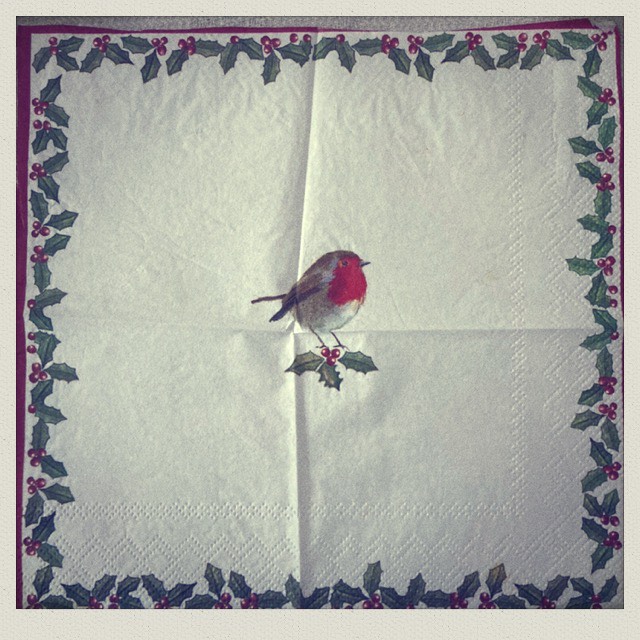
Image by Karl Powell, The Robin (Perth), 2023

It was this final version that helped establish the popularity and admiration of Thomas as a poet and a writer following his death in New York the following year.

Image by Karl Powell, Sunrise, Boxing Day (Rhondda), 2013

PART THREE: SAINT STEPHEN’S DAY – GŴYL SAN STEFFAN
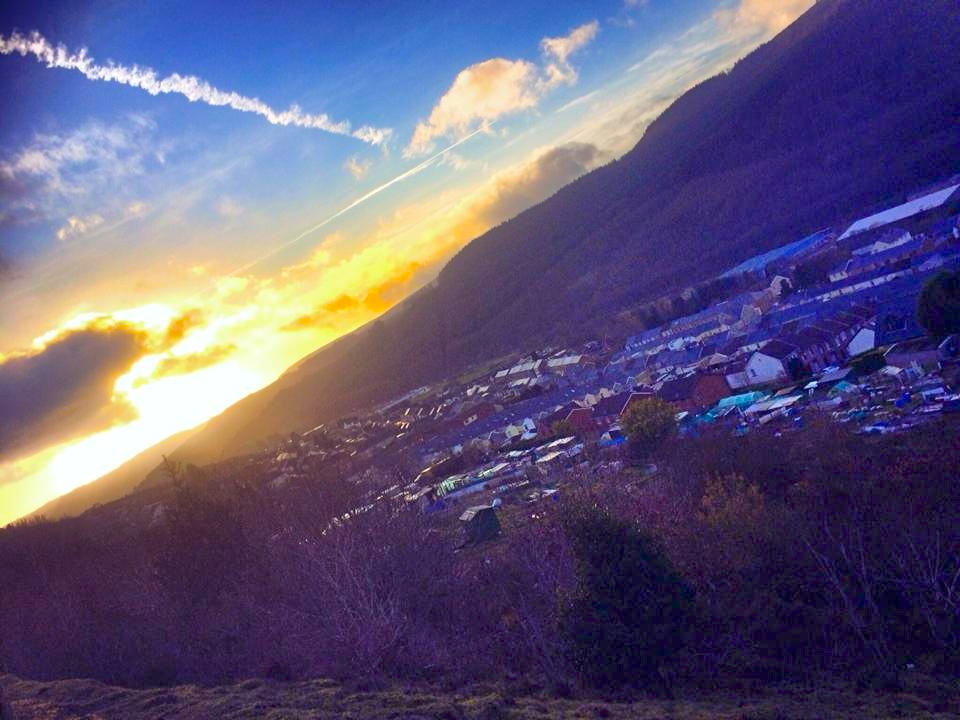
The sun is rising. From the vantage point of the horse-shoe bend up on the Rhigos mountain road I look down the Rhondda Valley and see the low-angled sunlight pierce through the freezing fog that clings to the landscape. Morning has broken. The sky is clear – its veil of night has now gone. A thin, crescent moon shines bright with Venus (both visible in the Eastern sky). The first light appeared at about a half-past seven. Slowly, darkness began to lift. Outside in familiar streets, frost sparkled. Coated on blades of grass, tarmacked roads, frozen stones, frost sparkles now. Everything is painted cold.

Image by Karl Powell, Station Street & Cwm Saerbren (Rhondda), 2013

Vapour trails from passing planes catch the streaks of yellow sunshine high in the blue winter sky, turning white in amongst the Christmas reds and rose of the morning chill, and hang suspended there in the glacial heights. Everything is so quiet. My eyes move along the valley, across the shivering homes and the trees without leaves. There are allotments empty and frozen on the mountainsides. There are horses roaming there and billowing great clouds of heat into the air from their nostrils. I watch a train pull in from Cardiff; sunlight blinking in reflections against the windows as it moves along the Baglan Field towards the station and the end of the line. From here I can see all the landmarks of home: the tall, clock tower of the old Ninian-Stuart Con Club in Station Street, the giant monkey tree now standing over the Marquis of Bute Hotel, roads and streets criss crossing as they always have, smoke rising from the Nag’s Head as it sits in the lap of the majestic Cwm Saerbren basin. And then in the silence of Christmas I realise that everyone I have ever known and loved has once lived there, down there, was from there, was once there.
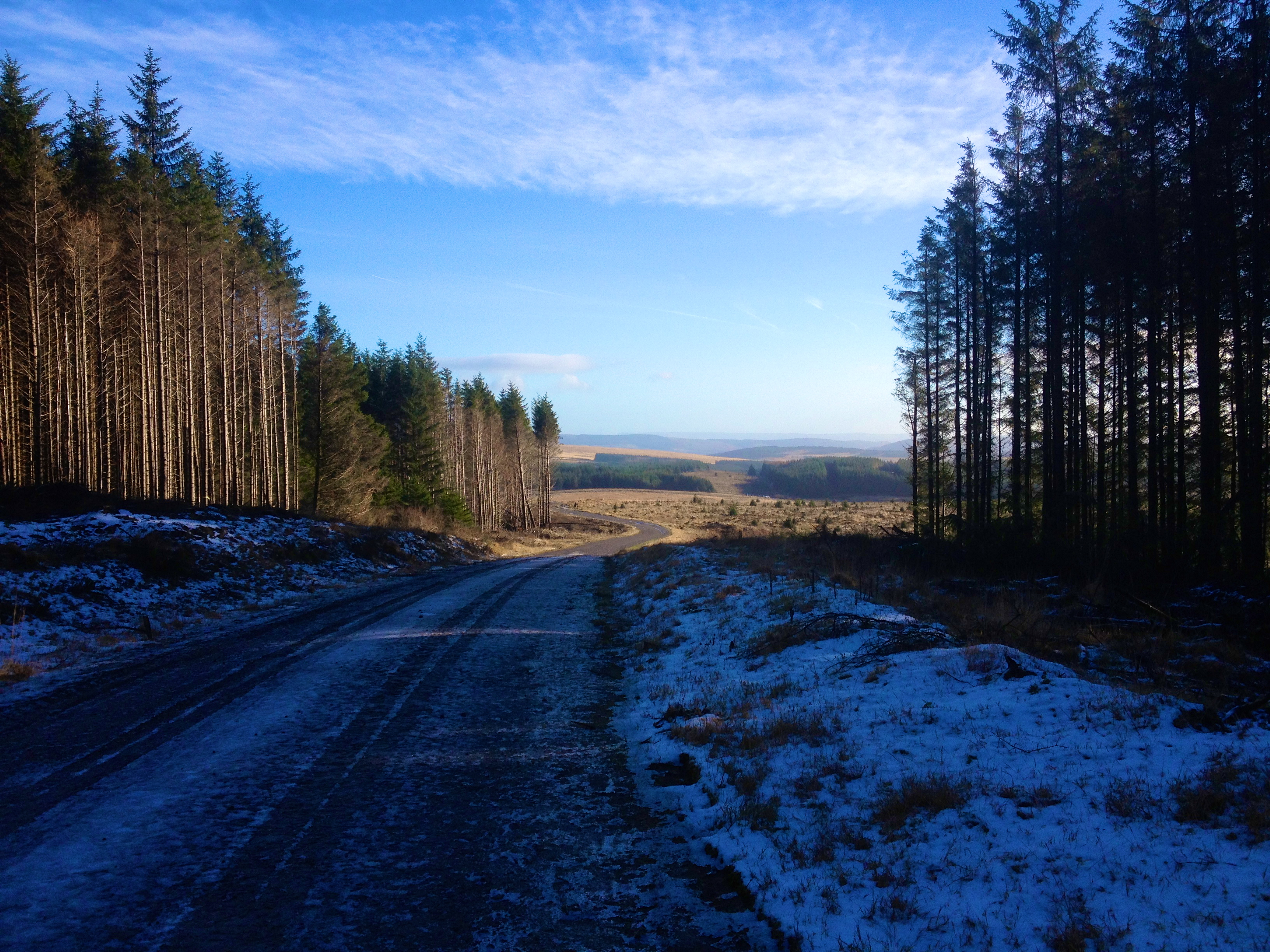
Image by Karl Powell, Rhigos (Rhondda), 2013

The holy silence is complimented by the song of the robin. It is the robin’s winter song. This sacred bird sings so clear from the woods of the Rhigos mountainside behind me, and the song carries out across the valley bringing familiarity and meaning to the cold, Christmas morning. And then the words of Dylan Thomas reappear again. There’s a wonderful line that appears in  ‘A Child’s Christmas in Wales’ – right at the end – where the child narrator leaves the adventures of the December snow and the cold and returns back into the warmth of his family home: Everything was good again, and Christmas shone through all the familiar town. And here is home and everything is good, and Christmas shines on throughout all of Treherbert.

Image by Karl Powell, Christmas (Rhondda), 2014

*

9 The Balinese Fishermen

The day had been spent writing. It was important to find a routine that worked; for good writing it was necessary to find a rhythm (or to let the rhythm reveal itself to you) – something, in the words of the Poets, which enabled you to hear the Muses sing as clearly as possible. When you committed to creating momentum, and worked patiently within in, then the words just flowed and the magic happened in front of your eyes. Waiting for inspiration is as pernicious as blocks, procrastination or the fear of a blank page. Much has been said about how to write, when to write, how often to write. In the end what works for you is probably best: but you have to find your own rhythm. For some, the most potent time is around dawn – brahma muhurta – when creativity literally comes down to meet you; for others the alchemy is best experienced after dusk, as documented in the verses of Dylan Thomas:

In my craft or sullen art
Exercised in the still night
When only the moon rages
And the lovers lie abed
With all their griefs in their arms,
I labour by singing light.

Image by Margi Currey, Sultry Sunset over Seminyak, 2017

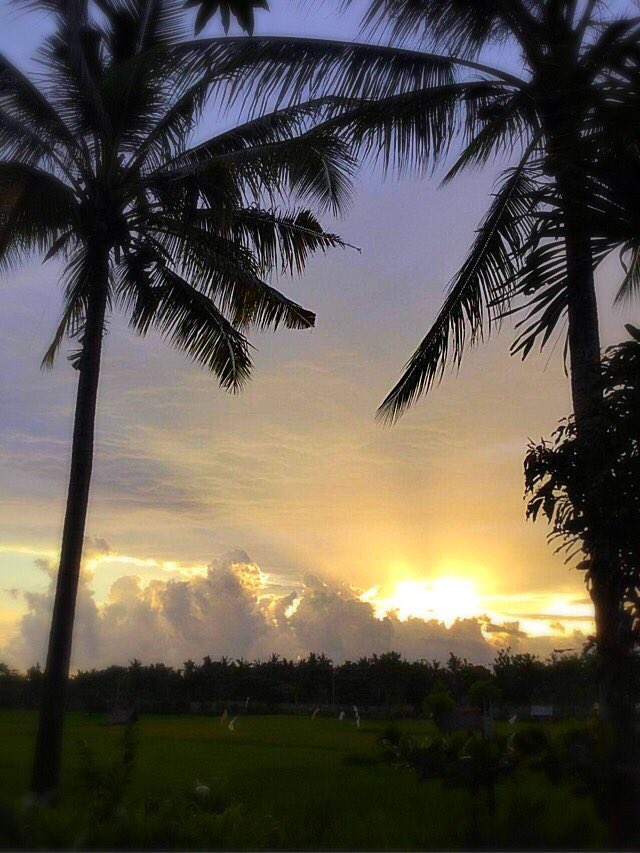
For almost a month I had found a routine that really worked for me: a walk along Tuban Beach before breakfast; to write for several hours at a desk in a room I had rented until lunch; a couple of afternoon hours editing sitting outside; finishing with a walk near the ocean at the day’s end – leaving the nights free. Long mornings were spent sat at a desk overlooking a garden with green, flat tropical leaves, which moved and swayed in what little breeze dared whisper. After lunch, I moved onto a balcony, a bar or cafe, editing what had been written the day before – all the while watching the afternoon skies grow heavy and then burst with rain. The flat palm leaves were drummed into a kind of submission by the downpour of raindrops – the surrounding greenery seemed to become more vibrant in sound and colour because of the rain. This routine had worked, the project I was working on was almost complete.

Image by Margi Currey, Sunset , 2017

Walking along the beach at late afternoon (before the sunset) helped rejuvenate and untangle the mind from words and ideas. It was a good way to avoid burnout on any long project. The beach was not far from my room – a short walk through several narrow streets (jalan or gang). Roughly, I would arrive there at that time of day when shadows had begun to fall through the trees and stretch themselves out across the shoreline where wet, tropical tarmac gave way to the sand. The strength of the sun had long begun to fade. Mosquitos were beginning to make themselves known, nipping and biting. The day itself felt tired in some way.

Image by Karl Powell, Kartika Gang Jalan (Tuban), 2005

Some days I would walk there as the tide crept its way back up the beach. The incoming waves growing in noise from a still and silent ocean. Local children would play in the foaming surf; tourists taking photos of the flat silver ocean beyond them, waiting for the pink sun to set and burn Titian colours across the sky. Planes flew upwards from Ngurah Rai Airport, passing the beach, reaching up overhead journeying home. Sometimes patches of yellow light broke from above the clouds and over towards the north, the mists would clear and Mount Batukaru drifted into view. 

Image by Karl Powell, Jenni, 2005

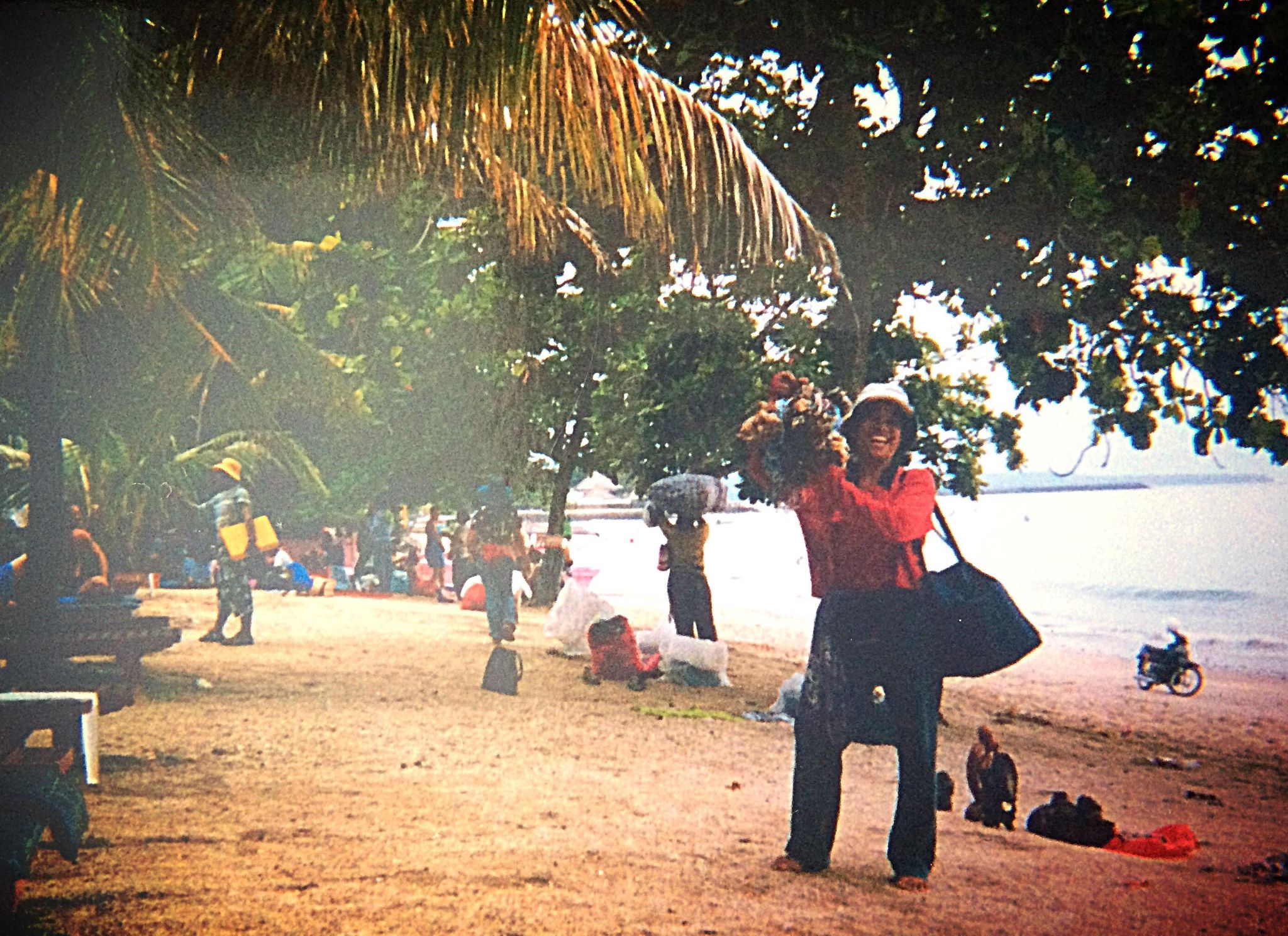
At that time of day, many of the sellers would be packing up – taking home what had not been sold to try again tomorrow. The odd tourist would walk past but the last sale of the day had possibly come and gone. Heads low. Some of these sellers worked on the beach the whole day. Time to count up the rupiah and see what has been made for the family today. Not much left to say. No more customers will come now. Through the familiarity of routine I got to know some of these faces. Andrew sells necklaces. He wears a yellow hat with his name on it. He has four children, three boys and one girl. He tries to sell me a temporary tattoo. OK don’t forget me tomorrow – remember my name. Eric is selling a crossbow. He also has a blow-dart for sale.  Eric speaks Italian. He learnt it on the beach. He speaks fluent Italian. A friend bought him a book. Each day he learns a little more. Step by step. Eric also speaks Javenese, Balinese, Indonesian, English, Spanish, French and a little German. He learnt it all on the beach – a la spiaggia. Most of the sellers here have their own patch.  Some sit under frangipani trees during the heat of the day. They sell for good price, cheap price, welcome to Bali price. A blond tourist has three Balinese women braiding her hair on the beach outside her hotel. They say all the right things to her: she is pretty, she smells nice, she has beautiful hair. They ask if she is Australian, or American, or English. They each repeat their names if she needs anything else – You want to buy a hat tomorrow? You come to Jenni. Kiki, Lisa, Jenni – all three braid her hair.

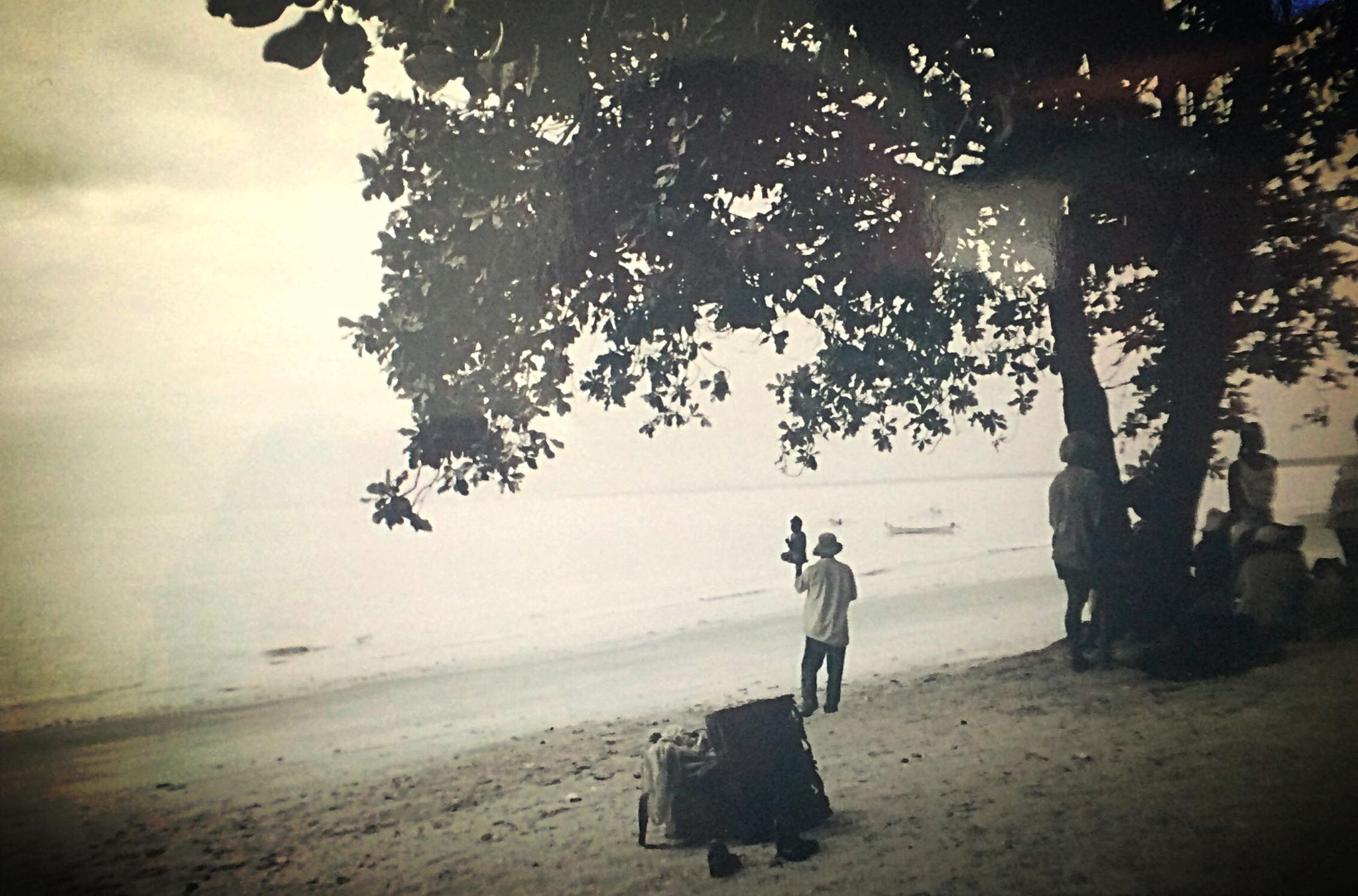
Yayan Nuken sees me and comes and tells me his name.  He writes it in the sand so I can see it. ‘YAYAN NUKEN.’ He gets me to pronounce it.  He sells wooden statues of the Buddah. He sells the most beautiful shells in the world (laid out on the sand in three, neat rows). He says, I make nothing for one week. I pray to make a little more money for next week. The rain keeps the tourists away. No tourist, no money. You want a tattoo, Boss?

Image by Karl Powell, Yayan Nuken, 2005

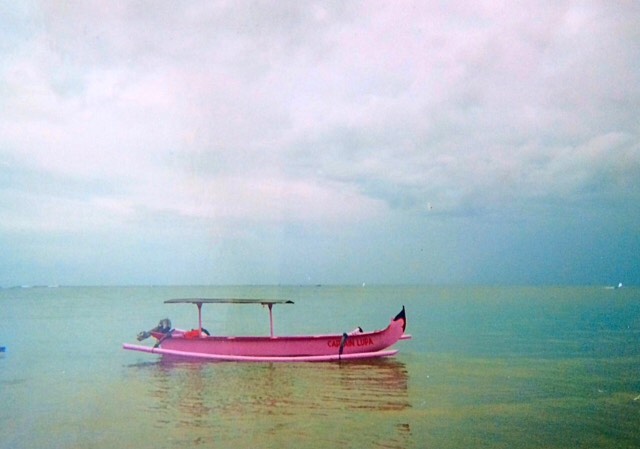
Further along the beach, the Lupa floats about without care on the flat silver ocean. It is visible from a distance, being a distinctive bright pink. Lupa is a boat – a jukung – a long, hollowed wooden outrigger with long, lateral supports. It is anchored in waist-deep water and having spun and drifted all day it now bobs and nods on the easy sea. Clouds move east filling the Balinese sky with moisture and heat. Captain Nyoman stands looking out to sea. No tourists. No good. No money. Arms folded over his chest he walks along the water’s edge. He sees something, bends down to pick it up. He looks at it in his hand, then tosses it out for the ocean to keep.

Image by Karl Powell, Lupa, 2005

Some days it was nice to walk the full length of the beach – to go right down to a perimeter fence that segregated something from the rest of us. One of the first times I ventured that far, I saw a lone black silhouette standing in waist-deep water ahead of me. By the time I reached him, he was standing up behind a stone breakwater facing the ocean, holding a thin fishing rod with the line sunk under the water. As I got closer I could see he was a young man, maybe in his twenties, hidden underneath a navy blue polythene poncho. He wore a baseball cap. On seeing my approach, he nodded and said, ‘Look for the stones to stand on.’ I looked down and there in the sand was a hopscotch smattering of octangular shaped stones sunk in the water, big enough for feet to walk on.

Image by Margi Currey, The Hidden Crystal Waters of Bali, 2017

I joined the fisherman on standing on the breakwater. Elevated up, he water stood around our knees with the breakwater at our chest.

‘Have you caught anything?’ I asked.
‘No, not yet.  I try to catch something.’
‘You work on the beach?’ I asked.
‘Yes.  Every day I work here,  I sell ice-cream for the tourist.’
‘You are from Bali?’
‘No, I am from Java.  But now I work in Bali.’
‘Do you have family here?’
‘Only my brother,’ he pointed to a smiling figure standing behind us up on the shore.
They both wore the same plastic ponchos.

The soft waves of the pushing ocean rolled around the front of the breakwater, bouncing back into the face of the Indian Ocean before being washed up on shore. The brother pointed out to sea and shouted something to his brother. I turned, but the fisherman already knew what the brother meant; his line was taut.  He caught something on his line. He clicked his reel and began to play with the fish. His line bent, with the nose of the rod dipping down into the water, pulled harder before flexing and relaxing and flexing again. The brother said something, wading in the water, across the octagonal stones and up onto the concrete ledge behind the breakwater. All the while, the fisherman kept focused, holding the rod with his left hand, spinning the reel with his right. His bare arms poked out of the poncho, with veins working hard beneath his skin. The rod kept being pulled beneath the waters, engaged in a frenzy of tight, spasmodic combat. The fisherman reeled and began to pull the fish in from the deep.

Crack!

And then the line snapped.  It just broke. 

The three of us stood there for what seemed a moment in time. I heard that sound that falling rain makes when it hits the ocean’s surface to create pockmarked rings. The fisherman stood holding what was left of his rod and turned half smiling in a kind of apology for something.

‘It’s gone,’ he said to me. 
The brother turned and jumped into the sea, wading back to shore, head bowed.
‘That was going to be our dinner,’ the fisherman said.
Instinctively my hand slapped the pocket to my shorts for some kind of recompense. But it was empty.  There was nothing there to give. The fisherman smiled, and jumped down into the sea. I stood still on the ledge for a moment, looking out at sea, listening to the rain.

The two brothers stood at the edge of the shore waiting for me to join them.
‘Where do you go now?’ I asked them.
‘Home,’ they replied. 
I shake their hands.  ‘I’m sorry about your fish.’
‘Don’t worry God will look after us,’ said the fisherman. 
‘I wish I had something to give you.’
‘Don’t worry.  Wassalam Mualaikum.’
And then we parted.

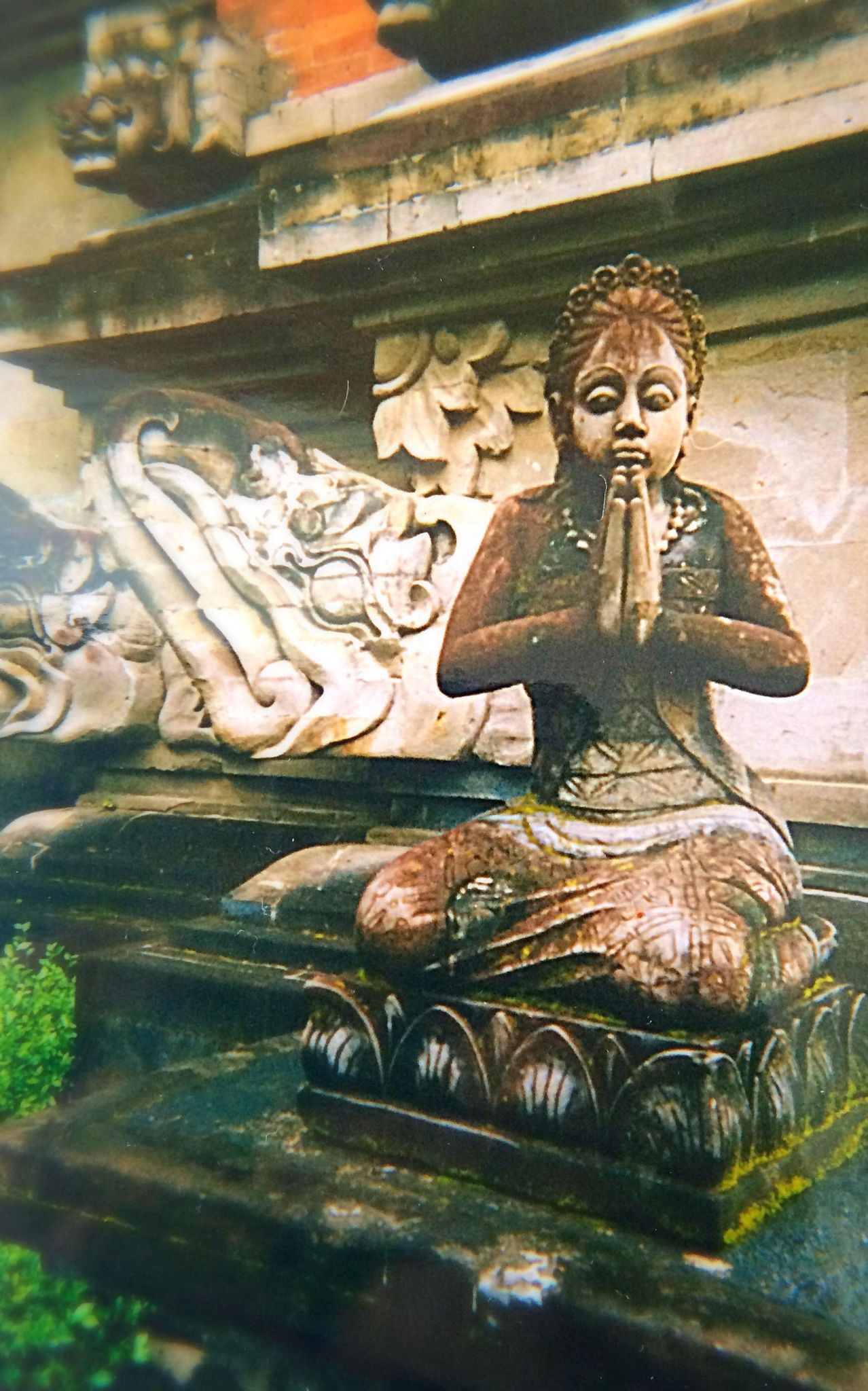
Image by Karl Powell, Goddess of Bakung, 2005

Each night, my body would feel better for the walk and my mind would be at rest (free from thoughts and ideas for another day). Back in my room I could often hear the evening rains falling on Tuban Beach. It was a time of day many gave thanks. It was a time to give thanks to the gods who protected them, and for the good luck and for the day that just happened. It was a time to say thank you for what prosperity had run through your hands. It was a time to express gratitude for family, for the love to which we belong, and for what roof spans above our heads this night. It was a time for offerings, to ask for the chance to try again tomorrow. To hope for a better day tomorrow. Terima kasih. The rain fell often on Tuban Beach.

*