There were many ways in which to enjoy London during those December weekends before Christmas. Of course there were parties and friends to see; the calendar was as full then as it seems to be now. People always wanted to celebrate and share happiness together; in the bleak mid-winters of northern Europe Christmas punctured through the advent of long, cold hours of darkness with tinsel, coloured lights and wrapping paper. Days were busy. Yet London was one of those big cities in which you could just walk into, dissolve into a crowd and enjoy anonymity. It afforded you the opportunity to take some time out of life and to just be, to flow and wander, and become part of a city’s metropolis of passengers. Black cabs and red buses, riding tubes beneath city streets on the London Underground, changing lines heading north, heading south. These were some of my happiest days of my life – over thirty years ago – chasing dreams in a big city. It was one of those times when money never seemed an issue because the focus always seemed on adventure. Everyone I knew then was also following dreams, their vocations and callings – we all lived for our passions and were very happy. London was the type of city that was able to inspire with its spirit; you always knew that you were standing in one of the great epicentres of the world and that life was taking place around you. Wherever you were in London, you knew that you were a part of it and somehow belonged to a greater dance taking place.

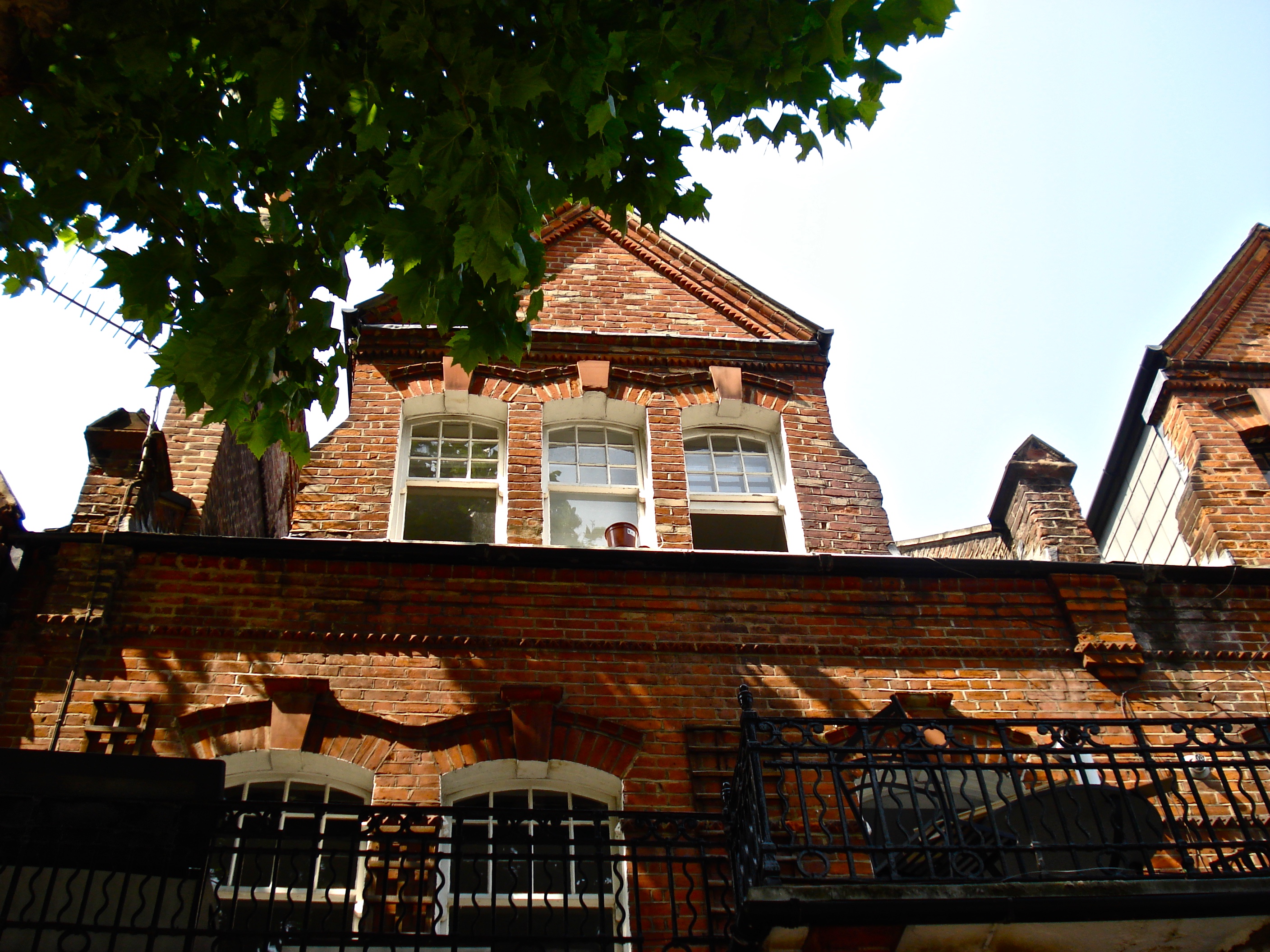
I had moved to London to write and had done so when I was nineteen. It was a wonderful time in which to have written and to have been a writer. I learnt a lot and read a lot. The streets in which you walked were laced with stories waiting to be discovered. There were poems on the Underground. Theatres could be found in the basements of pubs at the end of your road. And in my street I spent many happy hours leaning out of a top floor window people-watching passing footsteps coming and going on the pavement beneath the trees below. Occasionally I would write down what I saw, what was happening; creating snatched impressions from the street scenes below my window. Most of what I wrote during that time has now been lost, however, some scribbles, memories and photographs remain (but not enough).

One weekend in December remains vivid in my memory whenever I think of London and Christmas. It was to be my last Christmas spent living there. At the time I had no way of knowing it; I had been too engrossed living in the moments of each day and in being content. I had arranged to meet some friends in Camden Markets on a Sunday afternoon – the last weekend before Christmas. We wanted to buy some presents for our families and Camden Markets was one of the best places to visit on a weekend. It was one of those spots in North London where you could actively shop for something you needed or passively wander alongside the shoppers who searched for their hidden treasures. Either pursuit yielded its own reward.
My friends and I, at that time, all lived in West London and were on the District Line of the Underground. We all worked together on the Kings Road in Chelsea. We had arranged to meet at Earls Court station around midday on a Sunday before Christmas. Earls Court was a kind of junction where the three branches of the District line – Ealing Broadway, Wimbledon and Richmond – each converged before moving east across the capital. From there we could travel on towards the Embankment station (where one of Cleopatra’s obelisks stood on the banks of the River Thames), and change tubes onto the Northern Line which ran upwards, north, towards Camden.
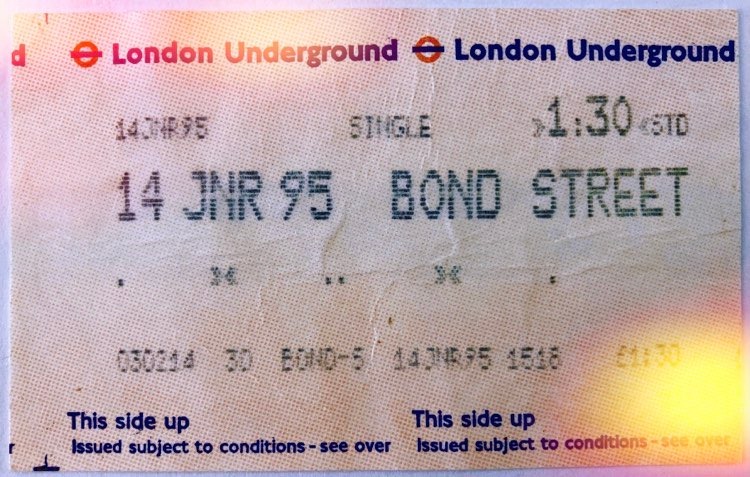
To get to the markets, which were immediately outside the tube station, you had to alight at the internal platform and look for the long, ascending escalators out of the underground and onto Camden High Street. The Northern Line could be busy, congested. People gently pushing, moving slowly, carried in a crowd upwards and out. On this day, at the foot of the escalators, a lone violinist was busking and played ‘White Christmas.’ The melody echoed around us as we moved past him, the sound reverberating in the silent tube tunnels behind as we exited out into the cold. And out into the cold there were market stalls selling clothes, books, jewellery, leatherwear. The air was scented with incense, tobacco and perfumed with chestnuts and almonds being roasted on brazier grills along the roads. People handed out flyers for various things; Big Issue sellers sold their magazines. There were also places to eat. My friends and I found an outdoor place somewhere near Camden Lock – the part of Camden Town where the Regent’s Canal ran through it. I can remember that we found an outdoor restaurant and took turns placing orders at a wooden kiosk while one person held the table. There were three of us and we ate together there. I cannot recall what we spoke about or what we ordered to eat. I can’t even remember where we went afterwards, or what we did but we were happy and live jazz had played that afternoon in the cold. We sat in Camden at Christmastime – around the corner from Bayham Street (the home of Bob Cratchit – the clerk of Ebeneezer Scrooge in Charles Dickens’ novella, A Christmas Carol).

And when the day had almost ended we made our way back to the tube station, back to West London. In December, the light fades early – the Winter Solstice being on the 21st – and with that the sun dips quite suddenly across the horizon before burning bright yellowed sunshine into the clear skies and frosted cirrus clouds. I know we were keen to leave Camden before the markets closed at five o’clock, so as to avoid a packed Northern Line back into the City. I had bought only one item – a wooden display case with dried flowers, fruit peels and cloves. It was handmade and produced a beautiful fragrance that smelled as warm in the way that mulled wine can in the winter chill. There had been a stall of them being made. I had bought one for my mother, and my friends had bought one each for theirs.
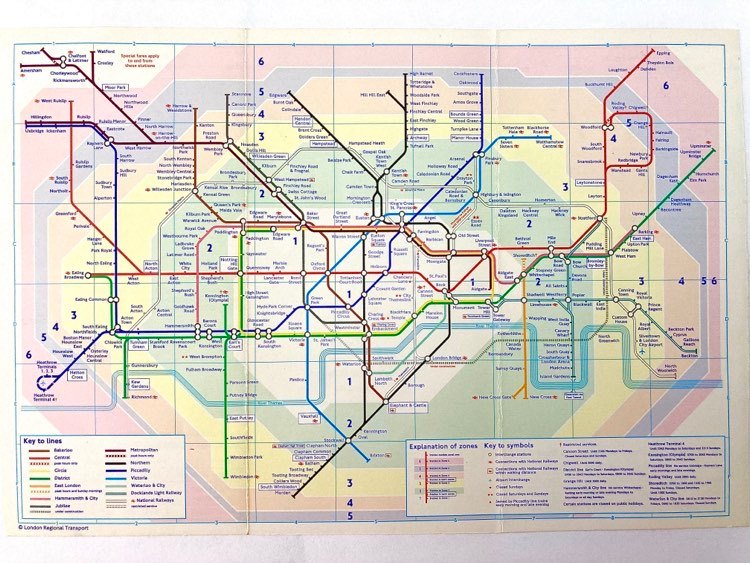
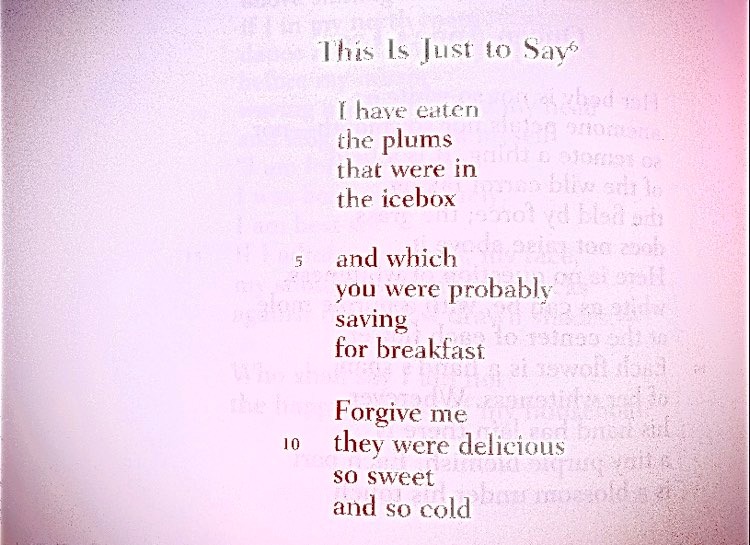
The Northern Line was busy. We squashed ourselves in to the tube, leaning against the crowd as it moved into the tube. Stood clear of the doors. Mind the gap. Doors closed. And the tube moved underground, beneath London. There had been a poem on the carriage that I had seen on my way to Earls Court that morning, and it appeared on that train again. Poems on the Underground had been an attempt to bring poetry to a wider audience of people as they used the tube system by including poems (classical and contemporary) among the advertisements on London Underground. There in the rocking carriage I read, “This is Just to Say” by William Carlos Williams:
I have eaten
the plums
that were in
the icebox
and which
you were probably
saving
for breakfast
Forgive me
they were delicious
so sweet
and so cold
At Leicester Square we decided to get off the Northern Line with the intention of catching the Piccadilly Line down to Earls Court. But as it was still early we walked over to Trafalgar Square. Each Sunday at early evening a brass band had been playing Christmas carols near the large Norwegian Pine Tree (gifted by Norway each Christmas since the end of the Second World War). It was only a short walk there from the tube station, and as there was still time we entered the National Gallery for the last fifteen minutes of its day. We walked into the Modern art section – which had been on the right hand side of the steps leading from Trafalgar Square. There we looked at the paintings and sculptures of Pablo Picasso, the sunflowers of Vincent van Gogh and a painting by Camille Pissarro that had always fascinated me for no real rhyme or reason ever since I first saw it: The Cotes des Boeufs at L’Hermitage (1877). As we left the Gallery, their gift shop was also closing; they were playing Van Morrison’s song Glad Tidings as we walked down the entrance steps and out into Trafalgar Square. It was now dark, and very cold. Traffic and headlights circled around the square. Moving coloured lights. We made our way down towards the Christmas Tree where a crowd of people had stood. We sat at the feet of one of the giant lion statues and listened to the brass band as they played carols. I remember that we all spoke about our childhoods, about where we had each of us had grown up and how Christmas always seemed a tangible link to the past (a world of blurred memories and feelings). And the brass band played and a choir sang and the black cabs and red double decker buses kept moving. And everything felt right. It felt like Christmas.

At Earls Court Station I said my goodbyes to my friends. We wished each other a Merry Christmas. They caught the line down to Putney and Wimbledon. I had to wait for the Richmond or Ealing Broadway route back to Barons Court. As their tube departed, I stood on the platform and waited for a while. But then something in me made me want to walk home instead. It wasn’t far. Maybe twenty minutes: out of the tube, turn right along Earls Court Road, turn right again and walk down the Old Brompton Road until it hit the North End Road in West Kensington and then home. About half way down I passed the Troubadour Café. As always, lights were on, tables were free, and it was just one of those places that you could go to and sit and eat or drink or sit and read or write. I usually went a couple of times each week at night. I’m sure I ordered something hot to drink that evening – maybe a coffee – and took a seat in one of the small booths beneath the rows of ceramic coffee pots that hung from the ceiling. Music always played in the Troubadour, and had always been part of its being. In the cellar where they held poetry nights and amateur plays, it was rumoured that during the 1960s Bob Dylan, Jimi Hendrix and the Rolling Stones had played there. Most evenings when I had gone there, classical music would sound until about ten o’clock, then the jazz would play. In the summer, with the front door wide open and the trees full of leaves, the jazz sounded amazing; it sounded right. This particular December night as I entered the café, they had been playing Camille Saint-Saens’ The Carnival of the Animals (Le Carnaval des Animaux, 1886). It sounded a good choice of music to reflect the cold outside. Frosted fairy lights twinkled coloured pinpricks of Christmas in the dark, and danced on the inside of the windows.
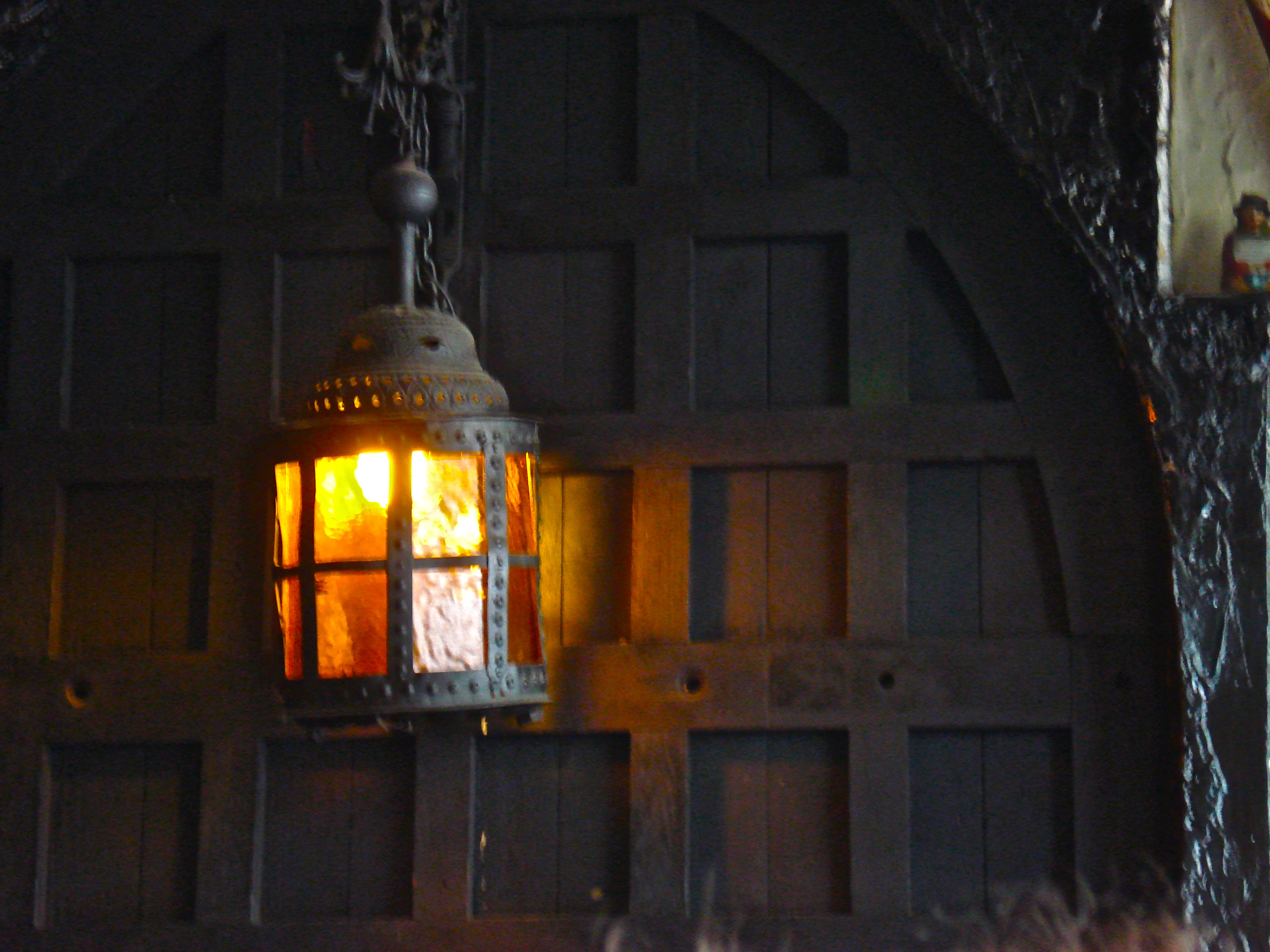
I stayed for the duration of the drink. The waitress wished me a Happy Christmas as I put on my coat to leave. The last song I had heard that night was Saint-Saens’ Aquarium movement. Out in the dark of the sky, with the brightness of the stars, frozen and transformed into shining glints of ice, it suddenly began to snow. Just a flurry. Snowflakes that fell for a few minutes. It was one of the most beautiful things I had ever seen in London. It had snowed, and it had snowed at Christmas. And all this had happened just a short distance from the Troubadour, outside the entrance to West Brompton cemetery. I stood still watching the snowflakes fall from the blackness above until a flash of colour appeared at my feet – the small, orange face of a fox emerged from between the railings of the cemetery gates. The fox looked up at me. Time stood still. I tried to stand as motionless as I could not to scare the animal or to ruin the moment. Snowflakes kept falling. Snowflakes fell from the dark sky. One landed on its black nose. And then it turned and darted off into the darkness. And with that I kept walking towards the North End Road. Walking in the cold of December.
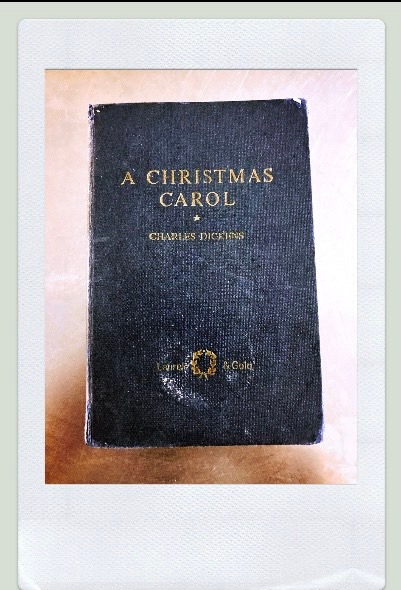
That weekend in December remains so vivid in my memory whenever I think of London and Christmas. Maybe because it was to be my last Christmas spent living there. At the time I had no way of knowing that; I had been so engrossed in living in the moments of each day and feeling content. At that time of my life I never thought I would leave London – I had been very happy there and it felt a very special place in which to write. But adventures have a habit of taking you towards other paths, along other outcomes, far from home, and these are the roads we now tread. And while the past can ache with an emotion of a time now gone, with people no longer at our side, the feelings like all opportunities always remain present in our hearts. One of the great epiphanies of Ebenezer Scrooge was such a realisation when alone with the Ghost of Christmas Present, that all aspects of time need to be embraced in order to honour our lives: “I will honour Christmas in my heart, and try to keep it all the year. I will live in the past, the present, and the future.”

*
 siesta del somewhere