Café au Pere Rousseau (Rue Caulaincourt, Montmartre)
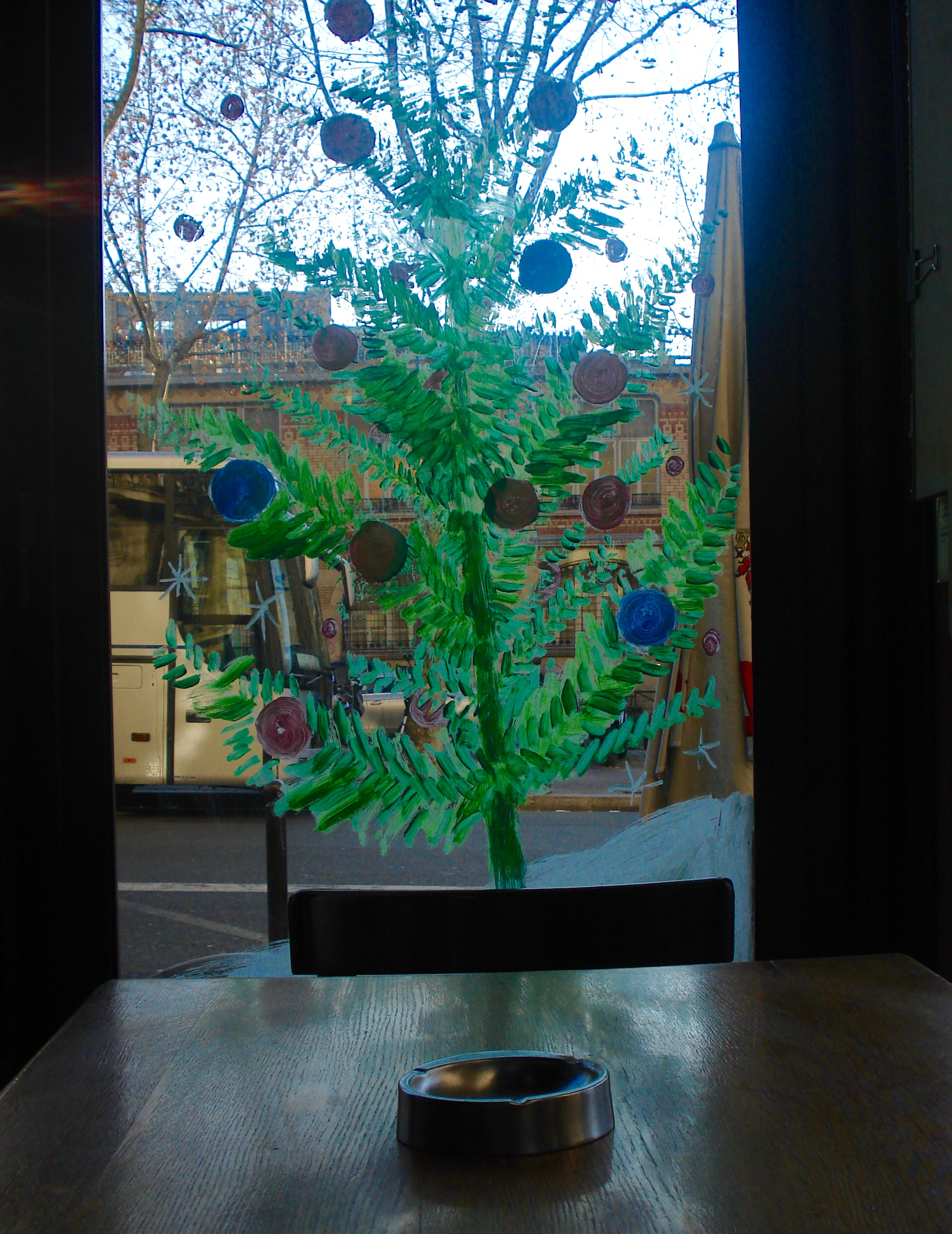
The morning had been stretched out across Montmartre for only a few hours. The December skies sparkled with winter sunlight, but because it angled up from such a low position near the horizon only the tallest rooftops felt the melting benefit. The numerous streets running off Boulevard de Clichy remained below zero in freezing shadows. Despite the brittle cold, the biting cold, Montmartre was filled with warmth. Shops were coloured and decorated ready for the advent of Christmas. There were lots of tinselled trimmings, starbursts of pinpricked coloured light and Joyeux Fêtes painted on shop windows. Pine trees stood outside in the frost.

People are walking, busy, going places. Christmas will be here within the week. Everywhere you look on this Saturday morning, people wear scarves. Woollen hats cover heads. Hands are in gloves, or in pockets. Pockets of hot air fur and curl in tumbling clouds above the Metro air-vents, rising up from underground alive with the sound of rumbling carriages approaching the Place de Clichy station. People are waiting to cross the road. An elderly couple stand patiently holding hands, clutching bags of shopping; one is dressed in a coat of brown leather, the other in a coat of tan suede. The trees above them are bare; there is no green left on any of the branches. A woman sits on the steps of a statue (she was there yesterday). All she has is a sign that reads ‘Aidez-moi’ (help me). All I had was an orange. She gave a blessing in exchange. Traffic slows down to a standstill. Lights change colour. People cross the road. A blackbird flies up towards the frozen sun.
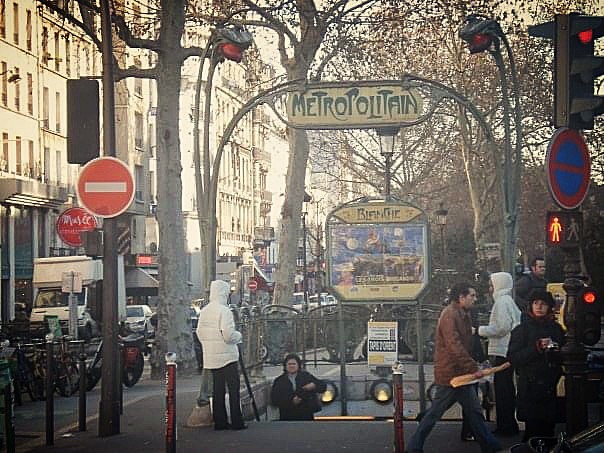
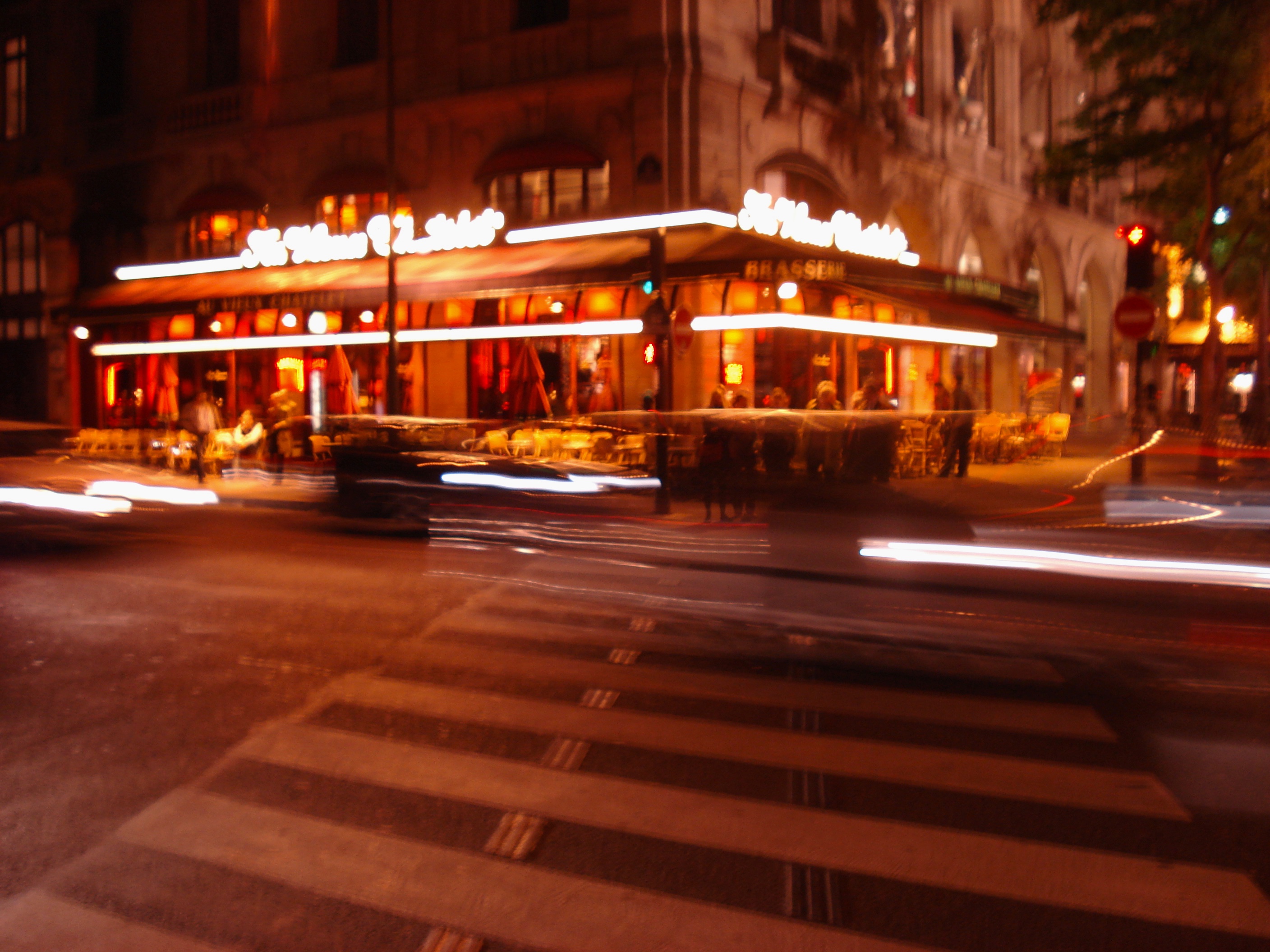
Brasseries and bistros beckon you in from the cold. This one on Rue Caulaincourt opened its doors at eleven. I had watched the owner clean its bay windows earlier this morning from my room. He polished them first from inside, before moving outdoors. Once this was done, he carried a bucket of hot, steaming water outside and cleaned the pavement in front of the café. Steam rose as he brushed the flagstones with a long broom. After he had finished, a large patch of white frost clung to the surface of the walkway. It is still there now (albeit pockmarked with footsteps of those who have passed by). The owner is making a coffee for an old man with no teeth and barely a voice standing behind me at the bar. Moments earlier three men walked in and ordered the first beers of the day. They sit at a table near the window, all looking out at the traffic. The cold seemed to follow them in, concealed and hidden inside the creases of their clothes before thawing into silence. My coffee has been drunk and I wait for my order to arrive (a baguette beurre jambon). It is quiet inside here. The front door opens and again a bell dings. An old woman in a large, red, padded coat struggles in carrying two large, plastic bags. She asks the owner if she may use the toilet. The owner of Au Pere Rousseau stops what he is doing and speaks in a quiet, soft voice ‘Of course.’ He helps her put down her bags, and directs her to the bathrooms. He returns to making coffee and produces an espresso for the old man behind me. It is thrown back in a second. My order arrives.
Words cannot convey just how cold this morning feels.

Église Saint Germain de Prés (Left Bank)
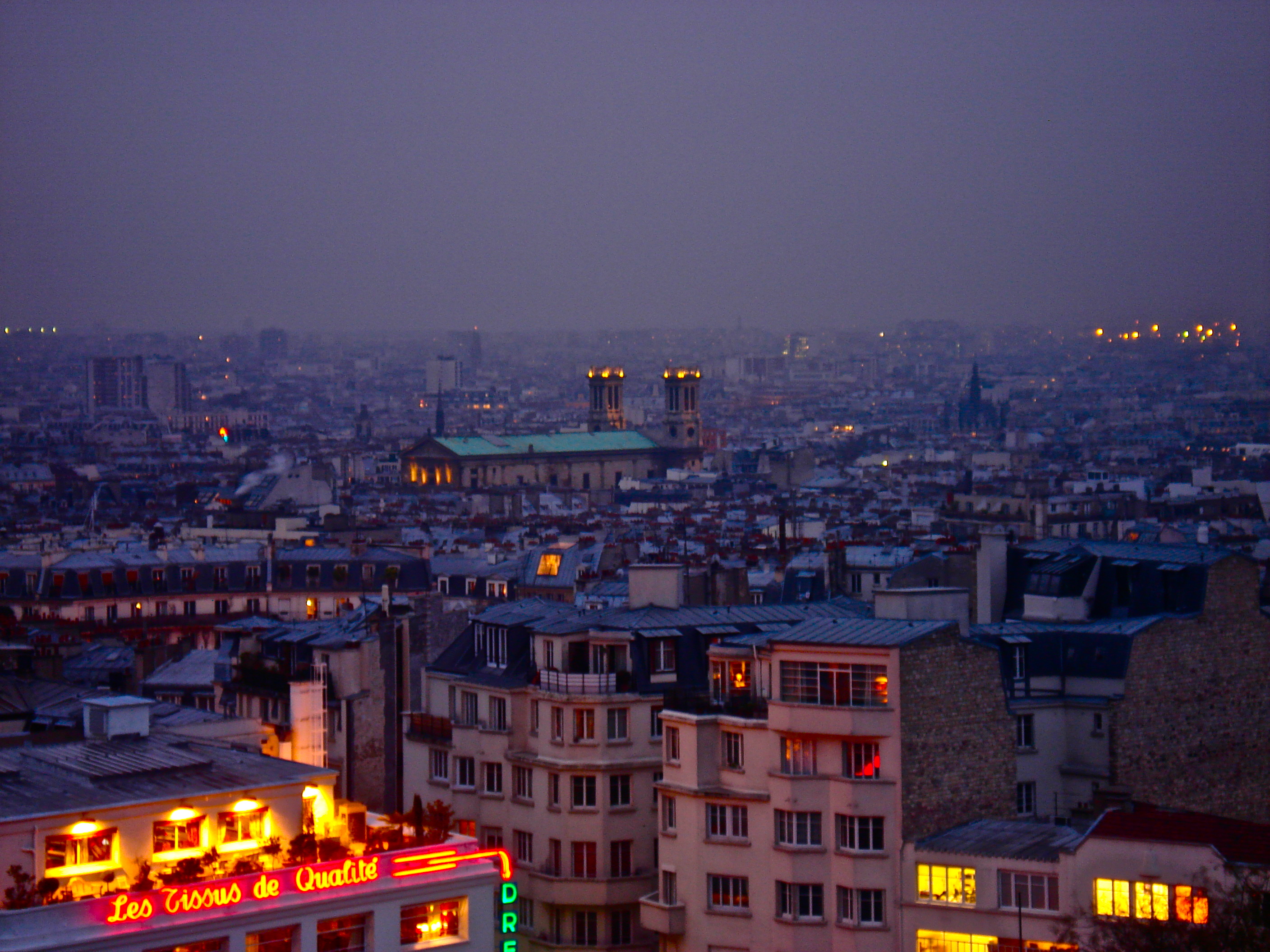
The day unravelled as the sun struggled to climb above the rooftops. I followed Rue Caulaincourt as it curled around the sloping sides of Montmartre, leading up to its summit. The street was longer that I had anticipated, and the laboured climb felt much steeper in the cold. Somewhere near the Moulin de la Galette I saw a street vendor in a small, mobile booth selling hot crêpes. I ordered and watched him pour a mixture of batter across a hot, flat iron. Steam rose. The griddle was circular and he used some kind of spatula smooth the batter, to make it round, so it cooked evenly. Then it was turned over and just before the cooked side began to smoke he added a broad stroke of nutella and a spoonful of chopped almonds, folding the snack up into quarters. The crêpe was hot in my hands and the chocolate melted as I ate it. Within a few minutes of walking the Sacré Coeur came into view (the basilica’s distinctive curved, white dome peered above the rooftops and floated up into the sunlight). Despite the cold there were lots of people milling about outside – tourists, priests, nuns, locals – pushing in together through a doorway to shuffle into the candlelit warmth of the church. Outside were numerous spaces to sit or stand and look out across the city. I sat on some steps to finish eating my crêpe. It was a wonderful view, facing out over a frozen Paris. The difference in height gave the appearance that the entire city was hibernating in a valley frozen in sub-zero shadows. Fog hung along the horizon. Steam and smoke rose from occasional chimneys. Coloured lights lit up pockets of freezing gloom. December sunlight only managed to touch the green roof and twin spires of Notre Dame and illuminate the Grand Palais and Eiffel Tower. Paris stretches out so far and wide from this vista.
The steps in front of the Sacré Coeur led down to where Boulevard Clichy met Pigalle. There was a metro station there called Anvers. It moved sideways across the city towards Gare du Nord (away from Place de Clichy). I journeyed underground, changing lines at Barbés Rouchechoart in order to travel south towards the Seine and the Cité station. From there it was a short walk across the two islands in the middle of the river: l’Île de la Cité and l’Île Saint Louis. Both were alive with people and colour. There were Christmas shoppers mingling with Saturday shoppers; tourists alongside locals. I visited a few shops, buying cheeses and wine, things to eat, things to share, gifts to give for Christmas. The wind stung as it blew across the Seine. The sun looked so tired, so distant, so far away. The narrow streets on l’Île Saint Louis provided some shelter from the wind, but eventually they gave way Pont de Sully and having crossed the river, I followed Boulevard Saint-Germain as it moved through the Left Bank. Outside the abbey of Saint-Germain-des-Prés a Christmas market had been erected – rows of small, wooden stalls all lit up with fairy lights, tinsel and holly. Chocolates, scarves and tobacco were some of the things I saw for sale. The open square was blazing bright with roasted chestnuts for sale. Blue lights shone in decoration from the surrounding trees. The abbey had loudspeakers outside, broadcasting songs from inside.

To escape the cold for a moment, I pushed open the main door and sat near the back of the church. Warm and candlelit, it was filled with the scent of incense and muffled sounds of the congregation listening to a mass in Spanish. Songs were being sung accompanied with a guitarist. I sat through the remainder of the service, near the back. As it finished, more people filled in from the cold; the French mass began almost immediately. I was too content to move, so stayed where I was. This service lasted about an hour. A choir sang, prayers were given and an elderly priest delivered a sermon in which he spoke about the need for us all to exercise patience and tolerance at this time of year. He spoke quietly but with authority about how Christmas is not always as it appears on television or Hollywood; that Christmas, while a time of celebration, can bring up difficult emotions for others. Hence the need for our patience for all those around us. After the mass, it felt time to head back to Montmartre. It was now dark outside. The sun had set. I began to navigate my route back to Place de Clichy (criss-crossing my way beneath the Left Bank and Saint Germain-des-Prés along a couple of connecting stations all the while heading north).
Words cannot convey just how cold this evening feels.

Le Carolus (Boulevard de Clichy, Montmartre)
The light from the Eiffel Tower spins around in the darkness, dancing across the rooftops of Paris and out into the endless reaches of the frosted night sky. Passing by Le Carolus – a bar on Boulevard de Clichy – I enter and sit at the long bar (marble topped, polished and clean with a curling brass bar-rail running all around). Everything is clean and is warm. Colours dance and blend in the tinsel and candlelight. Rugby is shown muted on a large TV screen (a match between Montpellier and Petrarca). Music sounds from a radio behind the bar. It plays a song called ‘Falling’ by Julee Cruise. Somehow the song feels right, fits the evening. People are relaxed and talking, the guy next to me is reading a newspaper, the kitchen sizzles within the stove of an orange glow. Busy hands are working: polishing glasses, delivering food, cleaning cutlery. A waitress walks out from the kitchen feigning injury in an act of theatre to melt the heart of the owner (a big, bearded man who stands behind the bar with his arms folded). He watches her approach. A small game of affection breaks out. She tells him she has been burnt, and holds her hand out to show him. His eyes drop down to the hand. He looks unimpressed. She says something and playfully flutters her eyelashes. His arms remain folded. The pair lock eye contact – her smiling, him impassive. Time stands still. A customer sneezes. Then the big man, the owner, cracks his poker-face façade and breaks out into a loud laugh through his black beard – he grabs both her cheeks and plants a kiss on her lips, she wraps her arms around his wide midriff and the pair hold an embrace. She walks off into the service area smiling, her ‘injured’ hand swinging at her side. He watches her walk off, smiles, and lights up a cigarette.

Outside the bar, walking back to my room along Boulevard de Clichy, I walk a little further towards Pigalle. The Moulin Rouge was lit up in warm, red neon and light bulbs. It looked so striking in the dark. Tourists and locals walked past – some stopping to take photographs. Words cannot convey just how cold this night feels. The newspaper, which had been read by the man at the bar, had a map of France and forecasted that temperatures would drop to -4.c tonight.
As I write, words cannot convey how cold it is outside.
*




 siesta del somewhere