36 – Yoga Ma (Thailand)

In Thai language the word for dog is หมา and when pronounced it sounds like ‘ma.’ Often the a sound is long and held a little before ending with a rising tone.

Yoga Ma – Picture by denpa.fit (September 2025)

Towards the far end of AoNang beach – near the little shrine at the foot of the Monkey Trail – there were yoga classes held each day at sunrise and sunset.  Having booked in for a morning class, I had arrived early and so waited near where I had seen the class advertised. I leant against a small wall facing the beach. While it had been raining when I first woke, the morning was overcast with rolling clouds, grey and thick, curdling low above the ocean. This was low season – or rainy season – when downpours and electrical storms were more frequent. Despite this, it remained warm and humid. Many relaxing afternoons had been spent under cover watching the rain and listening to it fall in AoNang.

It had taken me ten minutes to walk to that spot from my hotel along the shoreline. The beach was quiet. A few tourists were walking on the sand. There were about three or four elderly women crouched close to the ground digging for shellfish in the wet sand. They each wore pink headscarves as coverings, and collected whatever they found into small, plastic buckets. Their hunched bodies moved in silence across the shoreline. Behind them, an imposing ridge of limestone rock towered above the trees and hotels reaching out into the Andaman Sea – cutting off that end of AoNang from the neighbouring beaches of Railay and AoNam Mao.
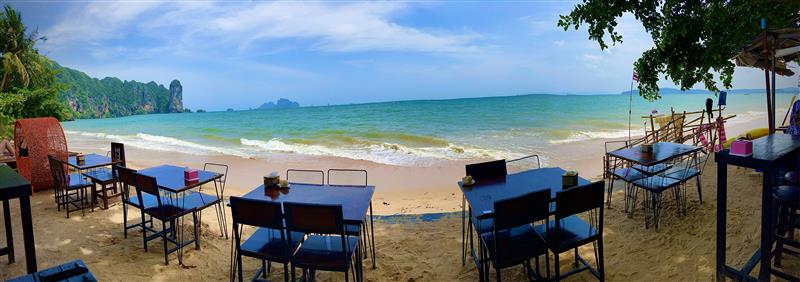
Outside Plaifa Restaurant – Picture by Karl Powell (August 2025)

A continuous warm breeze blew in offshore carrying the sounds of long tail boats labouring against the receding waves. In the shallows, a fisherman waded out waist deep into the Andaman Sea with bundles of red nets in his arms. I couldn’t tell if he was laying the nets or unravelling them in the water. The waves were breaking all around him, moving so fast, full of sound. Out on the horizon there were three or four islands, their outlines fixed and unmoveable. Koh Poda, the largest of them, was directly in front of me.

Early morning AoNang Beach – Picture by Karl Powell (August 2025)

A gust of wind made the wooden wind chimes hanging behind me rattle and echo. They belonged to the restaurant whose wall I was leaning up against: Plaifa. Its signs and menus sleep stacked up on the empty counter and closed kitchen (they opened for breakfast later in the morning). Plaifa had lots of aloe vera growing in short, fat pots outside an area between its service area and the next restaurant. Birds the size of matchboxes chirped and hopped about the pockmarked sand and fallen frangipani flowers there. Light struggled through the flat, broad leaves of the trees surrounding the restaurant. Dappled patches of shade moved on the ground as the wind blew in off the ocean. The scent of jasmine incense being burnt was present in the air for a brevity in time before the humidity and rolling waves overtook the senses.

Looking out all around me the two dominating colours were grey and green. Overcast grey, tropical green.
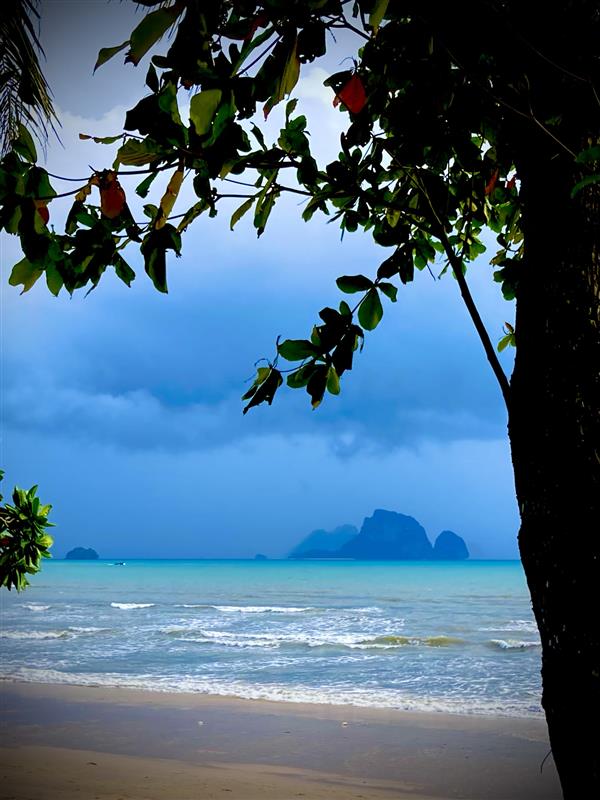
Storm at Sea – Picture by Karl Powell (September 2025)

The sound of a motorbike revved out of the silence. The bike travelled along a side road, and cut across a small stone bridge across a river, and parked at the side of Plaifa. A woman with long black hair tied behind her head, got off the bike which was fashioned with an open, roofed side carriage (like a tuk tuk). There it had carried a basket of towels and several black yoga mats rolled up together. This was to be the yoga instructor. Moving fast, she placed the basket and mats on the ground, beneath a tree, before making a couple of trips to carry all onto the beach. In no time she had done this and planted a tall, red flag nearby advertising her yoga class.

I moved down from the small wall to introduce myself to the instructor. She wore a red singlet and blue leggings and by the time I reached her, she was already setting up the mats on the beach. I offered if I could help her set up.

No need, she said, all ok.

The instructor rolled out four grass mats onto the sand, before placing a similar number of smaller, yoga mats on top. On top of each was placed a red hand towel with a bottle of water. There would be three others doing the class with me.

As the instructor set up her own mat – directly facing us with her back to the ocean – a girl walked along the beach to join the class. She introduced herself – she was travelling around Thailand and had come from China. As we all began chatting, a couple walked along the front of the restaurants (where I had just been) and dropped down on the sand. They were two Londoners repeating the class and knew the instructor – having first arrived in Krabi a few weeks earlier before spending some time over in Koh Samui and had now returned.

As we were now all present, the class could begin.

We were invited to sit down on a yoga mat. The instructor formally introduced herself and provided some information about herself, where in Thailand she was from, her own personal journey with yoga and what we would be doing in the class: some breathing exercises; stretches, twists and balancing poses (asanas); and, finish with a shavasana (or meditation). We all sat on our mats facing the instructor and the ocean. We were told to close our eyes.

Before the Yoga Class – Picture by Karl Powell (August 2025)

Our first practice was something called Nadi Shodhana. It was a practice of being seated and breathing in through one nostril and breathing out through the other. It was a practice used to still the mind and body, in preparation for yoga. We were each guided and shown how to do this: to rest our left hand on our knees and using our right hand to alternate the index finger and thumb in closing off our nostrils as we breathed. We brought our hands up and closed our left nostril and inhaled deeply and slowly through our right nostril. The instructor counted to four. We then pinched both nostrils closed and held our breath as the instructor counted again. Then we were told to release the left nostril and to breathe out slowly to a count of six. The practice then switched sides; we breathed in through our left nostril, pinched closed both nostrils and held our breath, before exhaling through our right.
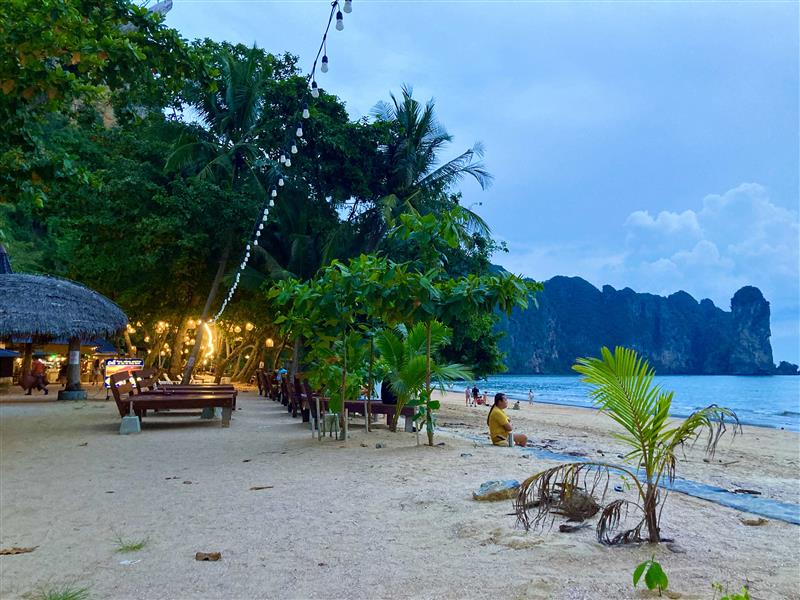
Chilling outside Plaifa Restaurant – Picture by Karl Powell (August 2025)

We practised this breathing technique several times. During the practice we were told it was a method to help calm the mind and calm the nervous system. In the thick humidity of the beach I laboured with this and felt my lungs begin to burn. Holding my breath was proving so difficult. Beads of sweat became more prominent on my skin. I felt sweat run down my forehead. I could hear my heart beating hard within my body, sounding with exaggerated thumps in my hearing. I kept my eyes closed and tried hard to follow the instructor’s count to breathe but I struggled and found myself needing to gasp and sip at the air. I couldn’t tell if it was my inexperience with the technique or the heat and humidity of being outside on the beach. Even though there was no sunshine that morning, the humidity had a presence and it felt as though it was building.

The practice was then cut short. I felt a sudden thump in my ribs and torso at the same time I heard a scream. Eyes open I saw myself as part of a tangle of limbs: the Chinese girl had crashed into me, lunging away from a wild dog that had encroached on her mat and now lay down on the sand.

It’s ok, it’s ok, said the instructor. This dog always comes here. He likes to join in meditation. He’s a good dog, not nasty, never bites, but always causing trouble.

The dog belonged to a group of dogs that seemed to live on the beach, never charging or bothering people; sometimes they barked. The dog seemed placid and at ease. If I had to guess, it looked like a small Labrador with thickish fur. It had a mixture of gold and black fur (its back, face and ears were black while its belly and legs were gold). Uninterested in us, the dog rested its gaze up the length of the beach laying on its stomach with its elbows bent – almost in a Sphinx pose.

The instructor told us not to worry about the dog. Just let him lay down, ignore him and he soon will go. He is a good dog. Has a good heart: ‘jai dee.’ She then told us in Thai language the word for dog was ‘ma.’

Trusting the instructor, we went back to our breathing exercises. When we had finished and opened our eyes again we noticed that the dog had gone. None of us had heard him leave (a trail of paw prints in the sand suggested that he had headed back up the beach).

With this aspect of the class complete, the instructor took us through the rest of the practice. This was the most challenging and demanding sequence. We did all sorts of poses and balances (seated and standing) such as the warrior and triangle poses. There were lots of twists – holding our bodies still as we tried to breathe space into any physical limitations we had on that morning.

Waiting for the Storm – Picture by Karl Powell (August 2025)

During one pose I looked out at the ocean. My perception of everything felt slower. The sea was changing colour before my eyes. Greens, blues and a kind of luminous shade of jade. Clouds had continued to build – as had the humidity. I felt drops of rain begin to fall on me. A sheet of cobalt blur drifted across the ocean. At first this seemed to be moving across the horizon, almost parallel to the shore, then one by one the islands in front of us began to fade. At first, they became outlines, then disappeared behind a curtain of mist. The more the wind gathered, I could begin to see the long, thin shadows of rain falling. This was a downpour moving towards the shore. Some tourists stood in the shallows of the ocean, all photographing the changing colours. A small child and a grandfather were walking nearby holding hands when suddenly the child broke free and ran to the ocean. There he had found something and held it aloft in his hand. He showed it to his grandfather and ran back to the ocean – skipping occasionally – before throwing whatever it was back into the rolling surf.
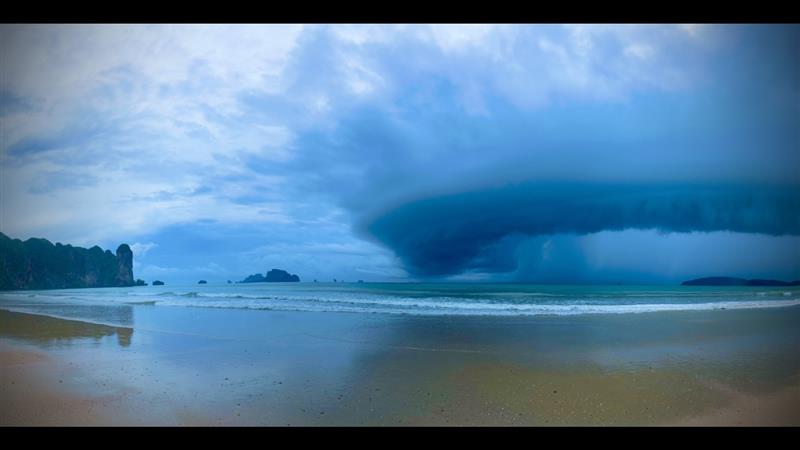
Storm AoNang – Picture by Karl Powell (July 2023)

Then a sudden gust of wind hit us like a wall of noise. The winds sounded loud and howled. Thunder rumbled somewhere in the distance. There was no horizon only grey. The instructor abandoned the class for a moment. We all ran, taking cover beneath the trees and bushes near Plaifa. Safe, we stopped – laughing, panting, listening to the downpour of rain on palm leaves over our heads. We saw the gang of stray dogs running further up the beach, seeking shelter near some massage huts towards the hotels.

And so, the rain fell. And it kept falling. At first the noise was deafening. The surface of the ocean danced and vibrated with concentric circles of rain – patterns appearing everywhere all at once then gone in an instant. The downpour muffled all other noises. The world for that moment sounded and felt so different. Visibility changed. The large limestone rocks at the end of the beach were obscured – just shades of green and grey. At my feet, small puddles of water formed in the wet sand. The small birds I’d seen hopping about earlier now hid in the upper branches, finding pockets of sanctuary, and struggled to balance as the wind continued to blow in gusts.

Then eventually, rain began to ease off before resting at a steady drizzle. Thunder continued to sound but was far away. The instructor gave us option of going to the yoga studio up in the town to continue the class there. But we were all happy to finish the remainder of the class under the trees and foliage we had camped beneath. We were already wet and there wasn’t long left of the practice. And so, this is what we did.

Plaifa Restaurant – Picture by Karl Powell (August 2025)

We continued with our class in a final flow of poses and balances. It felt so nice to be standing still and so fully present as the sound of rain tapped the banana palms and frangipani trees around us. The green of the limestone ridge and its trees seemed to come alive with a vibrancy I’d not appreciated before. Everything shone with a sheen and glossiness. I looked above me. At the trees. One trunk was covered in vine weepers, which curled and wrapped itself around the main stem before moving off onto other branches. Some branches were thicker than some of the tree trunks around us. Another gust of wind moved them in unison. Raindrops fell in concert landing on us and the wet sand. Many leaves managed to hold on the raindrops which seemed to sparkle with life as the light shone through them as the swayed on the moving leaves. The wind blew cooler air across the sea, dispersing the humidity. A large black and white butterfly flew between the raindrops, across my sight of vision until it disappeared into the dark green leaves.

I managed to look out again at the ocean. The whole body of water seemed calmer now, the waves moving as a single moving force breathing in and breathing out, collapsing as small waves onto the shallows at the shoreline.

As the class neared its end, the instructor asked us to stand motionless and to close our eyes. We were asked to just observe what we felt within and to be a witness to that.

I can remember closing my eyes. Standing there without thought. Just breathing in the warm, dense air. I can remember feeling the oxygen moving through my body and we began moving our arms over our heads, then in a circular motion down towards the sand, then back up towards the sky. We did this several times. Breathing. Eyes closed. Listening to the ocean. Listening to the rain falling on flat leaves. Everything felt centred. I could hear the waves of the ocean roaring towards shore. I could feel how wet my clothes were against my skin. I felt the warmth of the sea breeze continuing to blow. I felt contentment. I needed nothing. We kept moving our arms in circles. My body felt lighter, alive in movement, liberated by the breath moving within it. We were told to inhale and exhale in sync as we moved our bodies.
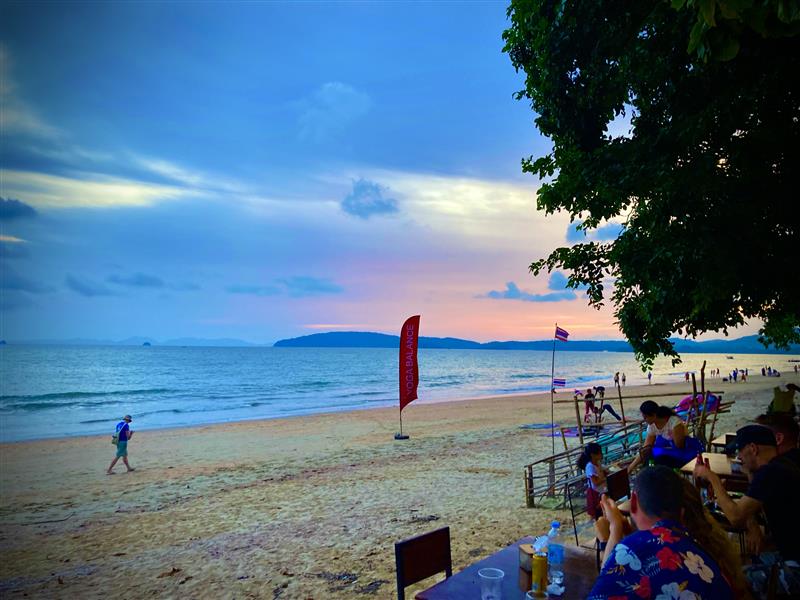
Yoga on the Beach – Picture by Karl Powell (July 2024)

Then we were told to stop. And to just stand still. Keep your eyes closed. Everything was black. I could hear the ocean. I could hear the wind. I knew I was standing on the beach but it was as if I was no longer within the body. There was no sensation of floating. There was no sensation of euphoria. It just felt as if I belonged to that moment in time. An intense belonging and harmony. As if I was a part of time and space (no longer a separate entity). There was energy within everything on that beach; the wind, the rain, the ocean, the sounds, the sand, all the people around me, all the animals on the beach – we all were united in that moment and belonged. And that belonging was its own sacred energy – alive in me, moving through all.

Belonging. No separateness. Oneness.

When I opened my eyes, I watched a wave come out of the depths of the ocean. I watched it rise up then crash onto the shore. It fell face first onto the wet sand. It became stillness. Then it seemed to move backwards, scooped up and dragged back by the tide of the sea. I watched it change into a new wave, rising above an oncoming swell before it disappeared back into the depths once again.  Belonging. No separateness. Oneness.

Koh Poda – Picture by Karl Powell (August 2025)

Finally, the instructor prepared us for shavasana. We returned to sitting on our mats and were again instructed to close our eyes.  We were guided through a set of breathing exercises. Filling our lungs with air. Asked to hold our breath. Then allowed to breath out through our mouth. This was repeated several times until we were told to return to allowing our own bodies to breathe. With eyes closed we sat in silence. I felt a feeling of contentment again. Of peace and happiness and belonging.  Then, keeping the eyes closed, we were told to rub our palms together to create heat. To keep rubbing and then place our palms over our eyes, then onto our shoulders. We were told to: send good energy out into the world – to our family, to our friends, to our parents, to our siblings, to all animals, to all beings, to ourselves.

Then the instructor sang Aum. It rose from within her. The sound resonated and reverberated. I had heard singing bowls do the same with a rising vibration – but the instructor was doing this with her voice. I could feel the vibration of sound moving through my body, through my chest. She sang this Aum three times. Each time as powerful as the first. Then when she had finished, we remained in silence before she asked us to gently open our eyes.

Waves were rolling ashore from the ocean. The sky was still overcast with clouds making the colours of the ocean jade in colour. At the end of the beach, the ridge of limestone rocks remained standing in the waters of the Andaman Sea. Longtail boats continued to streak across the ocean moving towards Railay Beach and AoNam Mao Pier. Chunks of cumulus cloud drifted along the horizon. Raindrops hung from branches like jewels.
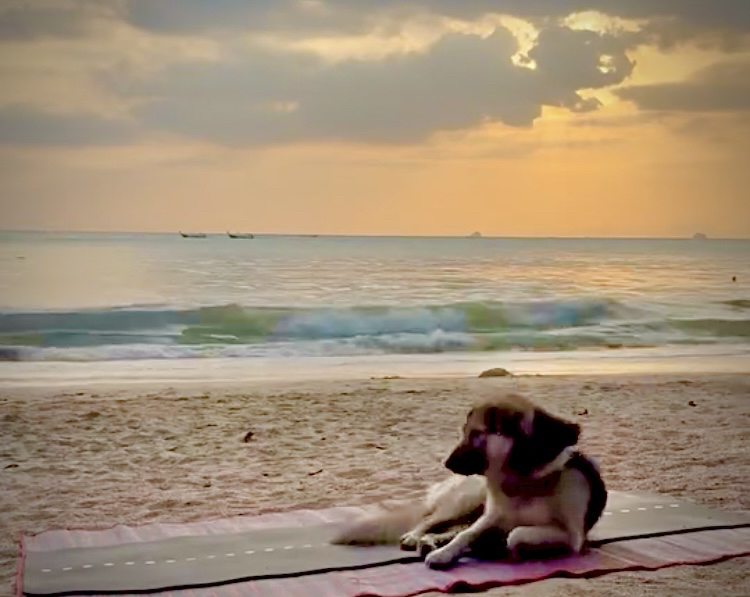
Yoga Ma Chilling – Picture by denpa.fit (December 2025)

And there laying on the beach, the dog had returned to the class (in meditation)

*

Yoga Balance AoNang:
web: https://www.yogabalancethailand.com/
contact:yogabalancethailand@gmail.com

Classes: AoNang Beach (Mon-Sun)
Morning Class 7:30 am – 9:00 am
Evening Class 5:15 pm – 6:45 pm
35 – Galle (Sri Lanka)

Image by Karl Powell (Galle, 2013)

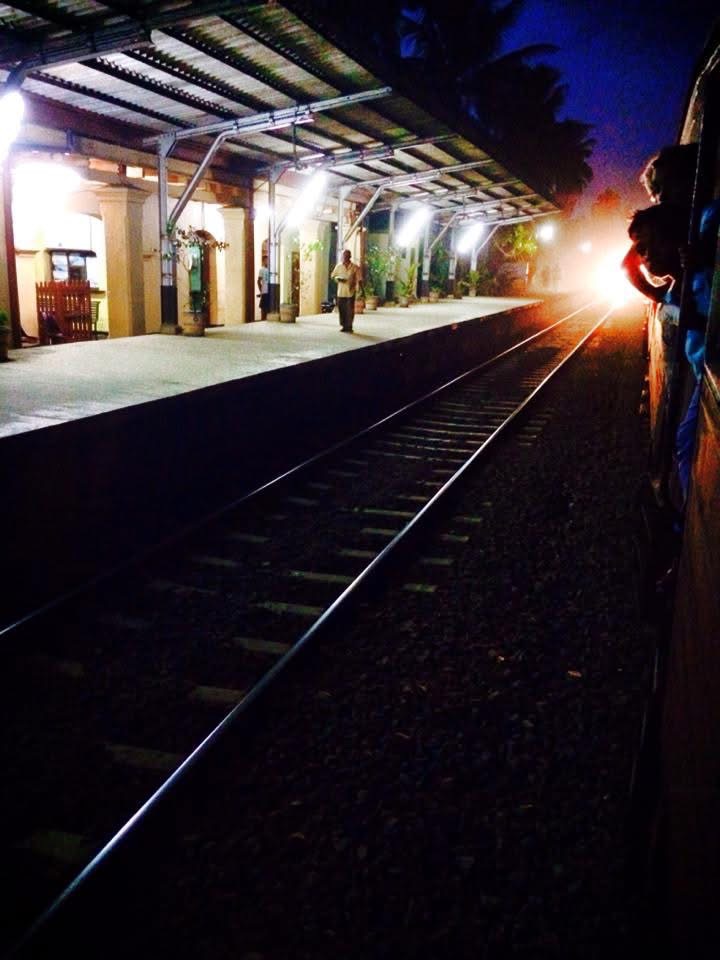
The train stopped in the dark. The sun had set across the Indian Ocean a few stations ago and now the world was bruising into an indigo of evening. Silhouettes of palm tress were visible, overhanging above the station’s heavy, metallic roof. A few stars peered into our world. The station’s platform was illuminated by several electrical lights, showing off the station walls which were painted in pastel yellows and pinks, and decorated with fat, round pots of green palm plants encamped at the base of each supporting girder – holding up the heavy metallic roof.

The platform was empty; it was neat and clean and looked welcoming from the stillness of my stationary train. A solitary man stood centre-stage at the edge of the platform; well-dressed in shirt and trousers, one arm folded across his chest supporting the other arm that acted as a support for his chin. The man looked into the darkness that we had been journeying towards.

Moments earlier we had pulled into this station on our train from Galle. I was reurning to Aluthgama. Expecting the train to move on after alighting, it instead began to move backwards. Slowly at first. It bumped to a halt having cleared the platform then shunted forwards onto a central track – a no-man’s land of three lines running parallel to the little station. Here we stopped. Standing in the dark. Without announcements. Here we wait. Kept company by the stillness of the night. 

Image by Karl Powell (Waiting for the Train, 2013)

I had spent the day in Galle (and was happy I had done so). I had actually visited the fort town a week earlier – as part of an organised tour, orchestrated by a guide who had pointed here and directed our attention there. I had grown frustrated on the tour, as Galle had struck me as one of those places that asks you to stay longer in its streets, to walk and wander along its shade and sunlight. During the tour, part of me wished I had booked a reservation to stay there instead. Galle struck me as somewhere unique – something that could not be found anywhere else. It had a vibrancy and sense of community encased within its walled streets as it sat on the coast of the Indian Ocean (it even had its own lighthouse). During the tour all I could think about was returning here, to spend more time, maybe a week or two, a period of time, to stay there with a blank notebook and to see what stories, ideas or daydreams ended up on paper.

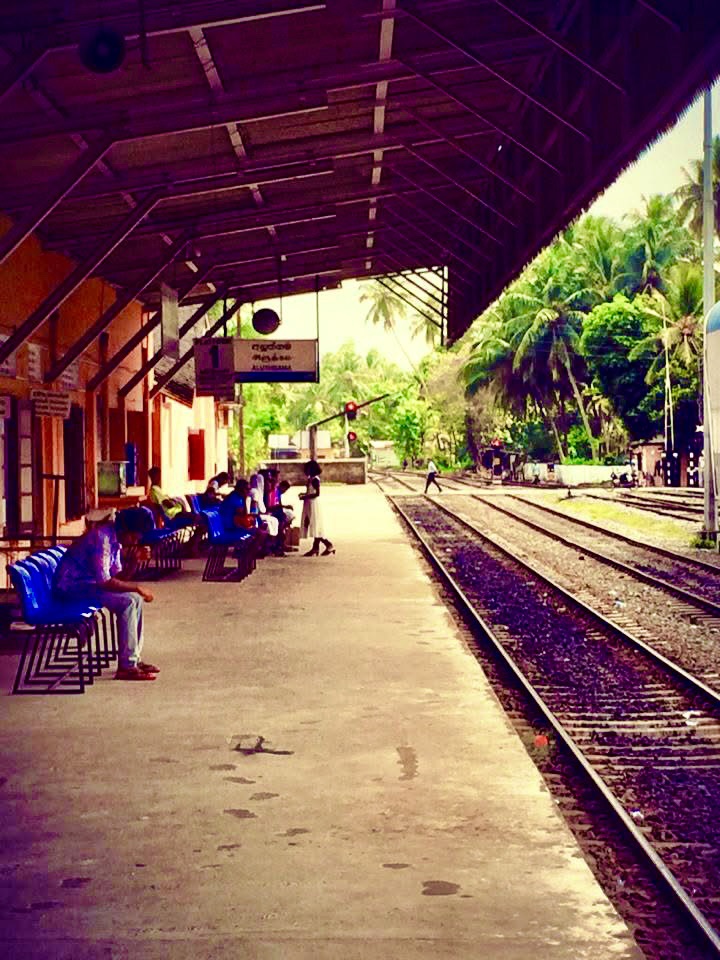
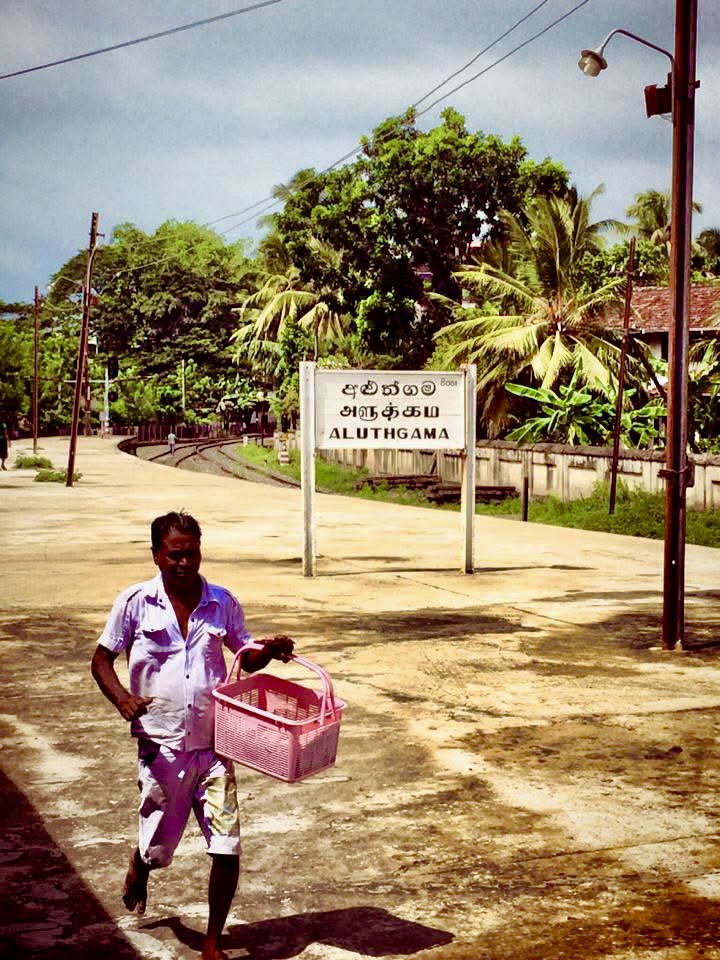
And so, today had begun with buying a ticket to Galle from Aluthgama early in the morning. It had cost me 55 SRL Rupees. The ticket was small (about the size of half my thumb), but made from thick, durable purple card. I had bought it at a small, manned ticket office at the station itself (which was only a two-minute tuk-tuk ride from my hotel). The station had orange walls and a large sloping roof that covered the platform and even the passing rails. 

Image by Karl Powell (At Aluthgama Station, 2013)

The train to Galle arrived on time. A tannoy announcement was made on the platform in Sinhalese and a few moments later a large, claret coloured diesel train appeared from out of the vanishing point where the illusion of parallel train tracks seem to meet and thundered into view. It blared its horn. The heavy locomotive pulled a stream of red carriages behind it. A stranger on the platform advised me in the collective commotion to board, which carriage I needed as the train pulled in. 

Image by Karl Powell (Boarding the Train, 2013)

The journey to Galle took just over an hour. This was an express train – only taking a limited number of stops along the southern coast of Sri Lanka. The track cut through countryside, villages, moving onwards the terminus, keeping parallel to the Galle Road and the Indian Ocean. Small fires burnt outside homes, colouring the green backdrop of palms and plants with dense, heavy patches of haze, humidity and grey smoke. Occasionally we passed people walking in both directions along the wooden sleepers between the train tracks. When the line opened out towards the ocean, the churning surf created great rainbows thrown into the air as the saltwater spray crashed onto the shore.

Image by Karl Powell (Walk the Line, 2013)

The carriage was packed tight. For a while I stood near the open doorway of the train. People around me held onto handrails as the train gathered speed. The moving air rushed inside the carriage making the task to stay onboard a challenge. As the train began to empty along its various stops, I eventually found a seat at an open window.

There was a good mix of tourists and locals on the train – a group of Japanese girls travelling together took photographs inside the carriage striking poses for the camera, flashing peace signs in each one.  

Image by Karl Powell (Train Ride to Galle, 2013)

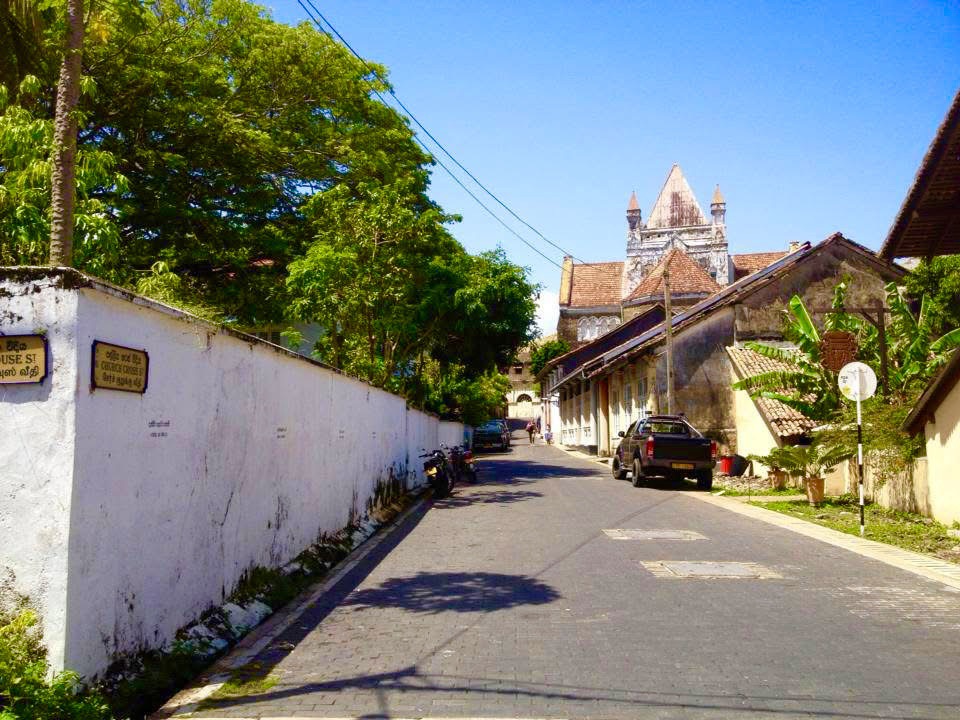
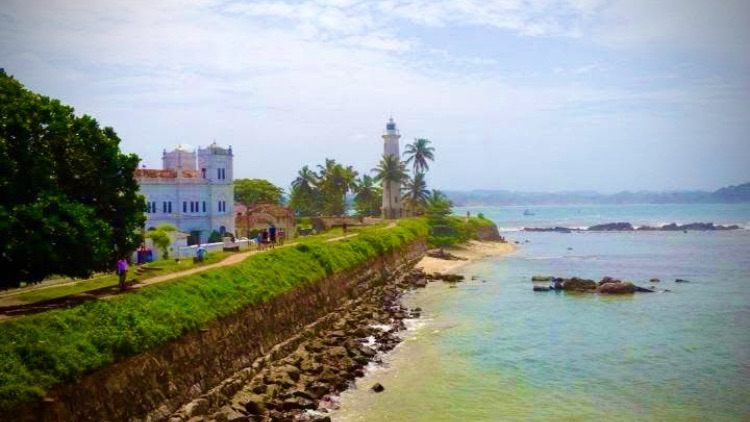
When the train arrived at Galle it did so in the middle of the confusion of midday. Galle was a busy station. Despite having a handmade map to navigate out of the train station to the fort, things were an immediate blur of moving swirls (traffic, heat, unfamiliarities and footsteps). I made my way to a large roundabout, then curled around it before heading into Galle Fort through the shade of the Main Gate – an archway in a stone wall between the Sun and Moon Bastions. This was a fortified town with narrow streets, cafes, guest houses, shops and homes. From this entrance, all roads led down towards the whitewashed lighthouse that stood on grass ramparts facing out to sea. I followed the first street that met me – there were lots of places open and serving meals.

I found a café and sat inside its shade looking out onto Church Street. I ordered coffee and something to eat. It was cool and quiet inside. I sat and wrote at a table for a good hour or so. I enjoyed being inside the building; I liked the fact it had orange walls, a brick floor and wooden slats on the window which seemed to let in a sea breeze without any of the heat of the day. Here, I wrote sketches – passing sights, sounds and impressions of Galle from that café. There was something about Galle that I found beautiful – no rational reason – just a feeling it gave me. It was a place I kept telling myself that I would come back to one day – to spend a chunk of time there solely to write.

After coffee I walked around and found some art shops, souvenir shops, took some photographs of the streets and houses. I had no real plans. It was just a free afternoon to meander until the five o’clock train back. 

Image by Karl Powell (Streets inside Galle Fort, 2013)

At the far end of the Galle Fort was the lighthouse. It stood like a white obelisk against the blues of the sky and Indian Ocean. It towered above a clump of palm trees which grew around it, sat on top of a grassy verge or rampart which was wide enough to walk along – giving an elevated view of both ocean and Galle. I walked along here, taking what photographs I could of the view. Sunlight moved through the body of water in the shallows – shimmering blues and greens in ripples. The afternoon was hot. Peanut sellers sold small packets of nuts alongside ice-cream vendors parked on the roadside.I bought both. 

Opposite the lighthouse was a large, white two-storied mosque. The holy month of Ramadan had just finished. There were men and boys milling about outside, lifting cardboard boxes full of tinned foods and rice from a van and carrying them into an adjacent building. They smiled and said hello as I walked past. A conversation began; they were preparing food parcels to give to families who were less well-off. All were undertaking this work on a voluntary basis (the children were doing so on their school holidays). As we chatted, they asked me about my travels, where I was from, where I was going, if I had liked Sri Lanka – they invited me inside for some water. 

Image by Karl Powell (Houses inside Galle Fort, 2013)

Layers of wide slabbed steps led up to the mosque’s entrance. From white heat into shade. The mosque felt cool and serene inside. The sound of birdsong echoed in from surrounding gardens. There was a large, open prayer room towards the back of the building. Bookcases stood against one side of a wall. I was invited to sit at one of the many benches inside the shade. Circular fans blew cool air downwards. Somebody brought me a bottle of cold water. Beads of condensation ran down the bottle into my hand. There, in that pocket of time, we all introduced ourselves; they told me about their lives, I told them about mine. An Imam came and sat nearby to listen to the exchange. 

There was a large, framed document on the wall behind me. I read it before I left: it was the Prophet’s last sermon and had been printed in Arabic, Sinhalese and English. The words were lovely. Long afterwards, the more I thought about what had I read that afternoon, the more I realised that all messengers of God express a truth from a Divine Source; only the names are different, the message is almost always the same – to love.

Image by Karl Powell (Passing Train, 2013)

When it was time to leave, photographs were taken on the steps together (including a group one on the steps outside the mosque). We exchanged contact details and thanked each other for the serendipity in our meeting – hoping to meet again in the future. They offered to take me back to the train station but I was confident of getting there myself. A man called Feisal gave me his card – stating he was a storyteller who owned a gemstone shop nearby. On my way back to the train station I bought a map of the area. It was a large, oversized postcard of Galle from a souvenir shop. I did it so I would never forget this day and that I could remember as much of it as I could for as long as possible. 

At the station, I bought my return ticket back to Aluthgama. There was enough time to buy some samosas from a vendor near the platform (the home-cooked food wrapped in pages of a student’s homework and advertisements from a newspaper) before the train hauled itself out of Galle. As we meandered alongside the beaches and shorelines of the Indian Ocean the sun began to sag down towards the ocean horizon. The late afternoon mellowed and the heat and light of the day hadsoftened. The sky began to fill with tints of peaches and pinks – a tangerine twilight came as we left Hikkaduwa station. The journey took on a feel of hypnosis; the transition from light to darkness, the repetitive clickety-clack of the moving train, row upon row of endless pencil-thin coconut trees passing the window – each with a thatch of leaves bending away from the evening’s sea breeze.

Image by Karl Powell (At Galle Station, 2013)

Lost in the mantras of movement through this beautiful land I suddenly remembered a passage I had read once in a book about train journeys. It had been somewhere in Paul Theroux’s ‘The Great Railway Bazaar’ where the author wrote about a particular sense of freedom he felt that only train journeys can provide. It had something to do with a train’s ability to take you to magical faraway places, moving through sleeping towns and tunnel, across bridges and mountains, meeting passengers in a way that planes, boats and cars cannot. I’m sure there was a sentence that said, trains were freedom on rails.

Image by Karl Powell (Approaching Train, 2013)

A pinprick of white light appeared from out of the darkness. Ahead of me, I noticed the swaying silhouettes of heads straining out of the windows to watch an approaching train. The white light grew brighter and illuminated the platform. In the marbled colours of dusk and darkness, the train’s headlight soon lit up the yellow platform and its green plants and palm trees. The white light began to move along the long, metal tracks of railway. The light grew brighter still. Then the noise arrived – a heavy train shuddered the ground as it passed with speed. It did not stop at the station. Its rush created a vortex of wind. Then, silence returned – as did the darkness. Our train reversed again to shunt back onto the line we had just been on. We carried on to Aluthgama, leaving behind the small lights of the station’s platform and the night sky filled with evening prayers.  

Image by Karl Powell (Hikkaduwa Sunset, 2013)

*

34 – High Street, Fremantle (Australia)

Image by Karl Powell (High Street), 2023

Sitting on the sunny side of the street, outside Breaks, I am waiting for my coffee to arrive. Late Friday morning, and already the feeling of another weekend yawns far and wide within languid daydreams – somehow stretching the confines of a week into an expanse of extra time. The sky is clear, blue and endless. Outside this café, people are walking through the sun-shined, sea-port town, leaving their half-caught conversations here and there for others to listen and love; streets are already filling up with day-tripping tourists keen to mooch along through the weekend markets further up on South Terrace. Scents of perfume hang heavy in the drifting breeze. A man with a fridge trolley pushes past everyone in his way labouring with a cargo of orange crates.  Large groups of lunchtime students drift – some going this way, some going that way – are meandering in conversations. The sun shines along the length of High Street. A feint moving breeze blows down from the Town Hall and out towards the sea.

Image by Karl Powell, (Sitting outside Breaks), 2017

The café was filled inside with the sound of female laughter and coffees being made – the hiss and rush of frothing milk. It was busy in and around the café. The High Street was full of noise and people. Almost all tables were taken at the café as well. I sat near the door and had the sun on my back. A girl with a coloured pencil case was writing something down on the table I normally wrote at. Some guy sat at the adjacent table, back turned slightly, almost facing the sunshine. He said good morning to some other guy called Ian who walked past. To my right were three young people talking in French. An old woman dressed like an English Vicar muddled past. An office worker walked quickly then dropped to his knee in the middle of the pavement to tie up a shoelace, then carried on walking, swinging his arms: grey shirt white pants. Lovers of all ages sauntered past arm in arm, hand in hand, sharing the sunshine and the moment of this morning.

A plane, low plane light aircraft fluttered overhead in the endless blue. An old man with short grey hair and an angry face grumbled past my table, limping with a stick. Behind him three youngsters walked past, oblivious to anything other than the delight of their own laughter as each jumped up to touch the awnings and overhanging shop signs. Across the road I saw my friend Shane the archaeologist walking down towards the Round House.

Image by Karl Powell, (Street Artist, South Terrace), 2017

At the corner of the next intersection a street artist was painting a large purple elephant in chalk on the floor.

Image by Karl Powell, (Street Artist’s Elephant, South Terrace), 2017

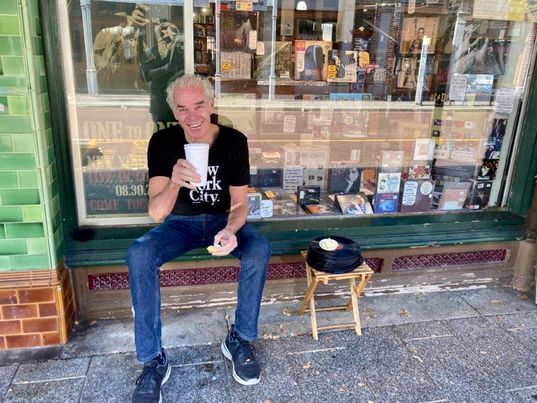
Everyone around me seemed to be reading – heads down in books and newspapers reading. A guy with a white ponytail sat nearby staring at a crossword. The crossword was large and took up most of the half-folded page of his newspaper. He bobbed his head and tapped his feet to music being played from the record shop next door. A watch on his wrist clearly told the time of a quarter past eleven. Nearby, a lady sketching sat in silence, drawing something with great care, crafting slowly, watching her ideas manifest in pictures. As she continued to draw, she leant on her left hand, elbow resting on the table. A giant pink stone sat in the ring on her finger. It matched the pink hue of her fingernails which shone in contrast to her olive skin. She coughed suddenly and turned her sketchbook: she was drawing rings.

Image by Karl Powell, (Pasta Addiction), 2023

Next door, the record shop had just finished playing George Gershwin’s “Rhapsody in Blue.” I had missed most of the song when ordering my coffee but caught its ending. The record shop already had its doors open before I arrived. They had a big, yellow sign telling the whole of High Street who they were: Record Finder – Specialists in New & Quality Used Records and Cassettes. The interior of the shop looked dark and eclectic – hosting the entire body of music in all its forms. Theirs was a portal into another world – a voyage into new dimensions of Time hitherto unknown and undiscovered; music shops, like bookshops, offered up the opportunity to glimpse into distant corners of the universe and come face to face with something utterly unexpected which somehow aligns with your soul, strikes a chord and eventually changes how you see the world forever (such is the magic of music and poetry).

Image by Karl Powell, (Morning Coffee, Record Finder ), 2023

A large, plastic crate of vinyl records balanced on a stool, guarding the shop doorway. Books about jazz sat alongside vinyl in a glass cabinet with words written on a note. Rows of compact discs ran from the entrance into the darkness inside – each with a small, white label in the right-hand corner (like a postage stamp). The ceiling was high. Behind the posters, behind the stacks of records and compact discs, the walls were painted jade green. In the window there was a large poster of Johnny Cash; below it, a box with the name ‘Tchaikovsky’ printed on it. Sunlight fell inside the shop floor, arrowing in through the gaps at the shop’s front and searing the patches of carpet in long, horizontal cuts. A lone seagull moved about the doorway. The bird had flown down out of the sunshine to land at an outside table where people had been eating. The bird landed in silence grabbed a large crust of something, swallowed it whole in one gulp. It then jumped to the floor and moved as if to enter the music shop (loitering in the shadows of the threshold).

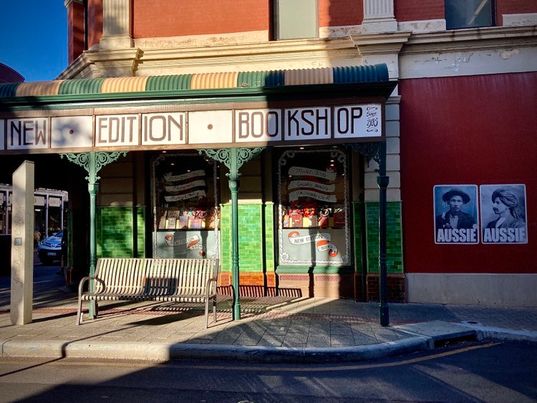
Image by Karl Powell, (New Edition), 2024

One of the record shop owners, sat outside the café on a table, watching the world walk by (offering out a greeting to whoever stopped to talk with him). As I took out my pen and paper and got ready to write on an adjacent table, he ordered another coffee from the waitress with blonde hair.

The humming thunder of a Harley Davidson purrs past us, hammering down towards the Round House and elsewhere. Van doors slam shut as morning deliveries are made. A young woman walks up towards town, carrying a book in one hand, with sunshine bouncing through each curl in her brown hair.

My pen cast a shadow on the table in front of me as I wrote. I watched the way it seemed to weave and dance in front of me on sunlit pages; my will, my ideas scorching blank paper forever.

Image by Karl Powell, (Sunshine on a Wooden Table), 2019

This is all I have today – ten minutes here at the cafe. This is all I have. And this is enough. This will work. With a flat pavement beneath your feet and the sun on your face. This is the place to be: sunshine on a wooden table, a coffee on its way and a ticket to ride. Writing on a wooden table, watching people passing by, blessed by the freedom of an empty page. Casting aside the irritations of seeking out a perfect time and place to write; there are no conditions worth pursuing (all are either absent or elusive). We need nothing more than to enjoy this moment: watching ink flow.

My coffee arrived. The blond waitress brought it.  She told me to ‘Enjoy.’ Midday sunshine was in abundance.

Image by Karl Powell, (Darawn Nature), 2023

I looked around the High Street. Opposite me sat an artist doodling and sketching something in oranges and greens. He had a glass jar of short, coloured pencils on the table in front of him. Eyes closed I could feel the warmth of the sun. The breeze moved past the skin on my face and hands. It was nice to have the sun on my face. I recalled the lines in Hunter S Thompson’s The Rum Diary where Kemp and Chenault have made love just as the novel begins to end, and the two lay together in the darkness of his apartment in Old San Juan – her head resting on his chest – drinking rum in the moonlight, listening to the clink of the ice in their glasses in the total silence they shared; it sounded loud enough to wake the whole of Puerto Rico.

Image by Karl Powell, (Bathers Beach House), 2023

I thought of the beach and began to write again. I began to think of the way that the ocean had looked and felt earlier that morning. Swimming in the endless blue. The feeling of saltwater all around. Floating in the waters of the Indian Ocean as they sparkled with summer’s sunshine. The waters had been sculpted and flat, moving slightly, here and there, broken only by the black dorsal fins of two dolphins coming up for air moving far out in the deep.

A scented candle burning somewhere filled the air with perfume.

Richard the journalist walked past my table and said hello. He stopped and we chatted about some news he had seen overnight in Europe. He told me about the new book he was writing. Told me how difficult the process was. Told me that it was a lot of effort for nothing. Told me the only reason you’d want to write something because you are passionate about it. I wished him luck (knowing he’d complete it and succeed – some people are so committed to their art that all the wind they need within their sails is always blowing near by).

Image by Karl Powell, (Cliff Street), 2019

The record shop began to play The Beatles. Sergeant Pepper’s Lonely Heart Club. After the eponymous track opened, the sounds of ‘With a Little Help From My Friends’ filled the air – and as the chorus tells the whole of High Street how to get high with a little help from our friends, an old man with a bulky, blue backpack appears from nowhere and begins to dance across the pavement, zig-zagging in fleet-footed fox-trots.

Everything was as it should be. Everything felt good. Everything was magic.

There was nothing but clear blue skies.

The sun was getting stronger. I sat still for a few moments more. I closed my eyes and felt the warmth of the sun on my back and heard laughter. It would be time to go soon. I failed to notice my friend, Liz, approach my table from out of my range of  peripheral vision. She’d been watching me write as she walked up the High Street. She came to say hello. We spoke for a while (she was on her lunchbreak, she had a cold and had to hurry as she was on her way to get something to eat).

Image by Karl Powell, (Breaks), 2017

Eventually it was time for me to leave. I finished what was left of my coffee and packed up what I had written. A customer entered the record shop as I stood up and the lone seagull scuttled out of the shadows back into the sunshine on High Street. Almost immediately they began to play ‘There’s Frost on the Moon’ by Artie Shaw. I walked down away from the café, down towards the Roundhouse and the sound of a clarinet followed me all the way down to the corner of Pakenham Street.

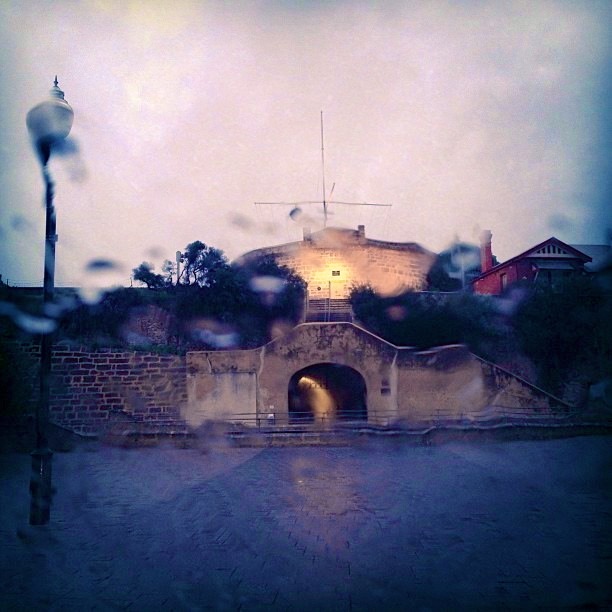
Image by Karl Powell, (Round House), 2017

The Round House basked in sandstone sunlight.  

*

1 Somewhere

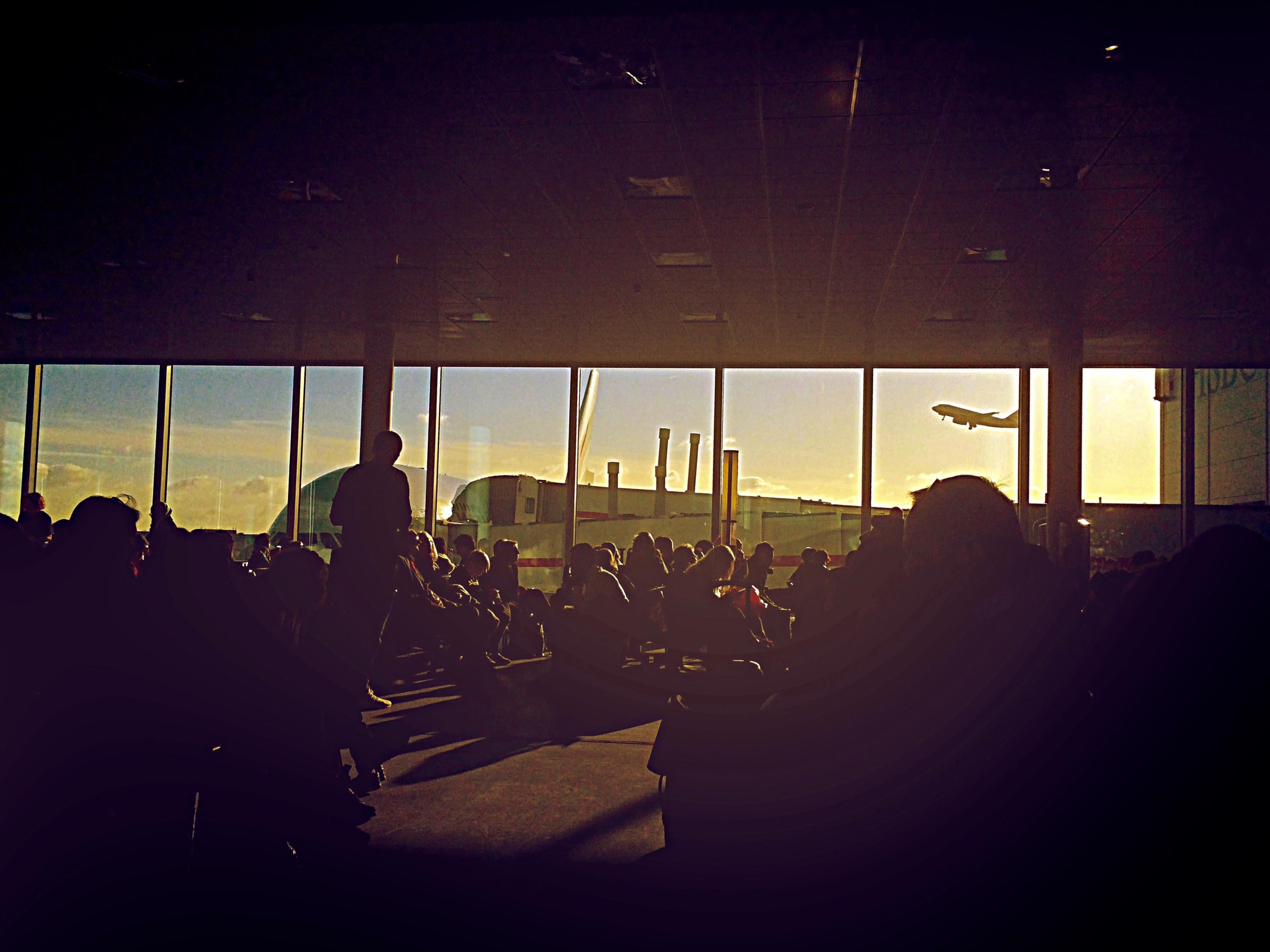
There are clear blue skies everywhere now, as they should always be whenever you leave a place. A new adventure is beginning all around me, and so omens seem to align elsewhere (all at once), in order that the entire cosmos can ferry me through this marvellous conveyance. All journeys must begin somewhere. I am sat here, in transit, at Gate 51, waiting for a flight from somewhere to go somewhere else (it feels as if I have been here so often before). There is a poem by Walter de la Mare titled “Somewhere” where we are asked to wonder what ‘somewhere’ is and what it means to us. Through the rhyme and metre of each stanza, the poet reminds us that it makes no difference whether we go somewhere on foot, or in our dreams, there is an authentic somewhere meant for each of us to reach, “the somewhere meant for me.” These occasional pockets of time, glimpsed lapses of meaning, or just the sense of seeing ourselves slipping through the cracked fissures of our faith in everything – all this brevity becomes legitimised through the poem’s mapping of somewhere.

Image by Karl Powell, LHR > DXB, 2017

So here we are again. Waiting in a departure lounge. Hungry. Didn’t have the best of sleep. Woke up at 2.30am and again at 430am, worried that I’d sleep through my 5am alarm – but it went off anyway, on time and I got up and got ready. I made my way into the city to catch the first bus to the airport. It arrived on time (although the city was quiet, still asleep). Moving through the streets I arrived at the airport without really realising – it just appeared there on the left having sped through a blur of tail-lights, traffic lights and eternal stars hung across the silent Heavens. In the Terminal – the right Terminal – I checked in, dropped off my suitcase, was processed through the scans and security checks, passports no longer stamped at passport control but it still took an age to get through.

I bought a coffee (an espresso) and sat near my gate. The plane was announced as late and is now leaving in about 30minutes. Patiently waiting and watching. I am alone with my thoughts for the first time in a long time. And for the first time, in a long time, with all the preparation behind me, I am really up for this adventure. It feels like the first day of something new already. The last time I flew from here, I sat on a flight next to a man from Laos whose name was Cracker; the flight went quickly (eight hours), I read a little, slept a bit, spoke, talked, laughed, listened, ate and watched clouds morph and change colour before the memory of that flight still marvels at some guy from France who wore sunglasses through the entire flight and sung along loudly to the music he listened to (Lionel Richie’s “Dancing on the Ceiling” was a particular highlight for the Economy Class cabin aboard flight TG249). We all arrived on time, that time.

Moments earlier, I spoke to a couple from India. They had been here on honeymoon. They were worried about the announced delay and the possibility of missing their connection. There was no information, no signs. Eventually they went and found someone to speak to at the front desk. I watched them for a while and then they suddenly dissolved into the rest of us here sat waiting: all in a big hall facing boards of changing signs with so many other people. A family from Europe is now getting frantic about missing a flight. A man and a woman, with two small children are worried about missing their connection. The man speaks loudly to a member of staff for our flight and keeps pointing out of the high panes of glass stating, “The plane is there: on the tarmac.” People look. Some understand. Eventually his voice quietens, but stressed passengers make others doubt. We all recheck our connection times, arrival times, departure times.

The P.A. system sounds to make an announcement. A voice speaks but people nearby talk louder than the information is audible.

So I wait and wish this time away. I try to visualise the events so that they may manifest sooner: a queue will form and begin to move. Slowly. Next I will make the decision to gather up my things and walk towards the queue. The blur of boarding will then unfold. We will show our boarding passes, printed earlier, along with our passports (opened at the page to show our photograph). Once through these final checks, we will move again, onwards and towards escalators, stairs or ramps leading to the cabin deck. We’ll begin to pool, orderly, nervously knowing that the plane cannot leave without us now, but an eagerness will build to board before those around us, to find our seat before anyone else. To sit, click on our seat belts, close our eyes and wait for lift off. Emotions will swirl. The realisation of no return. We are leaving. We are departing. We will be departing. We will be airborne. No longer in transit. Until then, we wait.

In stillness the mind operates differently. Thoughts and memories arise from nowhere, sometimes flashbacks of the airport blur occur (like walking through the Duty Free lounge), sometimes they are specific only to travel. I recall one flight that blessed the voyage, crew and passengers just prior to take off. On a trip to Borneo, years ago, with Royal Brunei, once the videos had been shown to educate passengers about what to do in the event of a crash-landing, a lack of oxygen in the cabin or how to hold the brace position, a travel prayer (dua) was broadcast. The prayer gave praise and blessings to the Prophet before the name of Allah was invoked for our journey. The prayer asked the Creator to lighten the burdens and hardships of our passage, to bridge the distance of our journey, to be our Companion for the duration of the flight and to be Protector to those we loved and had left behind. It was subtitled in Arabic, Malay and English for all passengers to take comfort in. 

Image by Karl Powell, Arriving in Bangkok, 2019

Another memory appears from the depths. Being in transit at Auckland. First by being struck at how genuinely friendly everyone was at the airport – from security guards, transit checks through to passport control. Everyone seemed to realise we were travelling and made the effort to take care of us. I bought a book at a shop, bought something to eat, sat down at a plastic table and then noticed a girl walking around the terminal with odd socks (no shoes in sight). After that – and I’m not sure if it had been my lack of sleep from the journey to be in transit – the airport became full of doppelgängers. There were people there who looked like people I knew (people I knew who could not be in Auckland); there were people there who looked like certain celebrities (plausibly, they may have been there, too – but I lacked the courage, and energy, to discover if it really was ‘them’). In the end I surmised I was probably becoming short-sighted, fatigued and just staring at strangers. In fact, the only other thing I saw with clarity was the generic (but appreciated) message next to my onward flight: relax. All other flights said Delayed, Departed or Boarding. But mine had said “Relax.”

And here I am, now, relaxed. In transit. Waiting. And time has ceased to be.

I am content being somewhere and nowhere; that somewhere, that Walter de la Mare, wrote about being “the Somewhere meant for me.” And true to the words of the poet, there is room for all of us in this Somewhere. At Gate 51, we are waiting to board our flight and there is room enough for all.

*